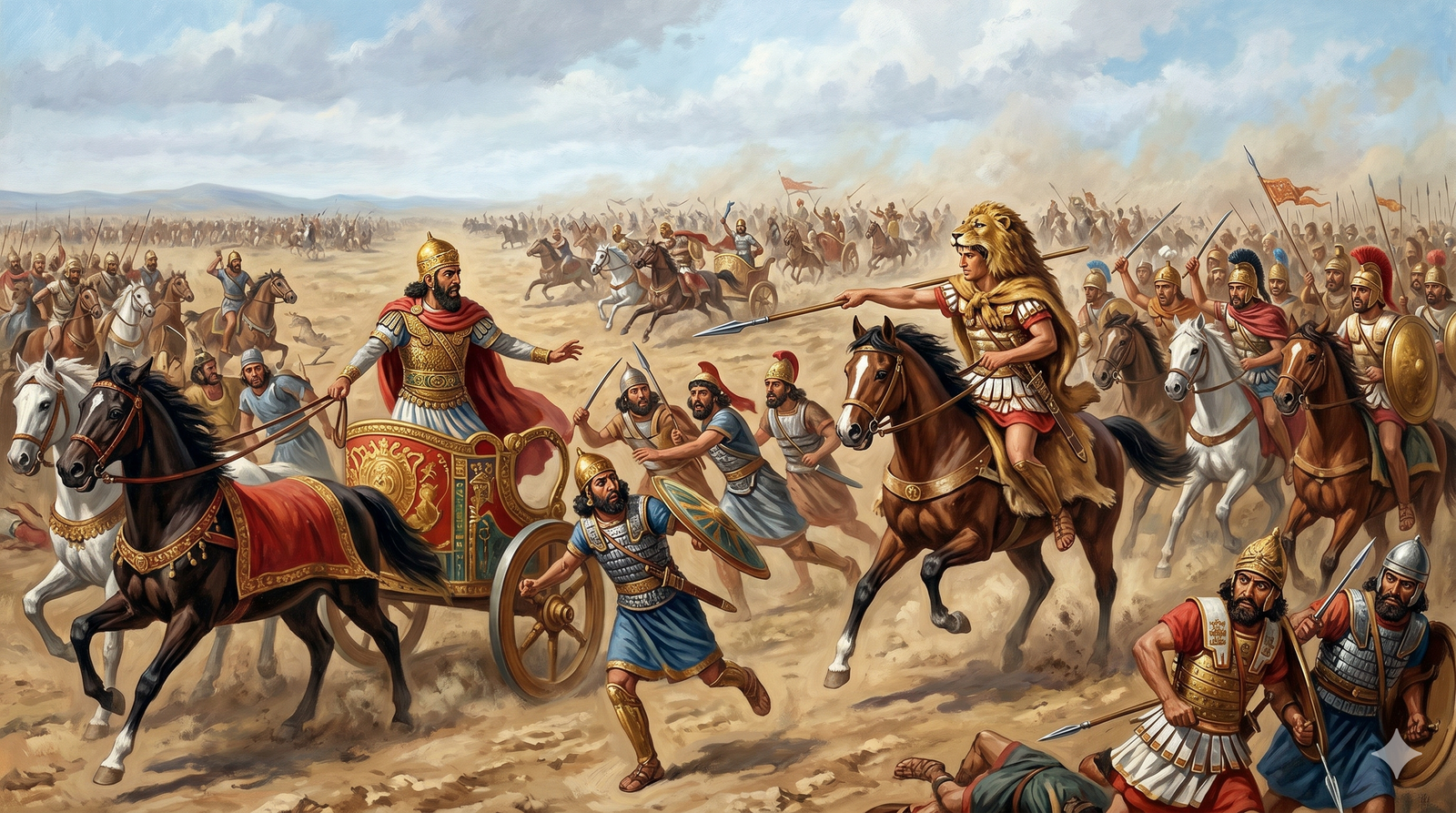
Alexander the Great vs King Darius of Persia - Battle of Gaugamela
The Battle of Gaugamela (October 1, 331 BCE) was the definitive "endgame" match between Alexander the Great and King Darius III of Persia. Gaugamela was the moment the Achaemenid Empire effectively ceased to exist.weapon"UnitsPhalanx, Companion CavalryScythed Chariots, War Elephants, ImmortalsStrategyH🧠 Alexander’s Masterstroke: To counter this, he used a brilliant piece of "battlefield baiting":The Oblique Advance: Alexander marched his army diagonally toward the Persian right.The Bait: Darius, fearing he was being outflanked, moved his cavalry to follow Alexander, As the Persian units shifted, a small gap opened in their center. Alexander immediately formed his Companion Cavalry into a giant wedge and dove straight into that gap, aiming directly for Darius himself.
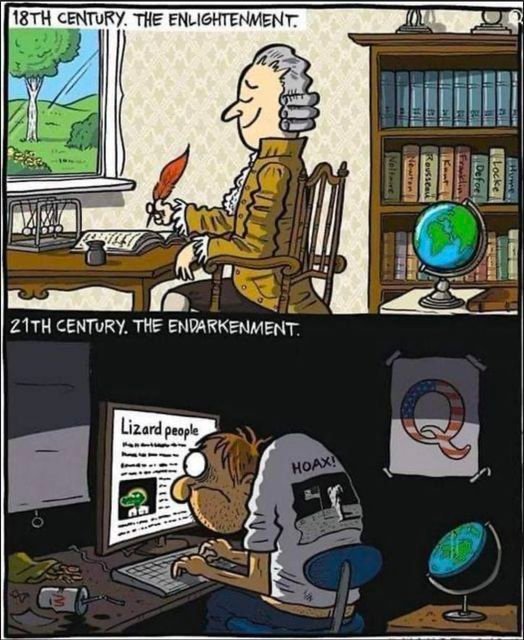
Enlightenment vs Endarkement
The Enlightenment (roughly the 17th and 18th centuries) was built on the radical idea that human beings could understand the universe through reason and empirical evidence rather than tradition or divine revelation.
Core Tenet: Sapere Aude—"Dare to know."
Key Values: * Scientific Method: If you can’t prove it, don’t preach it.
Individualism: You have rights simply because you exist.
Secularism: Keeping the church and state in separate lanes.
Progress: The belief that society can actually get better over time.
2. The Endarkenment: The Age of Unreason
The "Endarkenment" isn't a formal historical period; it’s a modern warning. It describes a cultural shift where objective facts are replaced by "alternative facts," and expertise is viewed with suspicion.
Core Tenet: "My feelings are as valid as your facts."
Key Characteristics:
Post-Truth: Where emotional appeal outweighs factual accuracy.
Echo Chambers: Surrounding oneself only with information that confirms existing biases.
Anti-Intellectualism: Dismissing scientific consensus (e.g., climate change or medicine) as elitist propaganda.
Fundamentalism: A return to rigid, dogmatic thinking that leaves no room for nuance.
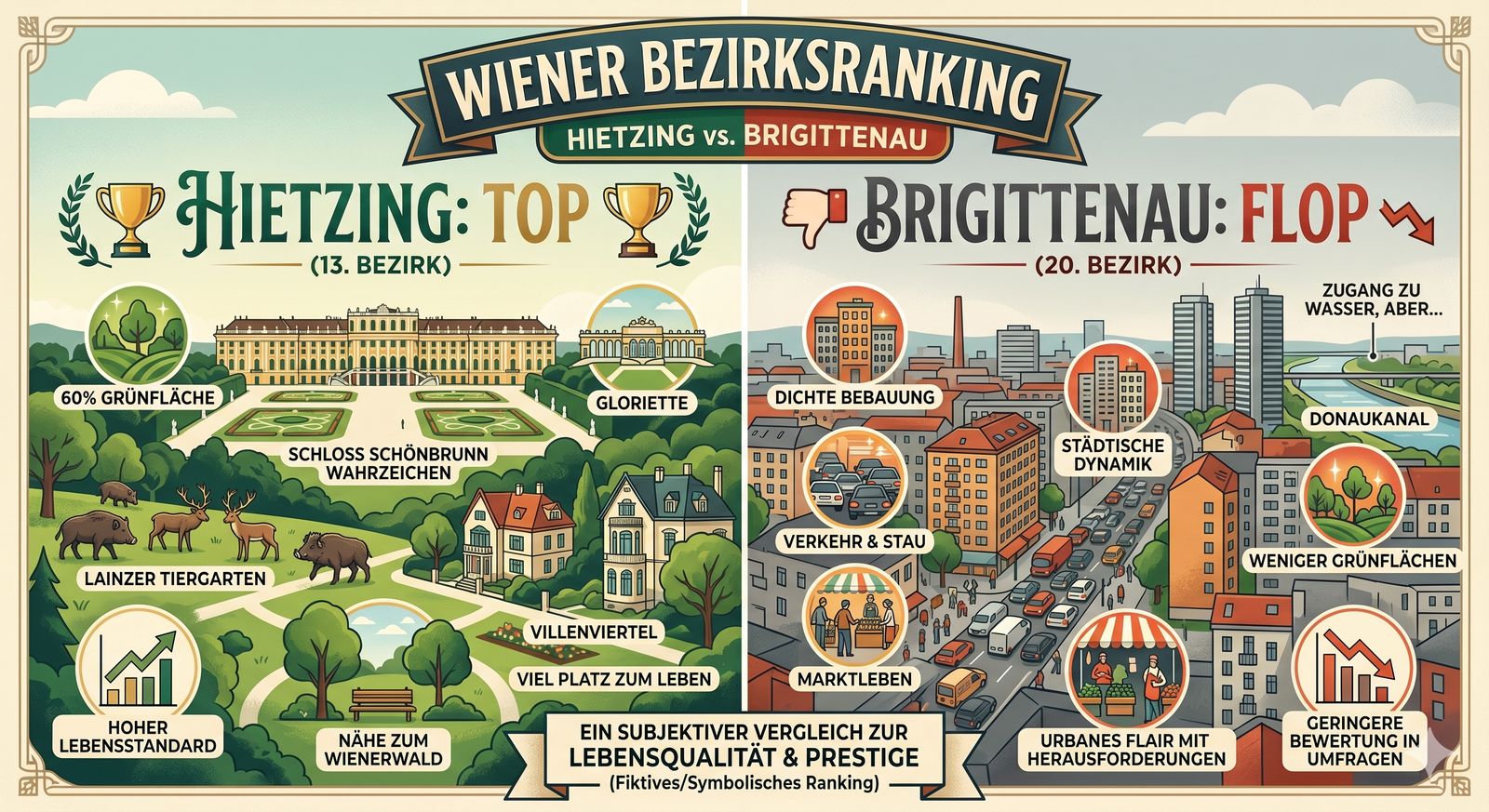
Wiener Bezirksranking: Hietzing top - Brigittenau flop
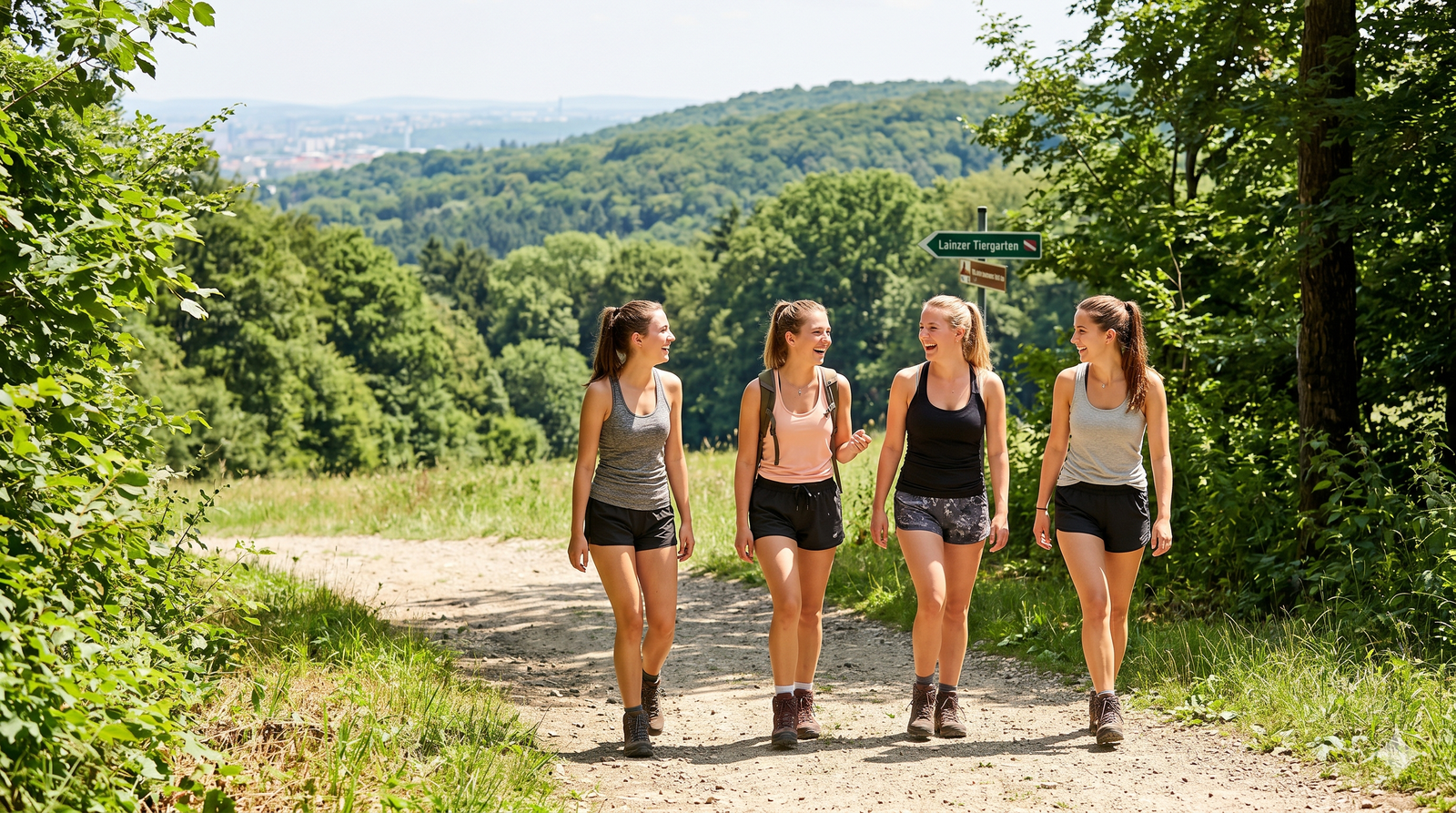
Hietzing bleibt auch 2026 der Inbegriff von Prestige. Wenn man hier wohnt, hat man es meistens „geschafft“.Warum „Top“? Es ist der grünste Bezirk Wiens. Mit dem Lainzer Tiergarten und Schönbrunn direkt vor der Haustür lebt man hier quasi im Park. Die Villenviertel in Ober St. Veit sind architektonisch ein Traum, und die Kriminalitätsrate ist so niedrig, dass man fast vergisst, in einer Millionenstadt zu sein.Der Preis: Die Exklusivität kostet. Mit Quadratmeterpreisen von durchschnittlich über 7.700 € (Stand April 2026) ist Hietzing für Normalverdiener kaum noch finanzierbar.Die Schattenseite: Manche finden es hier ein bisschen zu ruhig – fast schon verschlafen. Wer Nachtleben oder Street-Food-Märkte sucht, ist im 13. falsch. Zudem ist die Bevölkerung im Schnitt deutlich älter.🏗️ Brigittenau: Warum der „Flop“-Ruf?Die Brigittenau hat es schwer gegen die PR-Maschine von Hietzing anzukommen. Sie wird oft als grau, dicht bebaut und sozial schwierig abgestempelt.Die Kritik: Statistiken von 2025/26 zeigen oft Herausforderungen bei der sozialen Integration und im Bildungssystem (z. B. hoher Anteil an Schülern mit Förderbedarf in Deutsch). Es ist laut, es ist dicht, und Orte wie der Wallensteinplatz haben zwar Flair, kämpfen aber gegen ein „Dirty“-Image.Der „Sleeper Hit“ (Geheimtipp): Wer die Brigittenau als totalen Flop abschreibt, übersieht die Zukunft. Das Projekt Nordwestbahnhof ist 2026 voll angelaufen. Hier entsteht ein komplett neues, klimaneutrales Stadtviertel für 16.000 Menschen.Die Vorteile: Du bist in Minuten am Donaukanal oder auf der Donauinsel. Die Anbindung (U6/S-Bahn) ist top, und die Mieten sind – obwohl steigend – noch deutlich menschlicher als im Westen Wiens.Der direkte Vergleich (2026)FaktorHietzing (13.)Brigittenau (20.)VibeGediegen, konservativ, ruhigUrban, rau, im WandelNaturWeltklasse (Wälder, Parks)Wasser (Donau/Insel)PreiseLuxussegmentMittelklasse (Gentrifizierung läuft)DemografieEher alt & wohlhabendJung, multikulturell, dynamisch
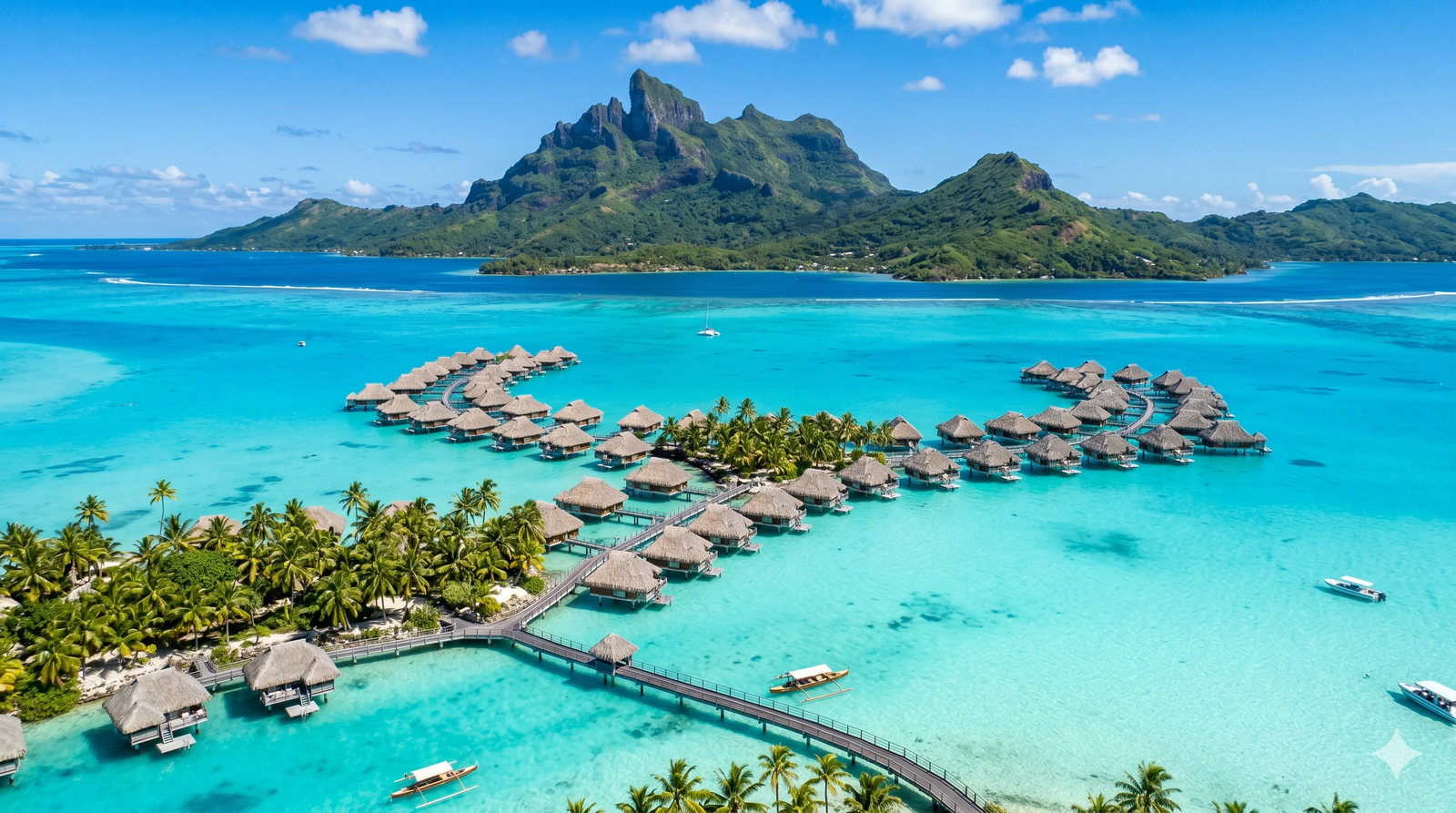
Bienvenue à Bora Bora, la "Perle du Pacifique". Située en Polynésie française, à environ 50 minutes de vol de Tahiti, cette île est mondialement connue pour ses lagons turquoise cristallins et ses complexes hôteliers de luxe.Voici l'essentiel à savoir sur cette destination de rêve :🏝️ Géographie et PaysageBora Bora est formée par un volcan éteint, entouré d'un lagon spectaculaire et d'une barrière de corail.Le Mont Otemanu : Le point culminant de l'île ($727$ mètres), une silhouette iconique visible de partout.Les Motus : Ce sont de petits îlots de sable blanc qui entourent l'île principale. C'est là que se trouvent la plupart des célèbres bungalows sur pilotis.🛶 Activités IncontournablesQue vous soyez amateur de farniente ou d'aventure, l'île offre des expériences uniques :Exploration du lagon : Snorkeling ou plongée pour voir des raies manta, des requins à pointes noires (inoffensifs !) et des jardins de corail colorés.Tour de l'île en pirogue : Une manière traditionnelle et romantique de découvrir les eaux translucides.Randonnée : Pour les plus sportifs, l'ascension (partielle) des montagnes offre des panoramas à couper le souffle.Détente à Matira : La plage de Matira est l'une des rares plages publiques de sable fin de l'île principale, souvent classée parmi les plus belles du monde.
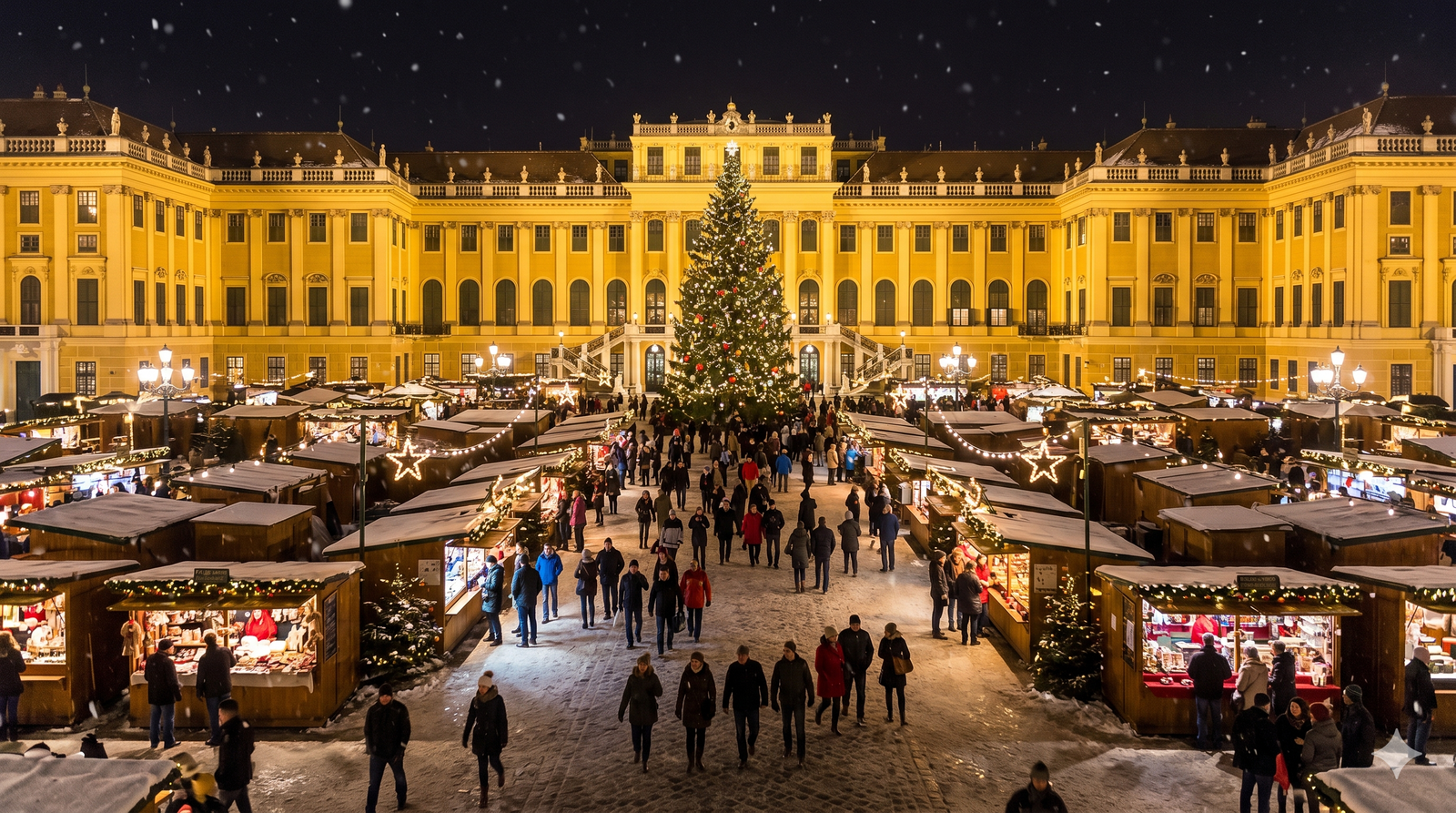
cartoon: Weihnachtsmarkt beim Schloss Schönbrunn
ist Wien tatsächlich eine der lebenswertesten Städte der Welt? Na ja- wenn man sich Bezirke wie Favoriten, Rüdolfsheim-Fünfhaus und Brigittenau ansieht, könnte man diese Aussage bezweifeln Frage: gibt es in Wien noch grindigere Bezirke als den 10., 15. und 20. ?
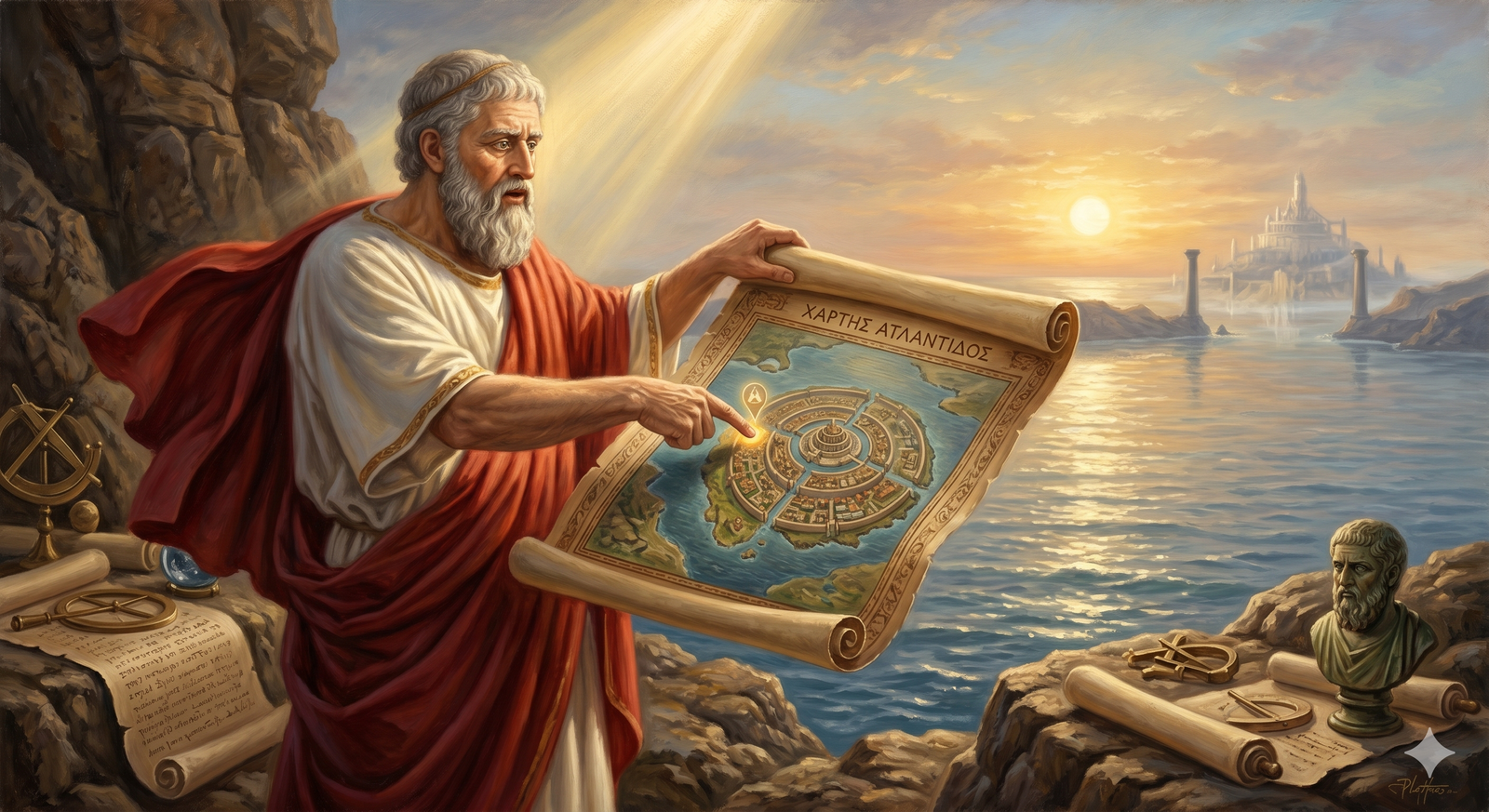
the Whereabouts of Atlantis
Plato, the ancient Greek philosopher, is the sole source of the Atlantis myth, describing it in his dialogues Timaeus and Critias as a powerful, circular empire that sank into the ocean "in a single day and night of misfortune." While he presented it as a philosophical parable, many have searched for a real-world location. Do you think that Atlantis really existed?
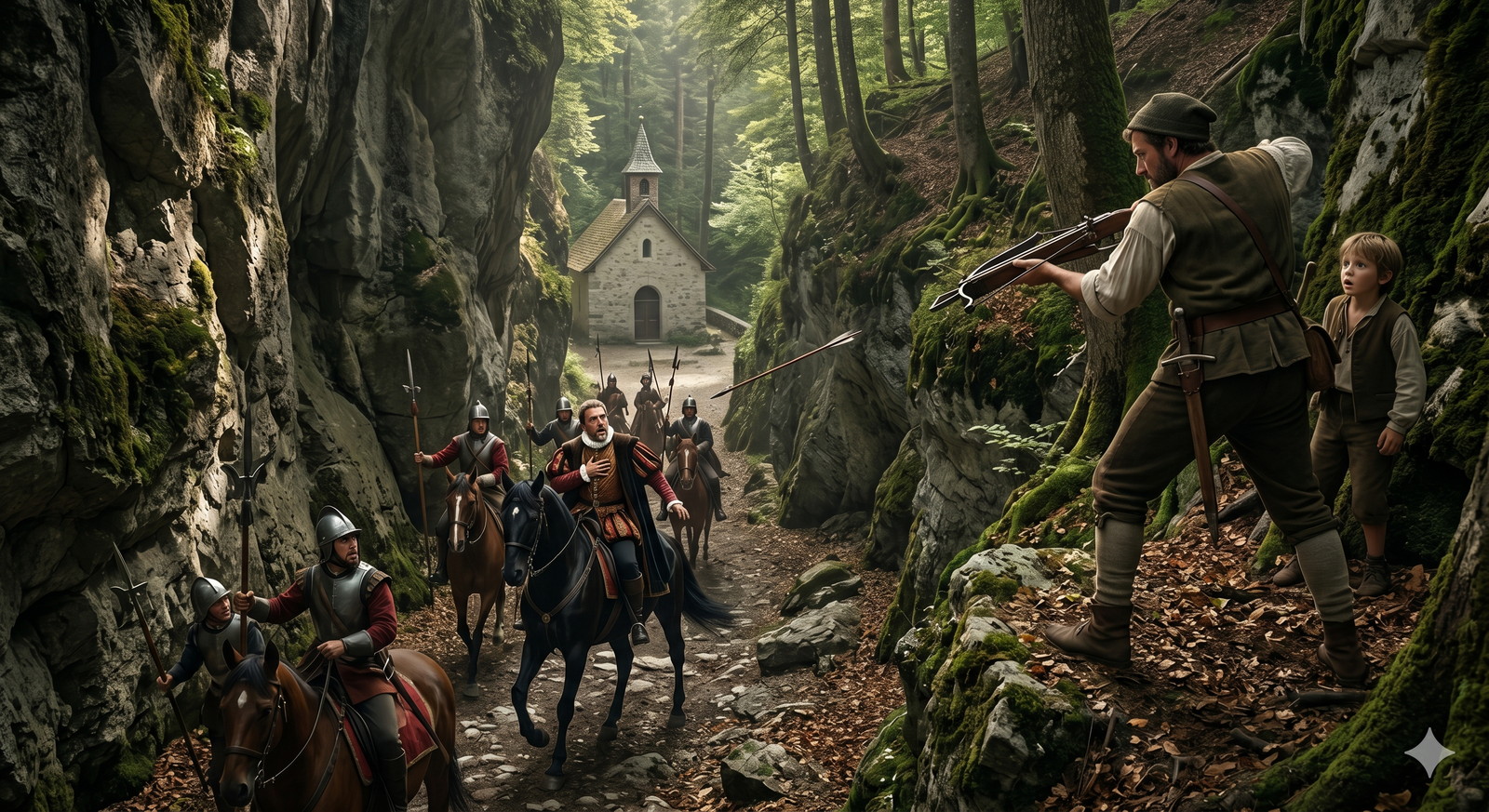
hat Wilhelm Tell tatsächlich gelebt oder it er nur die Erfindung eines schwäbischen Dichters (Schiller)?
In der modernen Geschichtswissenschaft herrscht weitgehend Einigkeit darüber, dass Wilhelm Tell eine Sagengestalt und keine historische Person ist. Es gibt keine zeitgenössischen Dokumente aus dem frühen 14. Jahrhundert (der Zeit der angeblichen Befreiungskämpfe), die seine Existenz oder die Taten, die ihm zugeschrieben werden, belegen.
Auch wenn Tell nicht existiert hat, ist seine Figur für die Schweiz von enormer Bedeutung. Er verkörpert:
Freiheitsdrang: Den Widerstand gegen fremde Vögte und Tyrannei.
Einheit: Die Entstehung der Eidgenossenschaft.
Identität: Friedrich Schiller machte die Geschichte 1804 mit seinem Drama „Wilhelm Tell“ weltweit berühmt und festigte das Bild des Schweizer Nationalhelden.
Wilhelm Tell ist eine personifizierte Idee. Während die politischen Spannungen zwischen den Waldstätten (Uri, Schwyz, Unterwalden) und den Habsburgern im 13. und 14. Jahrhundert real waren, ist der Armbrustschütze Tell eine literarische Erfindung, um diesen Freiheitskampf greifbar und heroisch zu machen.
Glaubst du, dass ein Mythos wie Tell für die Identität eines Landes wichtiger sein kann als die nackte historische Wahrheit?
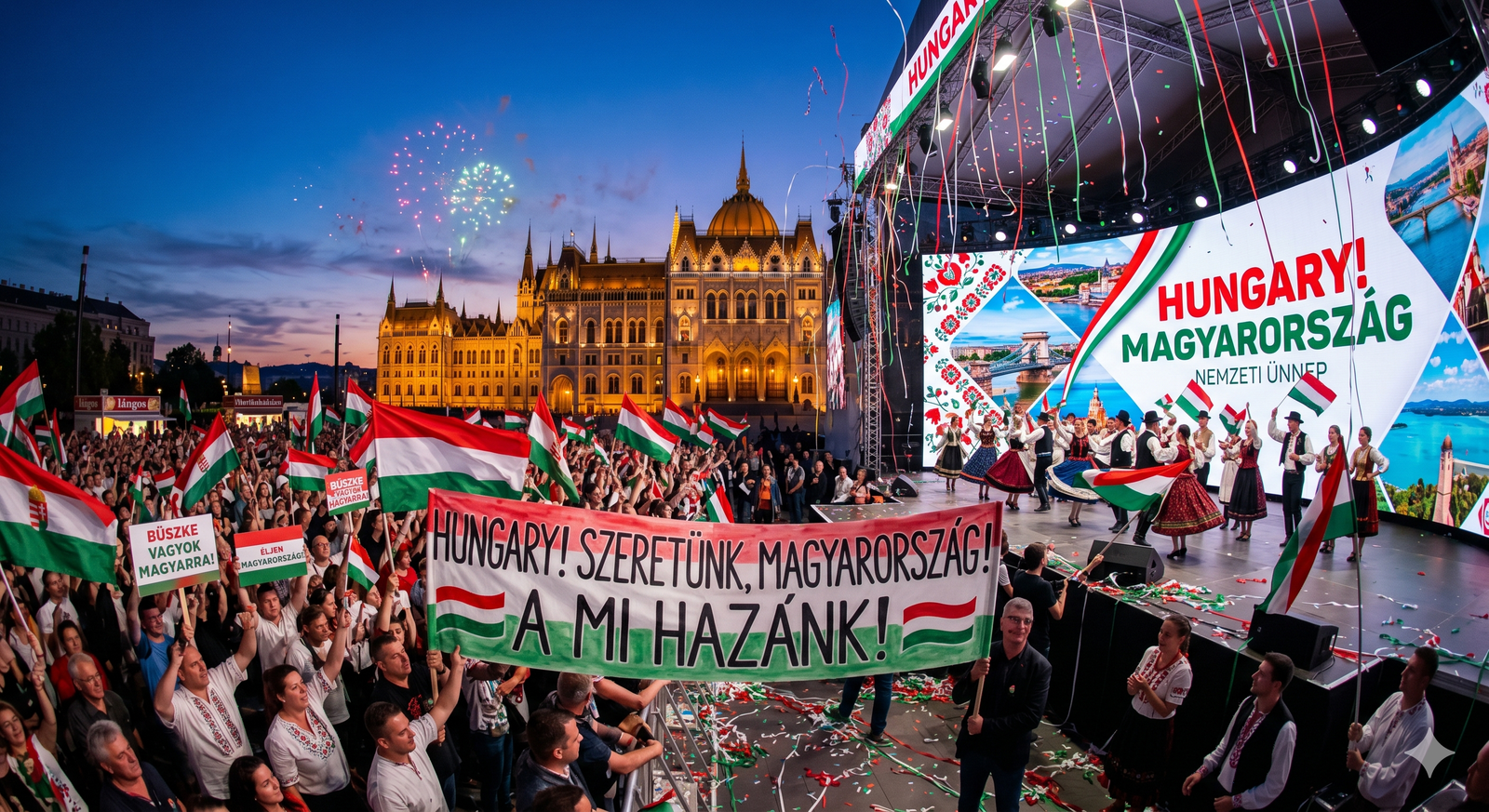
It’s a massive turning point for Hungary. After 16 years of Viktor Orbán’s leadership, the 2026 parliamentary election held on April 12 has resulted in a historic victory for Péter Magyar and his TISZA Party (Respect and Freedom Party).This isn't just a win; it’s a landslide that has effectively shifted the country's political landscape overnight. Here are the key details of the results:The Results at a GlancePartyLeaderVote Share (Approx.)Seats WonTISZA PartyPéter Magyar~54%137Fidesz–KDNPViktor Orbán~38%56Mi HazánkLászló Toroczkai~6%6Key Highlights of the VictorySupermajority: Magyar secured a two-thirds supermajority (137 out of 199 seats), giving him the power to potentially reverse constitutional changes made during the Orbán era.Historic Turnout: Voter turnout reached an all-time high of nearly 80%, signaling a massive public mobilization.End of an Era: This ends the longest-running government in modern Hungarian history. Viktor Orbán conceded defeat on election night, and President Tamás Sulyok has already formally proposed Péter Magyar as the next Prime Minister.Geopolitical Shift: The victory is being viewed as a major pivot toward a pro-European, anti-corruption stance. Markets and EU officials in Brussels have reacted positively, expecting a restoration of the rule of law and better relations with NATO.Magyar’s campaign focused heavily on "ending the system of national cooperation," tackling corruption, and repairing the economy, which seems to have resonated with a broad spectrum of voters—from former Fidesz supporters to the youth.It's a "new dawn" for Budapest, but now the real work begins as Magyar prepares to dismantle a very entrenched political system. What do you think will be his biggest challenge in the first 100 days?
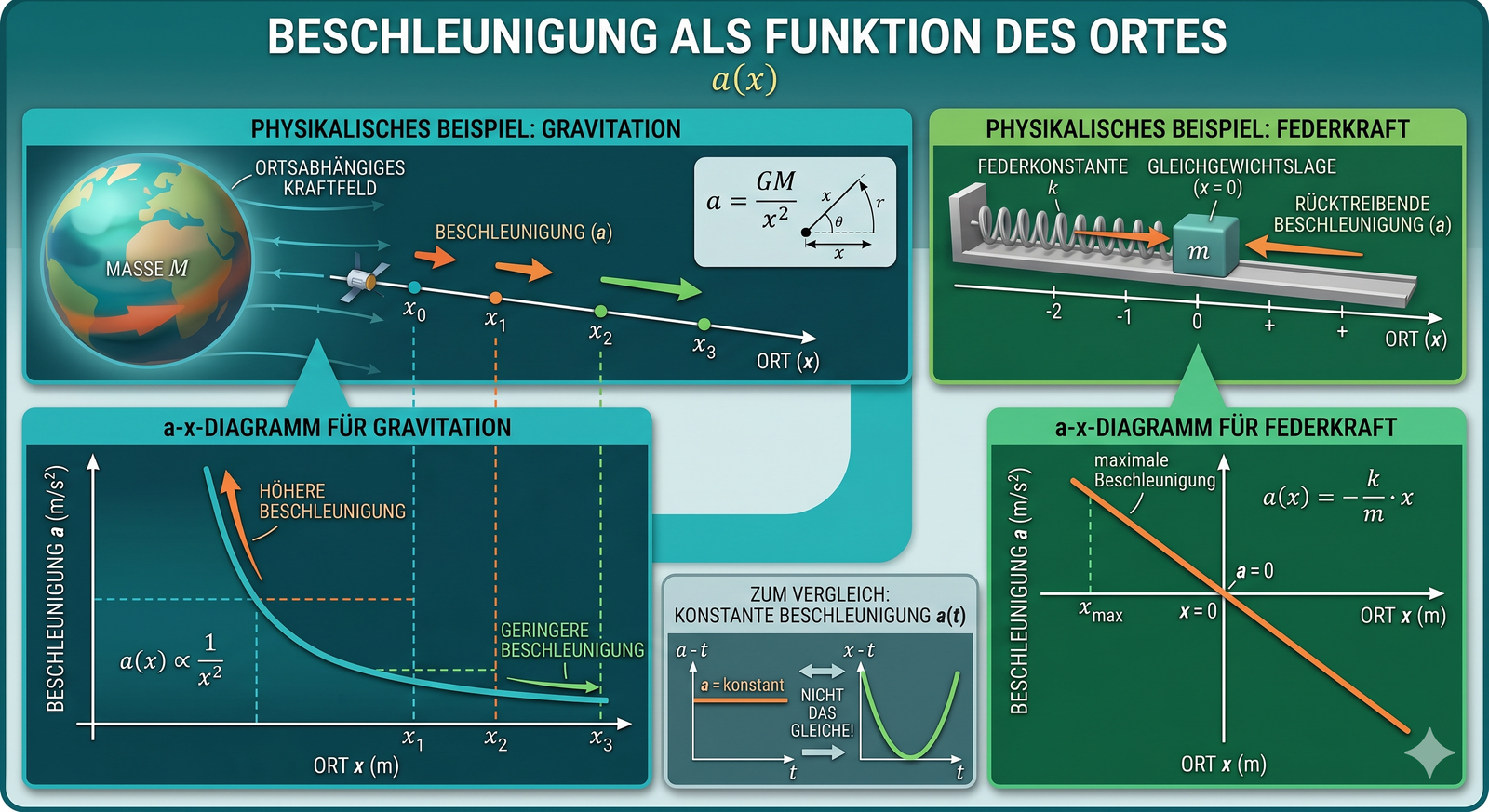
In der Physik ist die Beschleunigung a definiert als die zeitliche Änderung der Geschwindigkeit v, welche wiederum die zeitliche Änderung des Ortes s (oder x) ist. Wenn die Beschleunigung zeitabhängig ist, also als eine Funktion der Zeit a(t) gegeben ist, führt dies auf Differentialgleichungen:
Beschleunigung als erste Ableitung der Geschwindigkeit:
a(t)= dt dv(t) = v(t)
Dies ist eine gewöhnliche Differentialgleichung 1. Ordnung für die Geschwindigkeit v(t). Wenn a(t) bekannt ist, kann man v(t) durch Integration finden.
Beschleunigung als zweite Ableitung des Ortes:
Da v(t)= dt ds(t)
Dies ist eine gewöhnliche Differentialgleichung 2. Ordnung für die Ortsfunktion s(t).
Lösen der Differentialgleichung durch Integration
Wenn die Beschleunigungsfunktion a(t) explizit gegeben ist, kann man die Geschwindigkeit und den Ort durch sukzessive Integration bestimmen. Dabei treten Integrationskonstanten auf, die durch Anfangsbedingungen (z.B. Ort und Geschwindigkeit zum Zeitpunkt t=0) festgelegt werden.
Bestimmung der Geschwindigkeit v(t):
Man integriert die erste Differentialgleichung:
v(t)=∫a(t)dt+v
hierbei ist=v(0) die Anfangsgeschwindigkeit zum Zeitpunkt t=0.
Bestimmung des Ortes s(t):
Man integriert die Funktion für v(t) ein weiteres Mal:
s(t)=∫v(t)dt+s
Hierbei ist s = s(0) der Anfangsort zum Zeitpunkt t=0
Zusammenhang mit der Newtonschen Bewegungsgleichung
In vielen physikalischen Problemen ist die Beschleunigung nicht direkt als Funktion der Zeit gegeben, sondern resultiert aus den wirkenden Kräften gemäß dem zweiten Newtonschen Axiom:
F=m⋅a
Wenn die resultierende Kraft F zeitabhängig ist, F(t), dann ist auch die Beschleunigung zeitabhängig:
a(t)= m
Die resultierende Differentialgleichung für den Ort lautet dann:
s(t)=F(t)
Dies ist die klassische Form einer Bewegungsgleichung, wenn die Kraft explizit von der Zeit abhängt. Hängt die Kraft vom Ort oder der Geschwindigkeit ab (z.B. bei einer Federkraft F(s)=−k⋅s oder Luftwiderstand F(v)), werden die Differentialgleichungen komplexer.
Zusammenfassend: Eine zeitabhängige Beschleunigung führt direkt auf die Differentialgleichung s(t)=a(t)
Um den Bewegungsablauf s(t) zu finden, muss diese Gleichung unter Berücksichtigung der Anfangsbedingungen zweimal integriert werden.
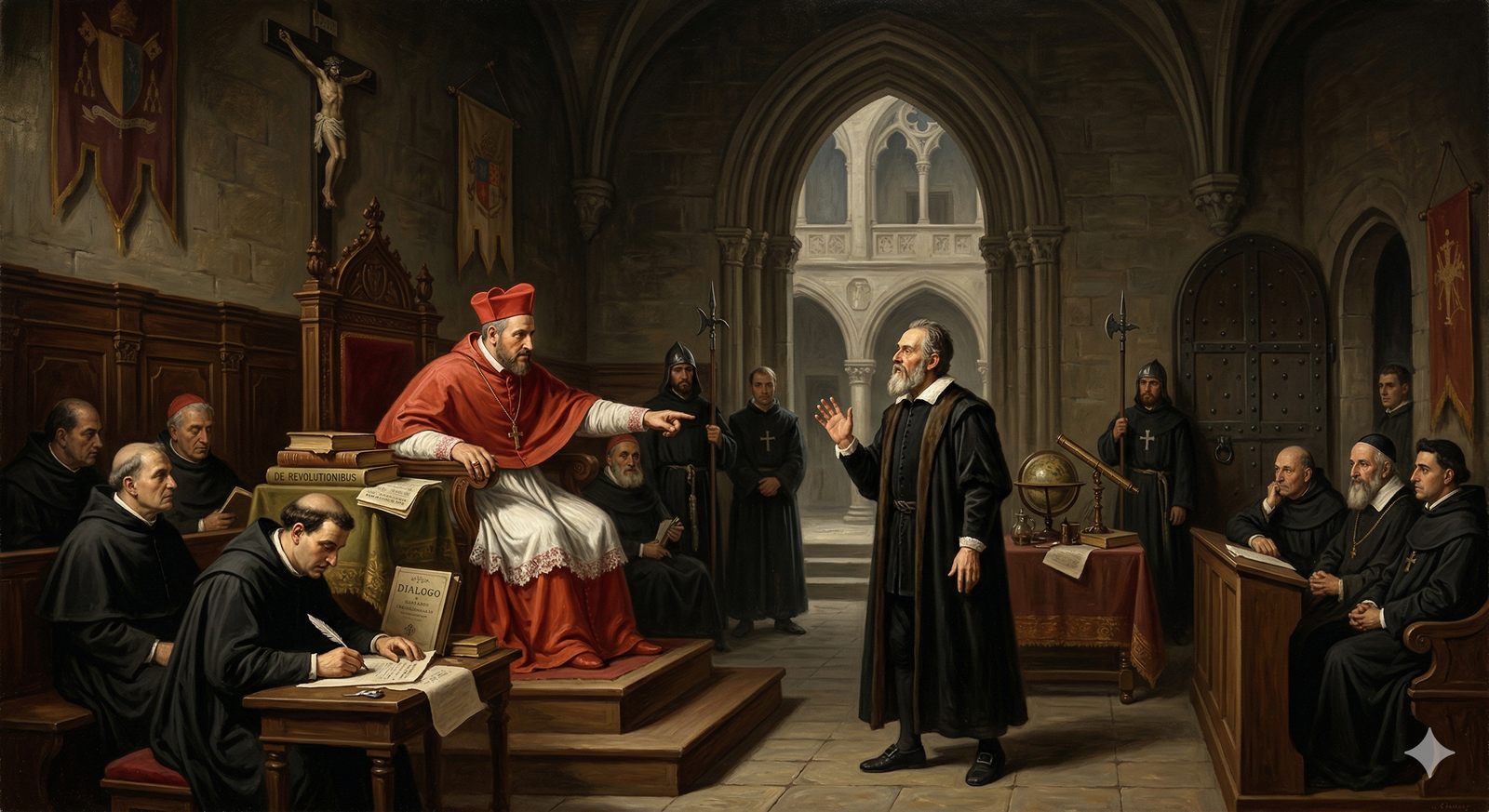
The inquisition of Galileo Galilei remains one of the most famous intersections of science, religion, and politics in history. It wasn't just a simple "science vs. religion" debate; it was a complex power struggle involving scriptural interpretation, the fallout of the Protestant Reformation, and Galileo’s own prickly personality.
1. The Core Conflict: Geocentrism vs. Heliocentrism
At the time, the Catholic Church adhered to the Geocentric model (Aristotelian-Ptolemaic), which posited that the Earth was the stationary center of the universe.
Galileo’s observations with his improved telescope provided evidence for the Heliocentric model, championed by Nicolaus Copernicus.
The Moons of Jupiter: He discovered four moons orbiting Jupiter, proving that not everything in the heavens revolved around the Earth.
Galileo was summoned to Rome and warned by Cardinal Robert Bellarmine:
He was told he could no longer hold or defend the Copernican view as a physical fact.
He was, however, permitted to discuss it as a mathematical hypothesis.
In 1632, Galileo published Dialogue Concerning the Two Chief World Systems. He believed he had the "okay" from his friend, the newly elected Pope Urban VIII, provided the book remained balanced.
Instead, the book was a clear defense of heliocentrism. Crucially:
He put the Pope’s favorite arguments into the mouth of a character named Simplicio ("Simpleton"), which the Pope took as a personal insult.
Galileo was brought before the Inquisition in 1633 on charges of "vehement suspicion of heresy."
Under threat of torture and facing a potential death sentence, the 69-year-old Galileo was forced to kneel and formally abjure (recant) his errors.
Abjuration: He had to curse and detest his previous "errors and heresies."
House Arrest: He was sentenced to life imprisonment, which was immediately commuted to permanent house arrest at his villa in Arcetri.
Ban on Works: The Dialogue was placed on the Index Librorum Prohibitorum (List of Prohibited Books).
Galileo remained under house arrest until his death in 1642. During this time, he smuggled out his most important scientific work, Two New Sciences, which laid the foundations for modern physics and kinematics.
It took centuries for the Church to fully bridge the gap:
1758: The Church dropped the general ban on books advocating heliocentrism.
1835: Galileo’s Dialogue was finally removed from the Index.
1992: Pope John Paul II officially expressed regret for how the Galileo affair was handled, acknowledging that the "theologians of the time" failed to distinguish between the literal and metaphorical interpretation of Scripture. Cartoon: Galilei being interrogated during the inquisition trial in Rome
Venezia e la peste hanno una storia indissolubile, fatta di tragedie immense ma anche di innovazioni che hanno cambiato il mondo. Essendo un emporio commerciale aperto all'Oriente, la città era la "porta d'ingresso" ideale per il morbo, ma proprio per questo divenne il laboratorio della moderna sanità pubblica.
1. 1348: La Morte Nera e l'invenzione della "Quarantena"
Questa fu l'epidemia più devastante: uccise circa 40.000 persone (un terzo della popolazione).
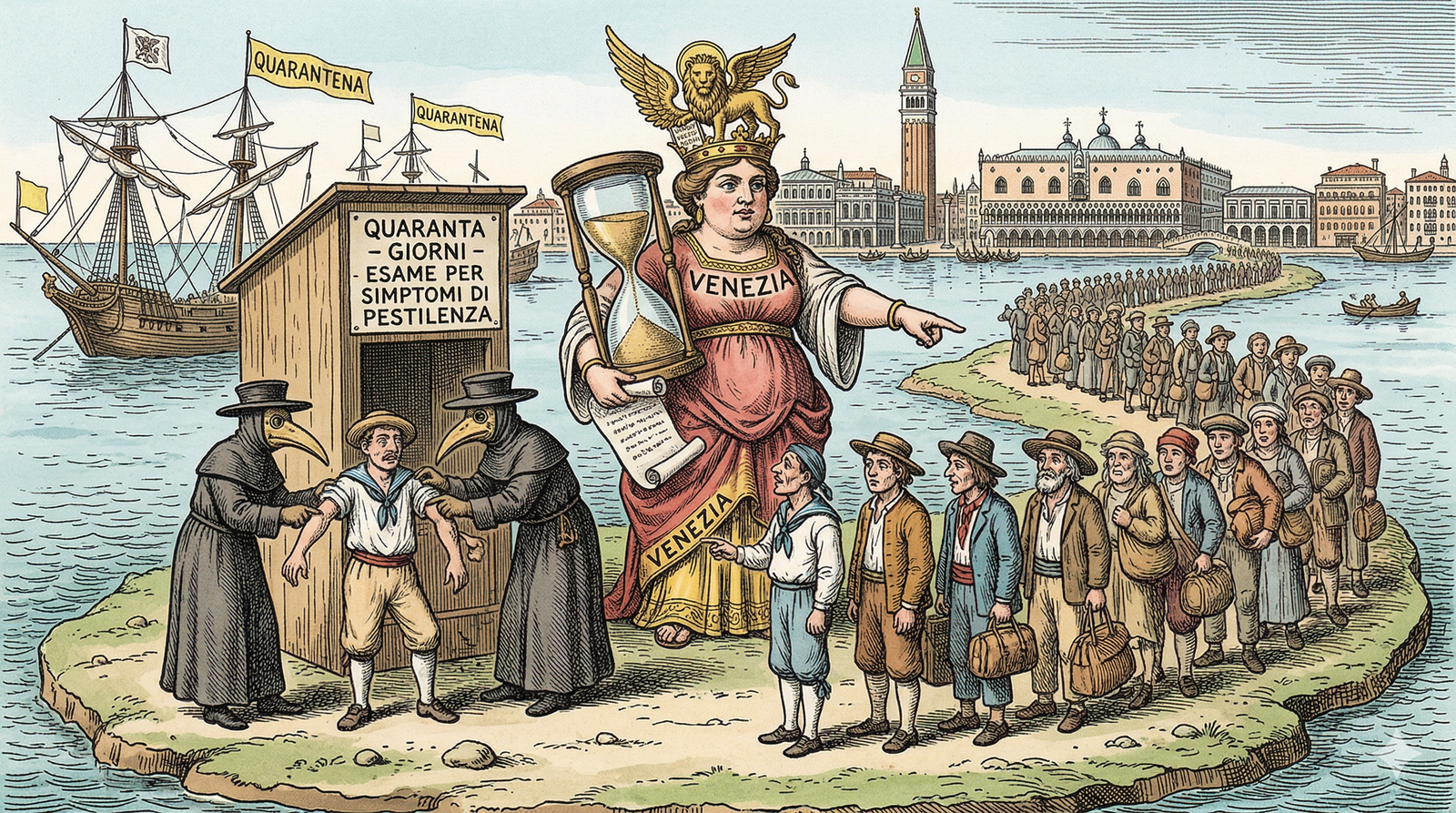
L'innovazione: Venezia fu la prima città al mondo a istituire un sistema di isolamento sistematico. Nel 1423 nacque il Lazzaretto Vecchio (su un'isola della laguna), il primo ospedale per appestati della storia.
La parola: Il termine "quarantena" deriva proprio dai 40 giorni di isolamento imposti alle navi sospette prima di poter attraccare a Venezia.
L'immagine iconica del medico con la maschera dal lungo becco è strettamente legata a Venezia. Quel becco non era un vezzo estetico, ma veniva riempito di erbe aromatiche, spezie e paglia per "filtrare" i miasmi dell'aria, che all'epoca si credeva fossero la causa del contagio. Cartoon: "La Serenissima" ordina i marinari di andare in Lazaretto per quaranta giorni
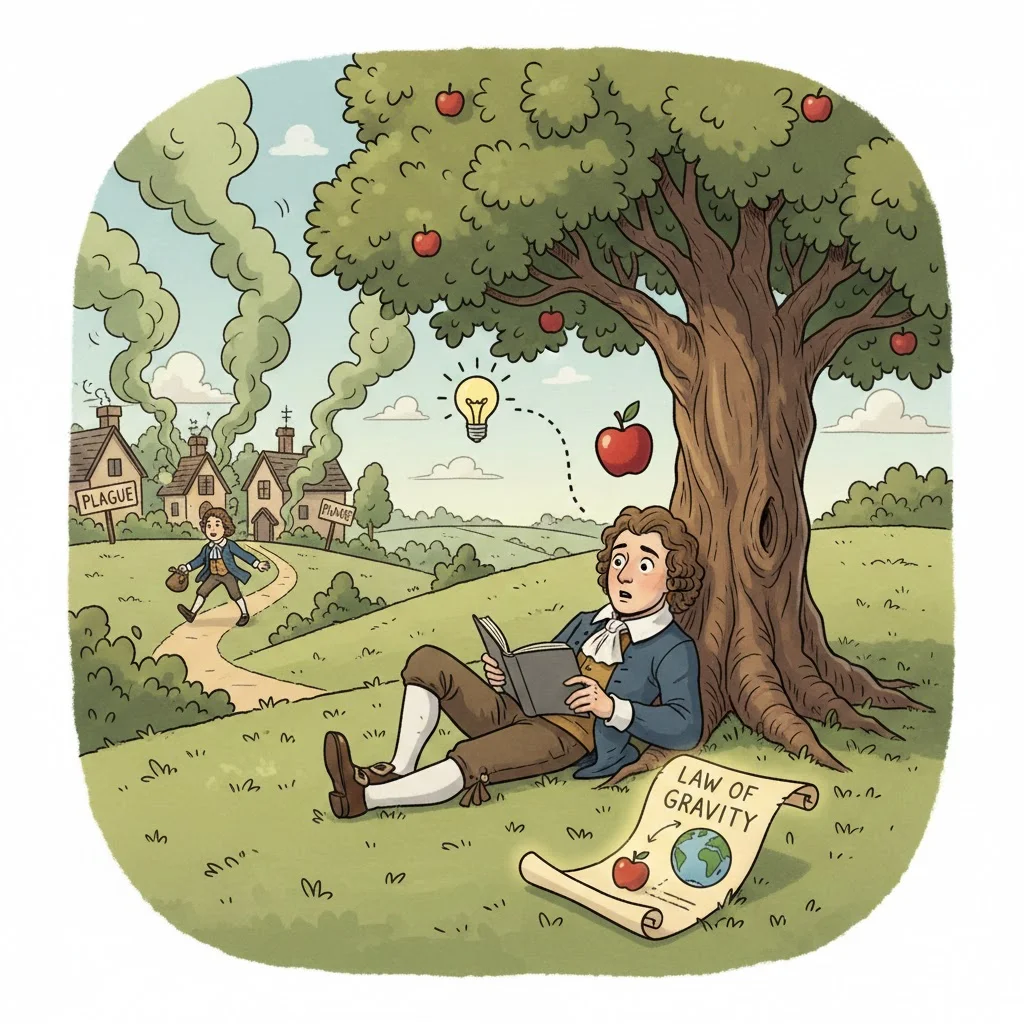
the most famous apple in History: during a lockdown of the Plague, Isaac Newton fled to his countryside estate and relaxed under an apple tree. While an apple fell down on his head, he discovered the law of Gravity

Kommentare