Cartoon & Humor
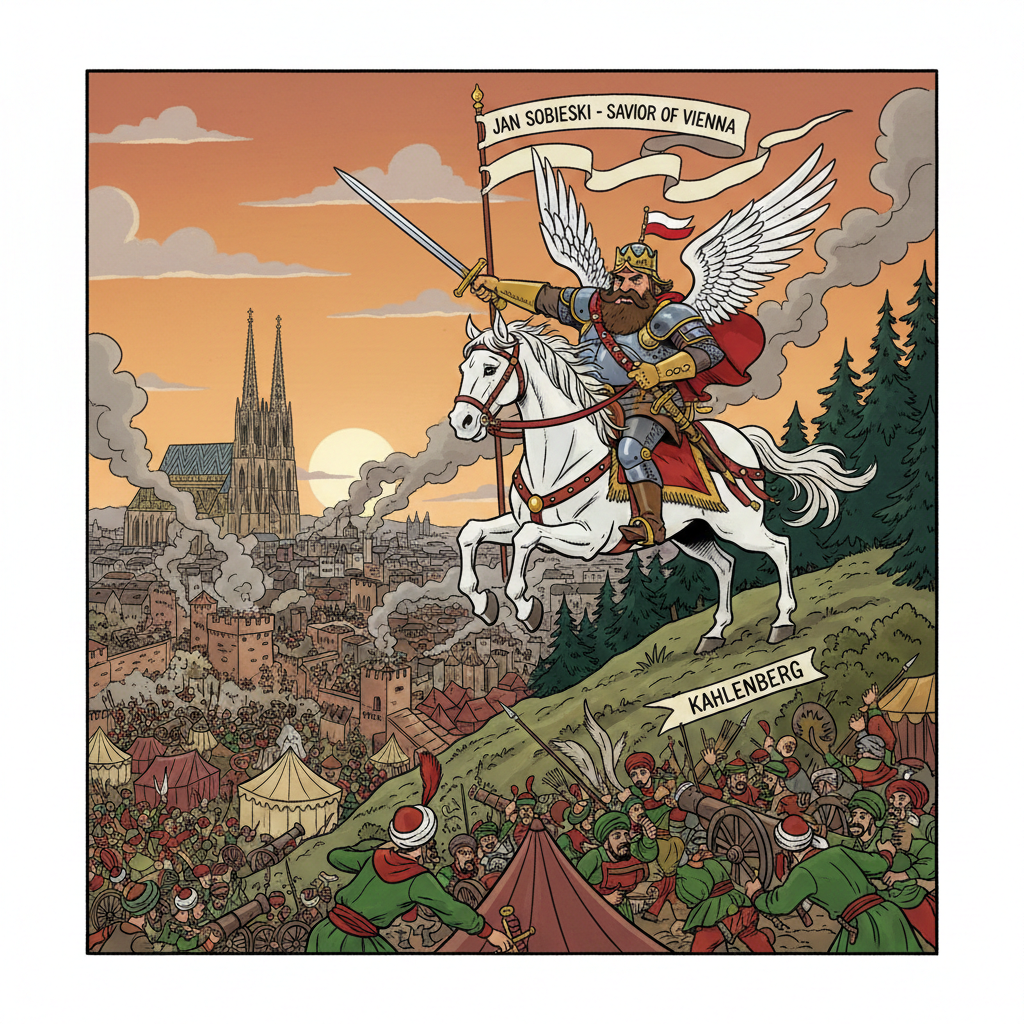
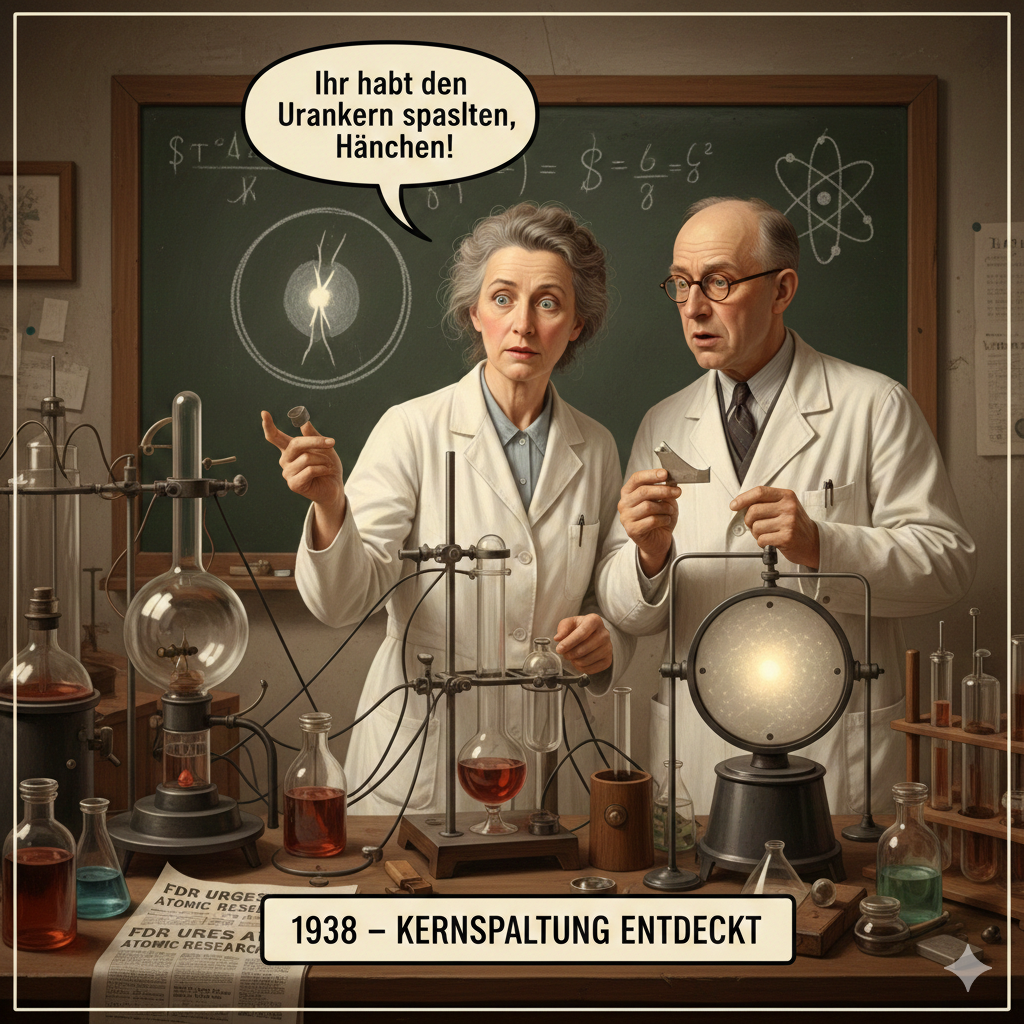
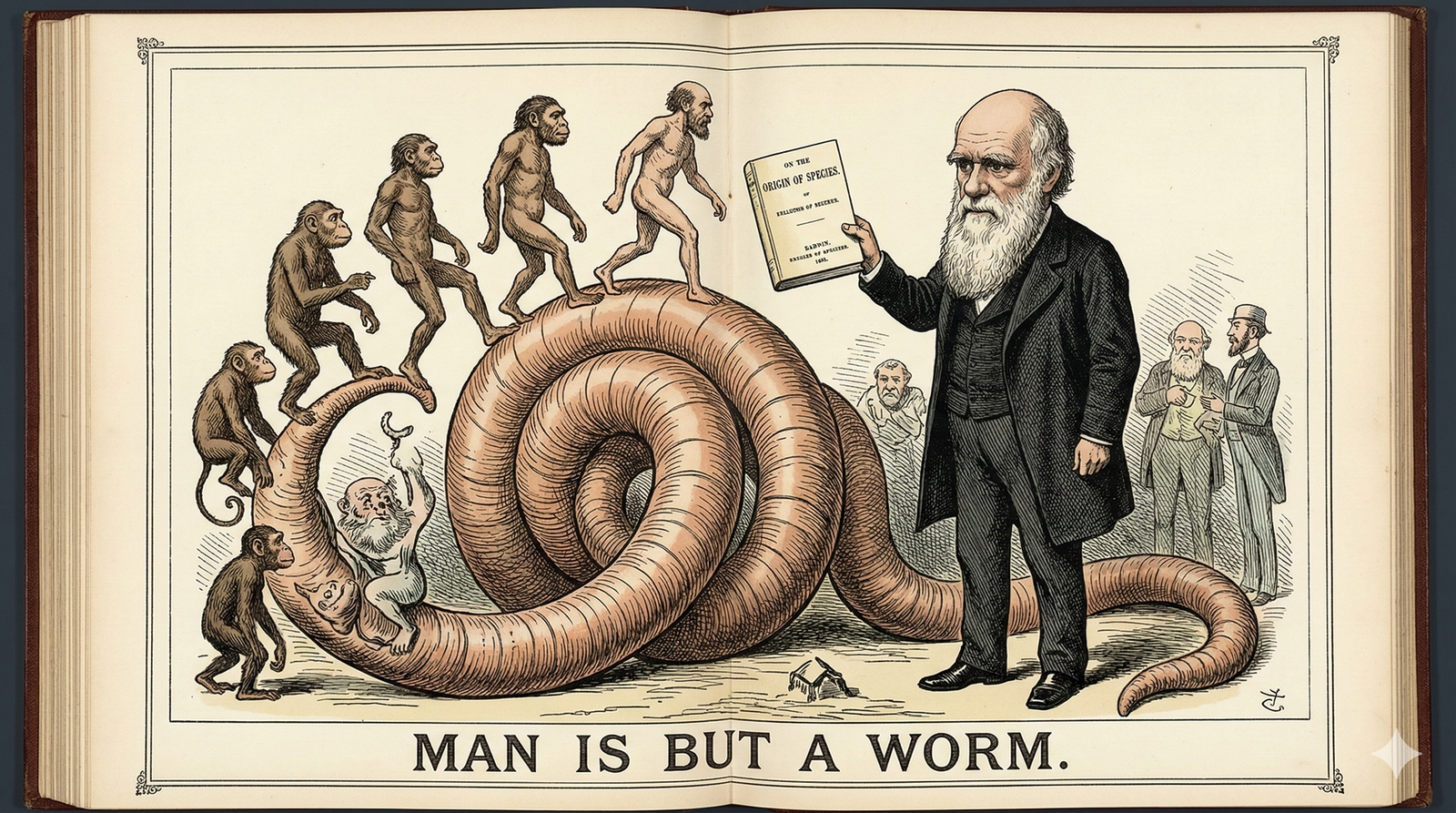
Juhuu! - endlich eine geniale Idee haben! - tolle Lösungen entwickeln - warum ist man da nicht früher draufgekommen? Teilweise mit AI unterstützt!
Score 1💬 1
14.07.2026
History
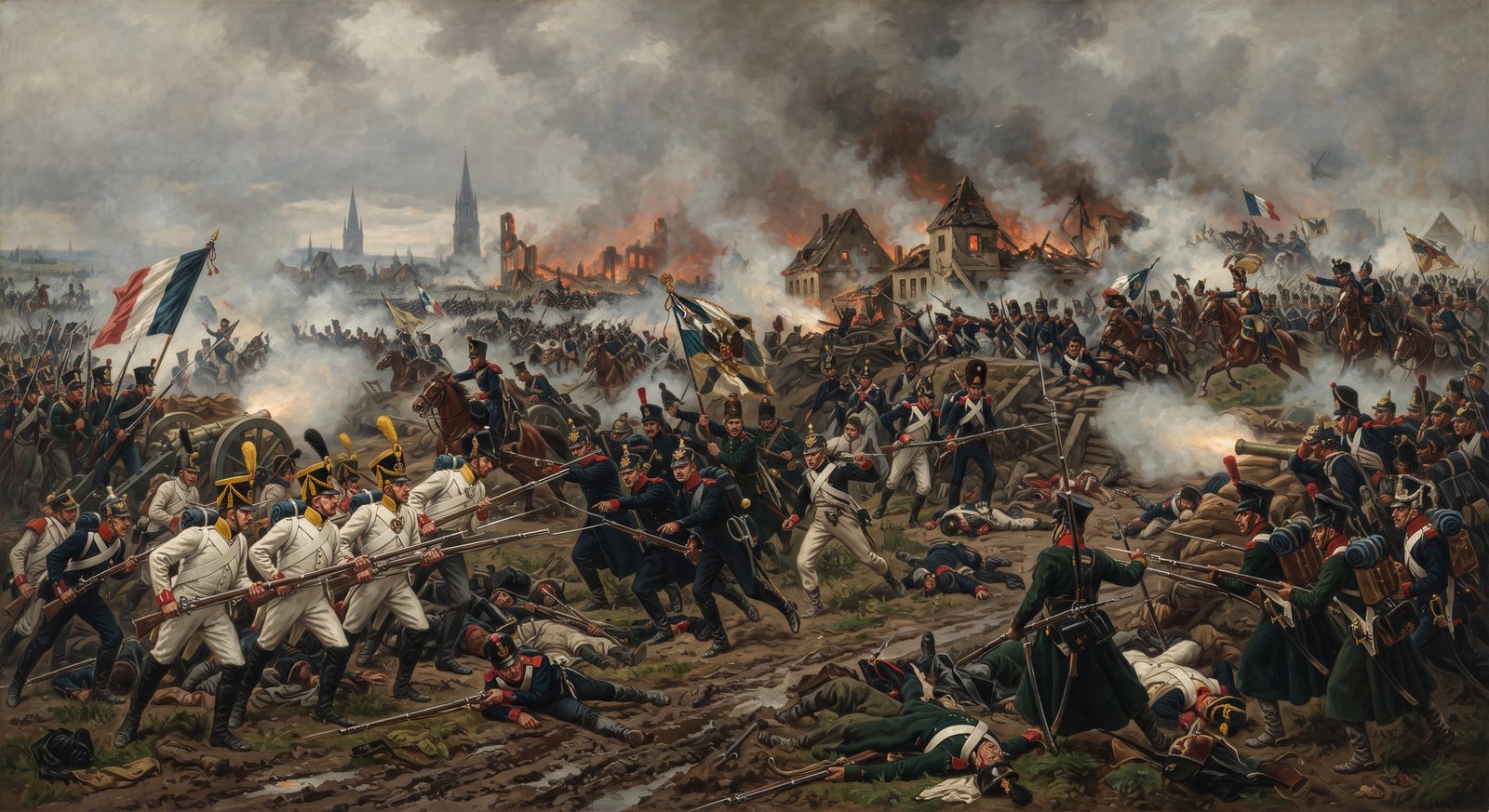
Ende der Vorherrschaft: Mit der Niederlage bei Leipzig endete die französische Vorherrschaft über weite Teile Europas und der deutschen Staaten. Die Schlacht gilt als der entscheidende Schlag, der den Weg für den Zusammenbruch des napoleonischen Systems ebnete (das 1815 bei Waterloo endgültig endete).Der Sieg gegen Napoleon trug in den deutschen Ländern maßgeblich zur Entstehung eines nationalen Identitätsgefühls bei, auch wenn die politischen Verhältnisse auf dem Wiener Kongress 1814/15 zunächst wieder eine konservative Ordnung herstellten.
Score 0💬 0
28.08.2026
Cartoon & Humor
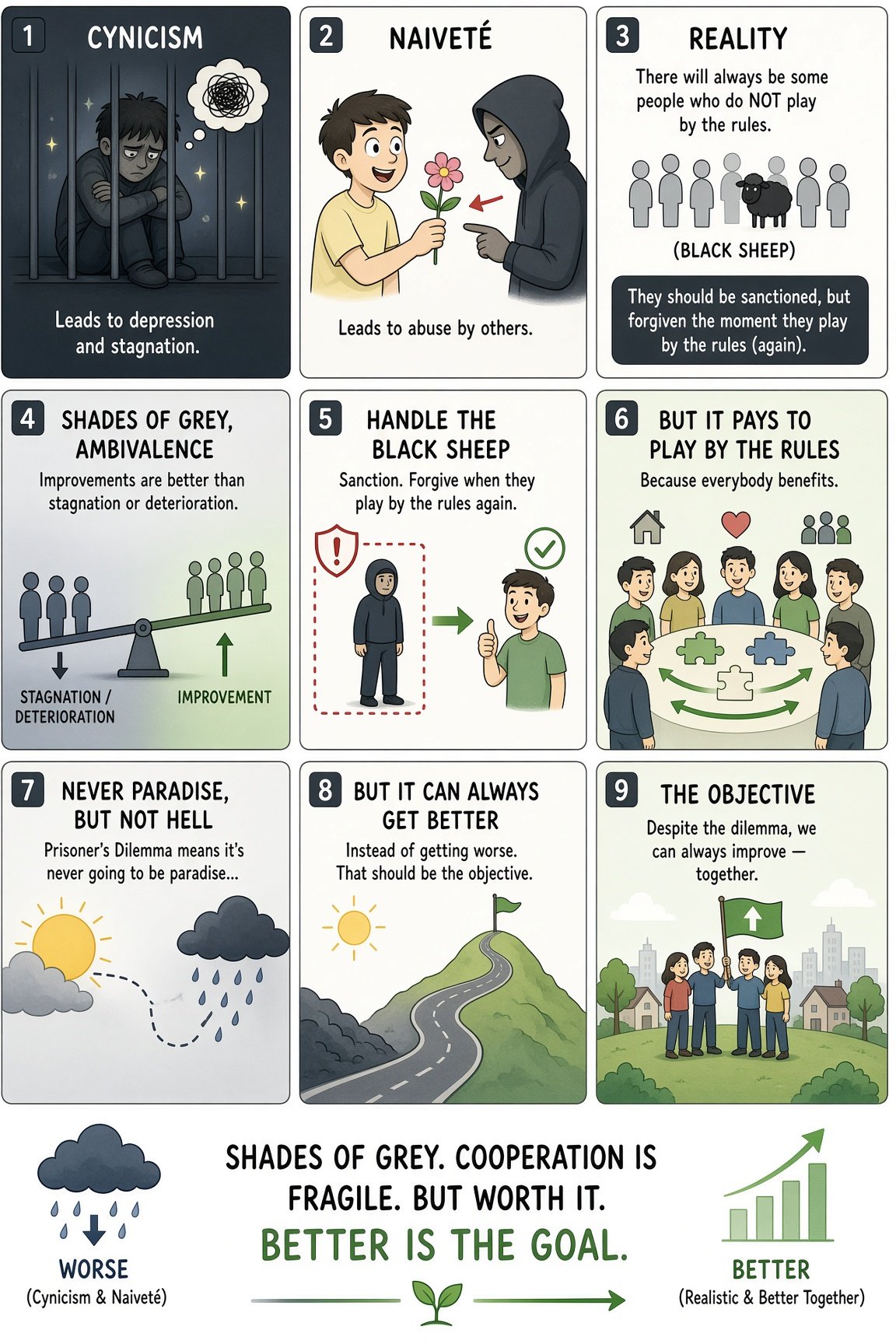
The Prisoner’s Dilemma originated in 1950 at the RAND Corporation through the work of mathematicians Merrill Flood and Melvin Dresher. They devised a two-player, non-zero-sum, non-cooperative game to explore strategic behavior and test ideas from emerging game theory (building on von Neumann, Morgenstern, and Nash), in a context that included possible applications to military strategy such as nuclear deterrence.
In their original formulation, the game was not yet called the Prisoner’s Dilemma (sometimes referred to as a “non-cooperative pair”). Flood and Dresher ran an early experiment in which economist Armen Alchian and RAND mathematician/executive John Williams played an iterated version of the game 100 times, with payoffs in pennies; the players often cooperated more than pure one-shot rational theory predicted, and the results (along with commentary) were later documented.
Albert W. Tucker (a Princeton mathematician and John Nash’s advisor) encountered the game around the same time—accounts describe him seeing it in connection with Flood and Dresher’s work. To make the abstract payoff structure intuitive and accessible (especially for a lecture to psychologists at Stanford), Tucker framed it as a story about two prisoners separately offered deals by police: remaining silent (cooperating) versus confessing/defecting, with prison sentences structured so that mutual silence is better for both than mutual confession, yet each has an individual incentive to confess regardless of the other’s choice. This narrative and the name “Prisoner’s Dilemma” stuck and popularized the game.
The dilemma quickly spread beyond RAND because it neatly captures the tension between individual rationality and collective welfare. It became a foundational example in game theory textbooks (e.g., Luce and Raiffa’s Games and Decisions), economics, political science, biology, philosophy, and psychology. Interest surged further in the late 1970s and 1980s with Robert Axelrod’s computer tournaments of the iterated Prisoner’s Dilemma, which highlighted the success of simple reciprocal strategies such as “Tit for Tat” (cooperate first, then mirror the opponent’s previous move) and helped explain how cooperation can evolve even among self-interested agents.
In short: Flood and Dresher created the mathematical structure and early experiments in 1950; Tucker supplied the memorable prisoner story and name that made it famous. The concept has since become one of the most studied and widely applied ideas in the social and behavioral sciences.
Score 1💬 1
20.08.2026
Science
The World Wide Web (WWW) was born from the need to improve information sharing among scientists. While the terms are often used interchangeably, it is important to distinguish the Web from the Internet—the infrastructure that makes the Web possible.The Origin: CERN and Tim Berners-LeeThe World Wide Web was invented in 1989 by British scientist Tim Berners-Lee while he was working at CERN (the European Organization for Nuclear Research) in Switzerland.The Vision: Berners-Lee proposed a "hypertext project" to create a global information system that would allow researchers to easily link and share documents across different computers.The First Steps: By the end of 1990, he had developed the essential building blocks:HTML (HyperText Markup Language)HTTP (HyperText Transfer Protocol)The first web browser/editorThe first web serverThe Public Launch: On April 30, 1993, CERN released the World Wide Web software into the public domain, making it free for everyone. This decision was a turning point that allowed the Web to grow into the global phenomenon it is today.Internet vs. World Wide WebIt is a common misconception that the Internet and the Web are the same thing. Think of them as a system of roads versus the traffic that travels on them:FeatureThe InternetThe World Wide Web (WWW)DefinitionThe massive "network of networks" connecting hardware worldwide.An application that runs on top of the Internet.FunctionProvides the infrastructure to move data between devices.Provides a way to access and navigate documents/media via browsers.OriginsDeveloped starting in the 1960s.Invented in 1989.ProtocolsUses TCP/IP to connect computers.Uses HTTP/HTTPS to serve pages.In short, the Internet is the physical and digital highway that connects computers globally, while the Web is the system of "pages" and "links" that we use to navigate that highway. Other services, such as email (SMTP) and file transfers (FTP), also use the Internet but are not part of the World Wide Web.
🌐
Score 2💬 0
14.07.2026
Cartoon & Humor
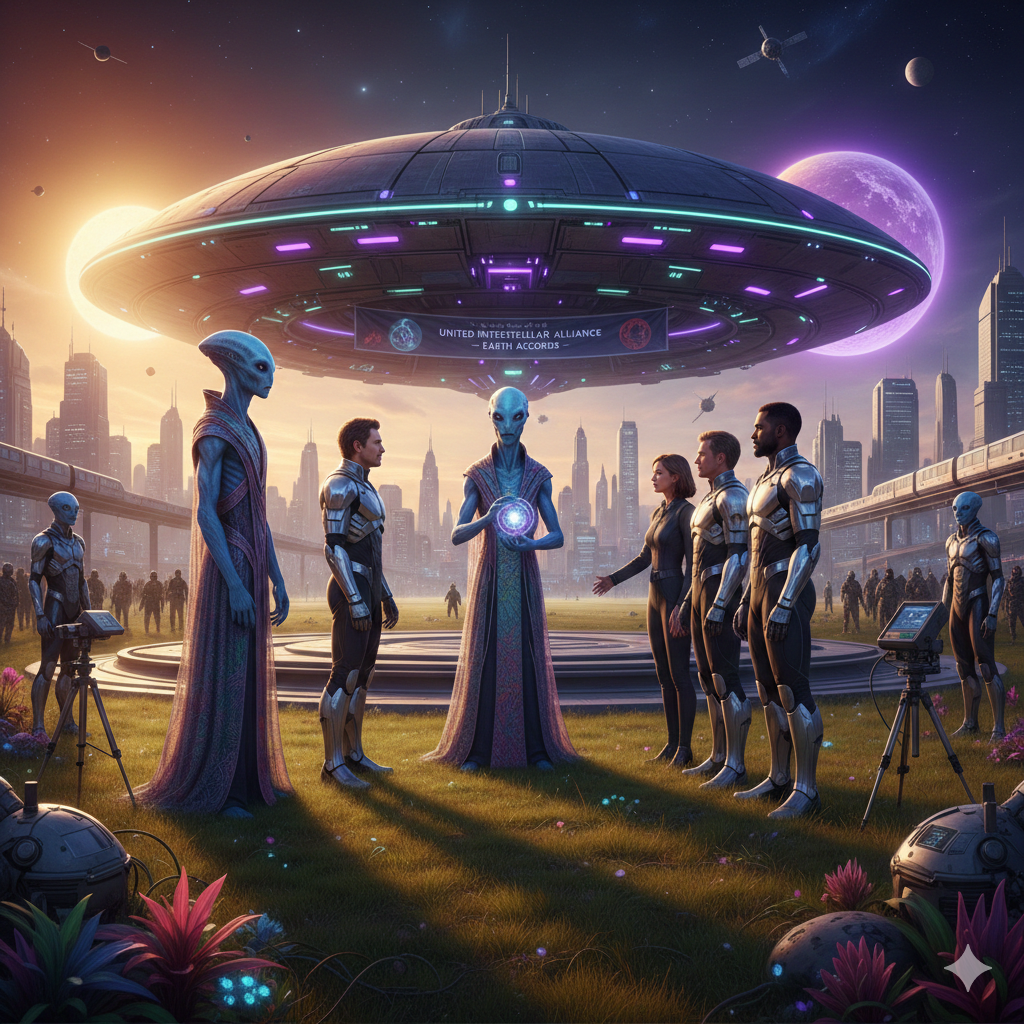
Finally we know: neither god's creation nor modern evolution designed humans - two Aliens landed with their flying saucer on prehistoric earth and created humans using parts of their own DNA
Score 1💬 0
13.07.2026
History
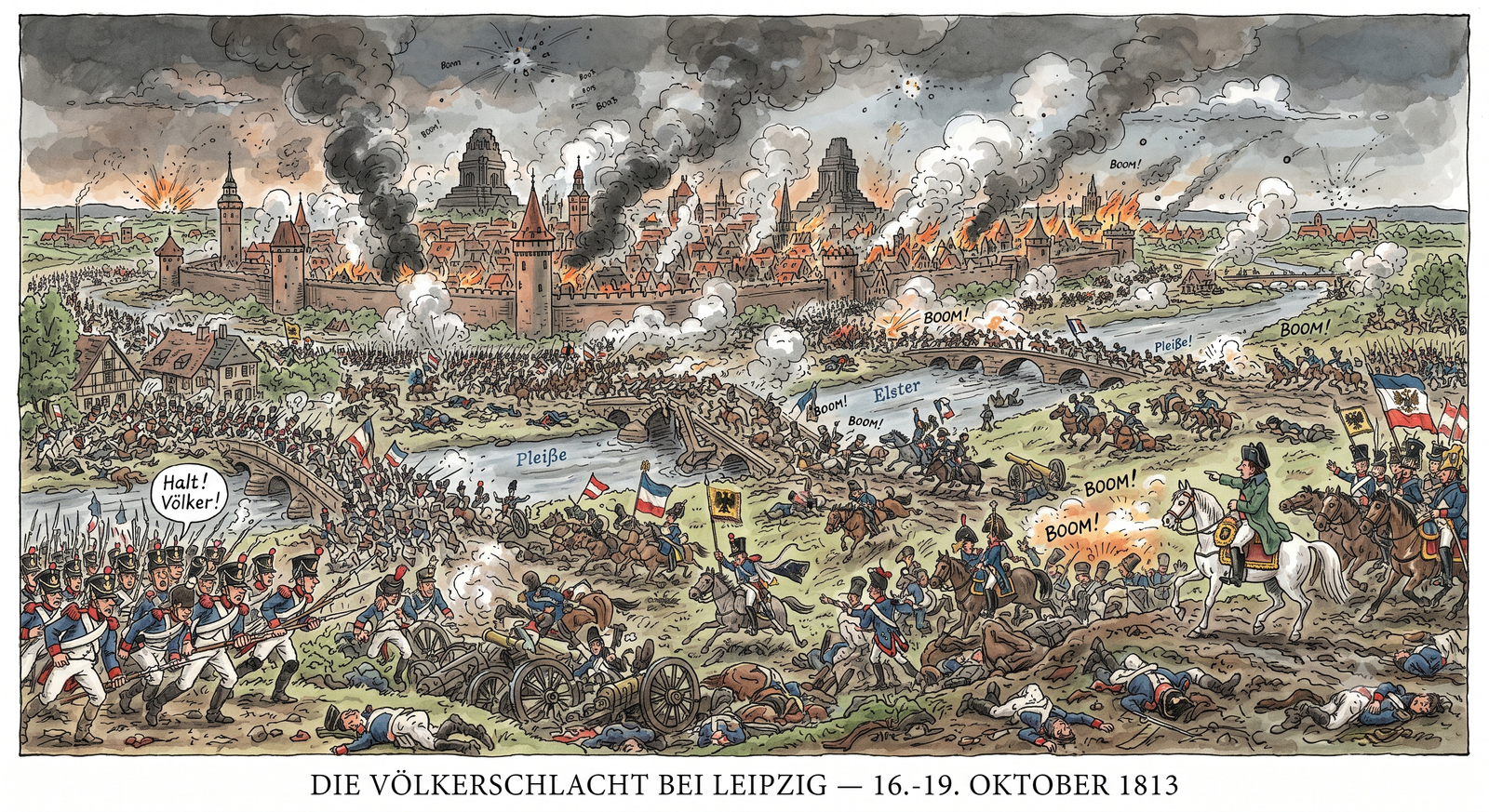
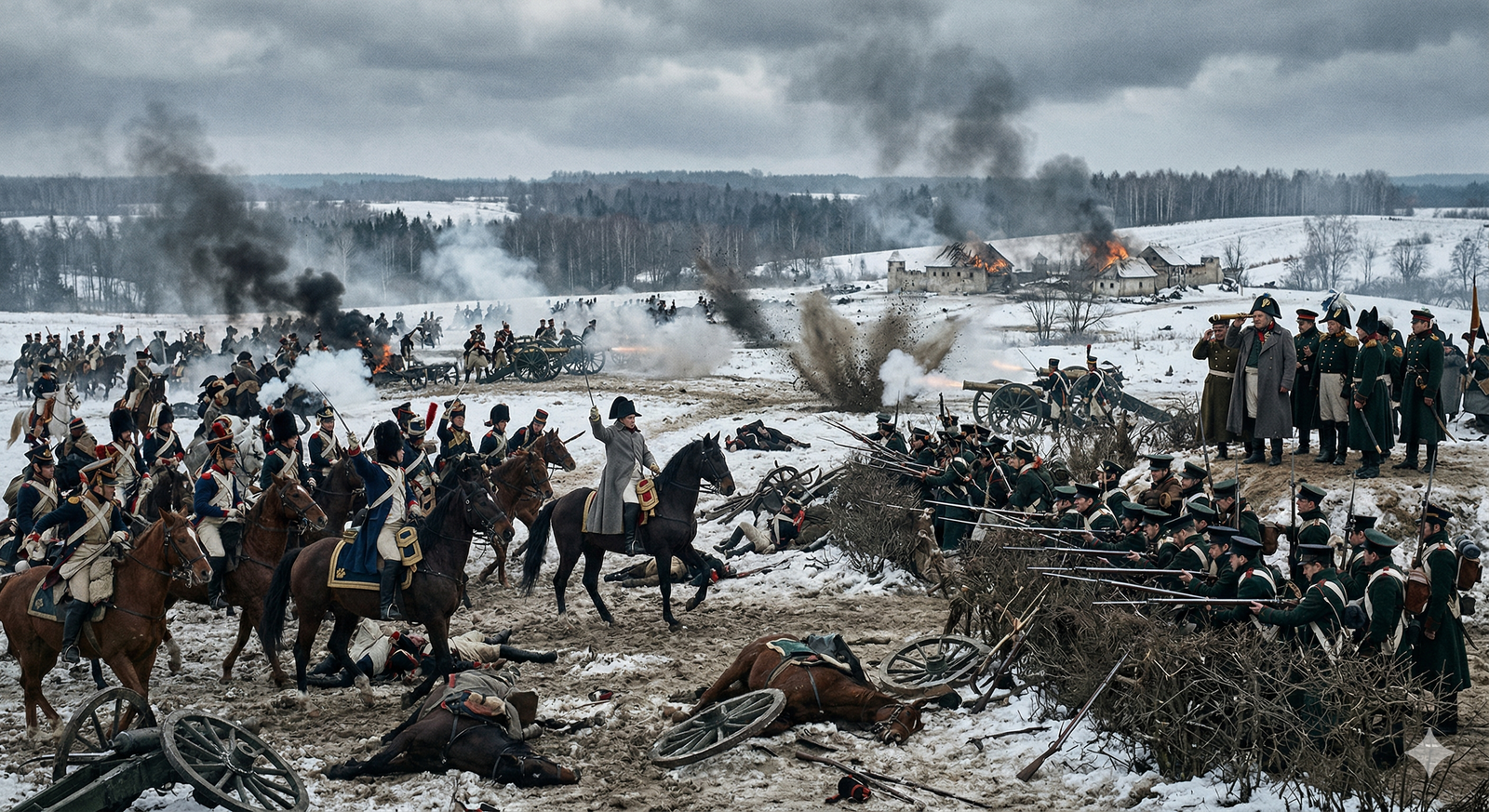
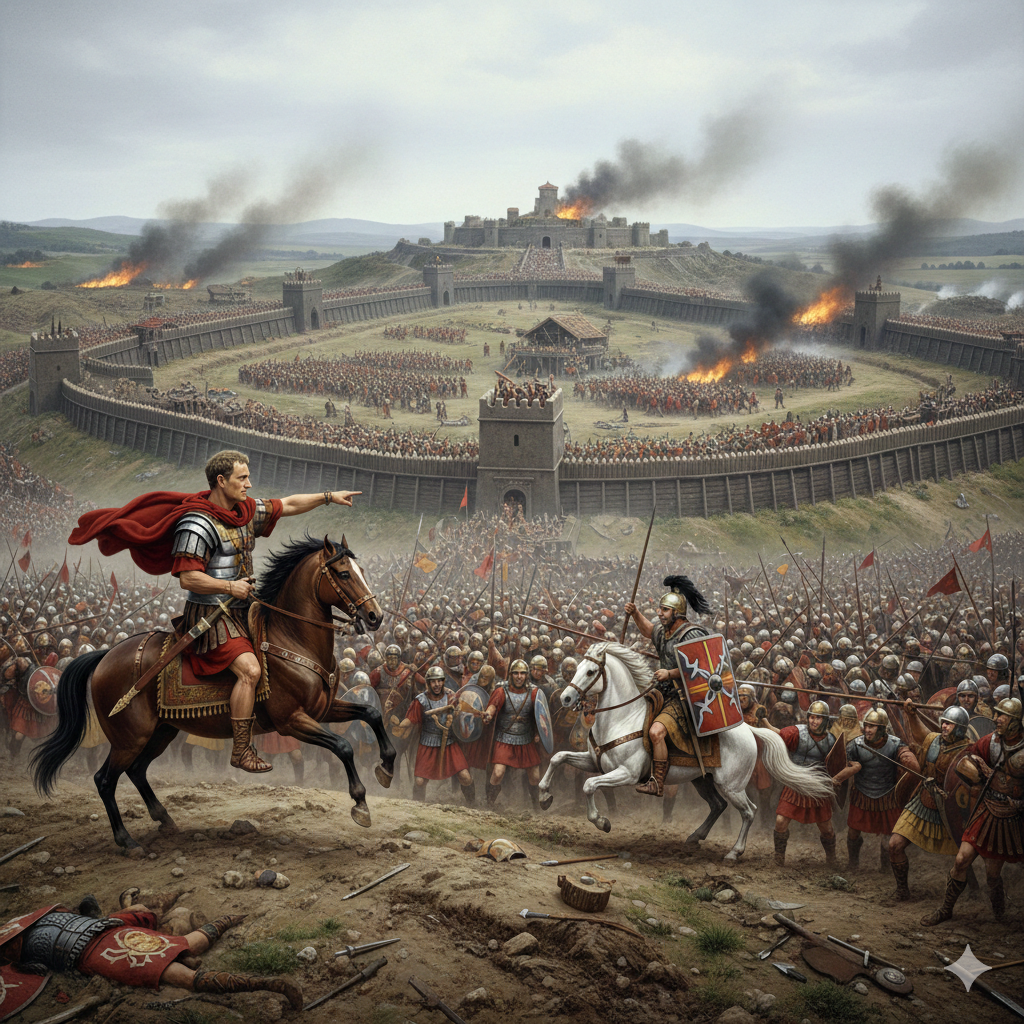
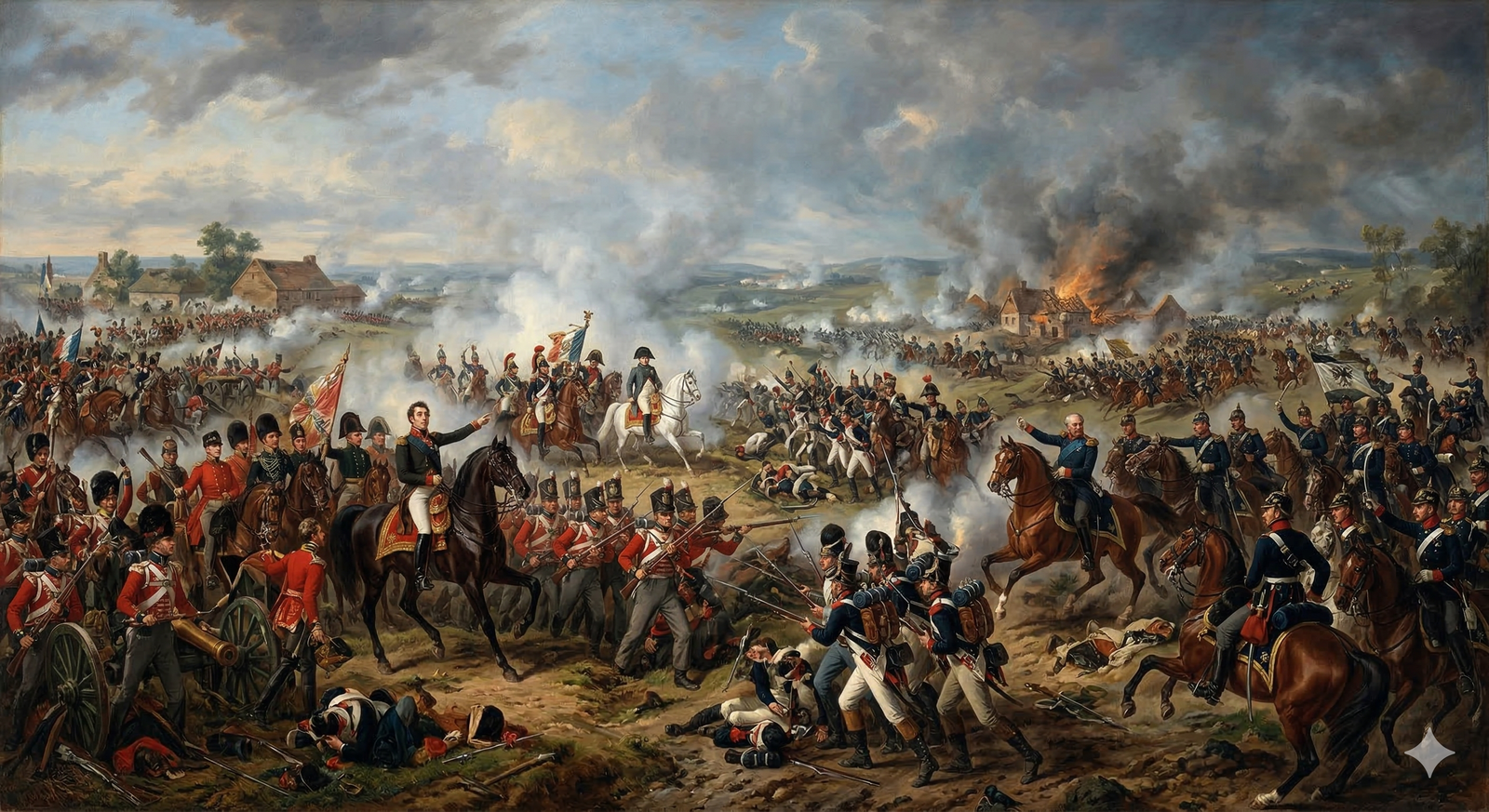
die Völkerschlacht von Leizig 1813
Die Völkerschlacht bei Leipzig (16. bis 19. Oktober 1813) war eine der bedeutendsten Schlachten der europäischen Geschichte und der entscheidende Wendepunkt in den Befreiungskriegen gegen Napoleon Bonaparte.
Gegner: Auf der einen Seite stand das französische Kaiserreich unter Napoleon Bonaparte (unterstützt durch Truppen des Rheinbundes), auf der anderen Seite die sechste Koalition (Russland, Preußen, Österreich und Schweden).
Größenordnung: Mit insgesamt über 500.000 beteiligten Soldaten aus über einem Dutzend Nationen war sie die bis dahin größte Schlacht der Weltgeschichte. Die Schlacht dauerte vier Tage und war geprägt von massiven Truppenbewegungen und blutigen Kämpfen rund um die Stadt Leipzig. Nach anfänglichen Erfolgen der Franzosen erlangten die zahlenmäßig überlegenen Alliierten die Oberhand. Am 19. Oktober musste sich Napoleon geschlagen geben und den Rückzug nach Frankreich antreten. Ein tragisches Ereignis während des Rückzugs war die verfrühte Sprengung der Elsterbrücke, durch die Tausende französische Soldaten abgeschnitten wurden, ertranken oder in Gefangenschaft gerieten.
Schätzungsweise 120.000 Soldaten fielen oder wurden verwundet. Zudem litt die Stadt Leipzig unter den Folgen der Schlacht,
Ende der Vorherrschaft: Mit der Niederlage bei Leipzig endete die französische Vorherrschaft über weite Teile Europas und der deutschen Staaten. Die Schlacht gilt als der entscheidende Schlag, der den Weg für den Zusammenbruch des napoleonischen Systems ebnete (das 1815 bei Waterloo endgültig endete).Der Sieg gegen Napoleon trug in den deutschen Ländern maßgeblich zur Entstehung eines nationalen Identitätsgefühls bei, auch wenn die politischen Verhältnisse auf dem Wiener Kongress 1814/15 zunächst wieder eine konservative Ordnung herstellten.
Score 1💬 1
13.07.2026
Cartoon & Humor
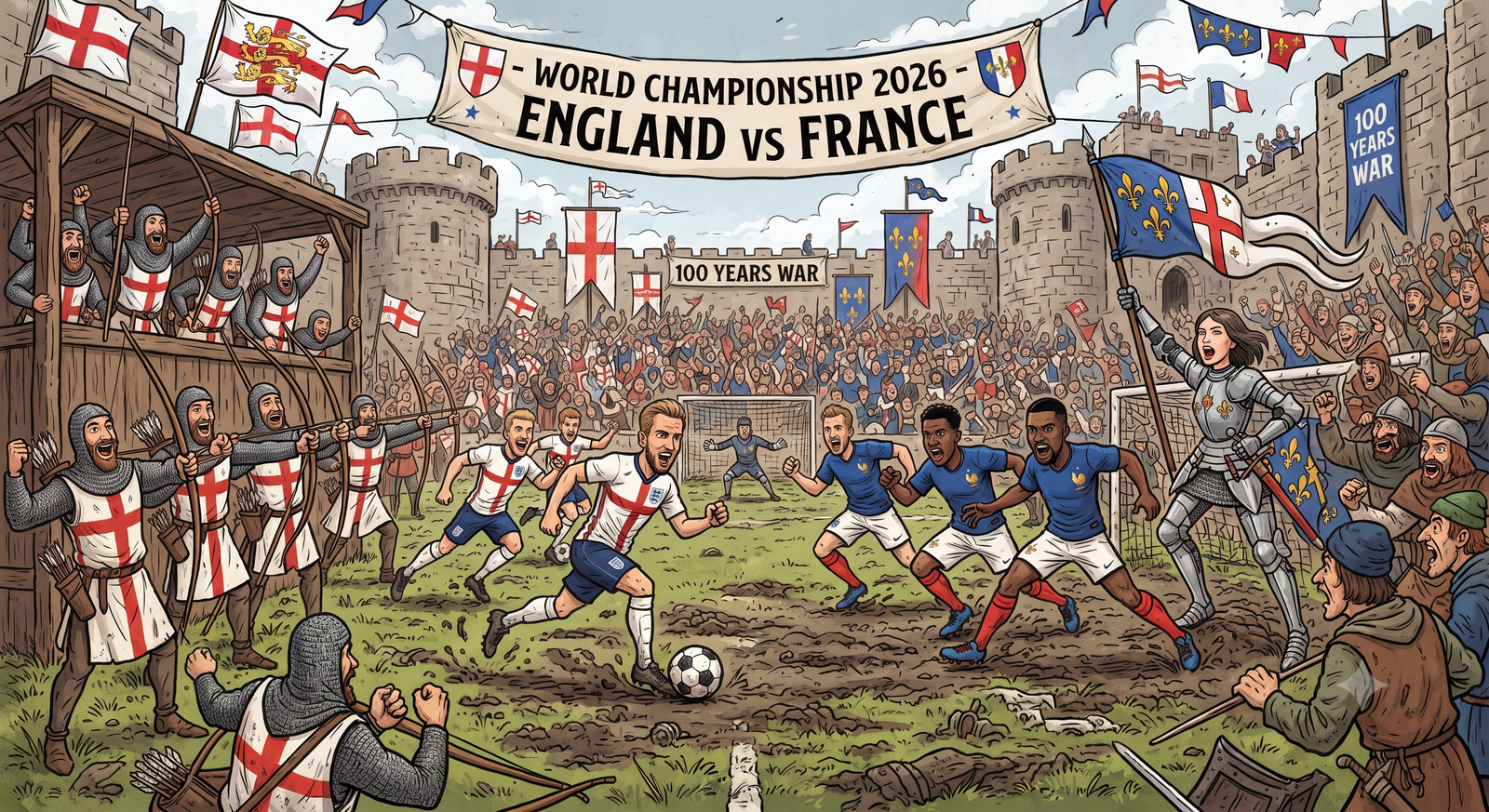
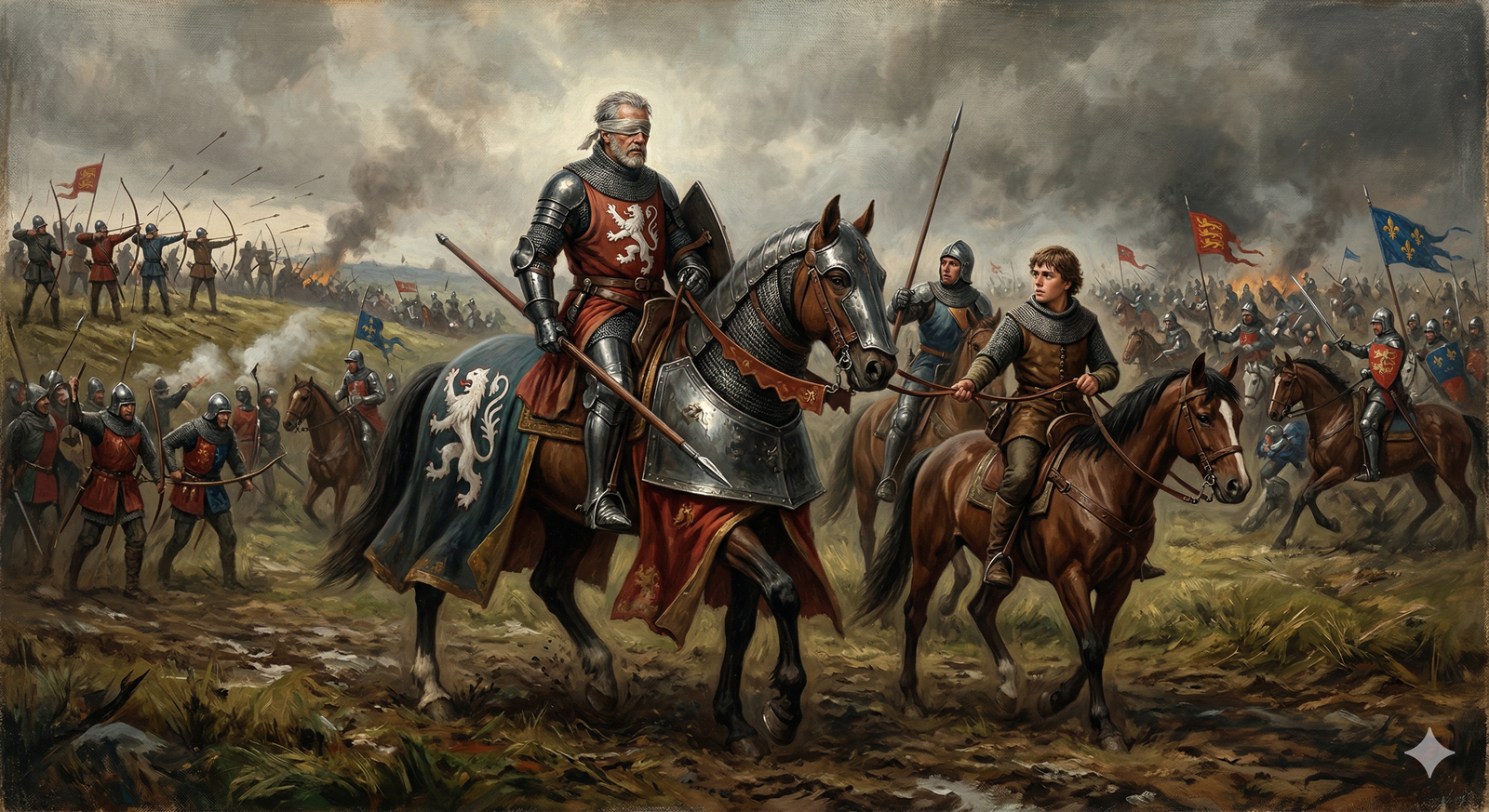
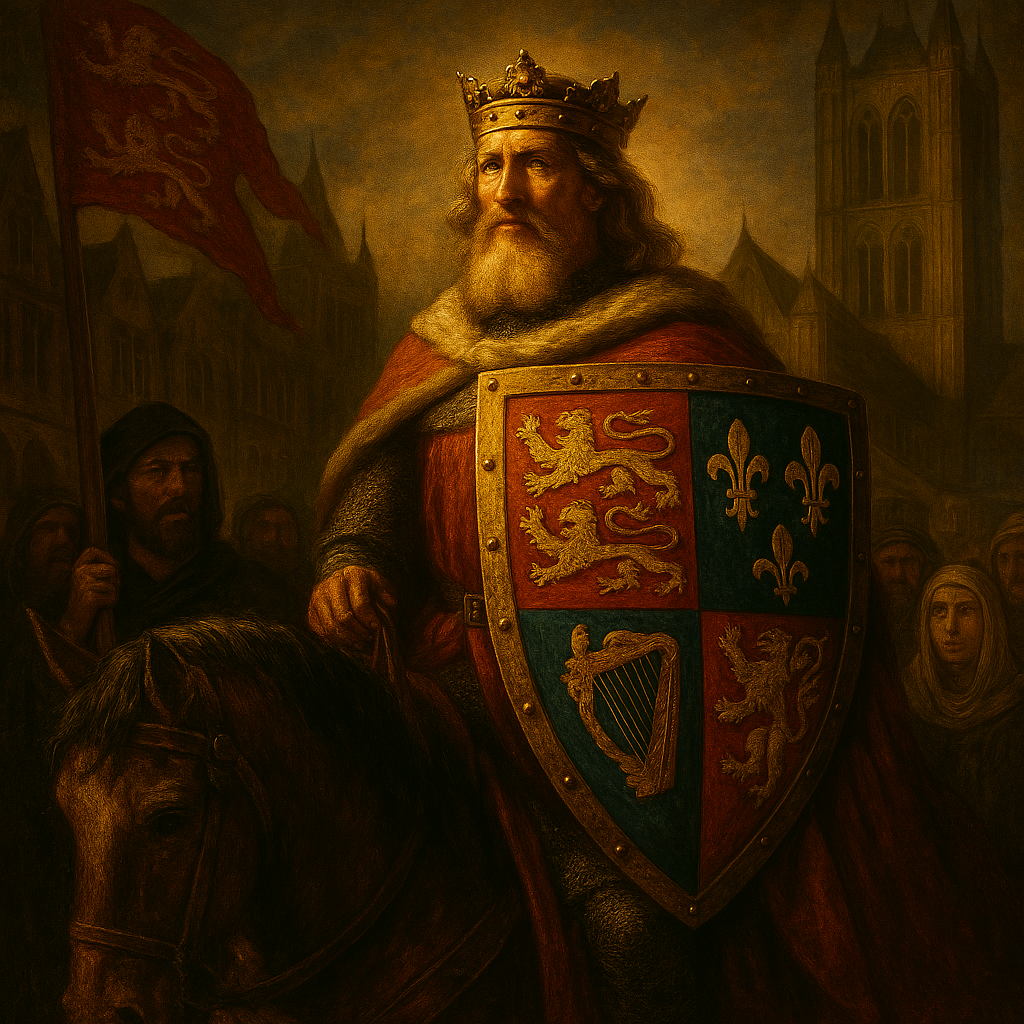
the real final of the soccer world championship: England vs France! The epic battle takes place during the 100 years war, England is supported by medieval longbow archers while France is helped by jeanne d'arc. In the 100 years war, France defeated the English - will the English this time revenge their loss?
Score 2💬 1
12.07.2026
Cartoon & Humor
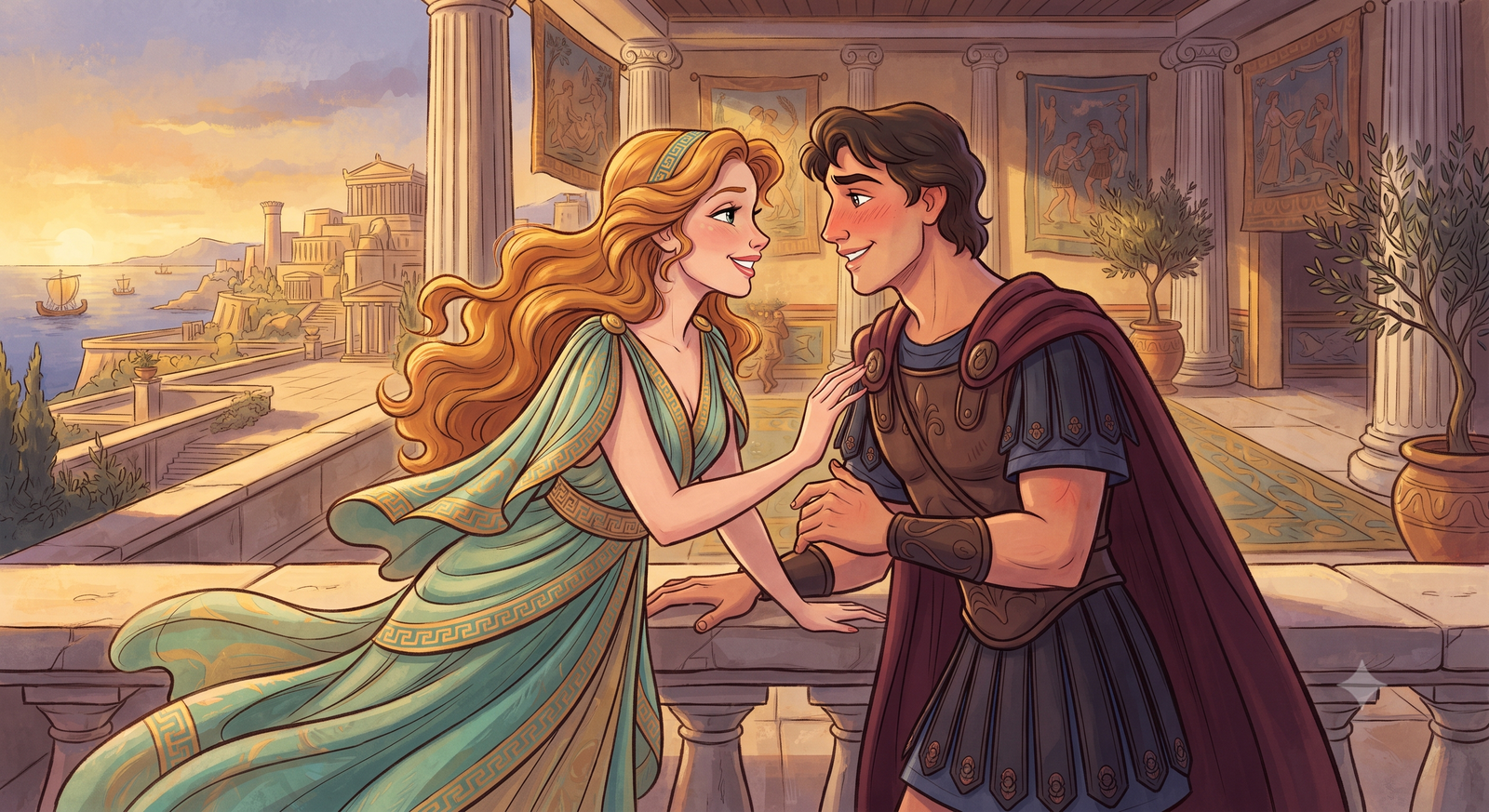
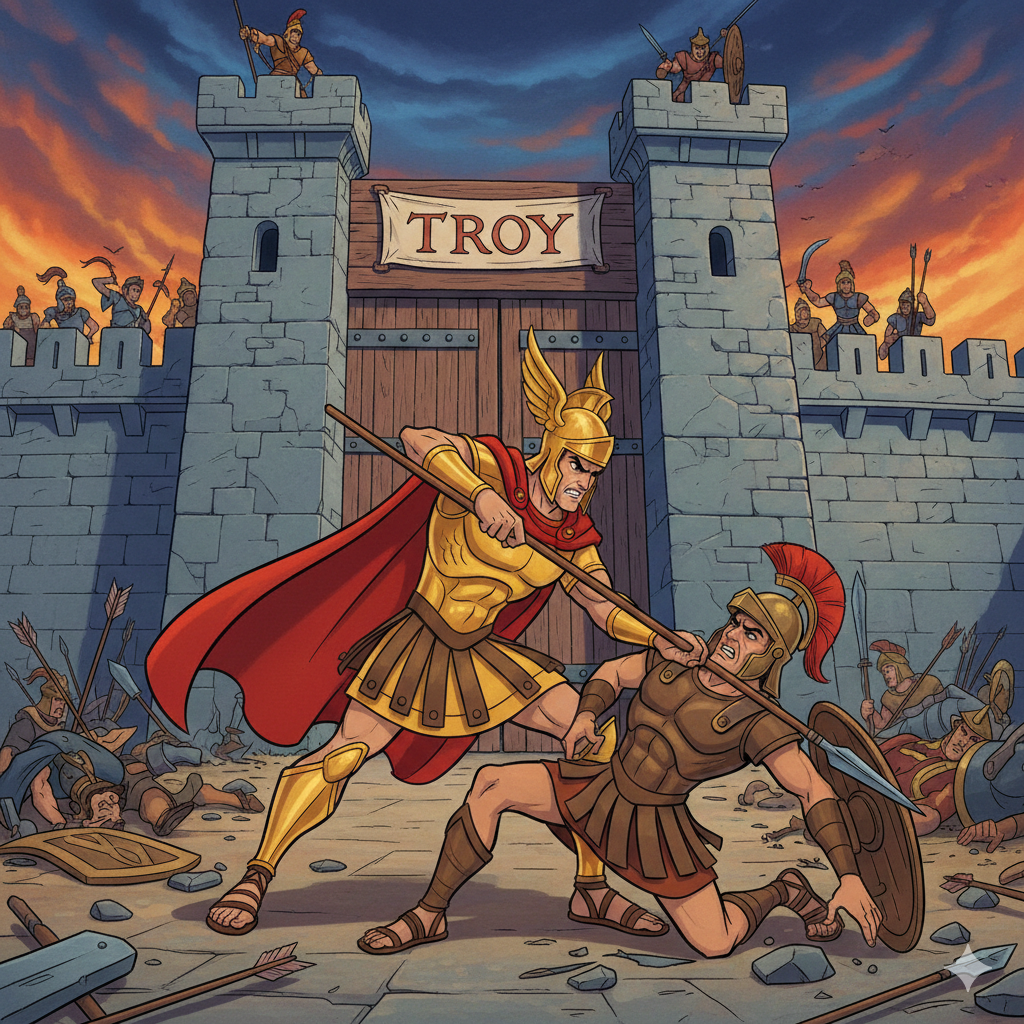
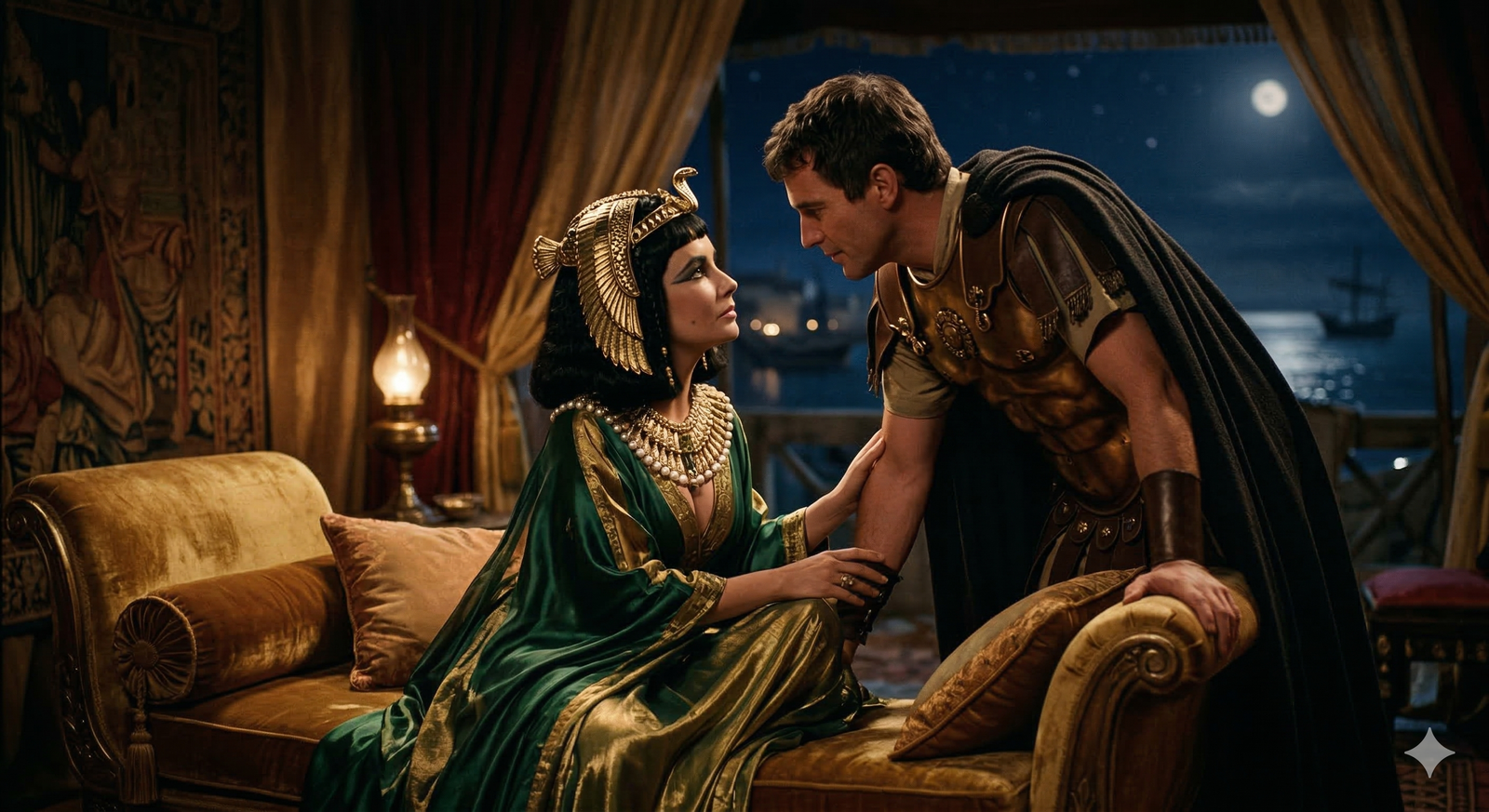
Helen of Troy seduces Paris
The Judgement of ParisThe conflict began not on a battlefield, but at a wedding. When Eris, the goddess of discord, was excluded from the wedding of Peleus and Thetis, she threw a golden apple inscribed "to the fairest" into the crowd. Three goddesses—Hera, Athena, and Aphrodite—claimed the prize. Paris, a prince of Troy, was chosen to judge them. Each offered him a bribe: Hera promised him power over kingdoms. Athena offered him wisdom and victory in war. Aphrodite promised him the love of the world’s most beautiful woman: Helen of Sparta. Paris chose Aphrodite’s offer. At the time, Helen was the wife of King Menelaus of Sparta. When Paris traveled to Sparta and took Helen to Troy—whether by seduction or abduction—he ignited a geopolitical crisis. The Trojan WarMenelaus, enraged, invoked the "Oath of Tyndareus," a pact made by Helen’s former suitors to defend her husband. He enlisted his brother, Agamemnon of Mycenae, to lead a massive coalition of Greek forces against Troy. The Siege: The Greeks laid siege to Troy for ten years. The war was defined by the heroism of figures like Achilles and Hector, and the heavy influence of the gods who took sides in the conflict. The Fall of Troy: The stalemate was finally broken by the famous ruse of the Trojan Horse. The Greeks hid soldiers inside a massive wooden horse, which the Trojans brought inside their city walls. Once inside, the Greeks emerged, opened the gates for their army, and sacked the city. Helen’s FateHelen’s role in the war is portrayed with complexity. In many accounts, she lived in Troy, feeling remorse and shame for the destruction her presence caused. Upon the city's fall, she reunited with Menelaus and returned to Sparta. Other, more obscure legends suggest different fates, such as her being taken to Mount Olympus or meeting a tragic end on the island of Rhodes.
Score 2💬 1
12.07.2026
History
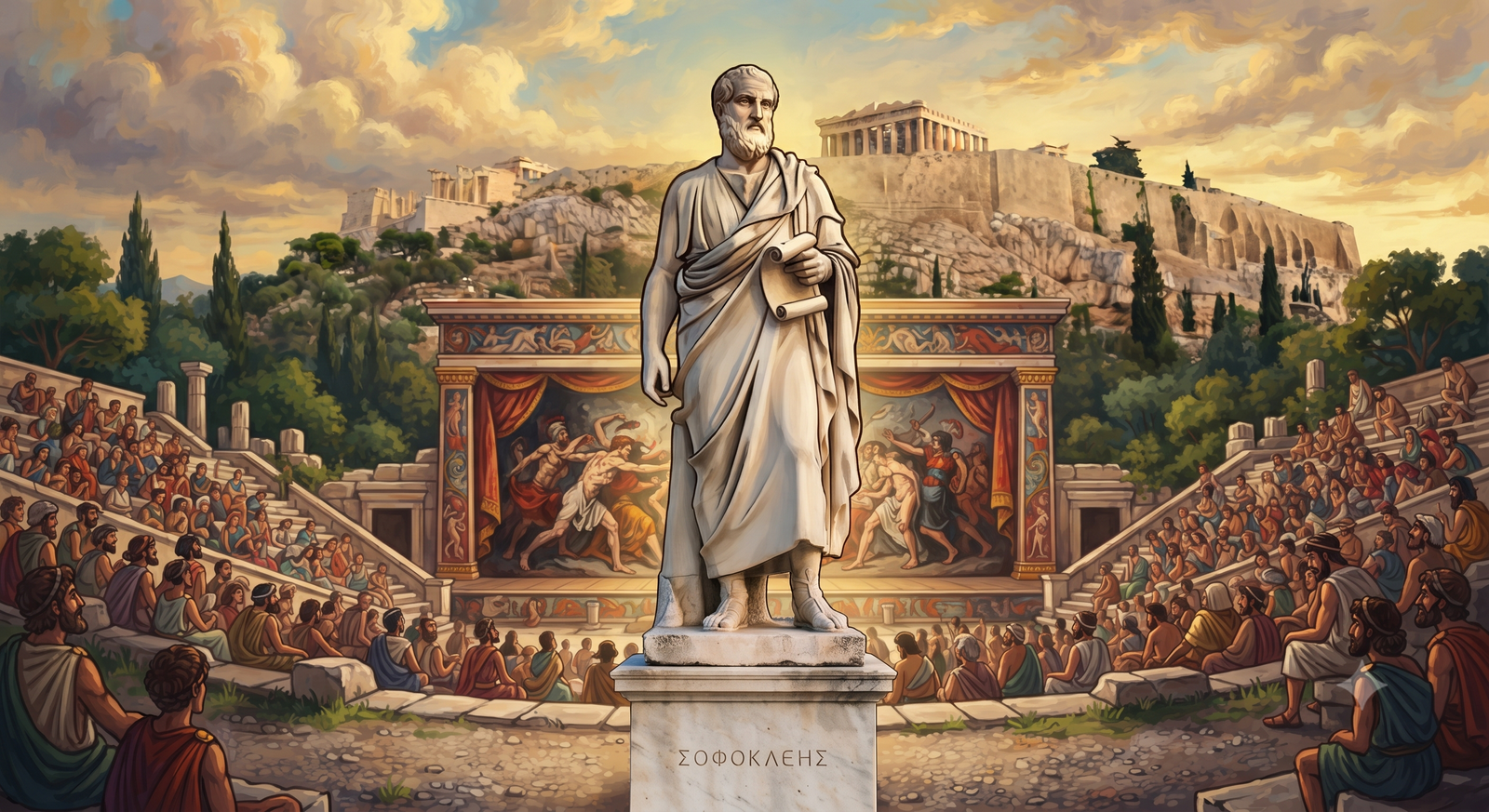
Sophocles (c. 496–406 BCE) was one of the three great ancient Greek tragedians, alongside Aeschylus and Euripides. A central figure in the cultural life of Athens during its Golden Age, he transformed the nature of drama through his innovative storytelling and technical contributions. Born in the deme of Colonus, near Athens, Sophocles was the son of a wealthy weapons-maker. He was well-educated in music, dance, and athletics, and was known for his charm, grace, and public engagement.
Public Service: Beyond his career as a playwright, he held several high-ranking civic and military roles, including serving as a treasurer of the Delian League and as a general (strategos) during the siege of Samos.
He began his career in 468 BCE by defeating the legendary Aeschylus in a dramatic competition. Throughout his career, he wrote over 120 plays and won the first prize at the Dionysia festival between 18 and 24 times; he famously never placed lower than second.
Sophocles is credited with significant advancements in theatrical craft:
Third Actor: He is widely recognized for introducing a third actor to the stage, which allowed for more complex interaction and character dynamics.He is believed to have increased the size of the chorus from 12 to 15 members.
Visuals: He introduced the use of painted scenery and specialized props to help establish the atmosphere and location of his plays.
Character Development: He is noted for his focus on psychological depth and the humanity of his characters, moving away from purely divine or archetypal portrayals.
While he wrote more than 120 plays, only seven have survived in their complete form:
Ajax Honor, suicide, and the psychological impact of war.
Antigone The conflict between moral/divine duty and civic law.
Women of Trachis The tragic myth of Heracles and his wife, Deianira.
Oedipus Rex The inevitability of fate and the irony of human knowledge.
Electra:The pursuit of justice and revenge for a father’s murder.
Philoctetes:Isolation, moral dilemma, and the nature of persuasion.
Oedipus at Colonus:The final days and spiritual transformation of Oedipus.
Score 3💬 1
12.07.2026
Cartoon & Humor
Unterhaltung mit Gemini
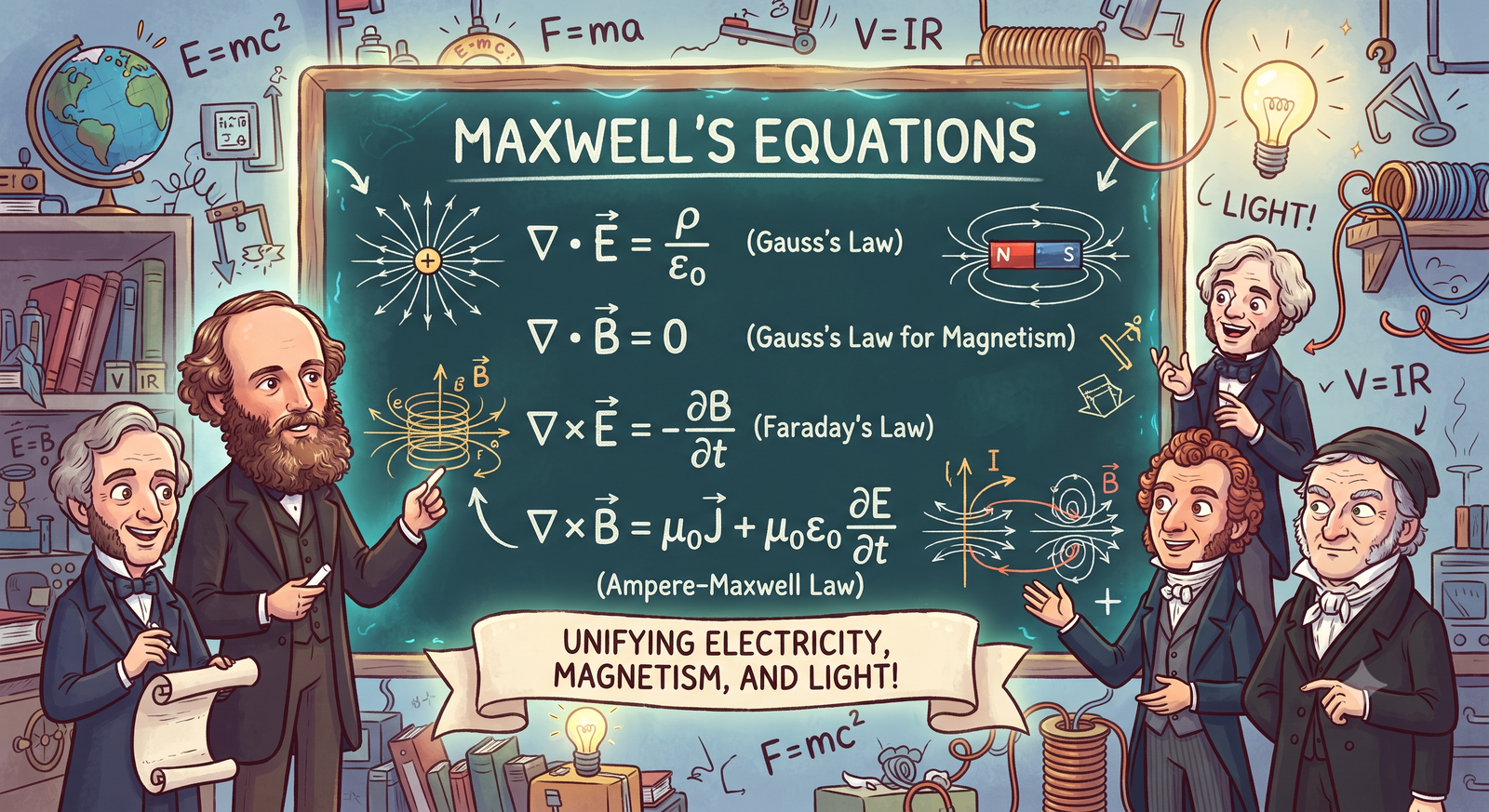
Maxwell equations
Maxwell's equations are a set of four fundamental partial differential equations that, together with the Lorentz force law, form the foundation of classical electromagnetism, optics, and electric circuits. They describe how electric and magnetic fields are generated by charges, currents, and by each other.
In their modern form, using vector calculus, they are expressed as follows:
Electric currents and changing electric fields create magnetic fields.
Key Variables and Constants
E: Electric field
B: Magnetic field
ρ: Electric charge density
J: Electric current density
Vacuum permeability
∇⋅: Divergence operator
∇×: Curl operator
Electromagnetic Waves: One of the most profound results of these equations is the prediction that time-varying electric and magnetic fields propagate through space as waves moving at the speed of light, c=
This unified optics with electromagnetism.
Conservation of Charge: The equations are consistent with the principle of charge conservation, which states that the total electric charge in an isolated system remains constant over time.
Relativistic Consistency: Maxwell's equations are inherently compatible with special relativity. In fact, Albert Einstein developed the theory of special relativity in part to reconcile the laws of mechanics with the behavior of electromagnetic fields described by Maxwell.
Score 2💬 0
11.07.2026
Cartoon & Humor
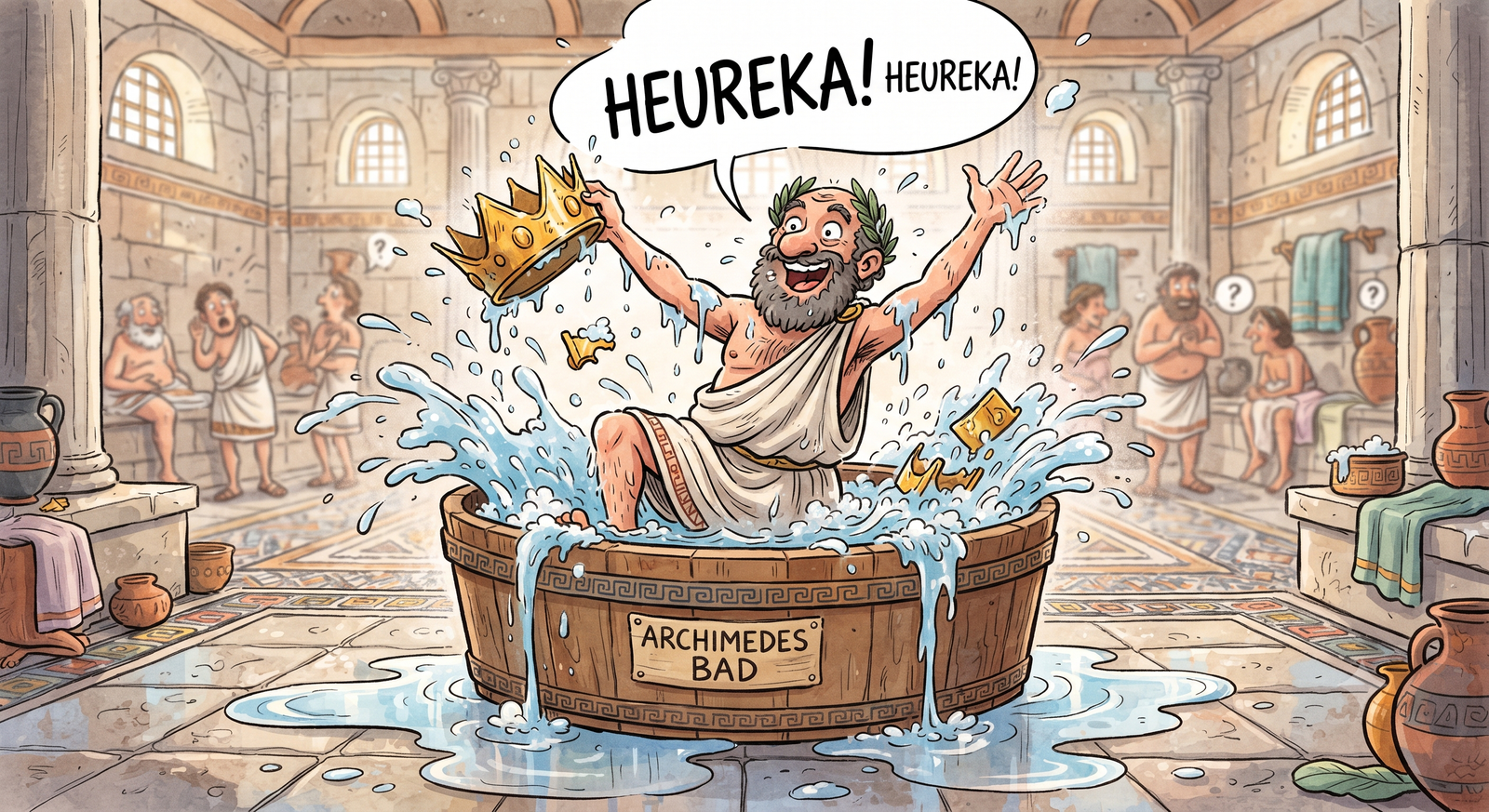
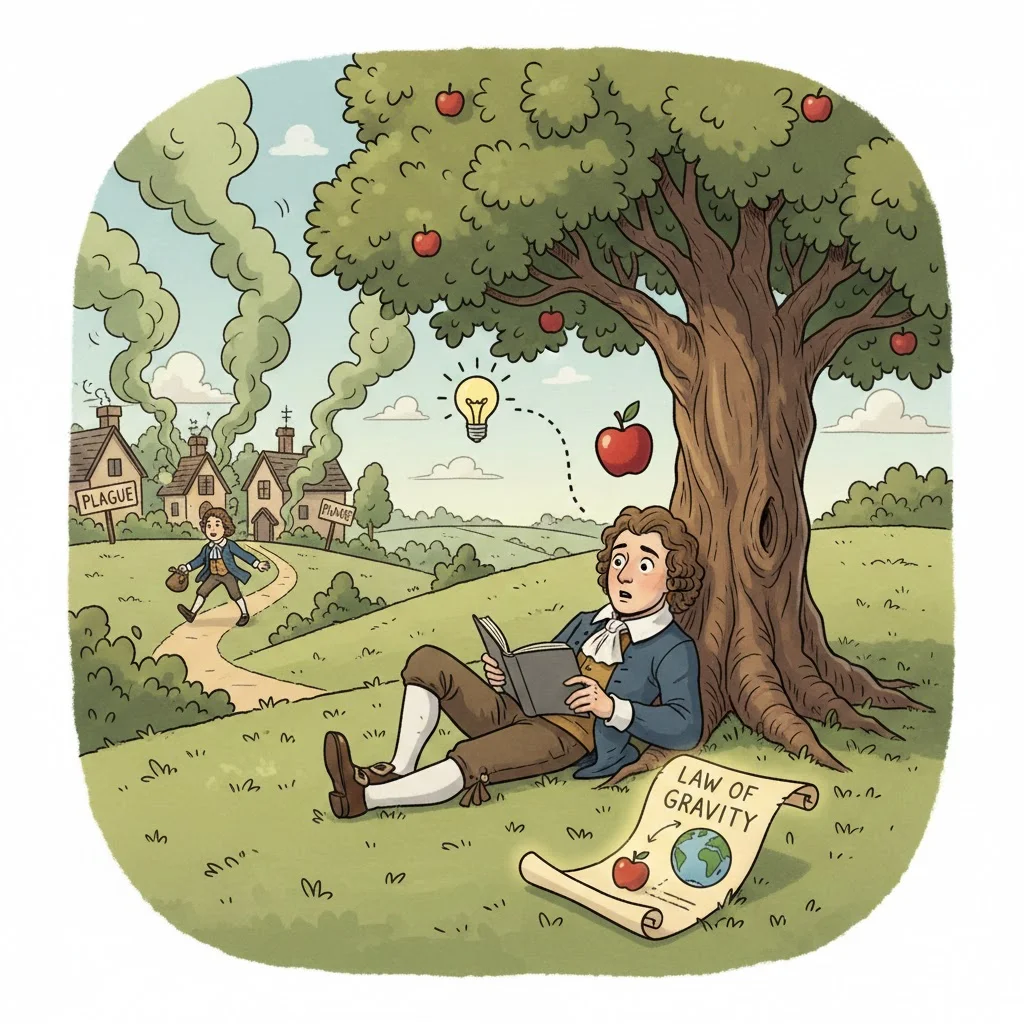
Archimedes determined the purity of King Hiero II's crown by utilizing the principles of density and buoyancy, famously leading to his "Eureka!" discovery
Because the crown had an irregular shape, Archimedes could not simply measure its dimensions to calculate its volumeInstead, he used the fact that different materials of the same mass occupy different volumes due to their varying densities
The Method
While there are variations in the historical accounts of his exact procedure, the most commonly cited methods include:
Water Displacement: Archimedes realized that when an object is submerged in water, it displaces a volume of liquid equal to its own volume By comparing the water displaced by the crown against the water displaced by an equal mass of pure gold, he could determine if they occupied the same space If the crown displaced more water than the pure gold, it meant the crown had a larger volume—and therefore a lower density—proving it was mixed with a lighter metal like silver
The Buoyancy/Scale Method: A more precise alternative involves measuring the "apparent weight" of the objects while submerged By hanging the crown on one side of a balance scale and an equal mass of pure gold on the other, Archimedes could submerge both in water Because the crown was less dense, it experienced a greater buoyant force, causing the scale to tilt This method avoided the measurement errors associated with simply measuring overflowing water
Why This Worked
The specific weight (or density) of gold is significantly higher than that of silver By proving that the crown's density was lower than that of pure gold, Archimedes was able to mathematically demonstrate that the goldsmith had dishonestly alloyed the gold with a cheaper, less dense metal
Score 3💬 0
11.07.2026
Cartoon & Humor
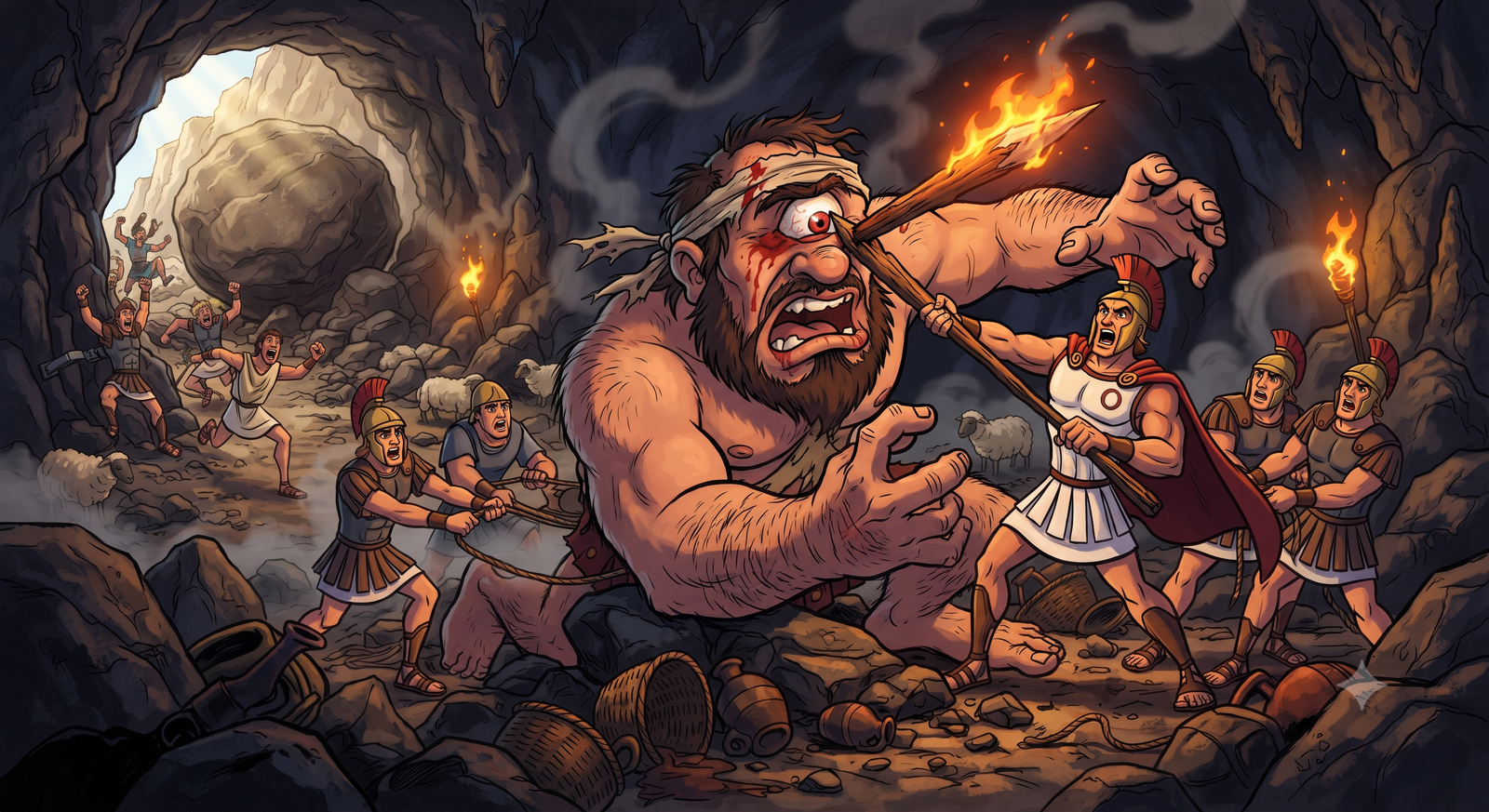
While the Iliad focuses on the events of the Trojan War, the Odyssey recounts Odysseus's ten-year journey home to Ithaca following that war. The encounter with the Cyclops, named Polyphemus, is found in Book 9 of the Odyssey. In this episode, Odysseus and his men become trapped in the Cyclops's cave. Odysseus defeats Polyphemus by: Outsmarting him: He gets the giant drunk on wine and tells him his name is "Nobody". Blinding him: While the Cyclops sleeps, Odysseus and his men drive a sharpened, heated stake into his single eye. Escaping: When other Cyclopes come to investigate Polyphemus's cries, he tells them "Nobody is killing me," causing them to leave him alone. Odysseus and his men then escape by clinging to the undersides of the giant's sheep as they leave the cave. Odysseus’s decision to reveal his true identity to Polyphemus after escaping is a pivotal moment in the poem, as it leads the Cyclops to call upon his father, Poseidon, to curse Odysseus's journey home.
Score 2💬 0
10.07.2026
Science
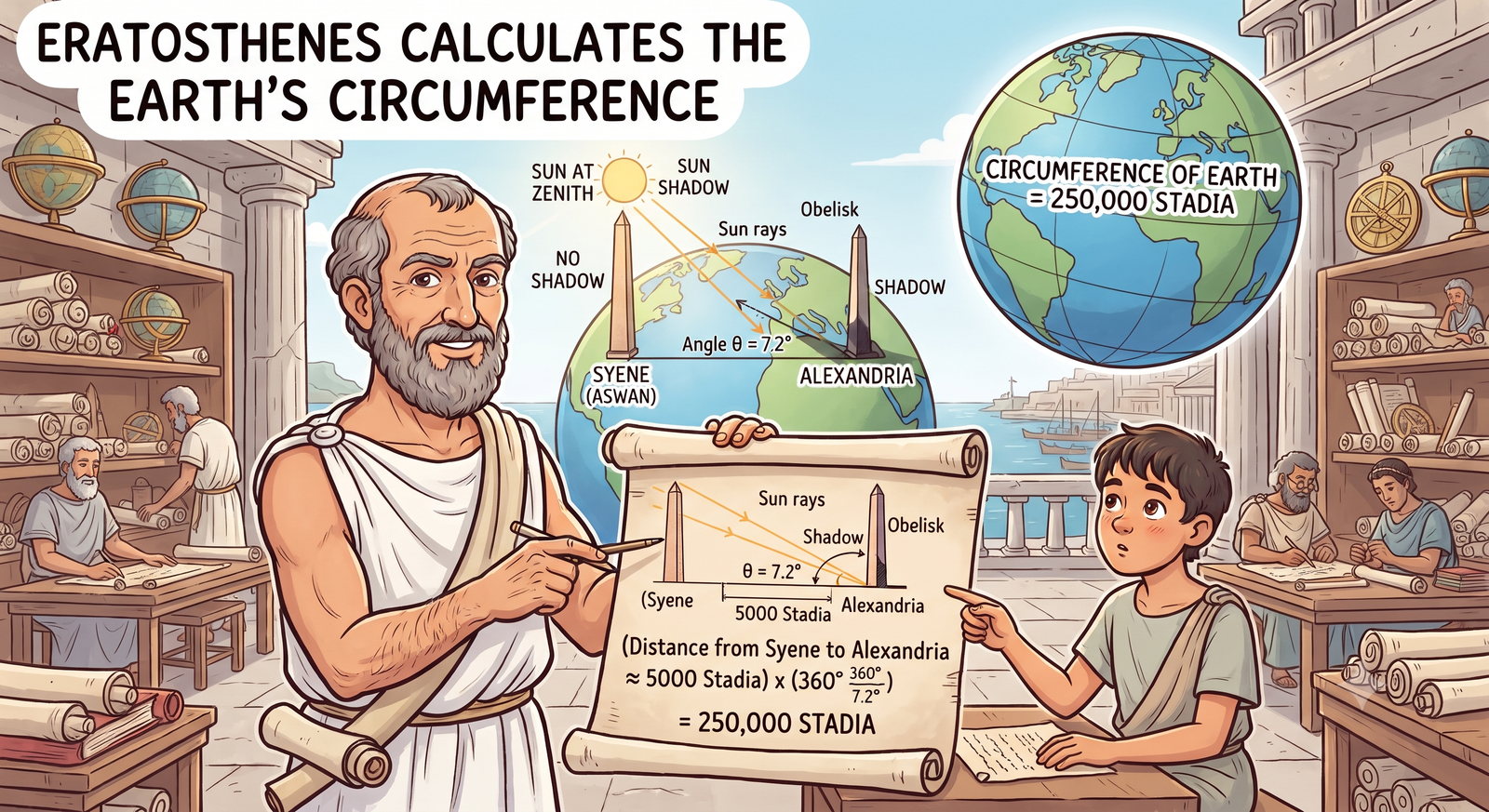
Around 240 B.C., the Greek scholar Eratosthenes performed one of history's most famous scientific calculations by determining the Earth's circumference using only geometry, basic observation, and a known distance between two cities. The MethodEratosthenes' calculation relied on the observation of the Sun at two different locations—Syene (modern-day Aswan, Egypt) and Alexandria—at the exact same time. The Observation in Syene: Eratosthenes noted that at noon on the summer solstice, the Sun was directly overhead in Syene. He knew this because a vertical object cast no shadow, and sunlight shone directly into the bottom of a deep well. The Measurement in Alexandria: At the same time in Alexandria, he measured the shadow cast by a vertical pillar (a gnomon). By using the height of the pillar and the length of the shadow, he used geometry to calculate the angle of the Sun’s rays relative to the vertical, which he found to be approximately 7.2 degrees (about 1/50th of a 360-degree circle). The Calculation: Assuming that the Earth was spherical and that the Sun's rays were parallel, he realized the 7.2-degree angle in Alexandria must correspond to the angle between the two cities as measured from the center of the Earth. He took the known distance between Alexandria and Syene (roughly 5,000 stadia) and multiplied it by 50 to complete the full circle. The ResultsDepending on the exact length of the "stadion" unit used at the time—which is still debated by historians—Eratosthenes' final result was remarkably close to the modern accepted value. His estimate of roughly 250,000 stadia converts to approximately 25,000 miles (40,000 kilometers), which is very near the Earth's actual polar circumference of about 24,860 miles (40,008 kilometers).
Score 2💬 0
10.07.2026
Cartoon & Humor
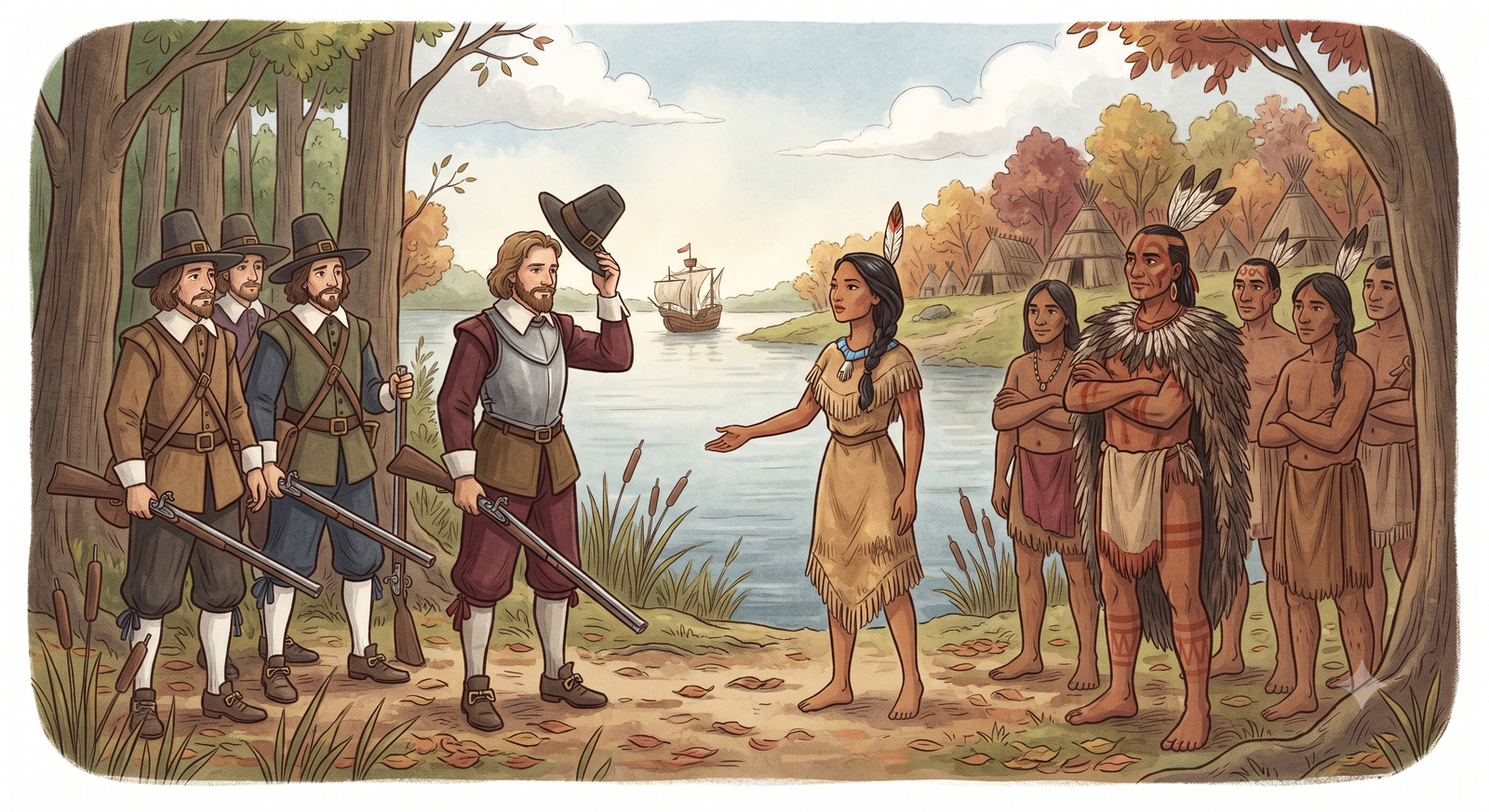
Pocahontas welcomes the British settlers in 1607
Score 0💬 0
09.07.2026
Cartoon & Humor
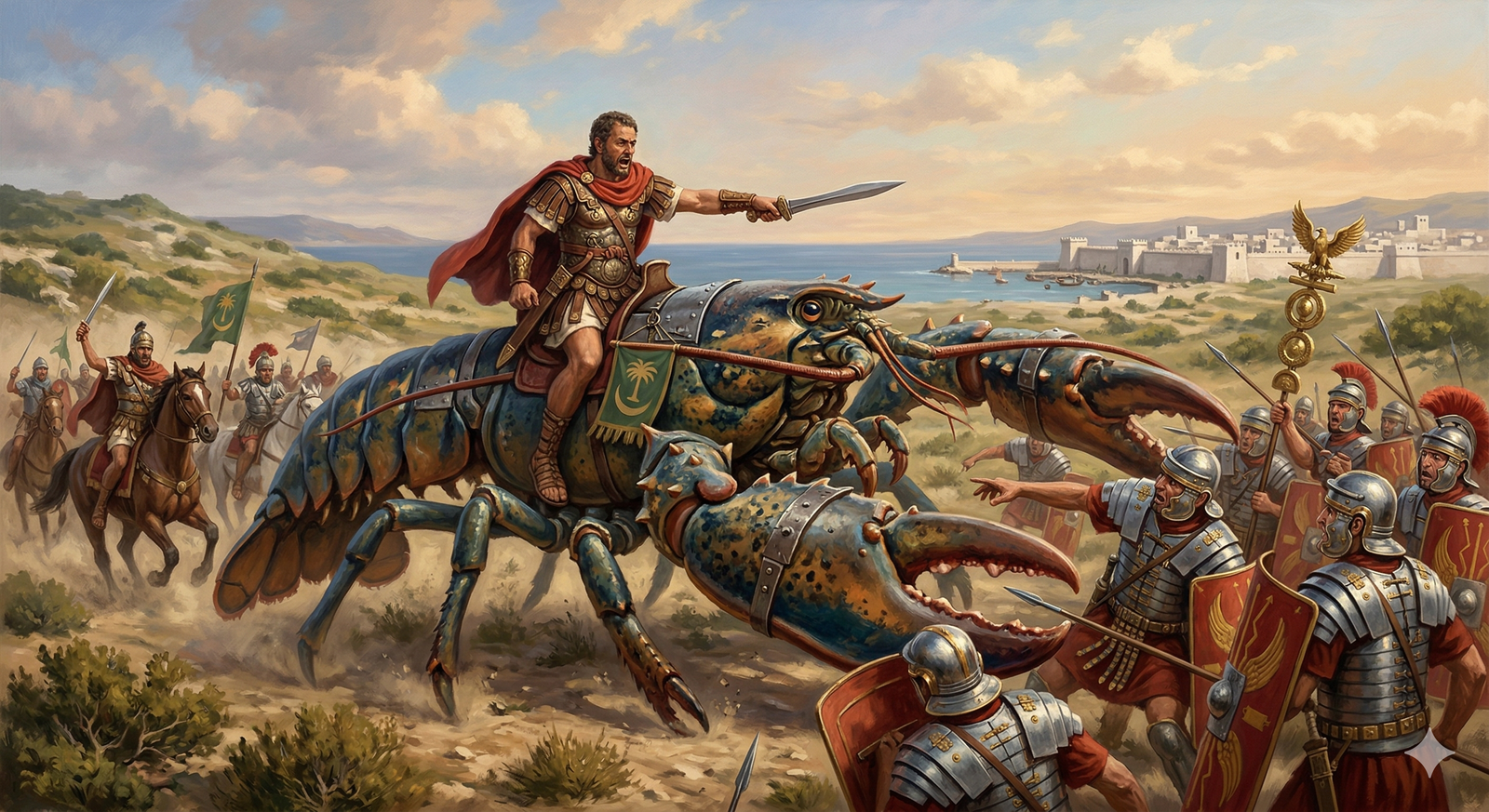
Atlantic Lobsters are huge soccer fans, especially in the times of word-championships
Score 0💬 0
09.07.2026
Cartoon & Humor
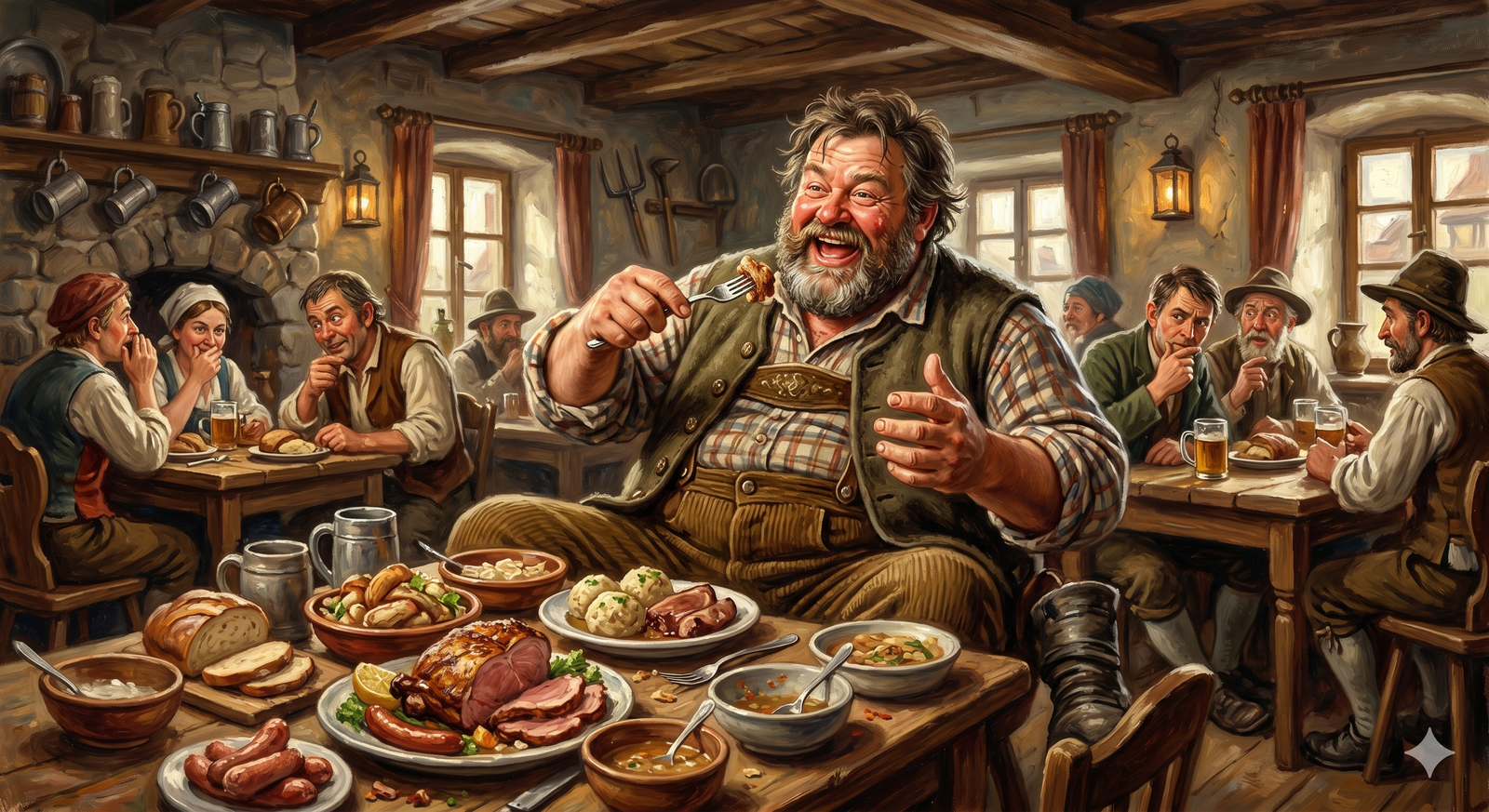
a horizontally challenged Austrian devours incredible quantities of food
Score 0💬 0
09.07.2026
Cartoon & Humor
Score 0💬 0
09.07.2026
Science
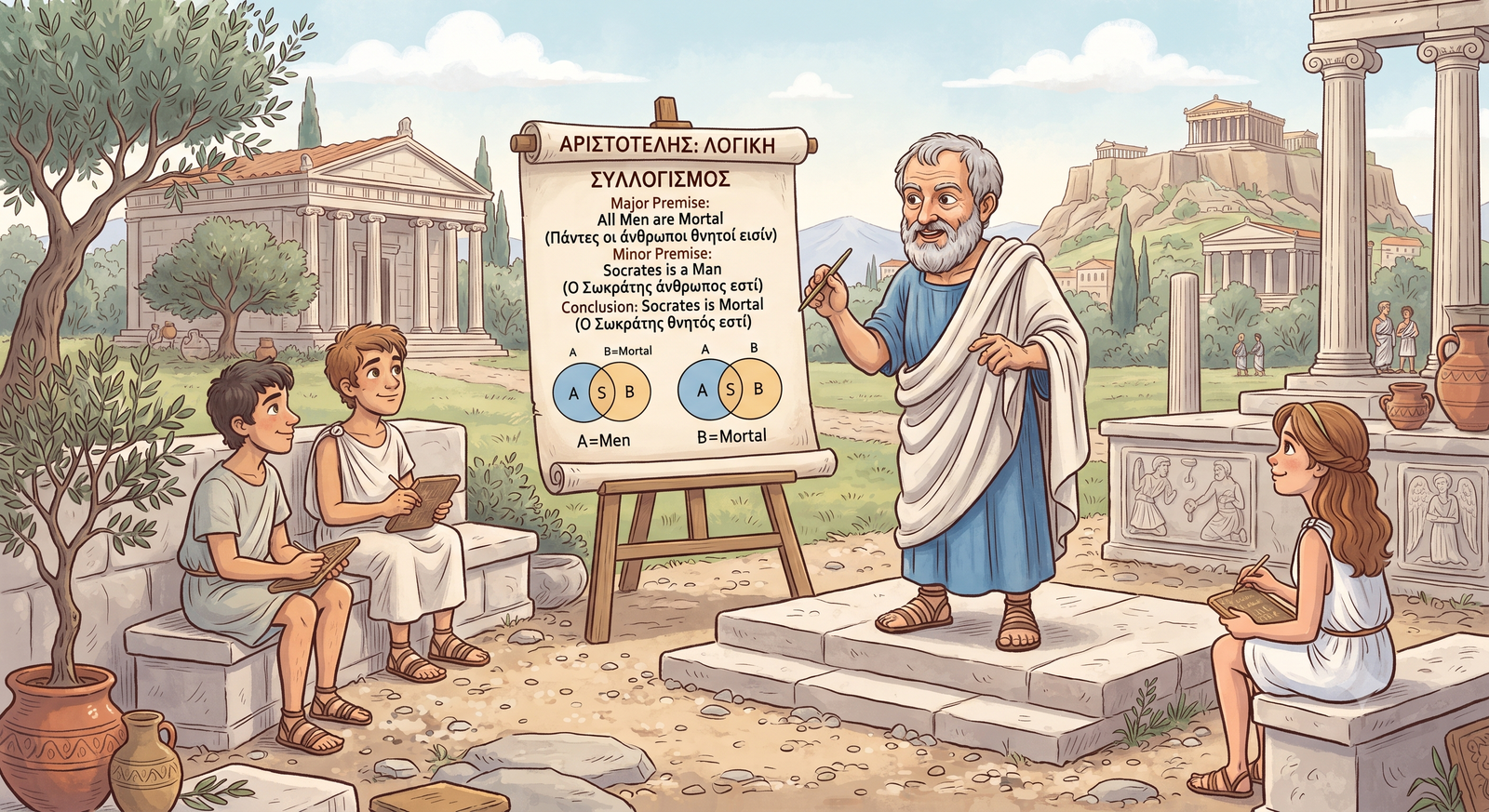
Aristotle explaining his invention of logics to his students
Score 0💬 0
09.07.2026
History
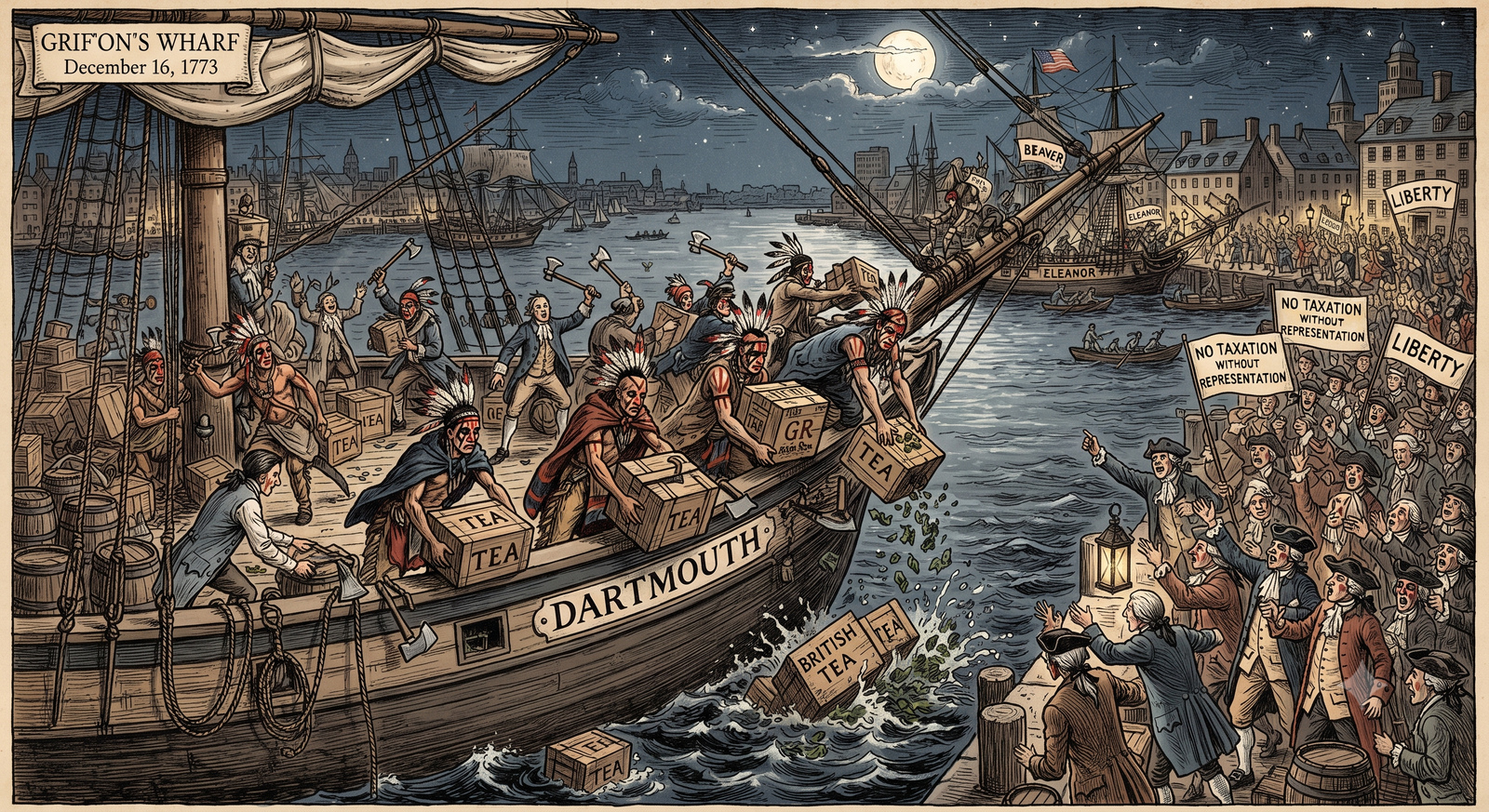
the Boston Tea Party 1776 - American colonists disguised like Native Americans dump British tea in the ocean - "No taxation without representation"
Score 0💬 0
07.07.2026
Cartoon & Humor
Students in the Aula being bored and annoyed by the usual rants of their teacher
Score 0💬 0
05.07.2026
Cartoon & Humor
the notorious Herr von Blaas mit famous Indian yogi in Agra
Score 0💬 0
27.06.2026
Science
Science.
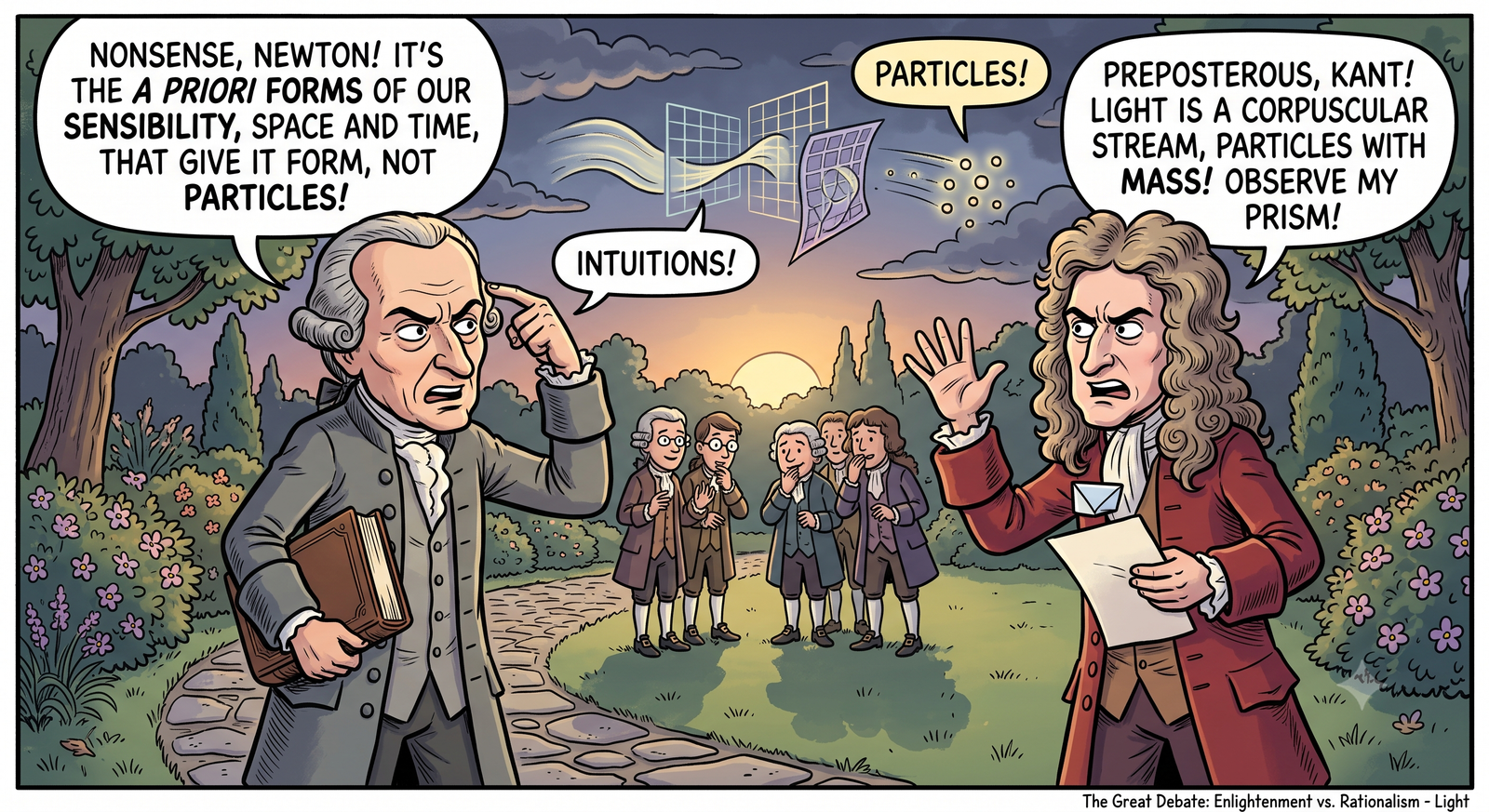
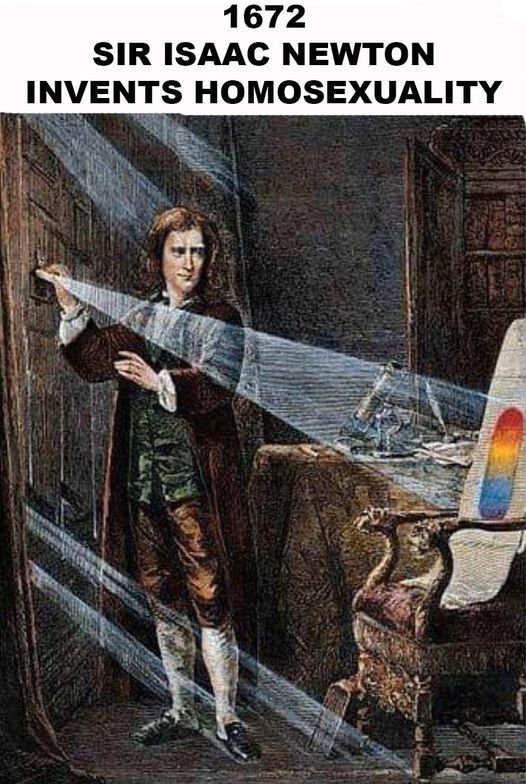
Sir isaac Newton and imanuel Kant arguing over the foundation of Light
Score 0💬 0
27.06.2026
Cartoon & Humor
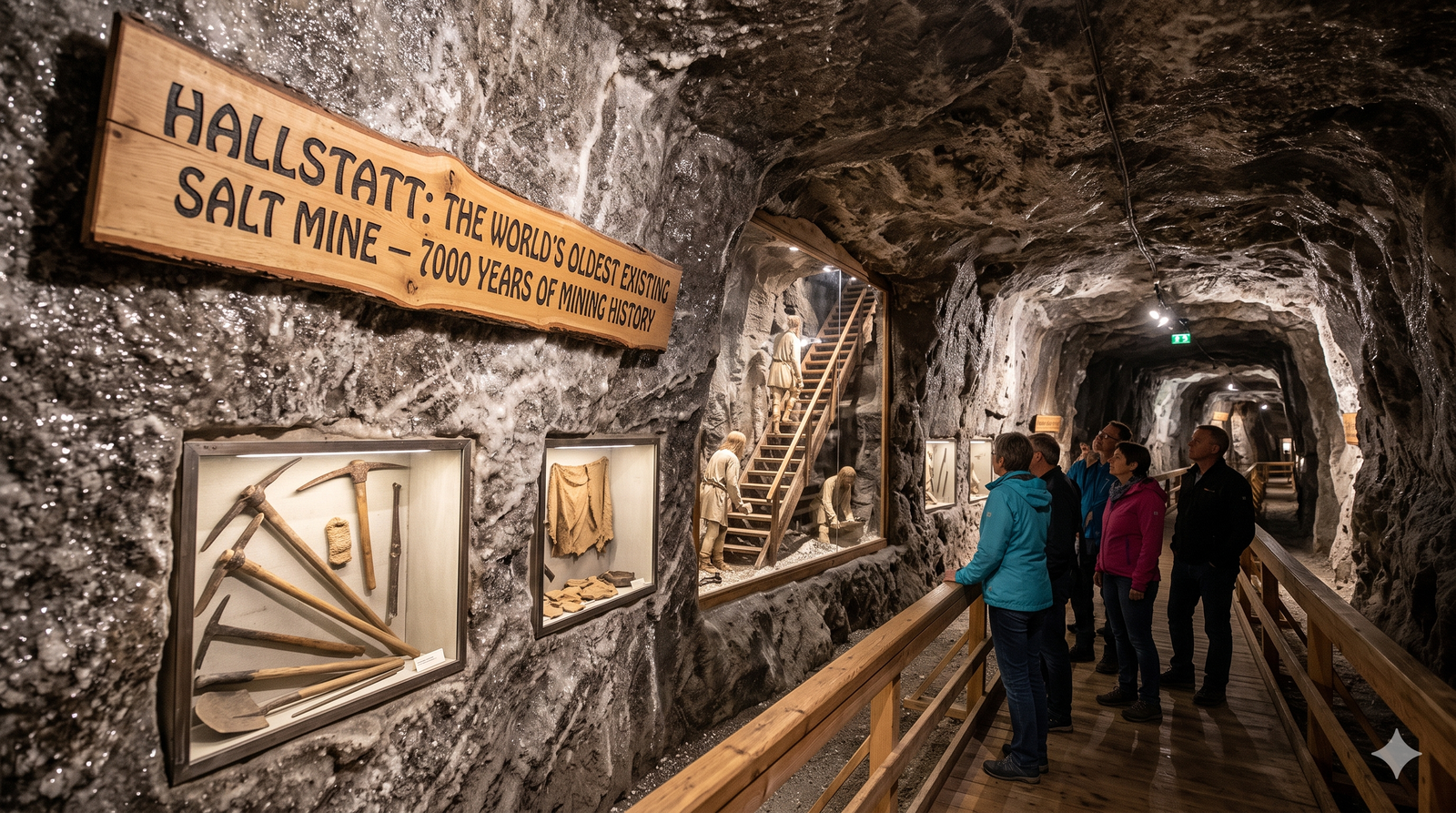
Hallstatt (upper Austria) - the world's oldest existing salt mine - 7000! years old
Score 0💬 0
27.06.2026
Cartoon & Humor
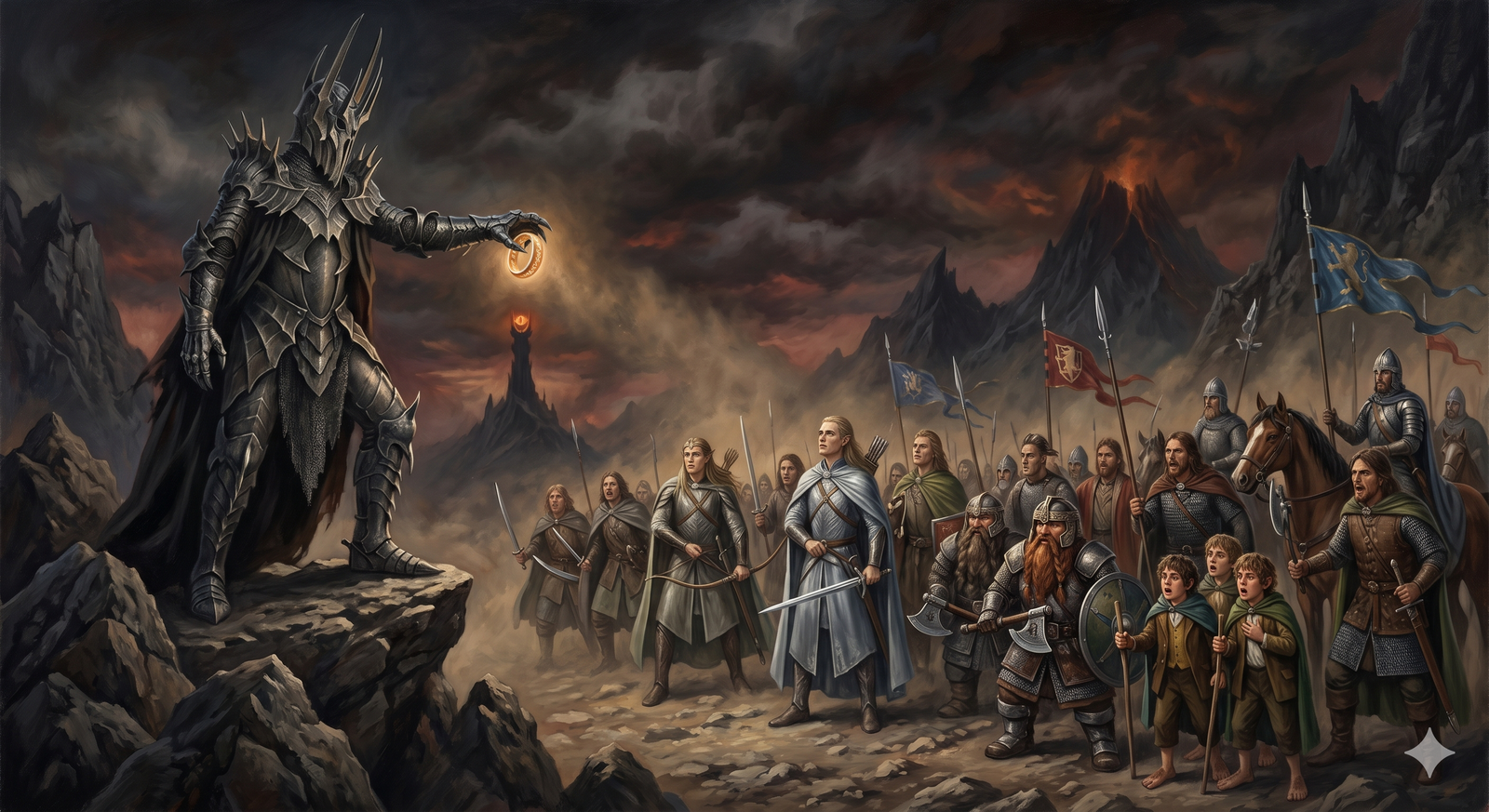
one ring to rule them all
is there any other existing person so manipulative to dominate and submit other existing peoples?
Score 0💬 0
11.06.2026
Cartoon & Humor
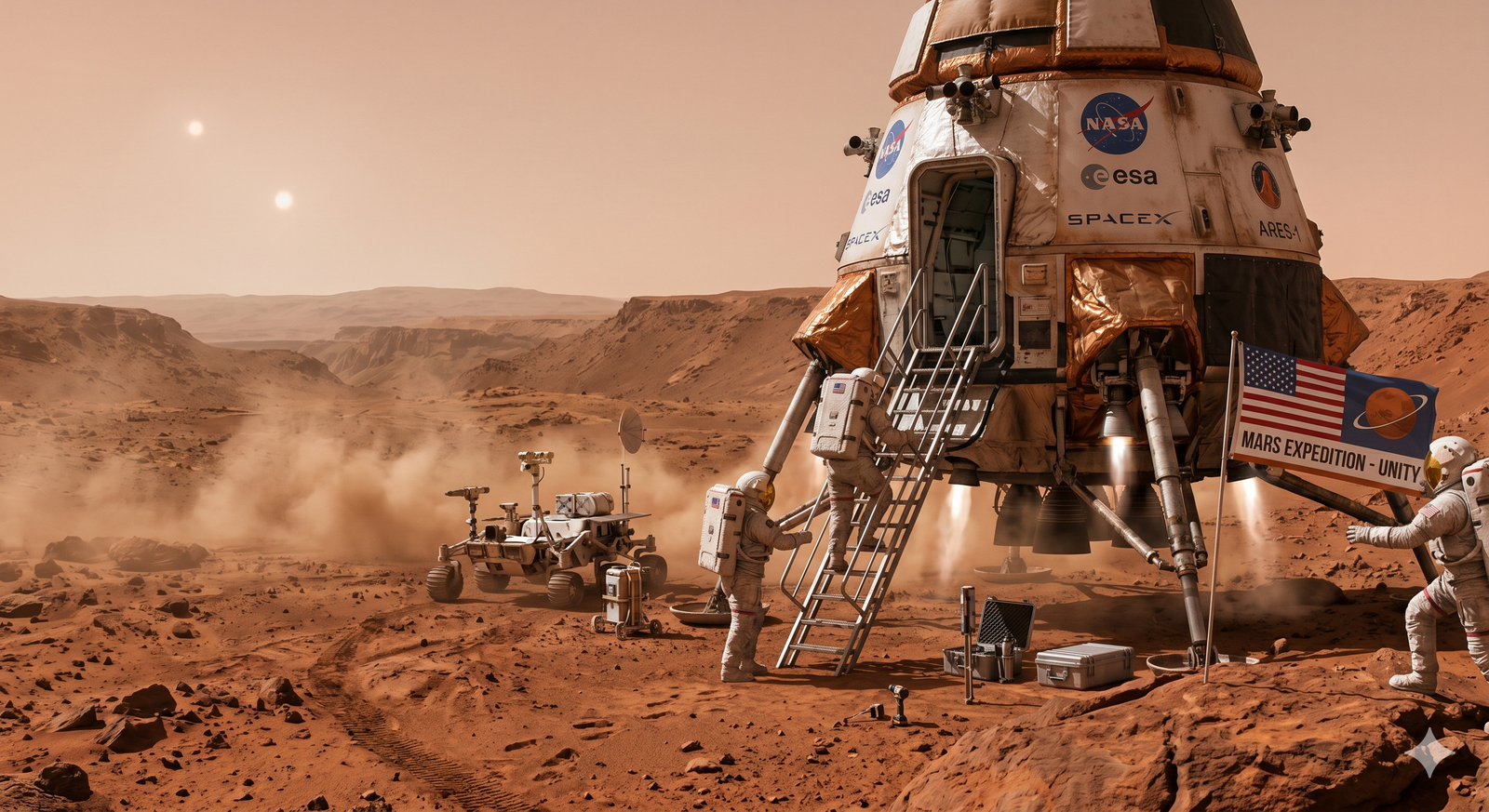
Life on Mars?
Is It Better to Find More Suited Planets?Yes and no. It depends on how far we are willing to travel.1. Within Our Solar System: Mars is Actually the "Best" Worst OptionIf we stick to our immediate neighborhood, everywhere else is even worse.Venus has a runaway greenhouse effect with surface temperatures hot enough to melt lead and clouds of sulfuric acid.The Moon is closer but has zero atmosphere, extreme two-week-long nights, and even less gravity than Mars.The Moons of Jupiter and Saturn (like Europa or Titan) have plenty of water ice, but they are incredibly cold and sitting in deadly radiation belts.2. Outside Our Solar System: ExoplanetsAstronomers have discovered thousands of exoplanets (planets orbiting other stars), and some sit in the "Goldilocks Zone"—the region where liquid water can exist.However, the "suitability" of these planets comes with a massive catch: Distance.The nearest potentially habitable exoplanet is Proxima Centauri b, which is about 4.2 light-years away. With our current rocket technology, it would take roughly 70,000 years to get there. Until we master theoretical physics like warp drives or generation ships, these suited planets are completely out of reach.The Alternative: Space HabitatsBecause Mars is a frozen desert and exoplanets are too far away, many scientists and futurists argue that we shouldn't colonize planets at all. Instead, we should build O'Neill Cylinders—massive, rotating space stations in orbit. By rotating the station, we can create artificial gravity equal to Earth's, preventing bone and muscle loss. We could control the weather, filter out radiation with thick shielding, and easily access solar energy. Instead of trying to adapt to a dead planet, we would build a perfect environment from scratch.Mars is a great laboratory for scientists, but as a long-term "Backup Earth," it requires a monumental amount of work just to keep humans breathing.To get a visual breakdown of the tech we would need just to stay alive on the Red Planet, check out this episode of How the Universe Works on Mars Survival, which covers the deadliest environmental hurdles astronauts will face.
Score 0💬 0
09.06.2026
Cartoon & Humor
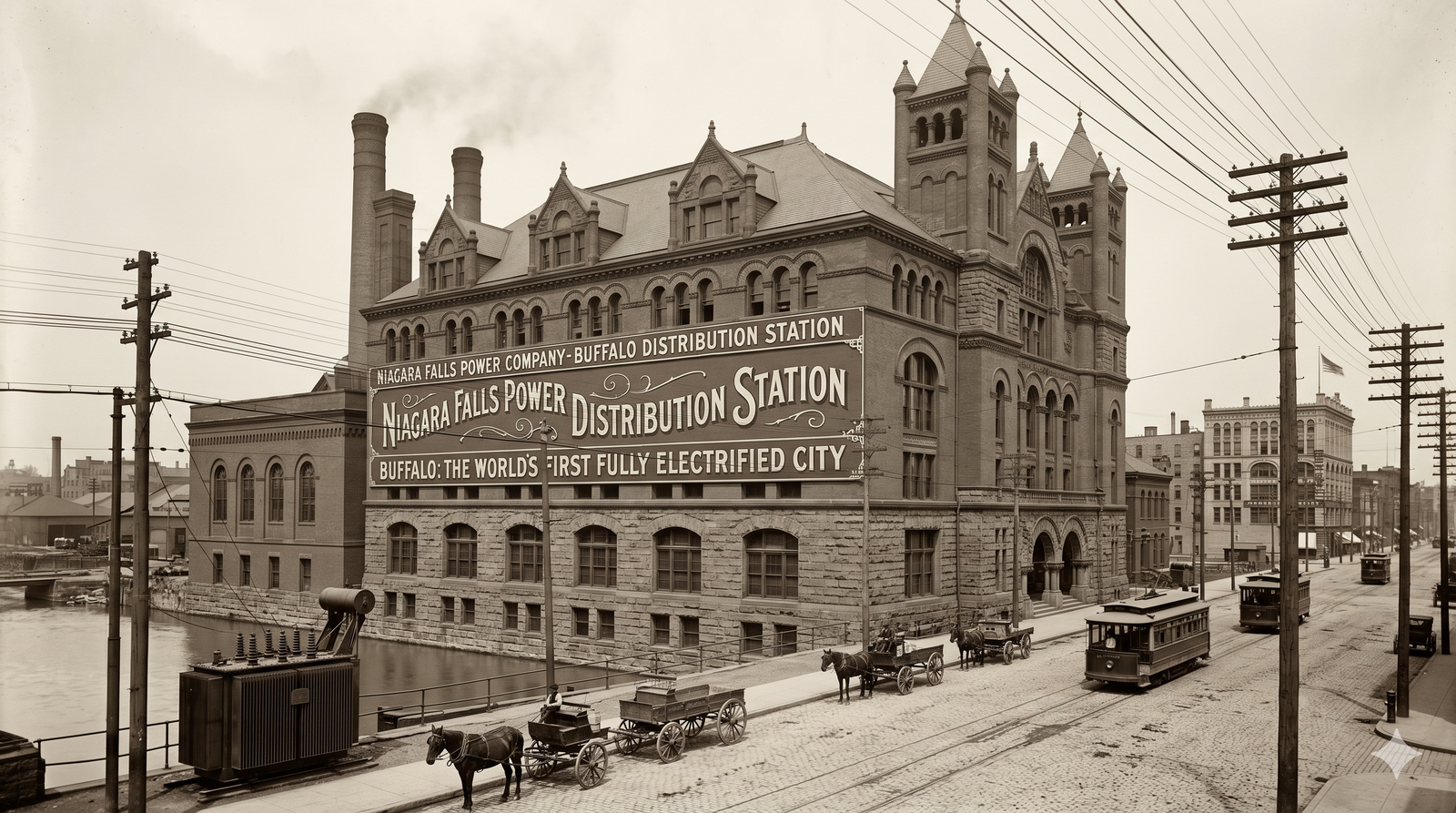
Buffalo, New York, earned its iconic nickname, "The City of Light," by becoming a global pioneer in the early days of electricity. However, the history is a little more nuanced than being the first electrified city ever.Instead, Buffalo holds a much grander title: it was the first major city in the world to receive large-scale, long-distance electric power using alternating current (AC).Here is how Buffalo and a couple of brilliant inventors changed the world forever.The Birth of "The City of Light"In the late 19th century, Thomas Edison's direct current (DC) systems could only send electricity about a mile before the power fizzled out. This meant early electrified towns required small, smoky power plants on almost every corner.Enter Nikola Tesla and George Westinghouse. They championed Alternating Current (AC), which could travel immense distances at high voltages and then be stepped down safely for home use.The Historic TimelineThe transformation did not happen overnight. Buffalo's path to electrification moved through a few critical milestones:First Local Streetlights1881The Brush Electric Light Company installed a local generator to power 12 carbon arc lights along Buffalo's Ganson Street. While impressive, this was localized DC power, similar to what a few other cities were doing.The Long-Distance BreakthroughNovember 16, 1896At midnight, the switch was flipped at the new Edward Dean Adams Hydroelectric Power Station at Niagara Falls. For the first time in history, 1,000 horsepower of electricity traveled 20 miles down copper lines to power Buffalo’s streetcars and streetlights.
Score 0💬 0
07.06.2026
Cartoon & Humor
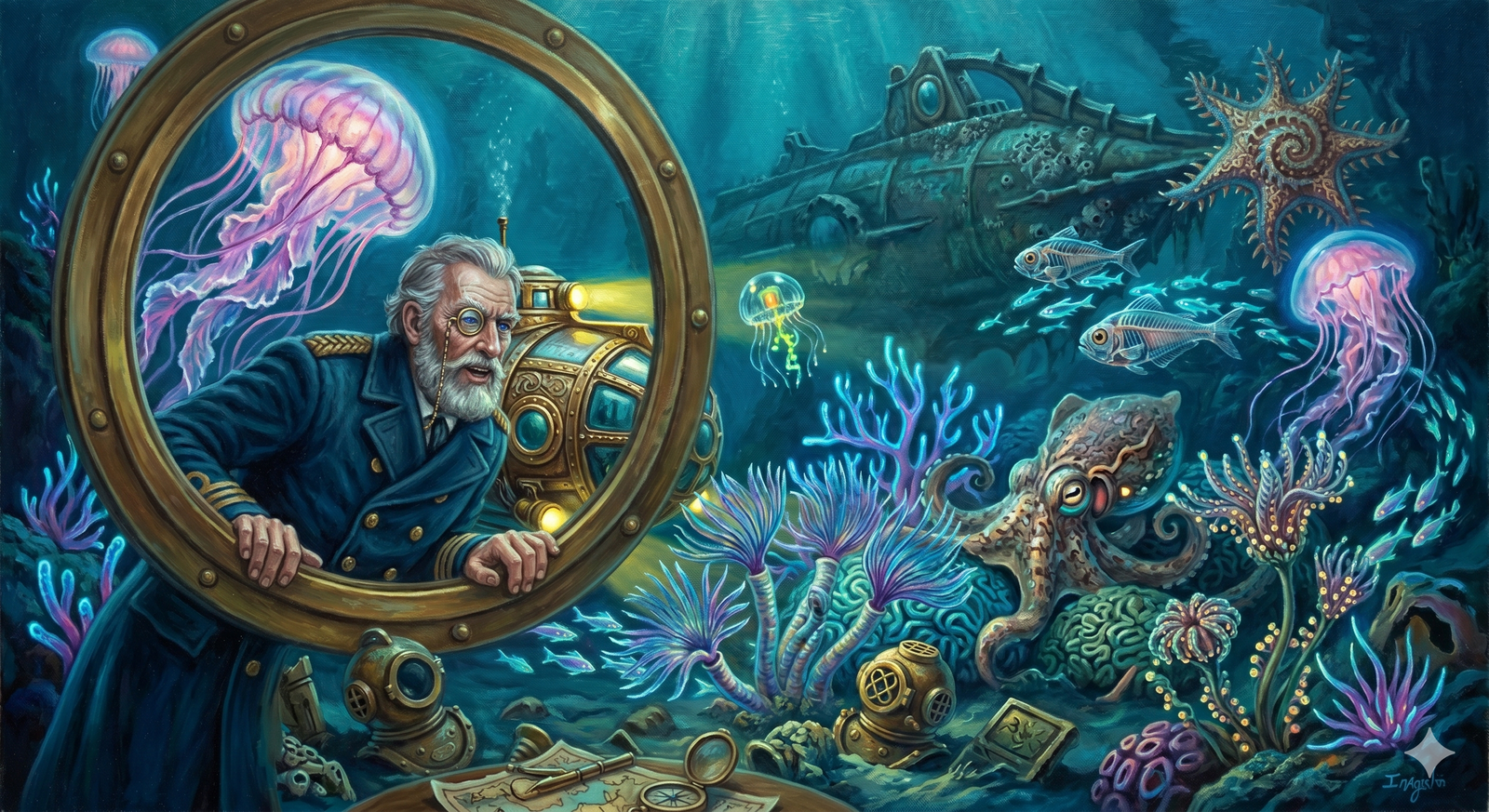
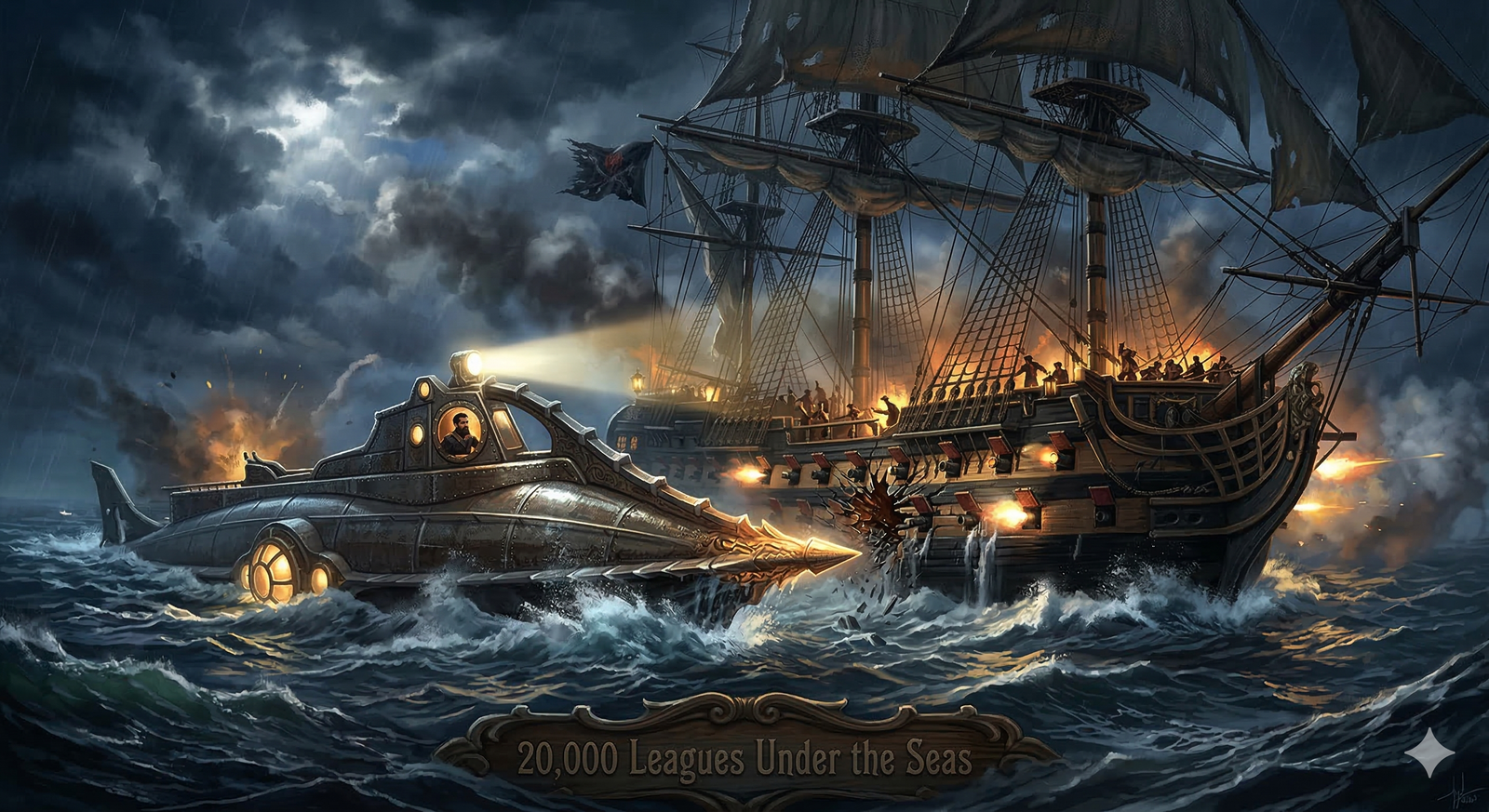
20.000 leagues under the Sea
In Jules Verne’s 1870 sci-fi masterpiece, Twenty Thousand Leagues Under the Sea, Captain Nemo and his advanced submarine, the Nautilus, act as the ultimate pioneers of the deep ocean. To the book’s narrator, marine biologist Professor Pierre Aronnax, the voyage is an unparalleled scientific goldmine filled with encounters that straddled the line between Victorian science and pure fantasy.
While Verne based many of his descriptions on real 19th-century marine taxonomy, he also let his imagination run wild, projecting discoveries of "new" or exaggerated species.
The Legendary and the Exaggerated
The Giant Squid (Architeuthis): The most famous encounter in the novel involves a battle with a pack of "poualpes" (giant squids or octopuses). While science at the time knew of these creatures through carcasses washed ashore, Nemo encounters a living colony of them measuring nearly 25 feet long.
The Giant Tridacna Clam: In the pearl fisheries of Ceylon (now Sri Lanka), Nemo shows Aronnax a colossal clam that keeps a pearl the size of a coconut hidden within its valves. Nemo purposely leaves it alive to continue growing.
The Dugong of the Red Sea: Nemo hunts a massive dugong (a marine mammal relative of the manatee) that is over 23 feet long—vastly larger than any dugong known to modern science.
Living Entirely off the Unknown Deep
For Nemo, discovering sea creatures wasn't just about scientific curiosity—it was about survival. Having cut all ties with humanity, Nemo’s crew gathered everything they needed from the ocean floor, discovering undocumented ways to utilize marine life:
Gourmet Deep-Sea Diet: The crew dined on liver of dolphin, sweetbreads of sea turtle, and preserved sea anemone.
Oceanic Wardrobe: Their clothes were woven from byssus—the glossy, silk-like filaments secreted by certain marine mollusks.
Marine Liturgy: Even their cigars were made from a dried, nicotine-rich seaweed.
"The sea does not belong to despots. Upon its surface men can still exercise unjust laws, fight, tear one another to pieces, and be carried away with terrestrial horrors. But at thirty feet below its level, their reign ceases, their influence is quenched, and their power disappears."
— Captain Nemo
Score 0💬 0
07.06.2026
Cartoon & Humor
Count Oxenstierna meets the legendary Herr von Blaas!
Score 0💬 0
06.06.2026
Cartoon & Humor
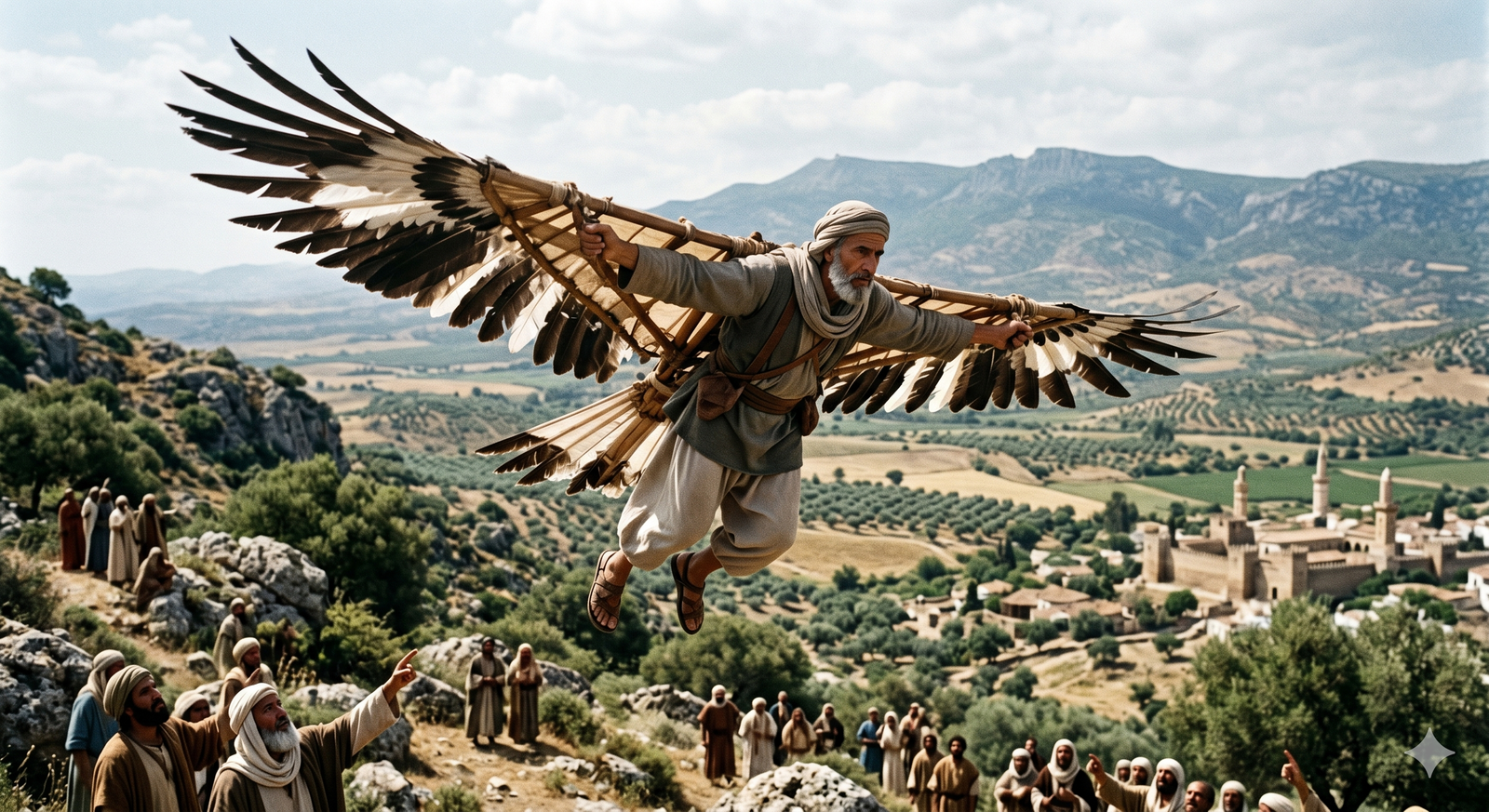
Abbas Ibn Firnas ist eine der faszinierendsten Figuren des goldenen Zeitalters des Islams. Sein legendärer Flugversuch im Andalusien des 9. Jahrhunderts gilt als einer der frühesten dokumentierten Versuche eines Menschen, sich wie ein Vogel in die Lüfte zu erheben.
Der Flug von Córdoba (ca. 875 n. Chr.)
Ibn Firnas war kein verrückter Draufgänger, sondern ein hochangesehener, über 65-jähriger Gelehrter, Dichter und Astronom am Hof der Umayyaden in Córdoba. Nach jahrelangem Studium der Natur und der Vögel beschloss er, seine Theorien in die Praxis umzusetzen.
Die Vorbereitung
Der Anzug: Er konstruierte einen Apparat aus einem leichten Holzrahmen (vermutlich Bambus), der mit Seide bespannt war.
Die Federn: Um den Auftrieb zu maximieren, befestigte er echte Vogelfedern an den Flügeln.
Der Ort: Als Startpunkt wählte er den Hügel Jabal al-Arus (den „Berg der Braut“) in den Ruinen der Palaststadt Madinat al-Zahra nahe Córdoba.
Der Sprung in die Tiefe
Vor einer großen, staunenden Menge von Zuschauern sprang Ibn Firnas von einer Klippe. Und tatsächlich: Er stürzte nicht wie ein Stein zu Boden.
Berichten zufolge schaffte er es, den Wind zu nutzen und für eine beachtliche Zeitspanne – manche Quellen sprechen von einigen Sekunden, andere von einer Minute – durch die Luft zu gleiten, bevor er wieder Richtung Boden sank.
Die schmerzhafte Landung und die Erkenntnis
Obwohl der Flug ein Erfolg war, endete die Landung in einer Katastrophe. Ibn Firnas stürzte schwer und verletzte sich am Rücken.Als genialer Wissenschaftler analysierte er seinen Fehler jedoch sofort: Was fehlte? Er hatte den Schwanz vergessen.
Die Erkenntnis: Vögel nutzen ihren Schwanz, um zu steuern und vor allem, um bei der Landung abzubremsen. Da sein Apparat diese Vorrichtung nicht hatte, konnte er den Sinkflug nicht kontrollieren. Sein Vermächtnis Trotz der Verletzungen, von denen er sich nie ganz erholte, lebte Ibn Firnas noch einige Jahre weiter und forschte auf anderen Gebieten (wie der Glasherstellung und Astronomie).
Score 0💬 0
06.06.2026
Cartoon & Humor
During the French Revolution, the guillotine became the primary instrument of execution, most notoriously during the Reign of Terror (1793–1794).Historically, executions were public events designed to draw massive crowds. Prisoners were transported from prisons like the Conciergerie to execution sites—such as the Place de la Révolution (now Place de la Concorde) in Paris—in open wooden carts called tumbrils.The Mechanics of the GuillotineThe machine was introduced by Dr. Joseph-Ignace Guillotin as a intended method of egalitarian and humane execution. Prior to its adoption, aristocrats were typically beheaded with swords or axes, while commoners faced more painful methods like hanging or breaking on the wheel. The guillotine applied the same penalty to all citizens regardless of class.The design relied on simple gravity and mechanics:The Frame: Two tall upright wooden posts served as tracks for the blade.The Blade: A heavy, weighted steel blade with a characteristic angled edge to ensure a clean, slicing cut rather than a blunt impact.The Bascule: The horizontal bench where the condemned person was bound and slid forward.The Lunette: The circular wooden collar that clamped down to secure the neck in place directly beneath the path of the blade.The Baskets: Wicker baskets were positioned at the front and side to immediately catch the head and the body.During the height of the Revolution, thousands of individuals—including King Louis XVI, Queen Marie Antoinette, and revolutionary leaders like Georges Danton and Maximilien Robespierre—were executed using this apparatus.
Score 0💬 0
05.06.2026
Cartoon & Humor
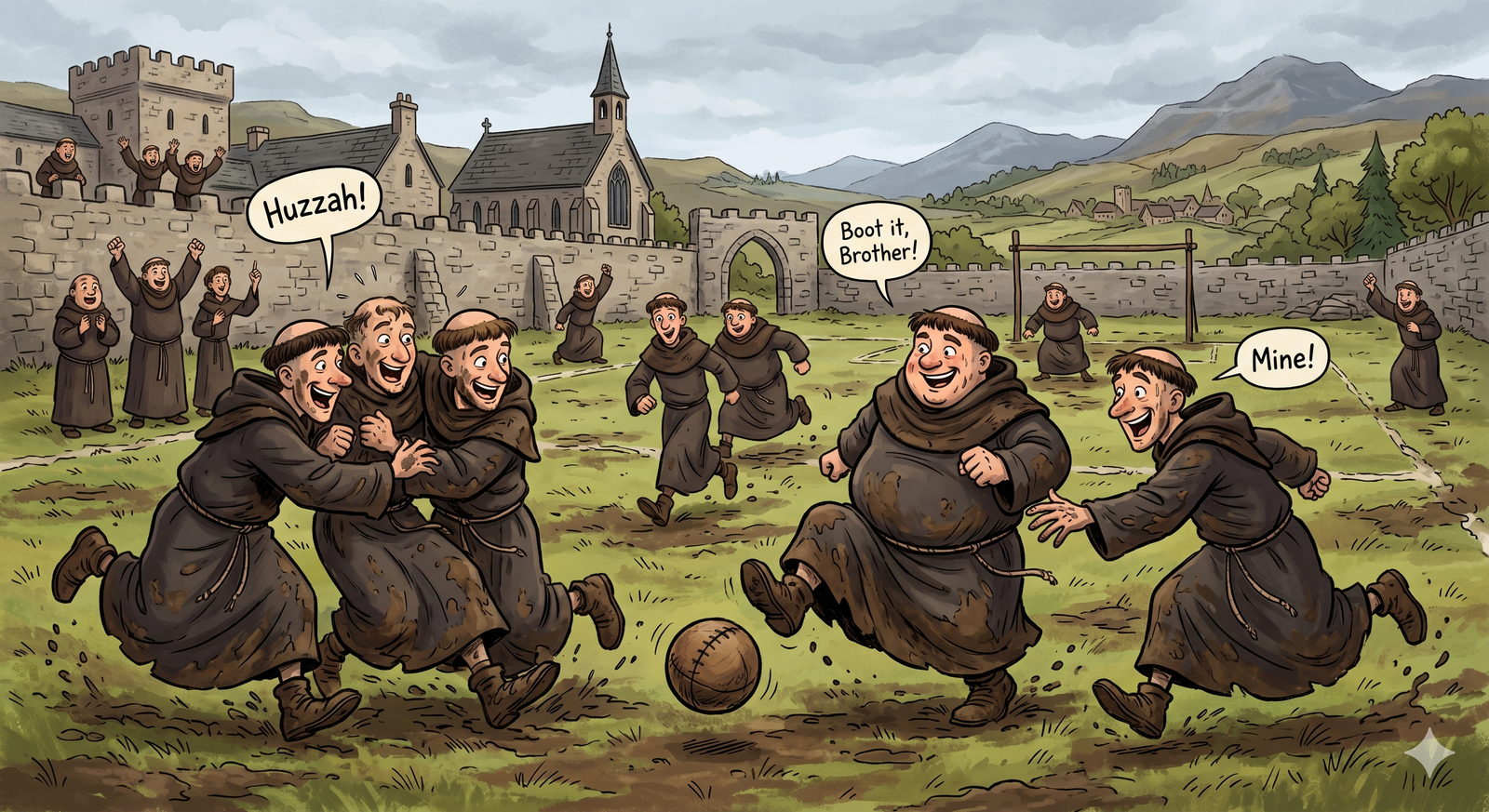
Who "invented" soccer?
Association Football (Soccer)If you are talking about the global game kicked with a round ball, its roots span thousands of years, but its modern rules were written in England.The Ancient Origins: Over 2,000 years ago, the Chinese played a military training game called Cuju (literally "kick ball"), which FIFA recognizes as the earliest form of football. The Romans and Greeks also had ball-kicking games.Medieval "Mob Football": In medieval England, football wasn't a clean sport—it was basically a massive, violent street brawl. Entire villages would try to force a pig's bladder into the opponent's town square. It was so chaotic and destructive that various kings repeatedly tried to ban it.The Modern Creators (1863): Football as we know it was codified by Ebenezer Cobb Morley. In 1863, he formed the Football Association (FA) in London and brought together various English public schools to establish a official, universal rulebook. This historic meeting split the sport forever: those who wanted to touch the ball with their hands left to form Rugby, while those who agreed to Morley's rules created Association Football (shortened to "Assoc", which eventually turned into the slang word "soccer"). Cartoon: English Monks playing a football game
Score 0💬 0
05.06.2026
Cartoon & Humor
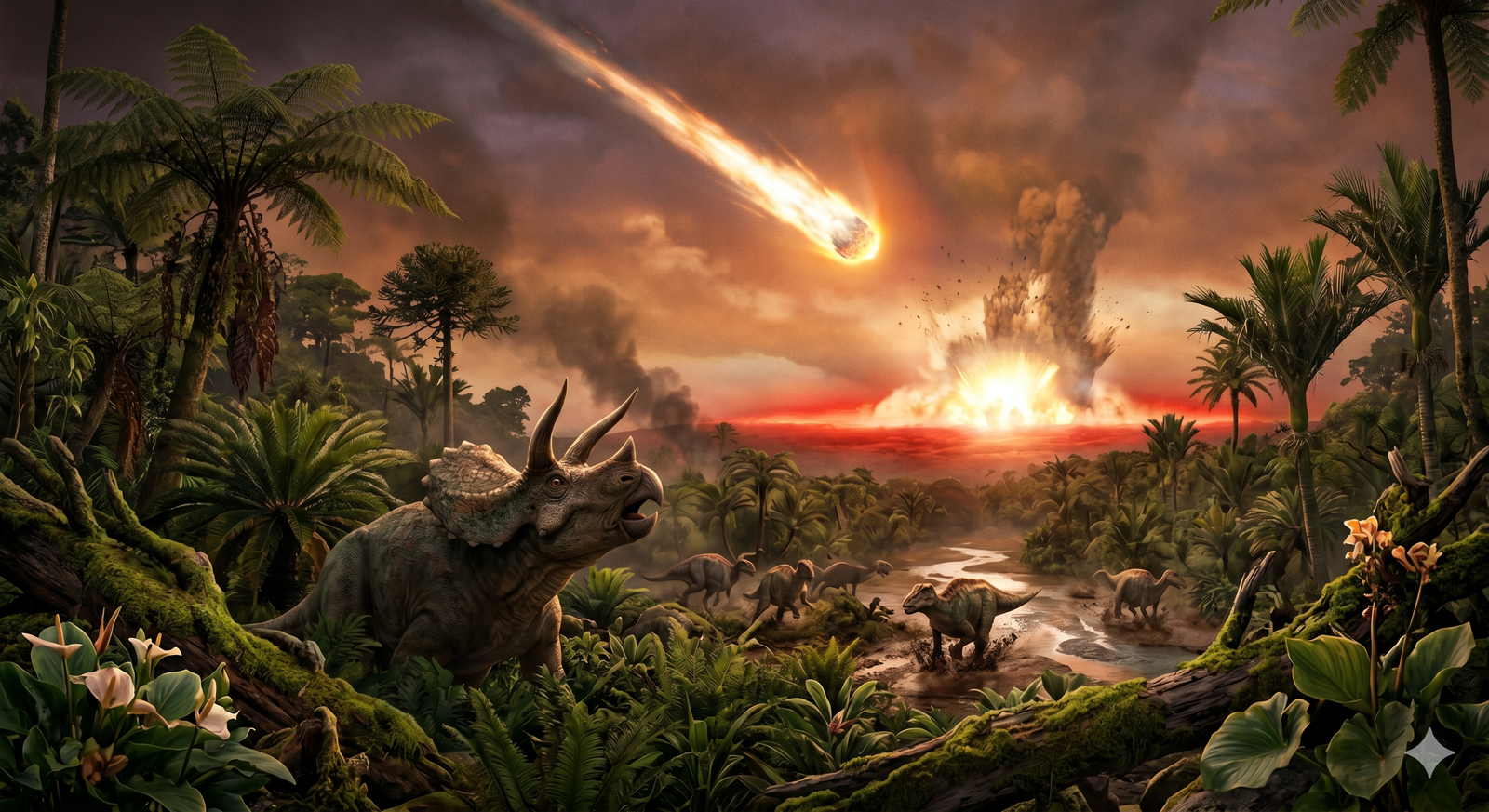
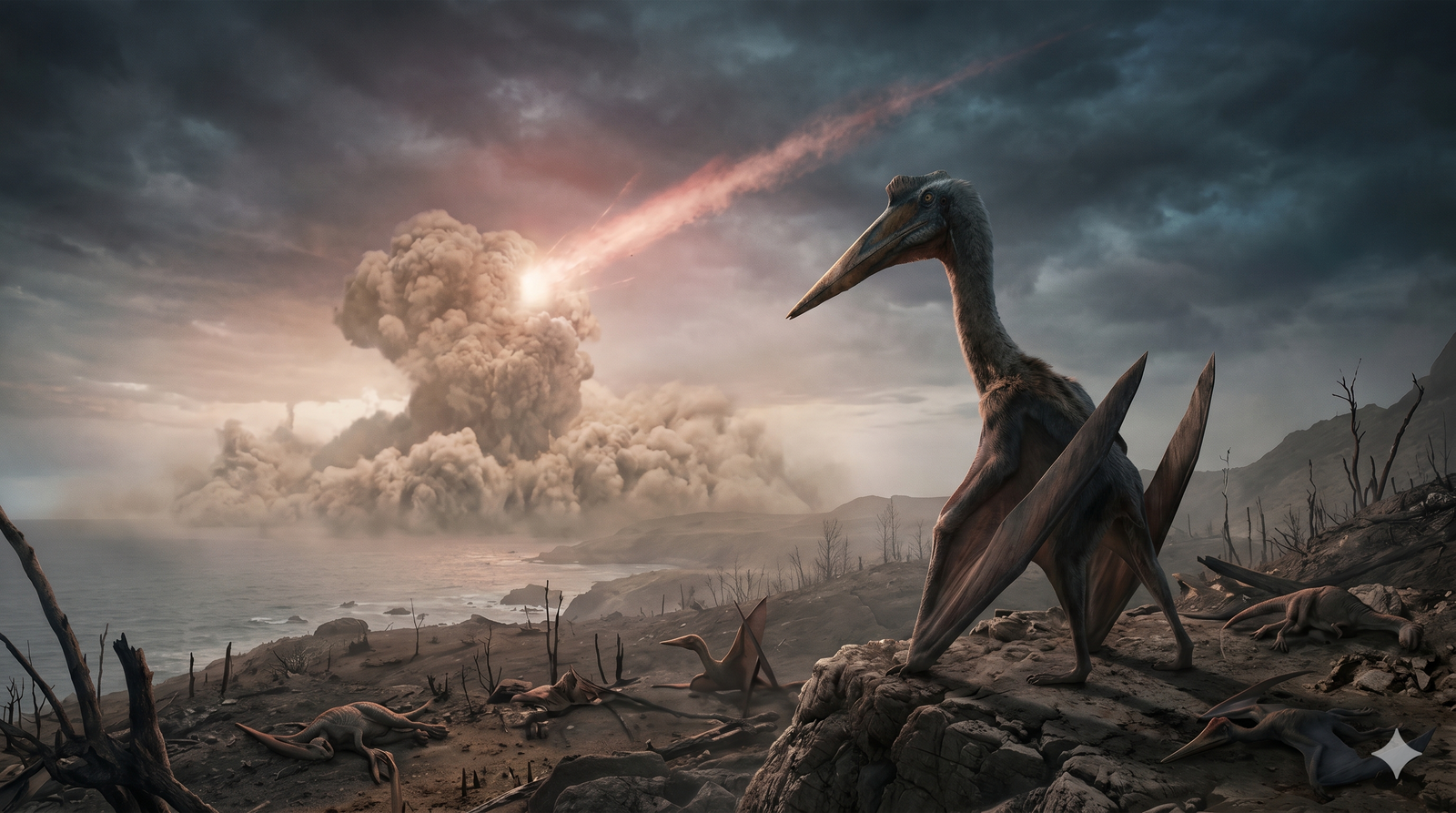
Minute 1: The ImpactHour ZeroThe asteroid strikes with the force of 100 trillion tons of TNT. It instantly vaporizes rock, throwing a massive plume of ash, soot, and debris into the upper atmosphere. A blinding flash of light and an intense thermal pulse ignite wildfires for thousands of miles around.Hours 1–12: Mega-Tsunamis and EarthquakesFirst DayThe impact triggers massive earthquakes across the globe, reaching magnitudes greater than 10. Massive tsunamis—some hundreds of feet high—scour the coastlines of North and South America. High-energy debris re-entering the atmosphere heats up like shooting stars, turning the sky red-hot and sparking global forest fires.Months 1–12: The Impact WinterFirst YearThe fine dust, soot, and sulfur compounds suspended in the stratosphere block out the sun. Global temperatures plummet, plunging Earth into a dark, freezing "impact winter." Without sunlight, photosynthesis halts. Terrestrial plants and ocean plankton wither and die, collapsing the base of the entire food chain.Years 3–10: The Starvation PhaseThe AftermathLarge herbivores like Edmontosaurus run out of vegetation and starve. Apex predators like T. rex, which relied on those herbivores, follow shortly after. Only small, generalist scavengers and omnivores—such as early mammals, birds, and crocodiles—manage to survive by feeding on detritus, rotting wood, and carcasses.The Casualty ListWhen the dust finally settled, roughly 75% of all species on Earth had been wiped out. The event was incredibly selective based on size and metabolic needs.GroupStatusWhy?Non-Avian Dinosaurs100% ExtinctLarge body sizes required vast amounts of fresh food that simply didn't exist during the impact winter.Pterosaurs100% ExtinctThe flying reptiles couldn't cope with collapsed marine and terrestrial food webs.Marine Reptiles100% ExtinctMosasaurs and plesiosaurs died out as the collapse of microscopic plankton starved the oceanic food chain.Early Mammals~93% Extinct (Species level)While hard hit, burrowing species that could eat insects, seeds, or decaying matter survived to inherit the post-dinosaur world.Avian Dinosaurs (Birds)SurvivedSmall, beaked, seed-eating birds managed to endure, preserving the dinosaur lineage to this day.The Silver Lining: If that asteroid had missed Earth by just a few minutes, it likely would have hit deep ocean water instead of the sulfur-rich shallows of the Yucatán, drastically lessening the global climate catastrophe. Had that happened, dinosaurs might still dominate the planet, and mammals like us may never have gotten our turn in the spotlight.
Score 0💬 0
04.06.2026
Cartoon & Humor
Imagine an animal that stood as tall as a modern giraffe on the ground, but possessed wings capable of soaring across oceans. That is Quetzalcoatlus northropi, one of the largest known flying creatures to have ever existed.Living during the Late Cretaceous period (around 68 to 66 million years ago), Quetzalcoatlus wasn't a dinosaur, but a pterosaur—a group of flying reptiles.Vital StatisticsFeatureEstimateWingspan33 to 36 feet (10–11 meters)—roughly the size of a small private airplaneStanding Height16 to 18 feet (4.8–5.5 meters)Weight440 to 550 pounds (200–250 kg)—surprisingly light due to hollow, air-filled bonesDiscoveryFirst found in Big Bend National Park, Texas, in 1971Anatomy and BehaviorThe Launch Technique: For a long time, scientists wondered how something this massive could take off. Biomechanical studies suggest it didn't run or jump with just its hind legs like a bird. Instead, it used a quadrupedal vault—rocking forward and using its powerful chest and arm muscles to literally catapult itself off the ground into the air.Terrestrial Stalkers: While they were excellent flyers, Quetzalcoatlus spent a significant amount of time on the ground. They walked on all fours, folding their massive wings upward. Their long, toothless, needle-like beaks suggest they behaved similarly to modern marabou storks, stalking land environments to swallow small dinosaurs, mammals, and reptiles whole.The Crest: Fossil evidence reveals they sported a bony crest on top of their heads, which may have been brightly colored and used to signal or attract mates.
Score 0💬 0
04.06.2026
Cartoon & Humor
On October 31, 1517, a German monk and theology professor named Martin Luther approached the doors of All Saints' Church (the Castle Church) in Wittenberg, Germany.He carried a document written in Latin: the Disputation on the Power and Efficacy of Indulgences, famously known today as the 95 Theses.While popular history loves the dramatic image of Luther defiantly hammering the parchment to the heavy wooden door, historians note that the church doors functioned as the university's public bulletin board. Luther wasn't trying to start a revolution—he was simply inviting fellow scholars to an academic debate.What Triggers the Anger?Luther was furious about the sale of indulgences—certificates sold by the Catholic Church that promised to reduce a soul's time in purgatory (a temporary place of cleansing after death before entering heaven).A charismatic friar named Johann Tetzel was aggressively marketing these nearby, using the famous jingle: "As soon as the coin in the coffer rings, the soul from purgatory springs."Much of this money wasn't staying local; it was funding the construction of St. Peter's Basilica in Rome and helping a local archbishop pay off his massive debts. Luther believed this was a predatory scam that gave people a false sense of security while bankrupting the poor.The Core ArgumentsLuther’s 95 points boiled down to three main ideas:Repentance is Inner: True Christian repentance is a lifelong, internal spiritual struggle, not an external financial transaction (Thesis 1).The Pope's Limits: The Pope does not have the power to release souls from purgatory; only God can grant forgiveness.The Pope's Wealth: If the Pope actually has the power to free souls, he should do it out of pure Christian charity, not for cash. As Luther bluntly wrote in Thesis 86:"Why does not the pope, whose wealth is today greater than the wealth of the richest Crassus, build this one basilica of St. Peter with his own money rather than with the money of poor believers?"From Bulletin Board to WildfireOctober 31, 1517: The PostingOct 1517Luther posts the Latin theses on the Wittenberg door and mails a copy to the Archbishop of Mainz to protest Tetzel's tactics.Winter 1517-1518: The Printing PressDec-Jan 1517Friends translate the document into German. Utilizing Gutenberg's moveable type printing press, they print and distribute it widely. Within two weeks, it spreads across Germany; within two months, across all of Europe.June 1520: The Papal ThreatJun 1520Pope Leo X issues a papal bull (decree) condemning Luther's ideas and threatening him with excommunication unless he recants. Luther publicly burns the document.April 1521: Diet of WormsApr 1521Called before Holy Roman Emperor Charles V, Luther refuses to back down, famously stating he cannot act against his conscience. He is officially declared an outlaw, cementing the birth of the Protestant Reformation.What started as a localized academic critique fractured Western Christianity forever, giving rise to Protestantism and fundamentally reshaping European politics, literacy, and culture.
Score 0💬 0
04.06.2026
Cartoon & Humor
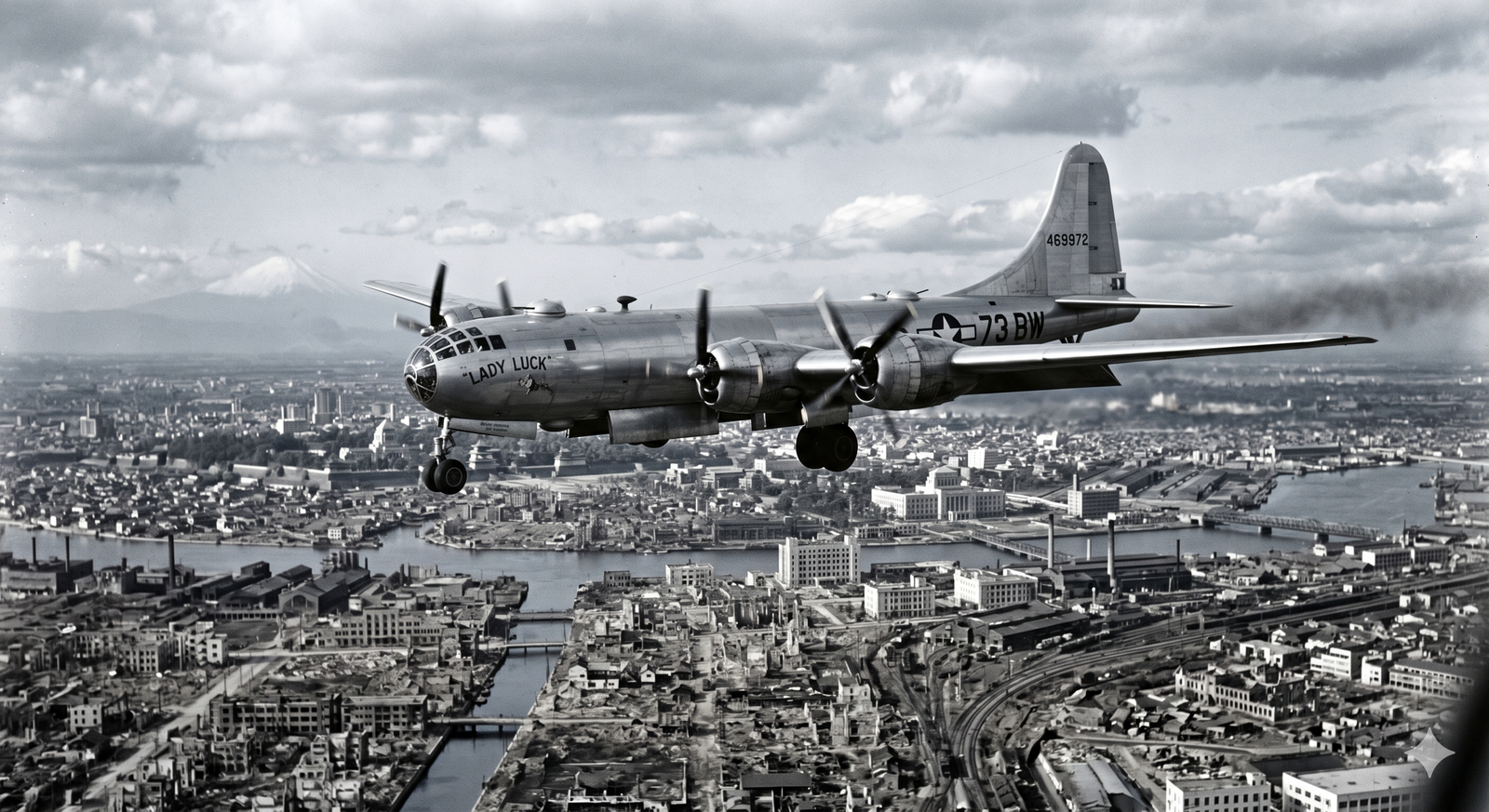
a b29 flying fortress circling above Tokyo on december 6th 1945
Score 0💬 0
04.06.2026
Cartoon & Humor
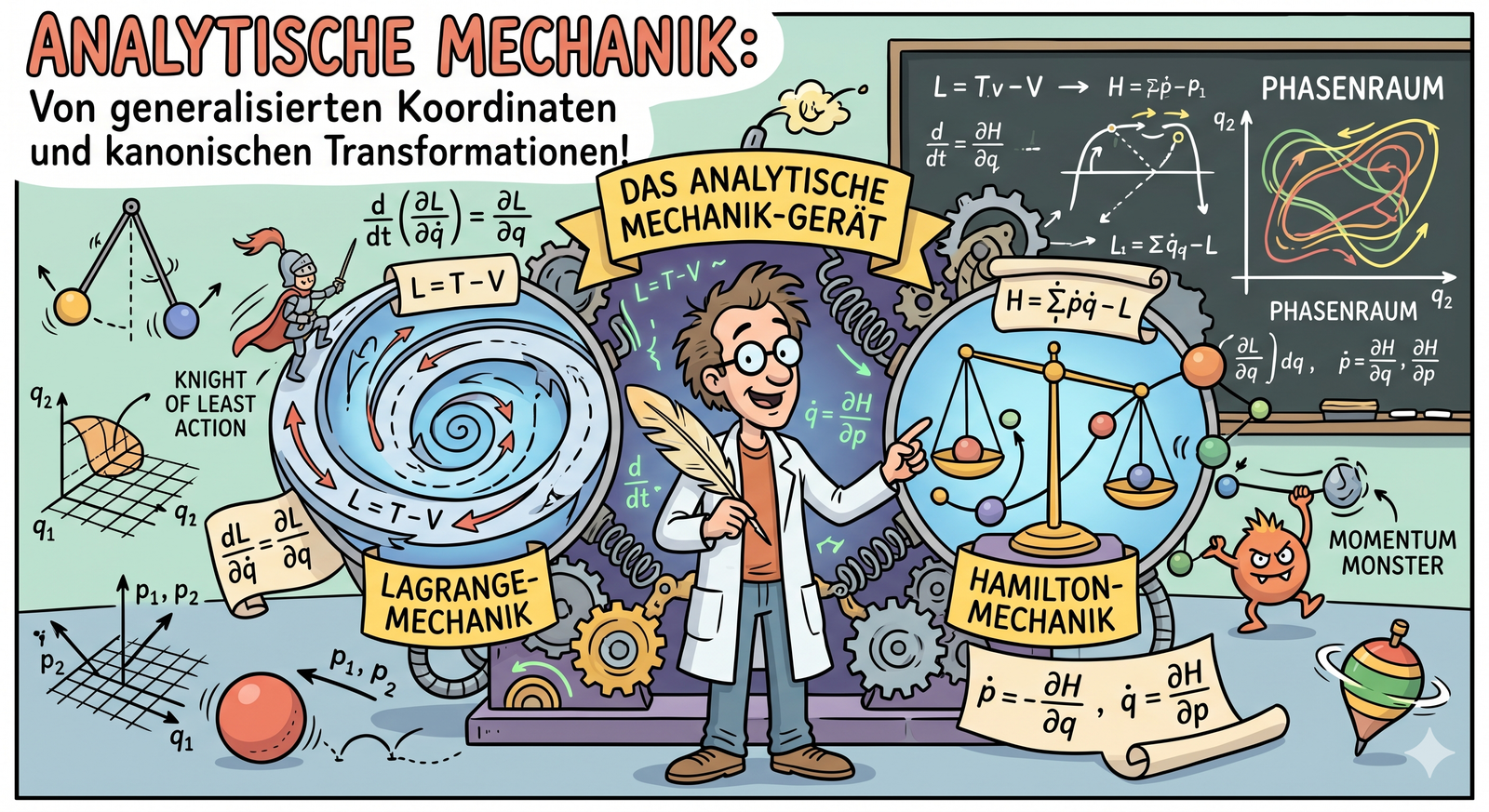
A. Die Lagrange-Mechanik (1. Art & 2. Art)
Hier steht die Lagrange-Funktion L im Mittelpunkt. Sie ist definiert als die Differenz aus kinetischer Energie T und potentieller Energie V: L=T−V
Setzt man L in das Wirkungsprinzip ein, erhält man über Variationsrechnung die Euler-Lagrange-Gleichungen: Vorteil: Du musst keine Kräftevektoren mehr zeichnen. Du stellst einfach die Energien auf, leitest ab und hast die Bewegungsgleichungen. B. Die Hamilton-Mechanik
Hier wechselt man von den Geschwindigkeiten
Vorteil: Statt Differentialgleichungen 2. Ordnung (wie bei Newton und Lagrange) erhält man hier doppelt so viele Differentialgleichungen, aber nur noch 1. Ordnung. Das ist extrem nützlich für die theoretische Analyse und die Quantenmechanik. Zwangsbedingungen Müssen als explizite Kräfte berechnet werden Werden durch geschickte Koordinatenwahl eliminiert
Koordinatensysteme Meist kartesisch, Wechsel oft mühsam Völlig frei wählbar (Symmetrien optimal nutzbar)
Skalierbarkeit Wird bei vielen Teilchen schnell unübersichtlich Perfekt für komplexe Systeme (z.B. starre Körper, Vielteilchenphysik)
Das Noether-Theorem (Der absolute Jackpot)
Ein gigantischer Vorteil der analytischen Mechanik ist die Verknüpfung von Symmetrien und Erhaltungsgrößen (bewiesen von Emmy Noether): Ist das System invariant gegenüber Zeitverschiebung? → Die Energie ist erhalten.
Ist es invariant gegenüber Raumverschiebung (Translation)? → Der Impuls ist erhalten.
Ist es invariant gegenüber Drehung (Rotation)? → Der Drehimpuls ist erhalten.
Score 0💬 0
01.06.2026
Cartoon & Humor
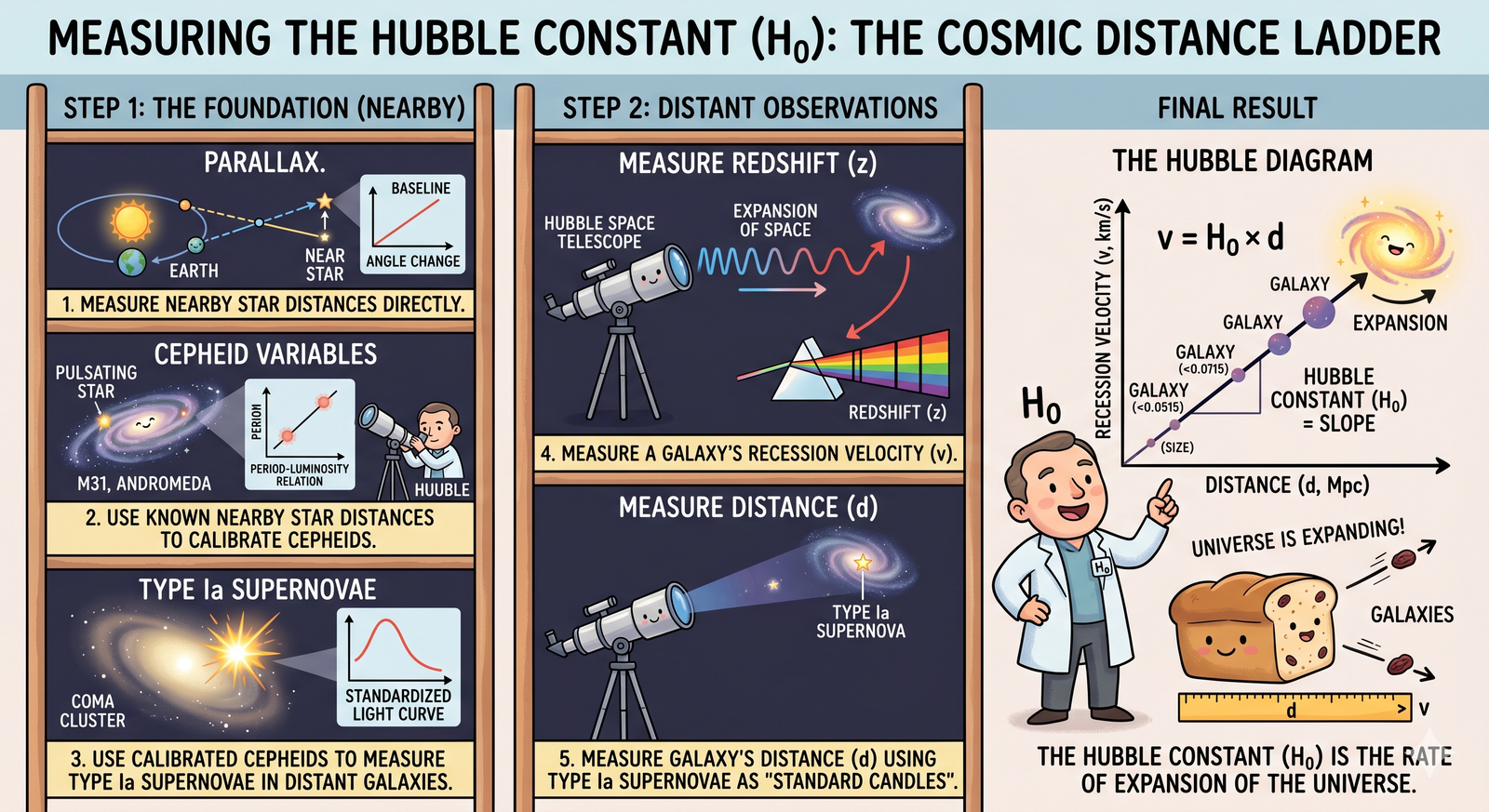
The Hubble constant ($H_0$) is one of the most important numbers in cosmology. It measures the current expansion rate of the universe, essentially telling us how fast galaxies are rushing away from us depending on how far away they are.While it sounds straightforward, the Hubble constant is currently at the center of the biggest crisis in modern astrophysics—a cosmic paradox known as the Hubble Tension.What the Number Actually MeansThe Hubble constant is typically written in a slightly unusual unit: km/s/Mpc (kilometers per second per megaparsec).One Megaparsec (Mpc) is equal to about 3.26 million light-years.If the Hubble constant is roughly 73 km/s/Mpc, it means that for every 3.26 million light-years a galaxy is away from us, it appears to be moving away 73 kilometers per second faster. A galaxy twice as far away moves twice as fast.The Crisis: The Hubble TensionFor decades, scientists assumed that as telescopes got better, measurements of $H_0$ would converge on a single, precise number. Instead, the exact opposite happened. The better our instruments became, the more clearly the data split into two irreconcilable camps.1. The Local Universe Method (The "Late" Universe)How it's measured: Astronomers look at the modern, nearby universe. They use a "cosmic distance ladder," starting with pulsating stars called Cepheid variables and exploding stars called Type Ia supernovae to map exact distances to galaxies.The Latest Data: A massive community consensus report published by the $H_0$ Distance Network (H0DN) pegged this value at an incredibly precise $73.50 \pm 0.81$ km/s/Mpc.The Takeaway: The nearby universe is expanding fast.2. The Early Universe Method (The "Early" Universe)How it's measured: Satellites like Europe's Planck telescope look at the Cosmic Microwave Background (CMB)—the "afterglow" light left over from the Big Bang, roughly 380,000 years after the universe began. Scientists take that early snapshot and use our standard model of physics ($\Lambda\text{CDM}$) to mathematically fast-forward to today.The Data: This method consistently yields a value of around $67.4 \pm 0.5$ km/s/Mpc.The Takeaway: Based on how the universe started, it should be expanding slower today than what we actually see.Measurement TypeSource MaterialApproximate H0 ValueWhat it impliesDirect / LocalNearby Stars & Supernovae~73.5 km/s/MpcSpace is expanding rapidly today.Indirect / EarlyCosmic Microwave Background~67.4 km/s/MpcStandard physics says it should be slower.Why This Mismatch MattersThe difference between 67 and 73 might seem small, but the margins of error on both sides are now so tight that this gap cannot be blamed on human error or faulty equipment. The odds of this being a statistical fluke are less than one in a million.This means our fundamental model of the universe might be missing a key piece.To bridge the gap, physicists are exploring radical ideas, such as:Early Dark Energy: An extra burst of dark energy in the infant universe that kicked off a faster expansion early on.Decaying Dark Matter: Dark matter that breaks down into invisible radiation over time, altering cosmic gravity.The Local Void Hypothesis: The idea that our Milky Way sits inside a massive, lower-density cosmic "hole," which naturally distorts local gravitational pulls and makes nearby expansion look artificially fast.
Score 0💬 0
01.06.2026
Cartoon & Humor
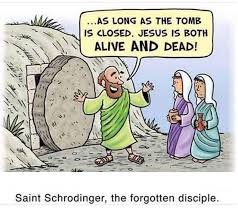
Schrödinger’s Cat is one of the most famous thought experiments in history, devised by Austrian physicist Erwin Schrödinger in 1935.Imagine you place a living cat inside a completely sealed, opaque steel box. Along with the cat, you place a helper device containing:
A tiny bit of radioactive substance (so small that there is a 50% chance one atom decays in an hour, and a 50% chance it doesn't).A Geiger counter to detect radiation.
A vial of deadly poison connected to a hammer.
If the Geiger counter detects that the atom has decayed, it releases the hammer, smashes the vial, and the cat dies. If the atom doesn’t decay, the cat lives.
The Quantum Paradox
According to the Copenhagen interpretation of quantum mechanics (the dominant view at the time), subatomic particles don't exist in a single fixed state until they are observed. Instead, they exist in a superposition—a mathematical combination of all possible states simultaneously.
Therefore, until someone opens the box to look:
The radioactive atom is both decayed and undecayed. The hammer is both dropped and not dropped.
The cat is both alive and dead at the same time.
Only when you open the box and look inside does the quantum wave function "collapse" into a single reality (either a living cat or a dead cat).
He used the cat to say, "Look, if your theory is correct, then you have to accept that a cat can be simultaneously alive and dead just because nobody is looking at it. And that is clearly ridiculous." His goal was to show that there was a missing link in quantum mechanics—a bridge between how things work at the atomic level (where superposition is real) and the everyday world (where cats are definitely either alive or dead).How do physicists explain it today?
Modern physics generally solves the paradox using a concept called quantum decoherence.
A cat is not a single subatomic particle; it is made of trillions of atoms. For a quantum superposition to exist, the system must be perfectly isolated. The moment the radioactive atom interacts with the Geiger counter, or the air inside the box, it "measures" itself against the environment. This interaction collapses the quantum state instantly, long before a human ever opens the box.
Score 0💬 0
31.05.2026
Cartoon & Humor
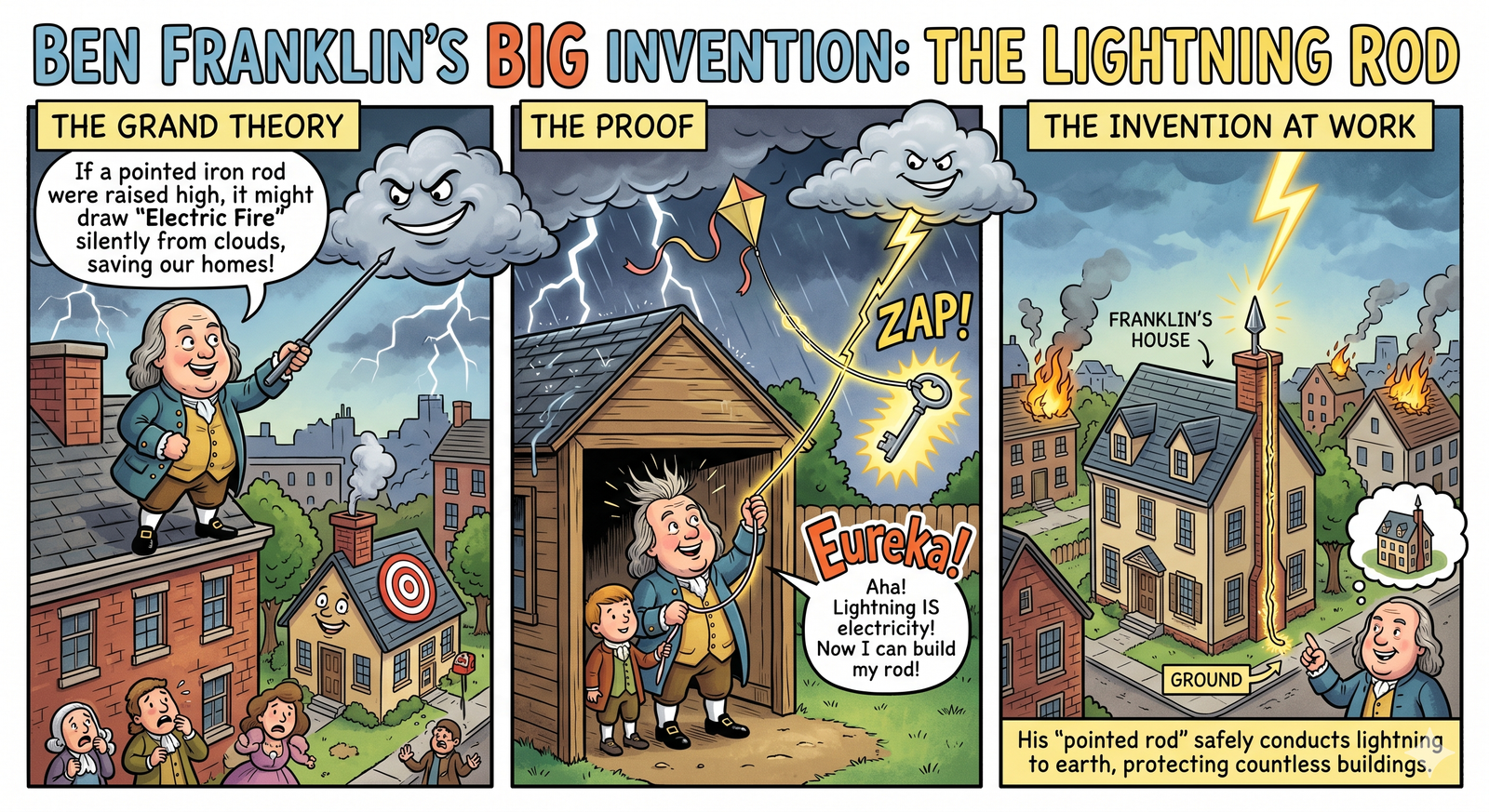
Benjamin Franklin and the Lightning Rod
In the mid-1700s, lightning was terrifying. It wasn't just a weather phenomenon; it routinely struck the wooden steeples of churches and homes, burning down entire city blocks. People largely viewed it as a sign of divine wrath.Benjamin Franklin changed all of that by proving lightning was just electricity—and then inventing a remarkably simple way to tame it.The BreakthroughBefore his famous kite experiment, Franklin noticed that sharp iron points could "draw off" electrical charges from laboratory equipment much better than blunt objects. He theorized that if clouds were electrically charged, a sharp iron rod placed high in the air could quietly drain that charge before it could trigger a destructive bolt.To test this theory, he famously flew a silk kite into a Philadelphia thunderstorm in June 1752.Contrary to popular belief, Franklin's kite was not struck by lightning. If it had been, he likely would have died. Instead, the kite collected ambient electrical charges from the storm cloud. This energy traveled down the wet kite string to a metal key tied at the bottom, creating a static charge that Franklin could feel and draw sparks from. This confirmed his theory: lightning was pure electricity.How the Lightning Rod WorksFollowing his success, Franklin developed the lightning rod (which he initially called the "Franklin rod"). He installed the first experimental ones on his own home and the Pennsylvania State House in 1752, publishing the instructions in Poor Richard's Almanack so anyone could replicate it.Franklin’s design is almost identical to how modern systems work today:The Point: A sharp, conductive iron or copper rod is mounted at the highest point of a building.The Wire: A thick wire connects the rod down the side of the building.The Ground: The wire attaches to an iron rod buried deep into the earth.The actual physics: Franklin originally thought the rod would prevent lightning by quietly draining the cloud's charge. While it does this a little bit, its main job is actually to provide a path of least resistance. When lightning does strike, the rod safely channels the massive electrical current around the building structure and deep into the ground, saving the home from catching fire.Religious BacklashFranklin refused to patent the invention, wanting it to be free for the public good. However, it faced heavy resistance. Many religious leaders argued that lightning was God's judgment and that trying to control it was an "impious presumption" or an attempt to thwart divine will.That narrative shifted dramatically in 1755 when a massive earthquake hit Boston. Some local ministers actually blamed Franklin’s lightning rods, claiming that "iron points" had offended God by redirecting his lightning into the ground, shaking the earth instead.The backlash faded as the data poured in. Buildings with rods stood perfectly safe during storms, while unprotected steeples next door burned to the ground. Within a few decades, lightning rods became standard across the globe.
Score 0💬 0
30.05.2026
Cartoon & Humor
The year is 80 AD. Stepping into the freshly finished Flavian Amphitheatre (which the world would only later call the Colosseum) is Emperor Titus.
For Titus, this moment isn't just about a ribbon-cutting ceremony—it is an aggressive, high-stakes public relations campaign.
Titus desperately needs a win. His short reign has already been battered by a brutal streak of disasters: the devastating eruption of Mount Vesuvius destroying Pompeii, a catastrophic three-day fire in Rome, and a deadly plague. The inauguration of this arena is his grand attempt to appease the angry gods and win back the hearts of a deeply shaken Roman public.
The Sight of the Empire: Looking out across the cavea (the tiered seating), Titus sees 50,000 to 65,000 Roman citizens packed tightly, organized perfectly by social hierarchy. Senators sit at the very front on marble seats, followed by knights, ordinary citizens, and the poorest classes and women at the very top.The Smell and Sound: The roar of tens of thousands of cheering citizens is deafening. To combat the oppressive Roman heat and the heavy smell of blood, a giant canvas awning (velarium) is stretched overhead by specialized Roman sailors, and the air is regularly misted with scented water (often infused with saffron).
The sheer variety of the entertainment showcases the absolute reach of Roman power:
The Animal Hunts (Venationes): Roman armies and traders scour the corners of the known world to bring back exotic beasts. In a stunning display of imperial reach, over 9,000 wild animals—including lions, leopards, elephants, and rhinoceroses—are slaughtered over the course of the games.
The Surprise Naval Battles: Because the underground tunnels (hypogeum) haven't been built yet by Titus's brother Domitian, the arena floor is still a flat, open space.
The Gladiator Battles (Munera): The main event features pairs of highly trained gladiators. In one of the most famous fights recorded by the poet Martial, two gladiators named Priscus and Verus fight so fiercely and equally for hours that Titus stops the match, declares them both winners, and grants them both their freedom (symbolized by a wooden sword) to the thunderous applause of the crowd.
Prizes for the Masses: To keep the crowd completely on his side, Titus has small wooden balls thrown into the audience. Each ball is inscribed with a prize—sometimes a stash of food, clothing, a sum of cash, or even the deed to a piece of property.
For Titus, standing before the cheering masses in the gleaming new amphitheater, the message is clear: Nero's private luxury is gone, the Flavian dynasty has provided for the people, and Rome is as powerful, wealthy, and stable as it has ever been.
Score 0💬 0
30.05.2026
Cartoon & Humor
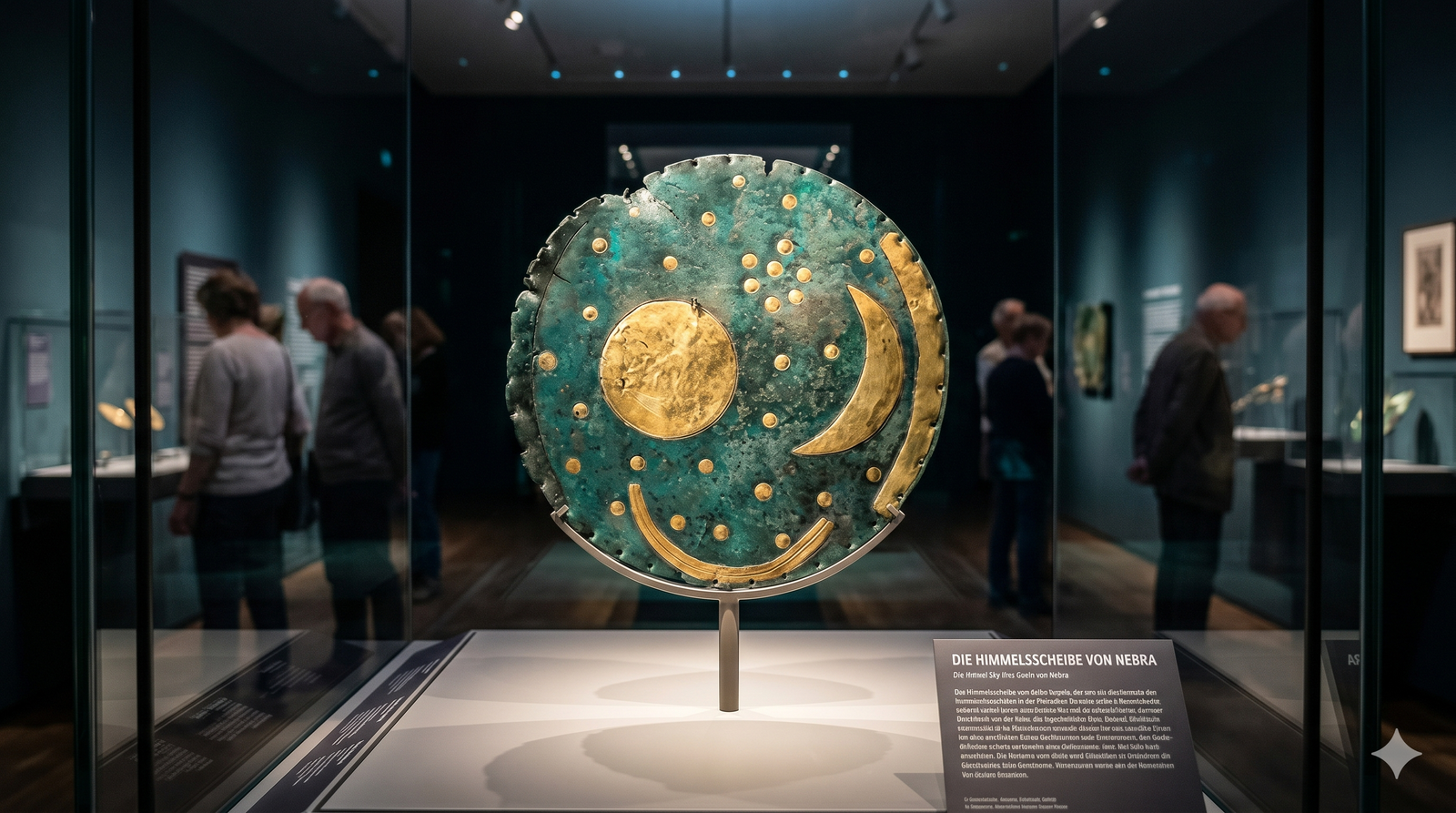
Die Himmelsscheibe von Nebra ist einer der faszinierendsten und bedeutendsten archäologischen Funde der Menschheitsgeschichte. Sie gilt als die älteste konkrete Darstellung des Kosmos weltweit.Hier ist ein kompakter Überblick über dieses Himmelswunder aus der Bronzezeit:Das Wichtigste im ÜberblickAlter: Ca. 3.600 bis 4.100 Jahre alt (zugeordnet der bronzezeitlichen Unstrut-Kultur, um 1600 v. Chr. vergraben).Material: Eine runde Bronzeplatte (ca. 32 cm Durchmesser, rund 2 kg schwer) mit Applikationen aus Goldblech.Fundort: Gefunden 1999 auf dem Mittelberg nahe der Stadt Nebra in Sachsen-Anhalt (Deutschland) – kurioserweise von Raubgräbern, bevor sie durch eine Kriminalsprecher-Aktion der Polizei sichergestellt werden konnte.Aktueller Standort: Landesmuseum für Vorgeschichte in Halle (Saale). seit 2013 gehört sie zum UNESCO-Dokumentenerbe.Was ist auf der Scheibe zu sehen?Die goldenen Verzierungen auf der grün patinierten Bronzeplatte stellen astronomische Phänomene dar. Experten haben herausgelesen, dass die Scheibe im Laufe der Jahrhunderte in mehreren Phasen verändert und ergänzt wurde:ElementAstronomische BedeutungZentrale KreisscheibeStellt entweder die Vollmond oder die Sonne dar.SichelStellt den zunehmenden (oder abnehmenden) Mond dar.7 Goldpunkte (Gruppe)Die Plejaden (auch "Siebengestirn" genannt). Sie dienten in der Bronzezeit als wichtiger Marker für den landwirtschaftlichen Kalender (Aussaat und Ernte).25 weitere GoldpunkteSterne, die den nächtlichen Himmel symbolisieren.Zwei seitliche Bögen(Ein Bogen fehlt heute). Sie umspannen jeweils einen Winkel von 82 Grad. Das entspricht exakt dem Winkel, den die Sonne an ihrem nördlichsten (Sommeranfang) und südlichsten Punkt (Winteranfang) am Horizont auf dem Breitengrad von Nebra beschreibt (Horizontastronomie).Unterer BogenEine schmale, schiffsähnliche Sichel. Sie wird meist als "Sonnenschiff" gedeutet – ein tief religiöses Symbol der Bronzezeit für die Reise der Sonne über das Himmelsmeer in der Nacht.Warum ist sie so revolutionär?Vor der Entdeckung der Himmelsscheibe traute man den Menschen der europäischen Bronzezeit ein so tiefes, präzises astronomisches Wissen schlichtweg nicht zu.Die Schaltregel: Forscher vermuten, dass die Scheibe als eine Art "Taschenrechner" für einen kombinierten Mond- und Sonnenkalender diente. Wenn der Neumond in einer bestimmten Position zu den Plejaden stand, wussten die Priester, dass ein Schaltmonat eingefügt werden musste, um das Jahr wieder mit den Jahreszeiten zu synchronisieren.Sie zeigt, dass die Menschen damals den Himmel nicht nur staunend betrachteten, sondern ihn exakt vermaßen, um Überleben (Landwirtschaft) und Religion perfekt miteinander zu verknüpfen.
Score 0💬 0
30.05.2026
Cartoon & Humor
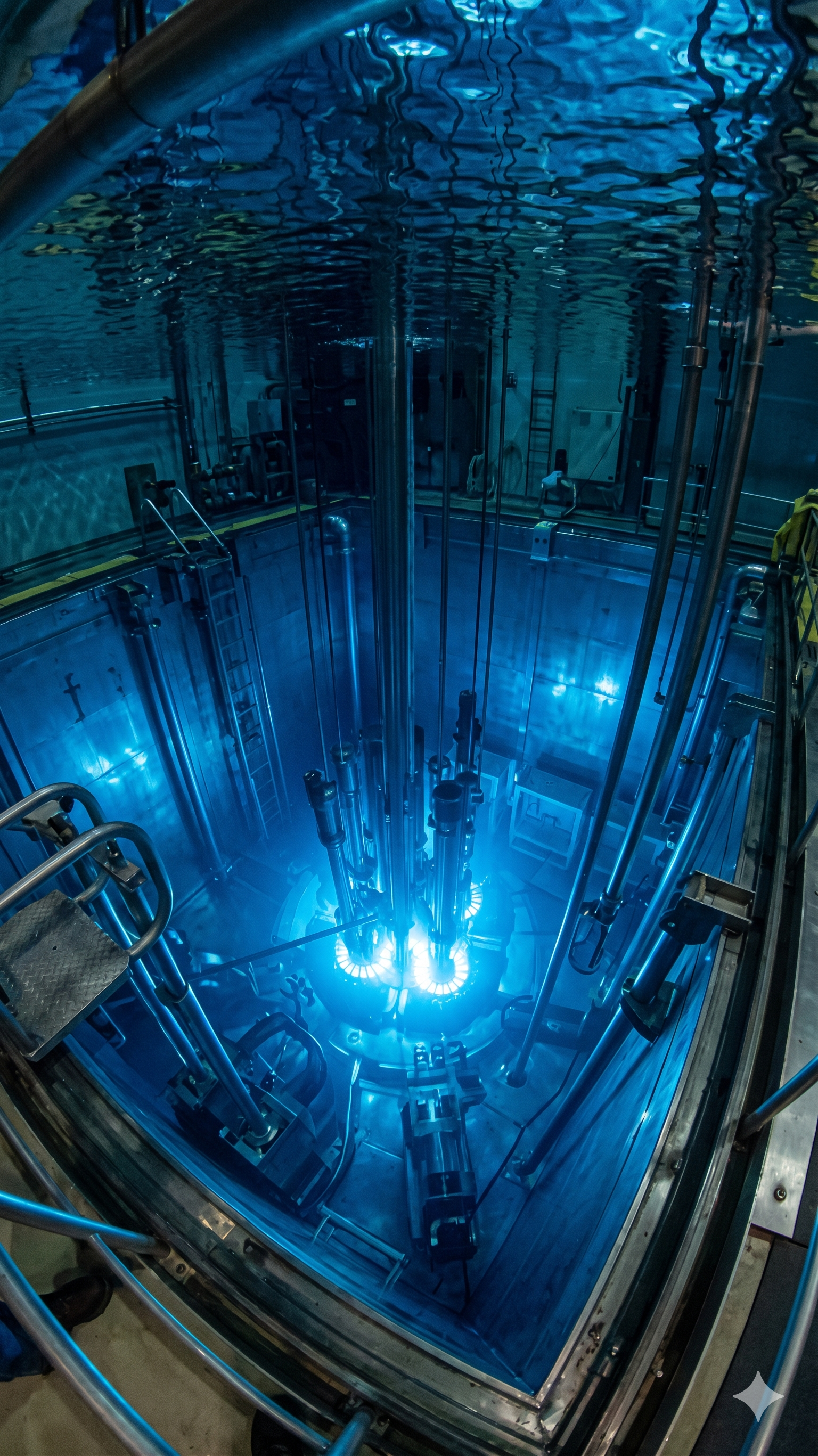
Traveling faster than the (vacuum) speed of light?
Cherenkov radiation is the distinct, eerie blue glow often seen in the water surrounding nuclear reactors or spent fuel pools. The phenomenon is the optical equivalent of a sonic boom. A sonic boom occurs when an object travels through the air faster than the speed of sound. Similarly, Cherenkov radiation occurs when a charged particle (typically an electron) travels through a medium faster than the speed of light in that specific medium. While nothing can travel faster than the speed of light in a vacuum , light slows down significantly when passing through other materials. In water, the speed of light is reduced by about 25% When a nuclear reactor is operating, high-energy particles are emitted through radioactive decay and fission. Many of these electrons are accelerated to speeds exceeding As these particles rush through the water, they polarize the surrounding water molecules. As those molecules snap back into equilibrium, they emit a shockwave of electromagnetic radiation—light. Why is it Blue? ranging from ultraviolet down to red. However, This means that shorter wavelengths (violet and blue) are emitted with much higher intensity than longer wavelengths (red and orange). Because the human eye is highly sensitive to blue and blind to ultraviolet, we perceive the resulting glow as a deep, brilliant electric blue.Practical ApplicationsBeyond looking spectacular, Cherenkov radiation is highly useful to scientists and engineers:Reactor Monitoring: The brightness of the blue glow is directly related to the rate of fission happening in the core. It allows operators to visually verify that a reactor is active and gauge its power level.Astrophysics: Giant deep-water or ice-bound detectors (like the IceCube Neutrino Observatory in Antarctica) look for faint flashes of Cherenkov radiation to detect elusive cosmic particles like neutrinos passing through Earth.
Score 0💬 0
30.05.2026
Cartoon & Humor
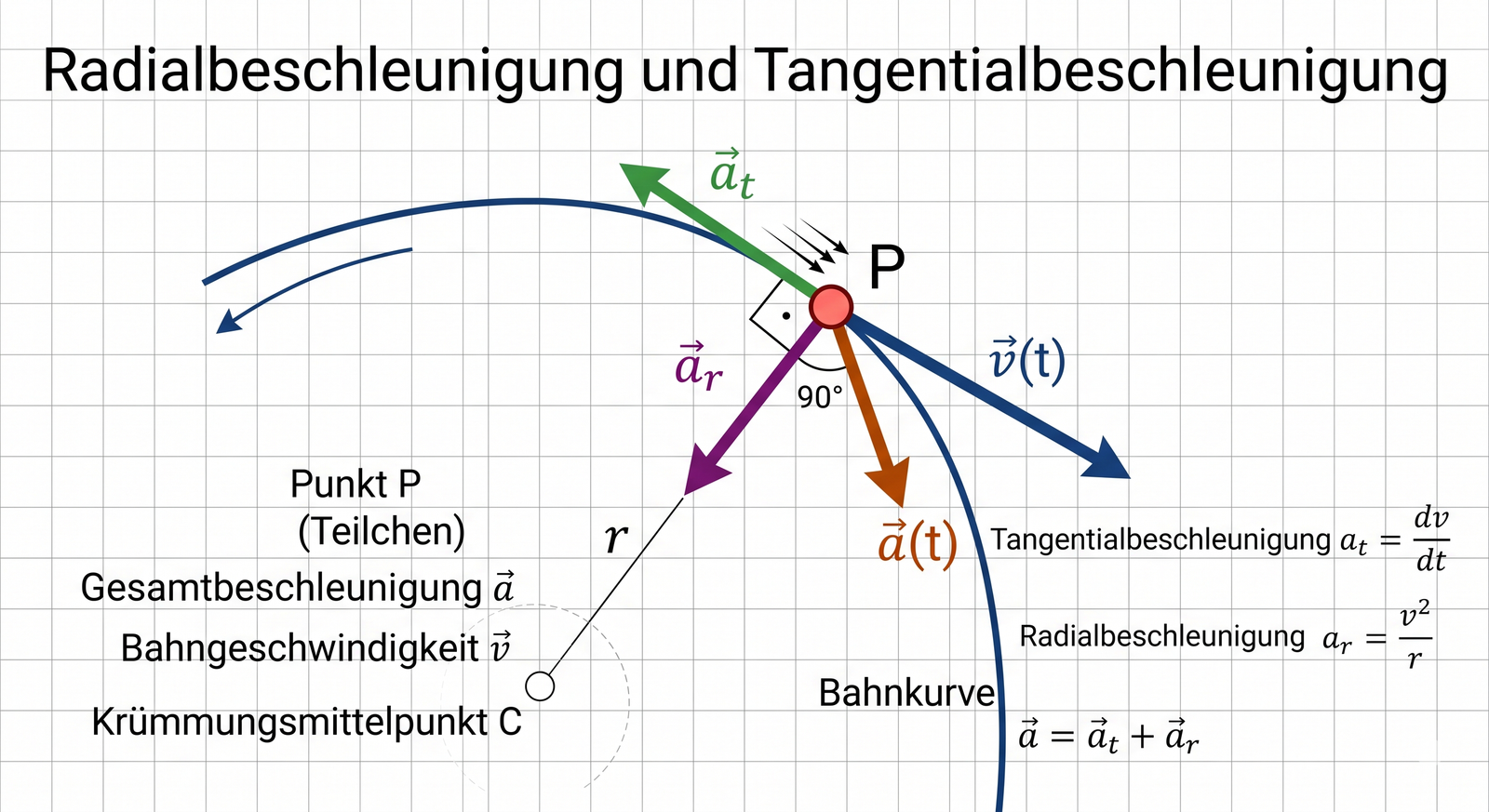
Die Radialbeschleunigung zeigt immer zum Mittelpunkt der Krümmung (radial nach innen).Zweck: Sie ist rein für die Richtungsänderung der Bewegung verantwortlich. Ohne sie würde der Körper geradeaus weglaufen (Trägheitsgesetz).Betrag: Auch wenn ein Auto mit konstant 50 km/h durch eine Kurve fährt, hat es eine Radialbeschleunigung, weil sich die Richtung des Geschwindigkeitsvektors ständig ändert.die Bahngeschwindigkeit 2. Tangentialbeschleunigung Die Tangentialbeschleunigung zeigt immer in Richtung der Tangente der Flugbahn (also in Fahrtrichtung oder genau dagegen).Zweck: Sie ist für die Geschwindigkeitsänderung verantwortlich. Sie gibt an, ob der Körper schneller oder langsamer wird. Wenn ein Auto mit Tempomat (konstante Geschwindigkeit) durch eine Kurve fährt, ist die Tangentialbeschleunigung Null. Gibt das Auto in der Kurve Gas, ist sie positiv.
Score 0💬 0
30.05.2026
Cartoon & Humor
7-jähriger Krieg: Friedrich der Grosse gegen Maria Theresia
War dies nicht eigentlich schon der "1. Weltkrieg"? - es kämpften ja nicht nur 2 deutsche Staaten gegeneinander, sonder auch England und Frankreich um die Vormachtsstellung in Nordamerika!
Die preußische Armee unter Friedrich II. trotzte im Siebenjährigen Krieg (1756–1763) einer feindlichen Übermacht aus Österreich, Frankreich und Russland. Dank militärischer Disziplin, moderner Taktik und britischer Finanzhilfen errang Preußen entscheidende Siege, die den Staat vor dem Untergang bewahrten und zur europäischen Großmacht machten. Cartoon: Friedrich in der legendären Schlacht bei Leuthen 1757
Score 0💬 0
30.05.2026
Cartoon & Humor
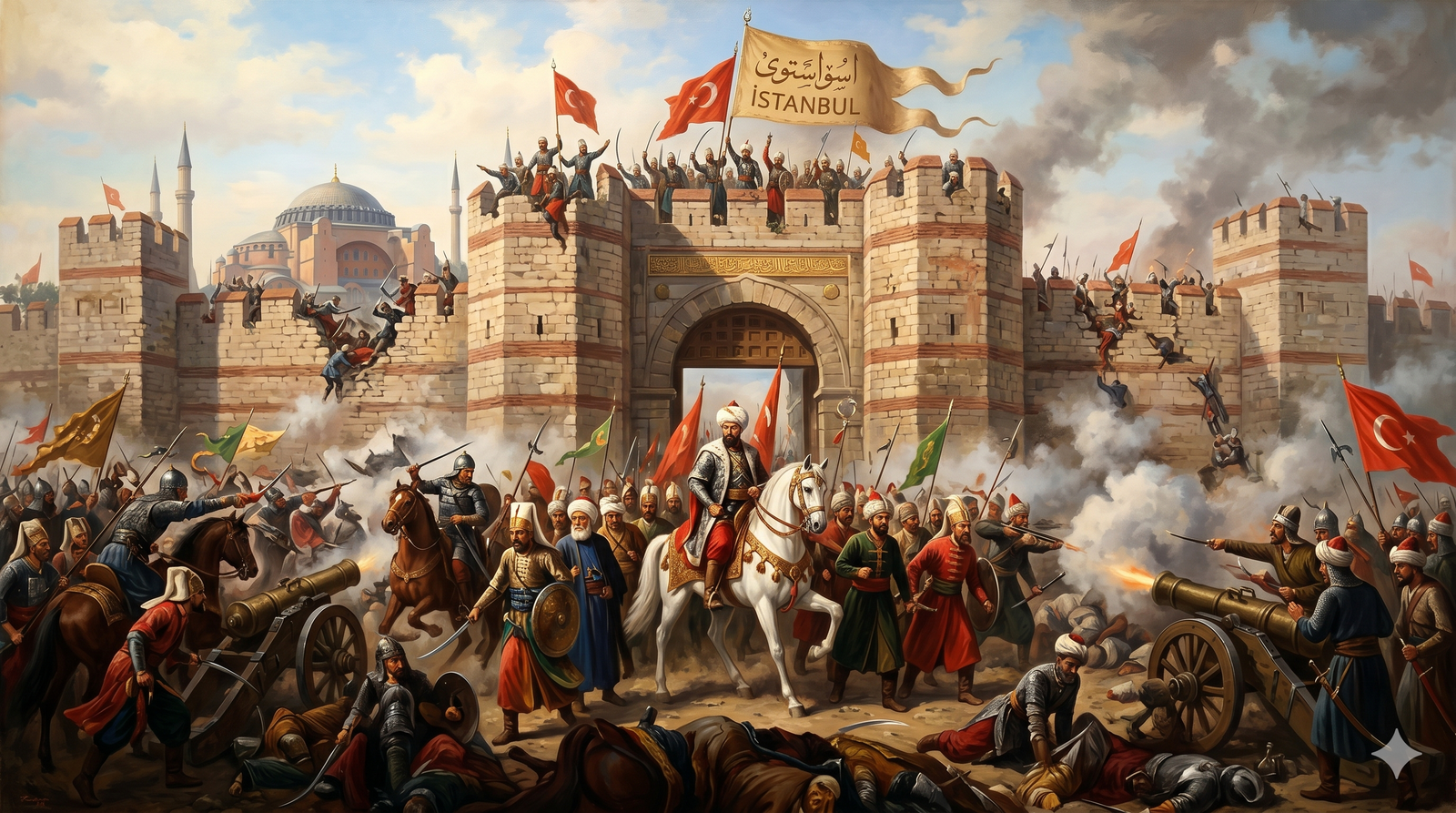
The conquest of Constantinople on May 29, 1453 is one of the ultimate turning points in world history. It brought a definitive end to the Byzantine Empire (the continuation of ancient Rome) and announced the Ottoman Empire as the new superpower bridging Europe and Asia.At the center of it all was the 21-year-old Ottoman Sultan, Mehmet II (later known as Fatih, or "the Conqueror").The Strategic SetupBy 1453, the Byzantine Empire was a shadow of its former self. Constantinople was essentially an isolated Christian island inside a rapidly expanding Muslim Ottoman sea. However, the city possessed the Theodosian Walls—a massive triple-layer fortification system that had resisted sieges for over a thousand years.To crack this nut, Mehmet II brought an unprecedented combination of numbers, engineering, and tactical audacity:The Numbers: Mehmet led an army of roughly 80,000 to 100,000 men. The Byzantine Emperor, Constantine XI Palaiologos, could only muster around 7,000 to 8,000 defenders to man miles of walls.The Super-Cannon: Mehmet hired a Hungarian engineer named Urban to cast the "Basilica"—a monstrous 27-foot cannon that fired 1,200-pound stone balls. While it took hours to reload and eventually cracked under its own heat, it fundamentally changed siege warfare forever by proving stone walls could be systematically shattered.
Score 0💬 0
30.05.2026
Cartoon & Humor
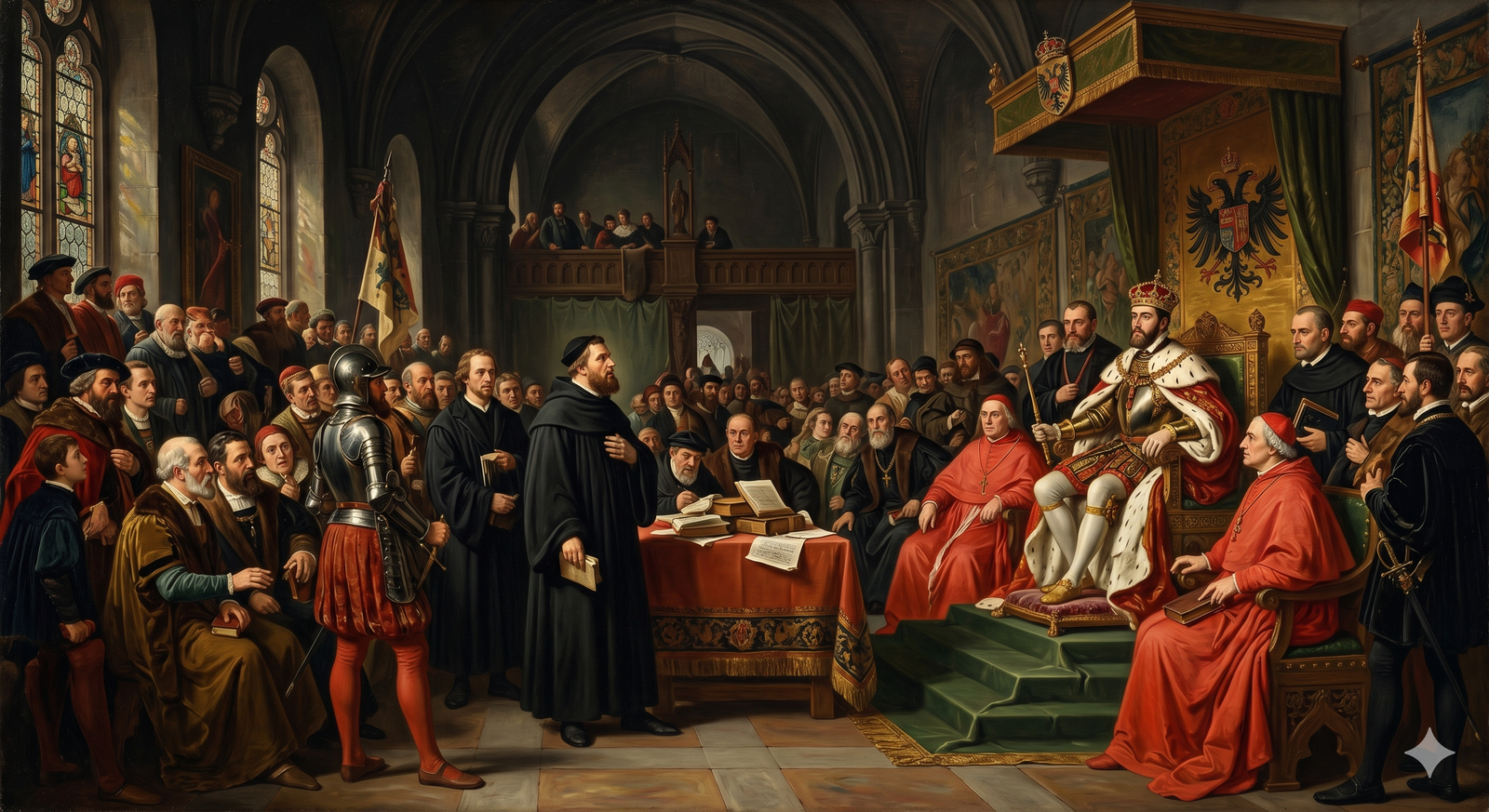
Reichstag zu Worms - Martin Luther und Kaiser Karl V
Im April 1521 ist Worms das politische Zentrum Europas. Auf der einen Seite steht der junge Kaiser Karl V., der gerade erst die Krone geerbt hat und über ein Reich herrscht, "in dem die Sonne nie untergeht". Auf der anderen Seite der Augustinermönch Martin Luther, der mit seinen 95 Thesen gegen den Ablasshandel die katholische Kirche in ihren Grundmauern erschüttert hat.Der Papst hatte Luther bereits exkommuniziert (aus der Kirche ausgestoßen). Eigentlich hätte Karl V. ihn direkt vogelfrei erklären müssen. Doch Luthers Landesherr, Friedrich der Weise von Sachsen, setzte durch, dass Luther auf dem Reichstag unter freiem Geleit persönlich angehört wird.Der Showdown: Das Treffen am 17. und 18. April 1521 war kein theologischer Diskurs, sondern ein knallharter Machtkampf. Luthers Bücher lagen aufgereiht auf einem Tisch. Er wurde im Grunde nur zwei Dinge gefragt: Sind das deine Bücher? Und: Widerrufst du die Inhalte? ReaktionMartin Luther(Der Reformator)Er verweigert den Widerruf, solange man ihn nicht durch die Bibel (die heilige Schrift) widerlegt. Das Gewissen steht über Papst und Kaiser.„...mein Gewissen ist in den Worten Gottes gefangen. Hier stehe ich, ich kann nicht anders, Gott helfe mir, Amen.“ (Sinngemäß überliefert)Karl V.(Der Kaiser)Sieht sich als Schutzherr der katholischen Kirche und der Einheit des Reiches. Für ihn ist Luther ein einzelner, irrender Mönch, der gegen tausend Jahre christliche Tradition argumentiert.„Es ist sicher, dass ein einzelner Mönch in seiner Meinung irrt, wenn diese gegen die ganze Christenheit steht [...] Ich bin entschlossen, meine Reiche, meine Freunde, meinen Leib und mein Blut dranzugeben.“Die Folgen des DuellsWeil Luther nicht widerrief, passierte genau das, was die Geschichte veränderte:Das Wormser Edikt: Karl V. verhängte im Mai 1521 die Reichsacht über Luther. Er war damit vogelfrei – jeder durfte ihn töten, seine Schriften wurden verboten.Die Schein-Entführung: Auf dem Rückweg wurde Luther von Soldaten seines Kurfürsten Friedrich "entführt" und zu seinem Schutz auf die Wartburg gebracht. Dort übersetzte er unter dem Pseudonym "Junker Jörg" das Neue Testament ins Deutsche.Die Spaltung: Karl V. konnte die Reformation nicht mehr aufhalten, da er politisch und militärisch durch Kriege gegen Frankreich und das Osmanische Reich abgelenkt war. Das Reich spaltete sich endgültig in ein katholisches und ein protestantisches Lager.
Score 0💬 0
28.05.2026
Cartoon & Humor
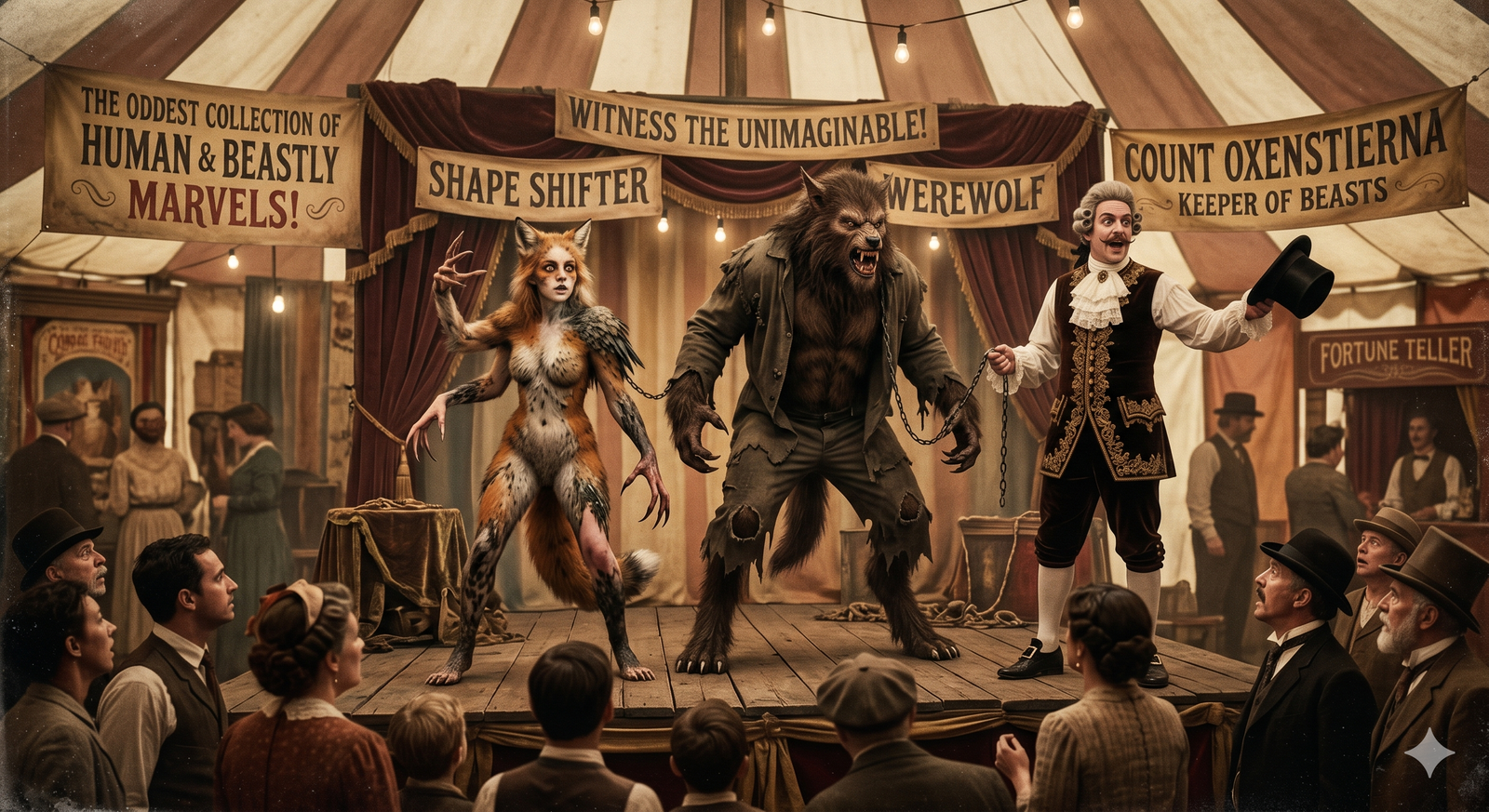
a shape-shifter, a werewolf and count oxenstierna in a freak-show!
Score 0💬 0
27.05.2026
Cartoon & Humor
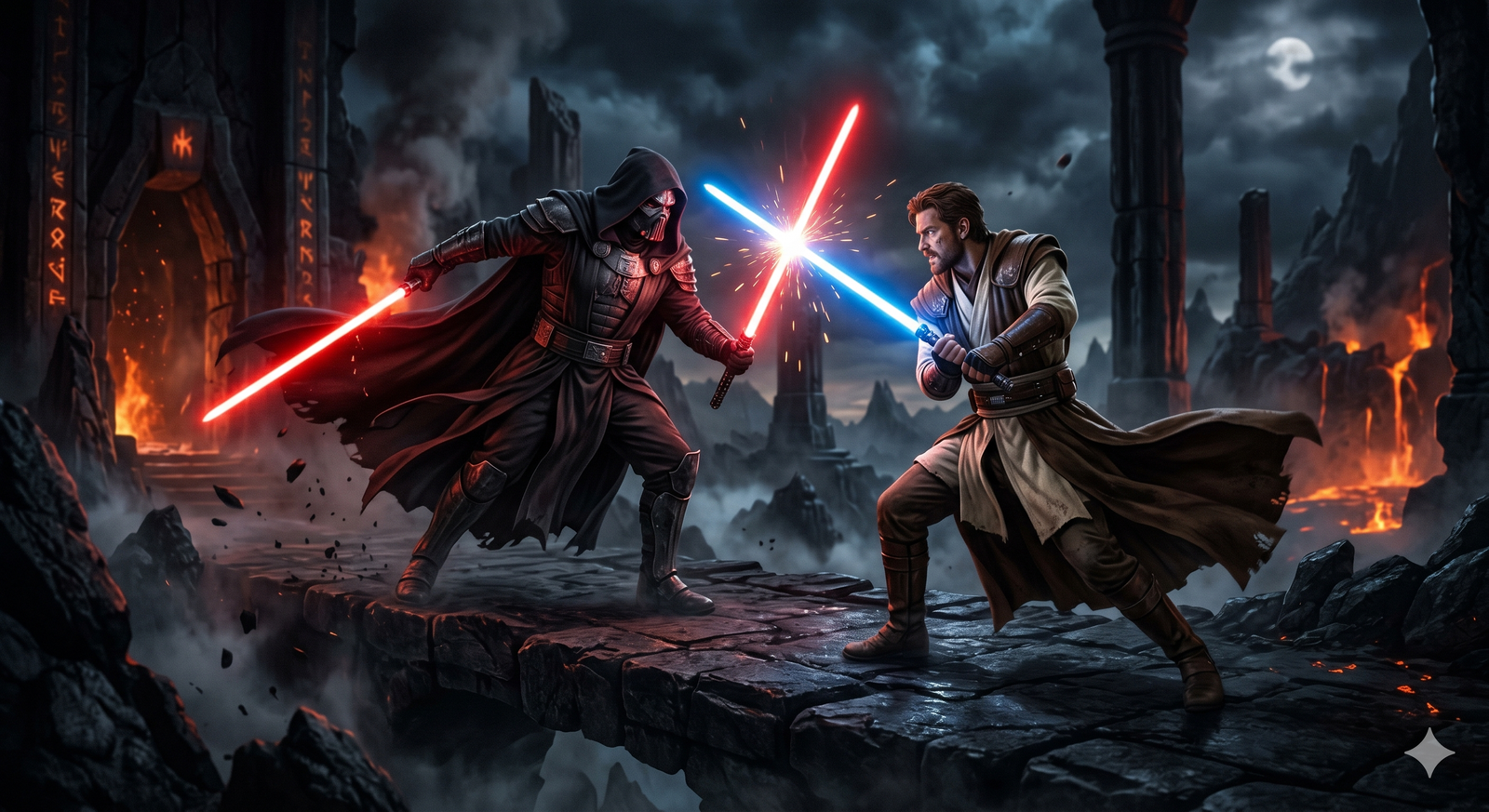
Sith Lord vs Jedi Knight - epic battle for supremacy
Score 0💬 0
27.05.2026
Cartoon & Humor
an Austrian Hunter, an Alien and a Wizard competing at a Hunt in Lower Austria
Advantages: the lower Austrian Hunter knows by far the typical landscape, the game and the traditional huntig habits of the hunting events. the Alien has the most sophisticated weapon but he is "alien" to the territory and the Wizard has been teleported from Middle Earth - so he is also alien to the game and the traditional habits - but he can use witchcraft which leads to his superior skills.
Score 0💬 0
26.05.2026
Cartoon & Humor
Als die Region um das Jahr 1114 erstmals in einer Urkunde des Stifts Klosterneuburg erwähnt wurde, hieß das Gebiet noch Campus anseris (Gänsefeld). Das sumpfige Gelände rund um den Weidenbach bot ideale Bedingungen für die Zucht von Gänsen.Wenige Jahre später, am 10. Februar 1115, tauchte der Ort erstmals offiziell als „Genstribindorf“ (wörtlich: Gänsetreiberdorf) in einer Urkunde des Bischofs von Passau auf. Der Name bezog sich direkt auf die Menschen, die dort lebten und arbeiteten: die Gänsehirten bzw. Gänsetreiber. Historischer Alltag: Die Marchfelder Gänsetreiber hielten die Tiere in riesigen Scharen und trieben sie zu Fuß – oft über weite Strecken und später auch mithilfe von Rückengestellen (sogenannten „Gänsekraxen“) – bis nach Wien, um sie dort auf den Märkten zu verkaufen.
Score 0💬 0
26.05.2026
Cartoon & Humor
archeologists finally excavate the Holy Grail in the suburbs of Jerusalem
In Arthurian legend and Christian tradition, it is the legendary cup or chalice that Jesus Christ drank from at the Last Supper and which was used to catch his blood at the crucifixion. Knights spent their entire lives searching for it. While mainstream historians agree the Holy Grail is a myth born out of medieval fiction, several real-world artifacts claim the title. The most famous is the Holy Chalice of Valencia, housed in Spain. The top portion is an ancient agate cup dated to the 1st century BCE or CE, though the elaborate gold base and jewels were added much later in the Middle Ages.
Score 0💬 0
26.05.2026
Cartoon & Humor
usefull gadgets you can invent with a prism:
Newton isolated a single color from the spectrum (for example, just the red light) and passed it through a second prism. If the prism was adding color, the red light should have changed colors. It didn’t—it stayed red. Recombination: He placed an inverted second prism in the path of the separated rainbow spectrum. The second prism bent the colors back together, merging them back into a single beam of pure white light. The Verdict: White light is not the absence of color; it is the combination of all colors. Prisms don't create color; they just untangle it. each color gets its own unique angle of refraction causing them to fan out.
Score 0💬 0
26.05.2026
Cartoon & Humor
Leif Erikson was the first European to set foot on American Soil - almost 500 years before Columbus!
Score 0💬 0
24.05.2026
Cartoon & Humor
King Gustav Adolf meets Count Oxenstierna. Oxenstierna was the Swedish imperial Chancellor before, during and after the 30 years war. King Gustav Adolf was fatally wounded at the battle of Lützen 1634
Score 0💬 0
24.05.2026
Cartoon & Humor
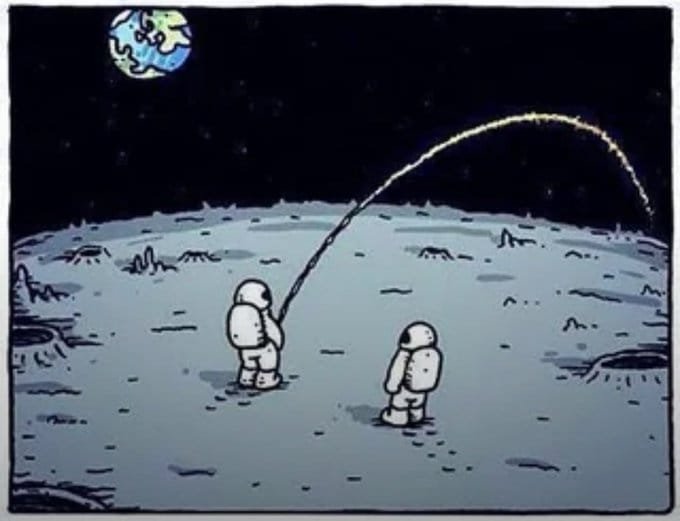
If you were to step outside your lunar habitat, bypass the obvious life-support logistics of your spacesuit, and relieve yourself on the surface of the Moon, you would witness a textbook, mathematically perfect parabola.Here is exactly how the physics breaks down compared to doing the same thing on Earth.1. The Perfect Parabola (No Air Resistance)On Earth, standard projectile motion is ruined by atmospheric drag. Droplets of liquid quickly hit terminal velocity, break up, and fall into a distorted shape.Because the Moon is a vacuum, there is zero air resistance. Every single droplet would follow a flawless, unbothered parabolic trajectory dictated purely by initial velocity and gravity. The standard kinematic equation for the vertical position ($y$) over time ($t$) applies perfectly here:$$y = y_0 + v_0 \sin(\theta)t - \frac{1}{2}gt^2$$Where $g$ is the local acceleration due to gravity.2. Distance and Height (The $1/6\text{th}$ Gravity Effect)Lunar gravity is only about $16.6\%$ of Earth's gravity ($g_{moon} \approx 1.62 \text{ m/s}^2$ vs. $g_{earth} \approx 9.81 \text{ m/s}^2$). Because the downward acceleration is roughly six times weaker, two wild things happen to the trajectory:The Peak: The stream would go roughly six times higher than it would on Earth.The Range: The horizontal distance covered would be six times farther.If a person on Earth achieves a modest distance of $1.5\text{ meters}$, that exact same launch velocity and angle on the Moon would launch the stream $9\text{ meters}$ (nearly $30\text{ feet}$) away.3. The Graphic Plot Twist: Boiling and FreezingWhile the trajectory math is clean, the physical state of the liquid introduces a chaotic twist.Because space is a vacuum, the boiling point of liquid drops instantly. The moment the fluid leaves the pressurized environment of a suit, it would undergo explosive flash boiling.The Vapor: A significant portion of the liquid would instantly turn into a gas, expanding rapidly in all directions.The Ice: Flash boiling removes heat from the remaining liquid incredibly fast, causing it to instantly freeze into tiny ice crystals.The Visual ResultInstead of a clean, cohesive liquid stream arc, you would get a parabolic cloud of sparkling ice crystals drifting majestically over a $30\text{-foot}$ span before settling onto the lunar dust.Because the Moon's gravity is so low, it would also take almost three times longer to complete the arc and hit the ground than it would on Earth.
Score 0💬 0
24.05.2026
Cartoon & Humor
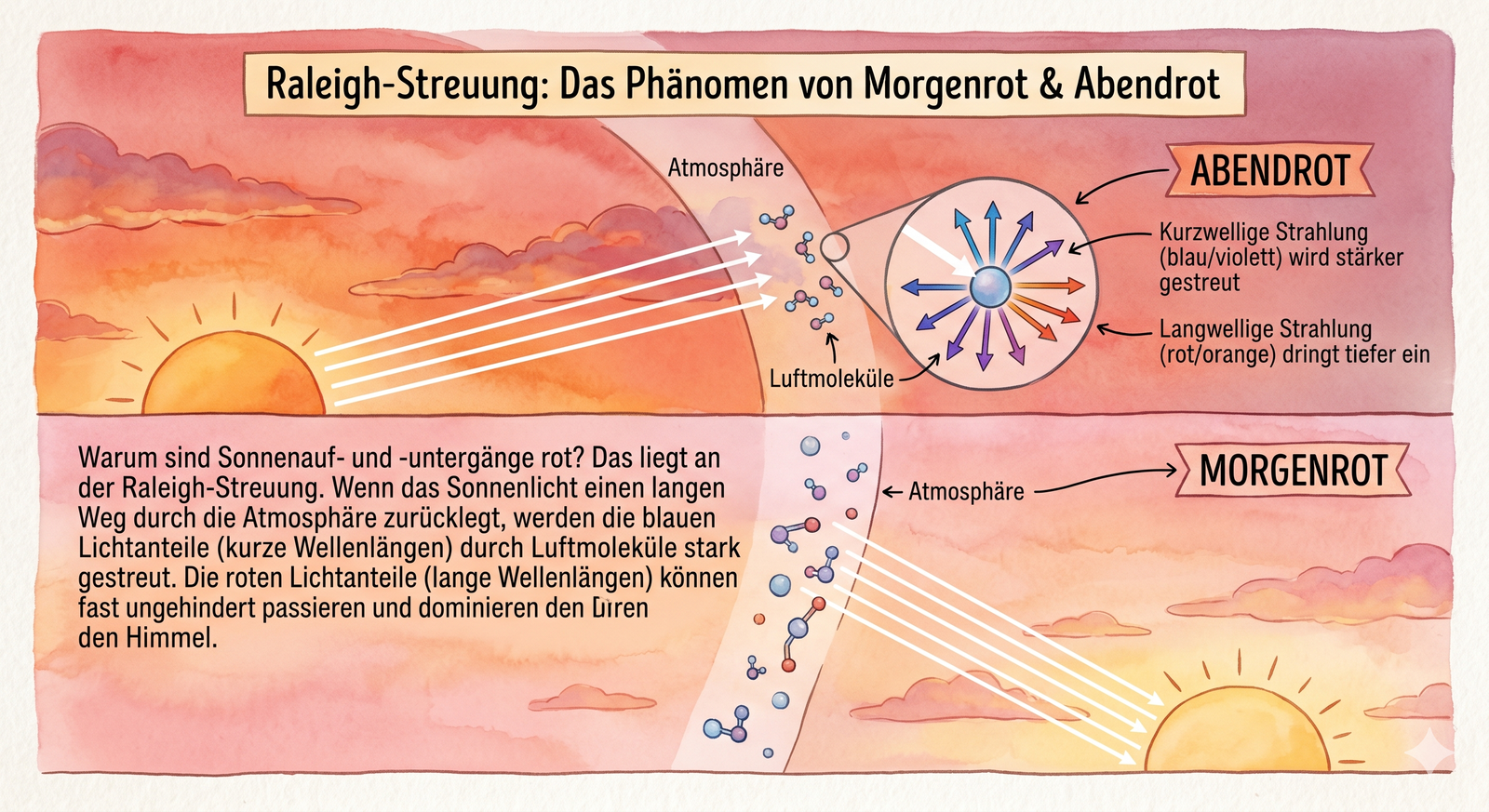
die Raleigh - Streuung erklärt das Phänomen von Morgen-und Abendrot. Das weisse Sonnenlicht setzt sich aus mehreren Farbfrequenzen von rot bis ultraviolett zusammen. Da das höherfrequente blaue Licht stärker gestreut wird als das langwellige rote Licht muss das einfallende Sonnenlicht zur Mittagszeit einen viel längeren Weg durch die Atmosphäre zurücklegen und somit werden mehr rotfrequente Partikel auf ihren Weg durchgelassen als das blaue Licht- so entsteht das Morgen- bzw Abendrot. Das Weltall ist schwarz - es gibt keine Atmosphäre - es gibt dort also keine Streuung und das Sonnenlicht erscheint uns weiss.
Score 0💬 0
18.05.2026
Cartoon & Humor
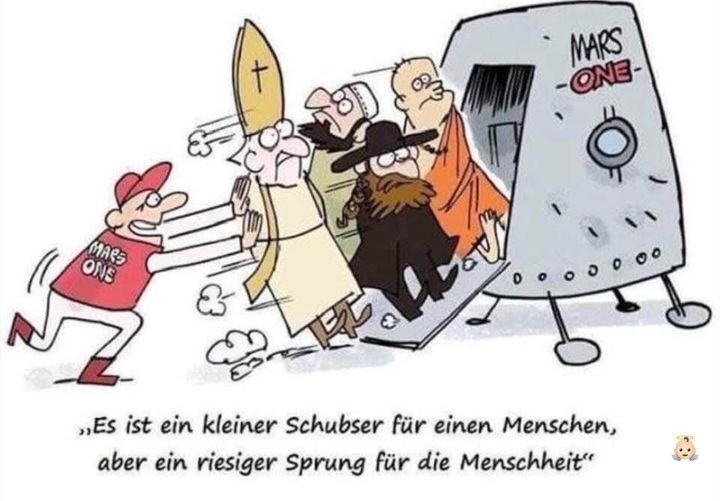
a small step for a man but a big leap forward for mankind.
Score 0💬 0
18.05.2026
Cartoon & Humor
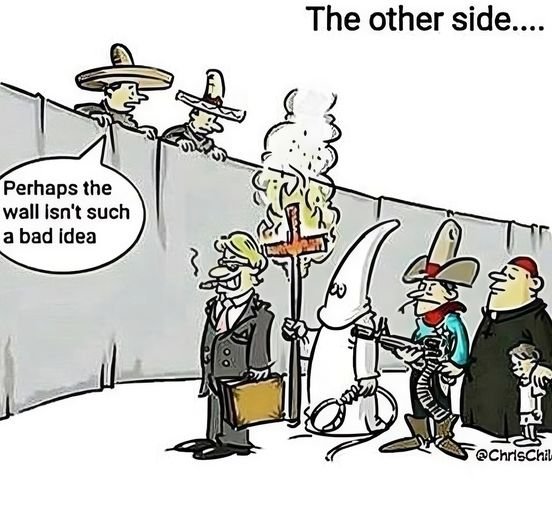
the Wall - no comments
Score 0💬 0
18.05.2026
Cartoon & Humor
humans feeling alone in the universe and looking for friends far, far away
Score 0💬 0
18.05.2026
Cartoon & Humor
people starting to realize that the entire world is just a computer generated illusion
Score 0💬 0
16.05.2026
Cartoon & Humor
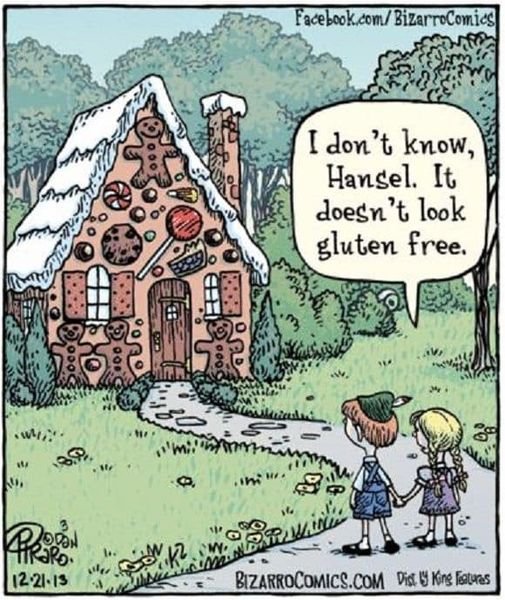
gingerbread house
Score 0💬 0
16.05.2026
Cartoon & Humor
Giacomo Casanova seduces a beautiful woman
Score 0💬 0
14.05.2026
Cartoon & Humor
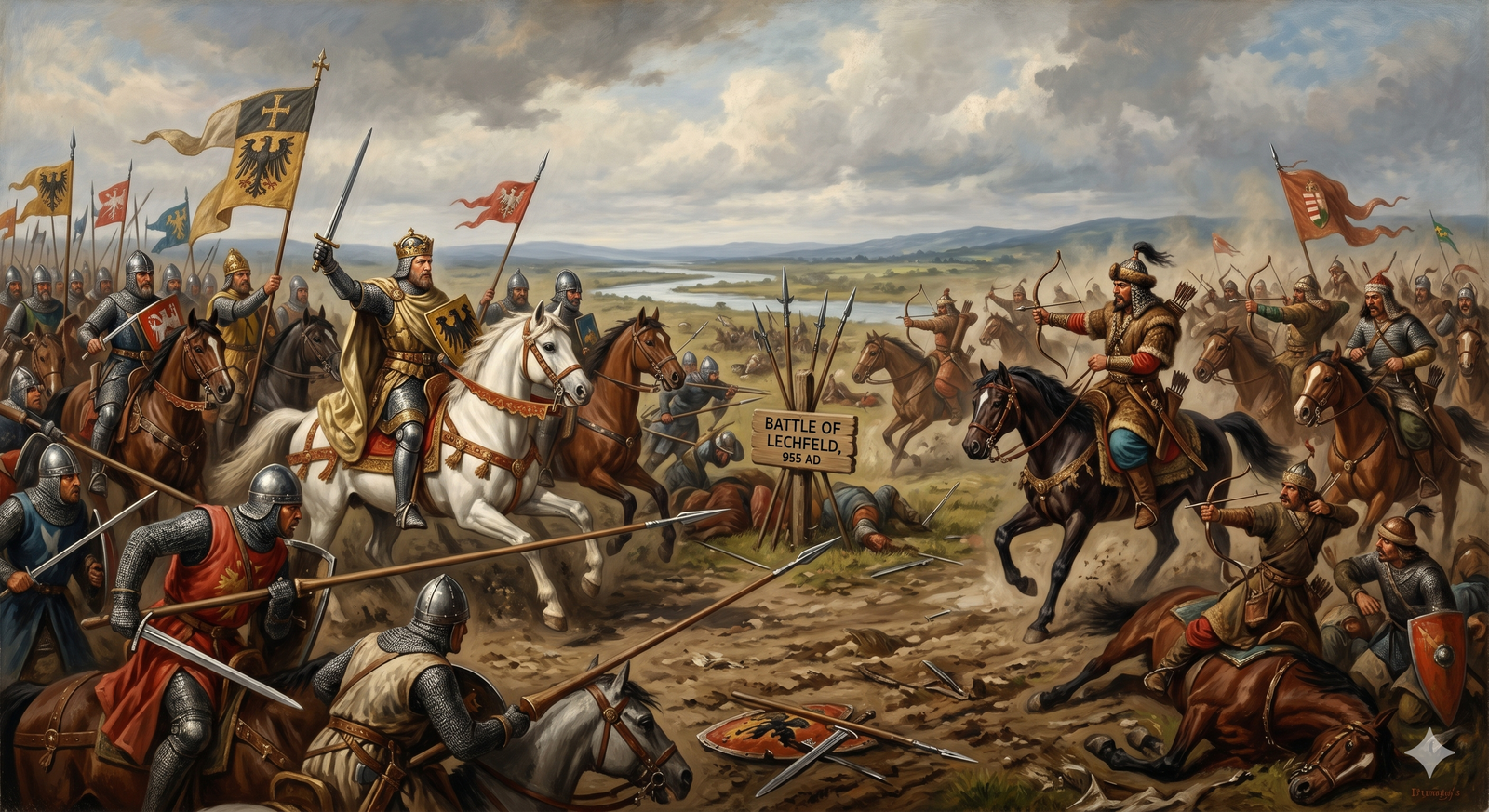
955 AD Battle of Lechfeld Attila vs King Otto: The Birth of the Holy Roman Empire: The victory cemented Otto I’s reputation as the undisputed defender of Christendom. In 962, largely on the strength of this triumph, Pope John XII crowned him Holy Roman Emperor. The Settlement of Hungary: The catastrophic defeat shattered the Magyar military elite and forced a massive cultural shift. They halted their nomadic expansion, permanently transitioned to a sedentary agrarian society, converted to Christianity under King Stephen I, and founded the Kingdom of Hungary. A United Germany: The battle forced historically bitter rivals (like the Saxons, Bavarians, and Swabians) to fight under a single banner, marking a foundational moment for German national identity.
Score 0💬 0
10.05.2026
Cartoon & Humor
was ist die hässlichste Stadt Österreichs?
Score 0💬 0
10.05.2026
Cartoon & Humor
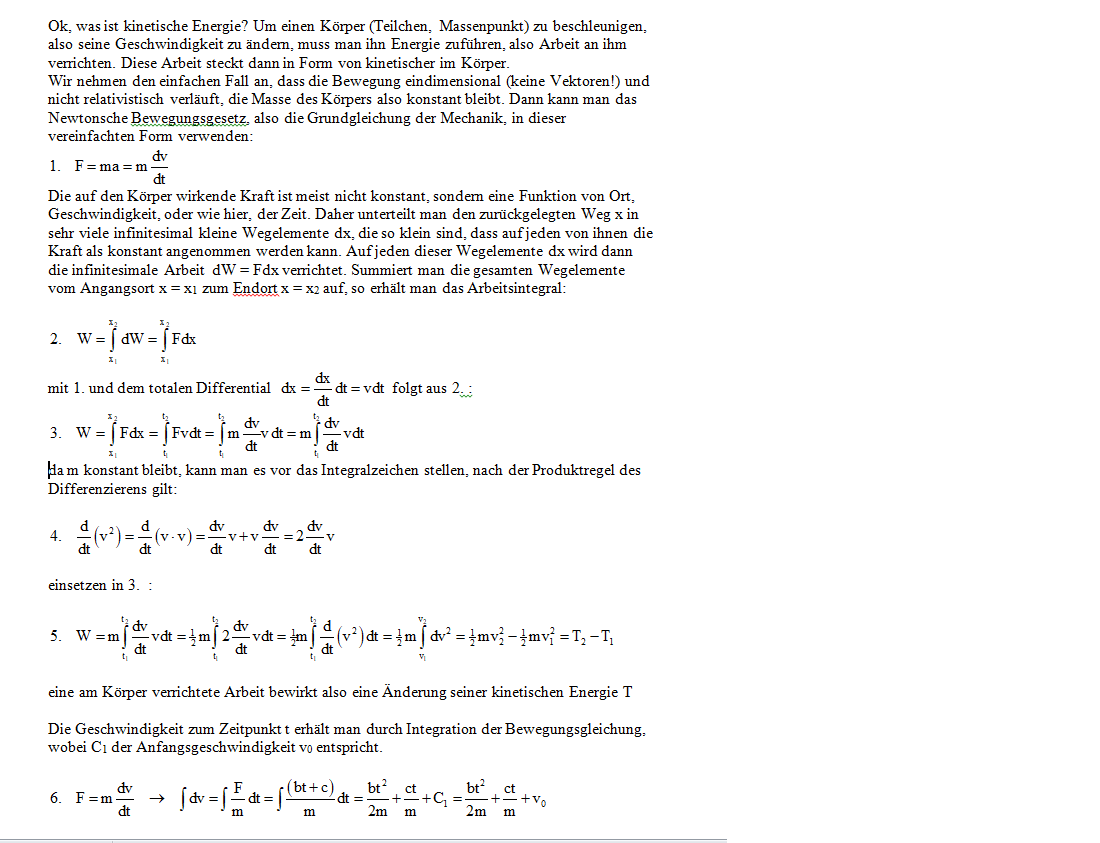
zeitbahängige Differentialgleichungen: kinetische Energie
Score 0💬 0
09.05.2026
Cartoon & Humor
a Hindu in his immagination Paradise
Score 0💬 0
09.05.2026
Cartoon & Humor
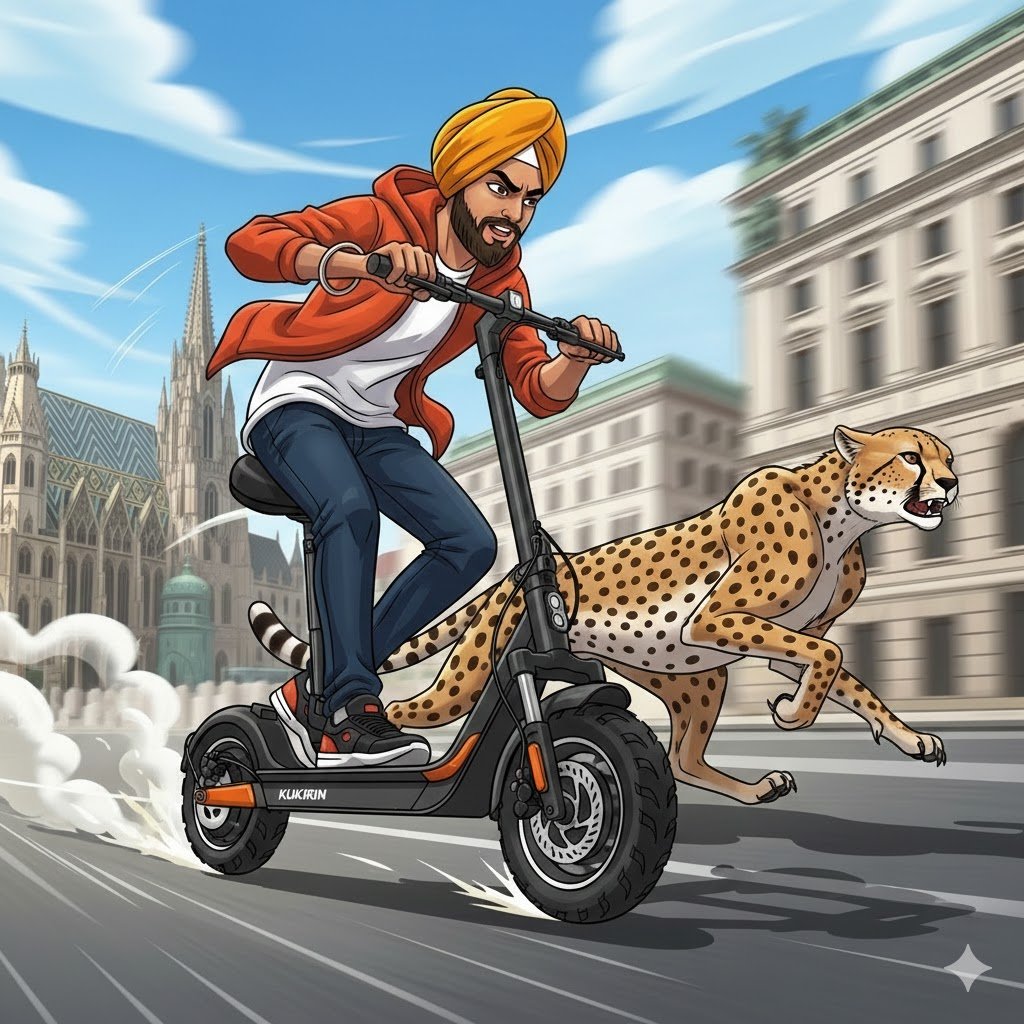
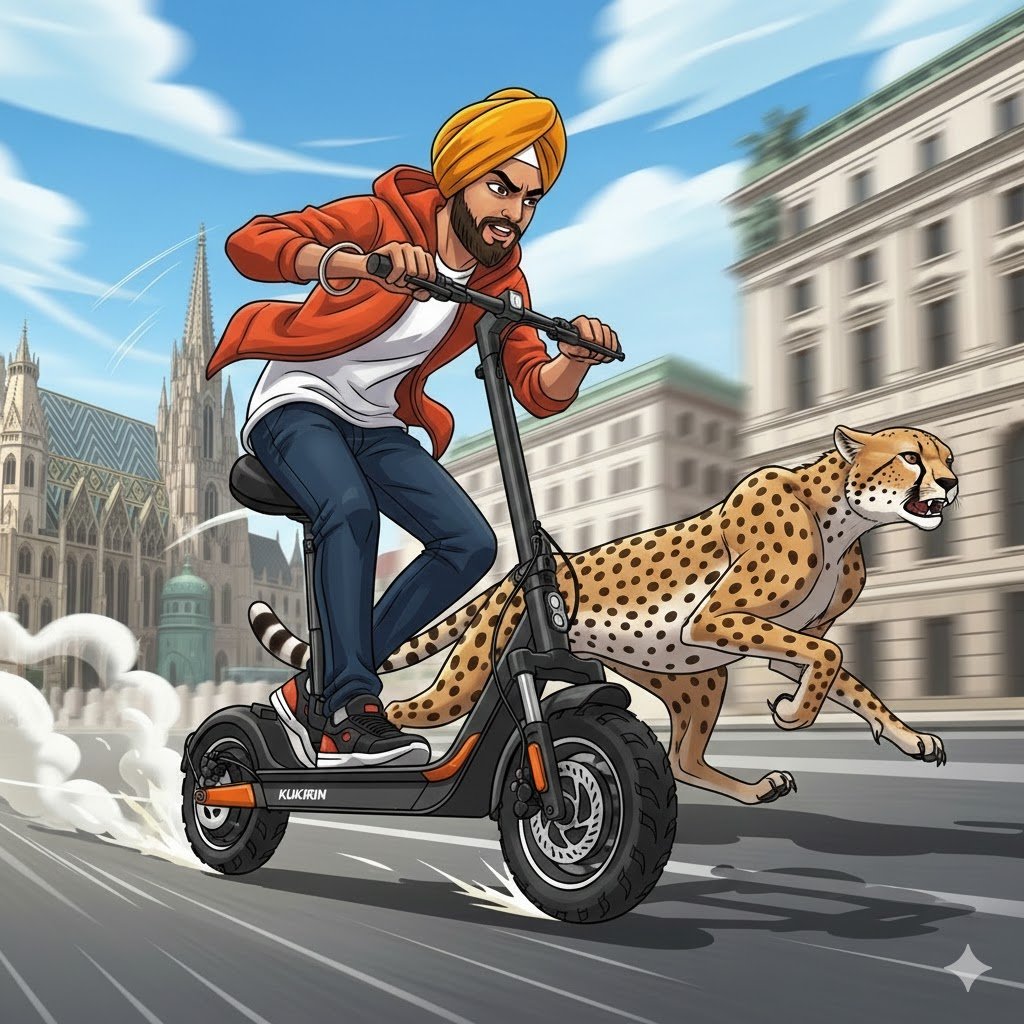
an Indian scooter driver in an illegal streetrace in dowtown Vienna competing with a cheetah
Score 0💬 0
09.05.2026
Cartoon & Humor
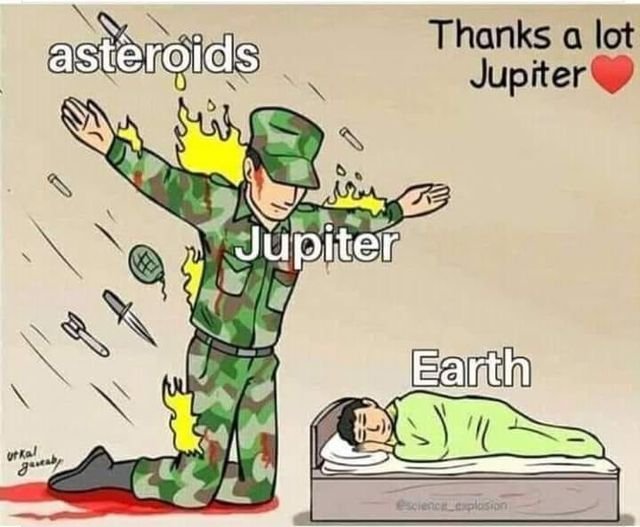
ja - die Schwerkraft vom Jupiter...
Score 0💬 0
09.05.2026
Cartoon & Humor
tja - Pech für homo sapiens
Score 0💬 0
08.05.2026
Cartoon & Humor
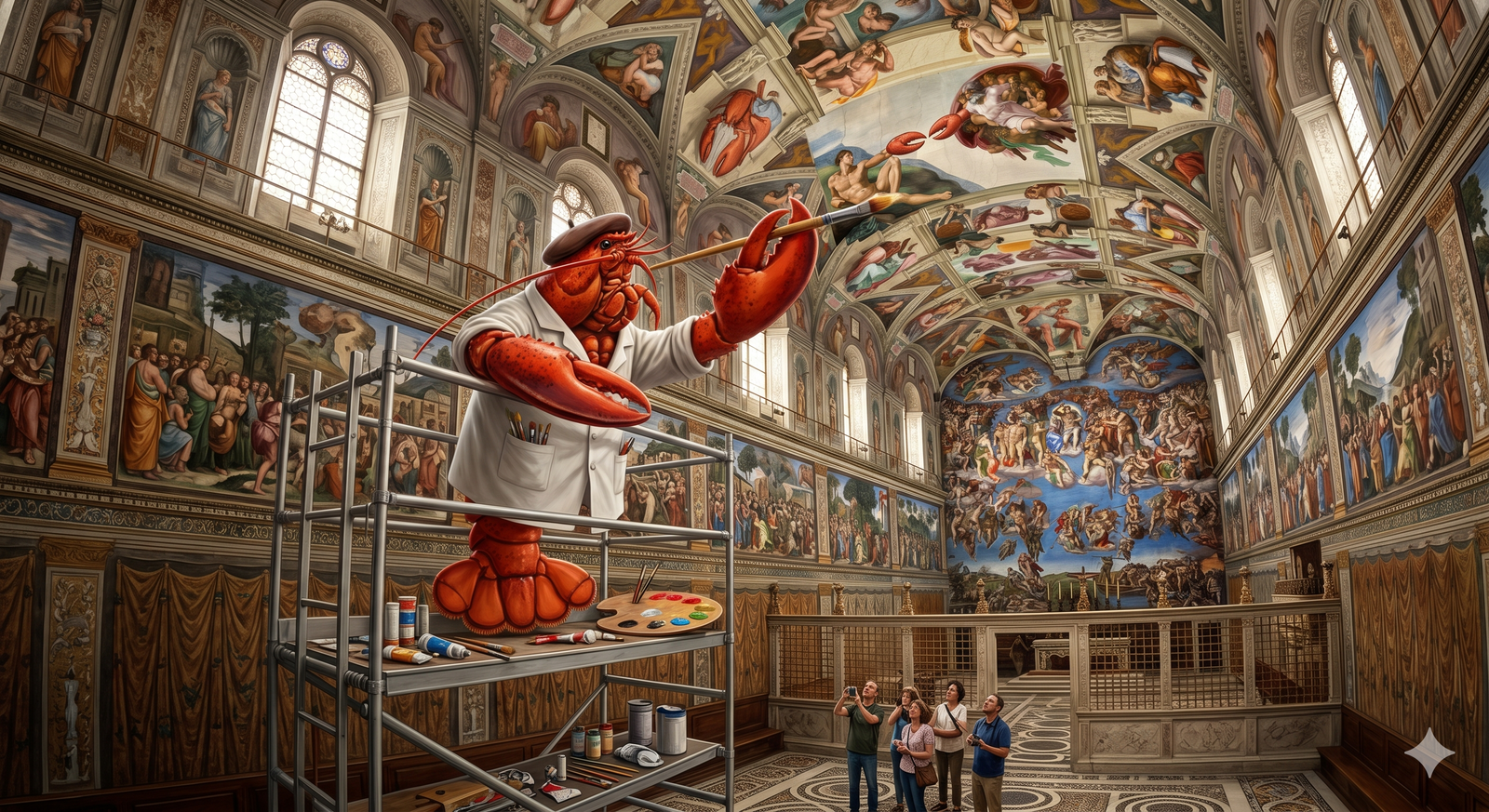
l' astice artista dipinding la Sistina
Score 0💬 0
08.05.2026
Cartoon & Humor
raper's delight performed by the original rap-lobster
Score 0💬 0
07.05.2026
Cartoon & Humor
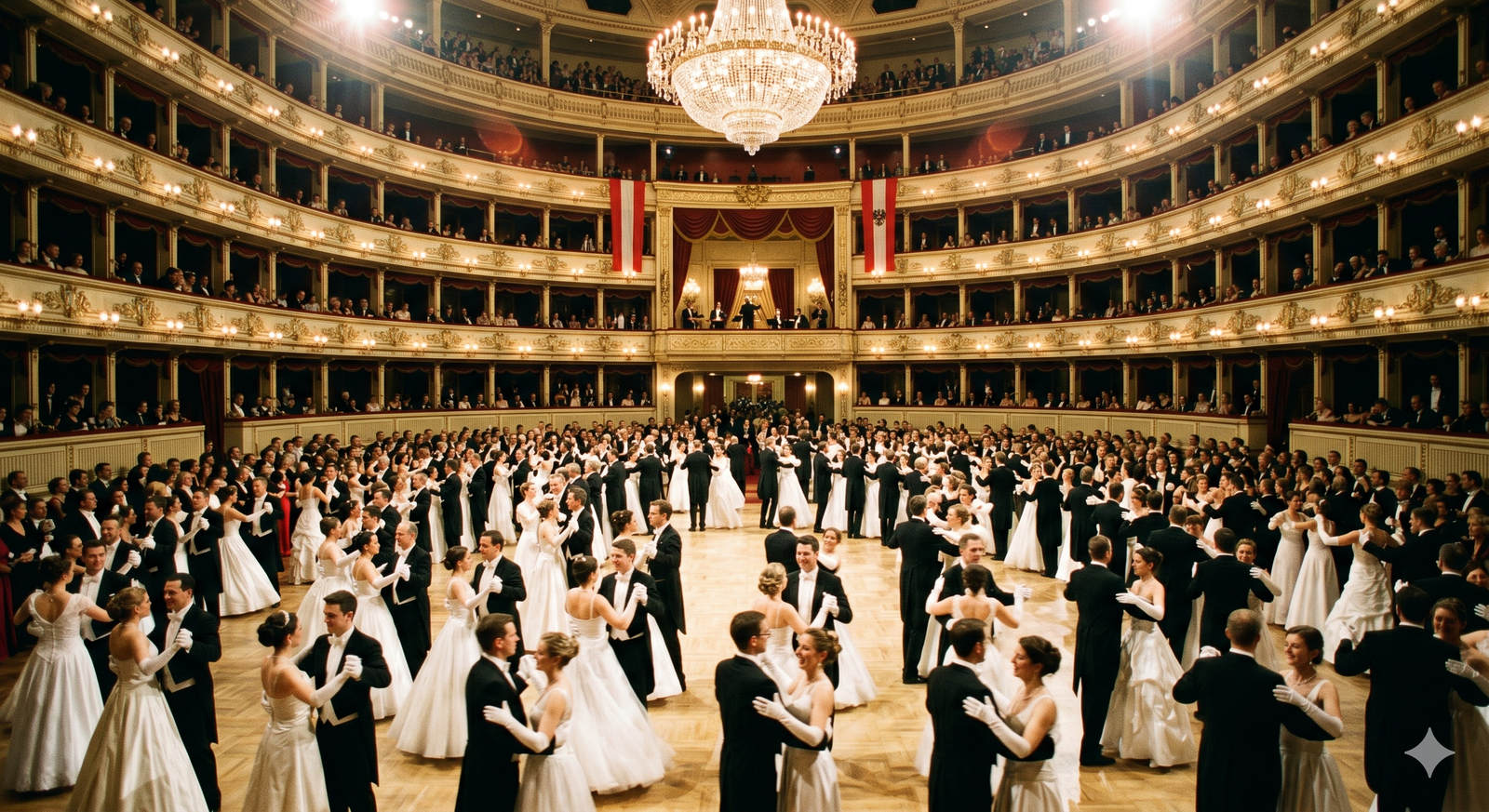
Opernball Vienna one of the leading society events in Vienna. Question: is it just an event for the upper classes? or does it contribute with other fringe benefits to the population?
Score 0💬 0
04.05.2026
Cartoon & Humor
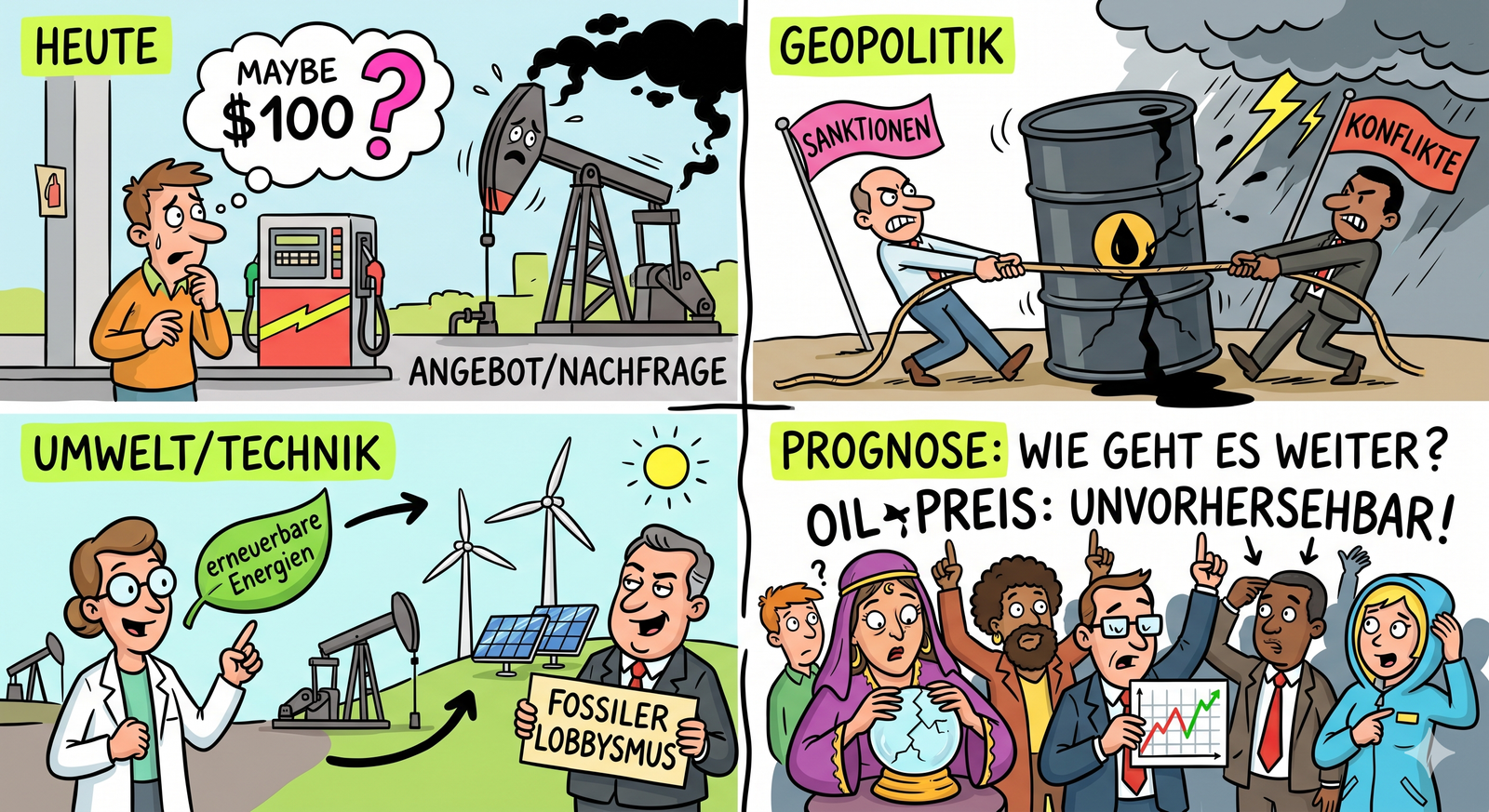
Ölpreis. Wie geht es weiter?
Score 0💬 0
03.05.2026
Cartoon & Humor
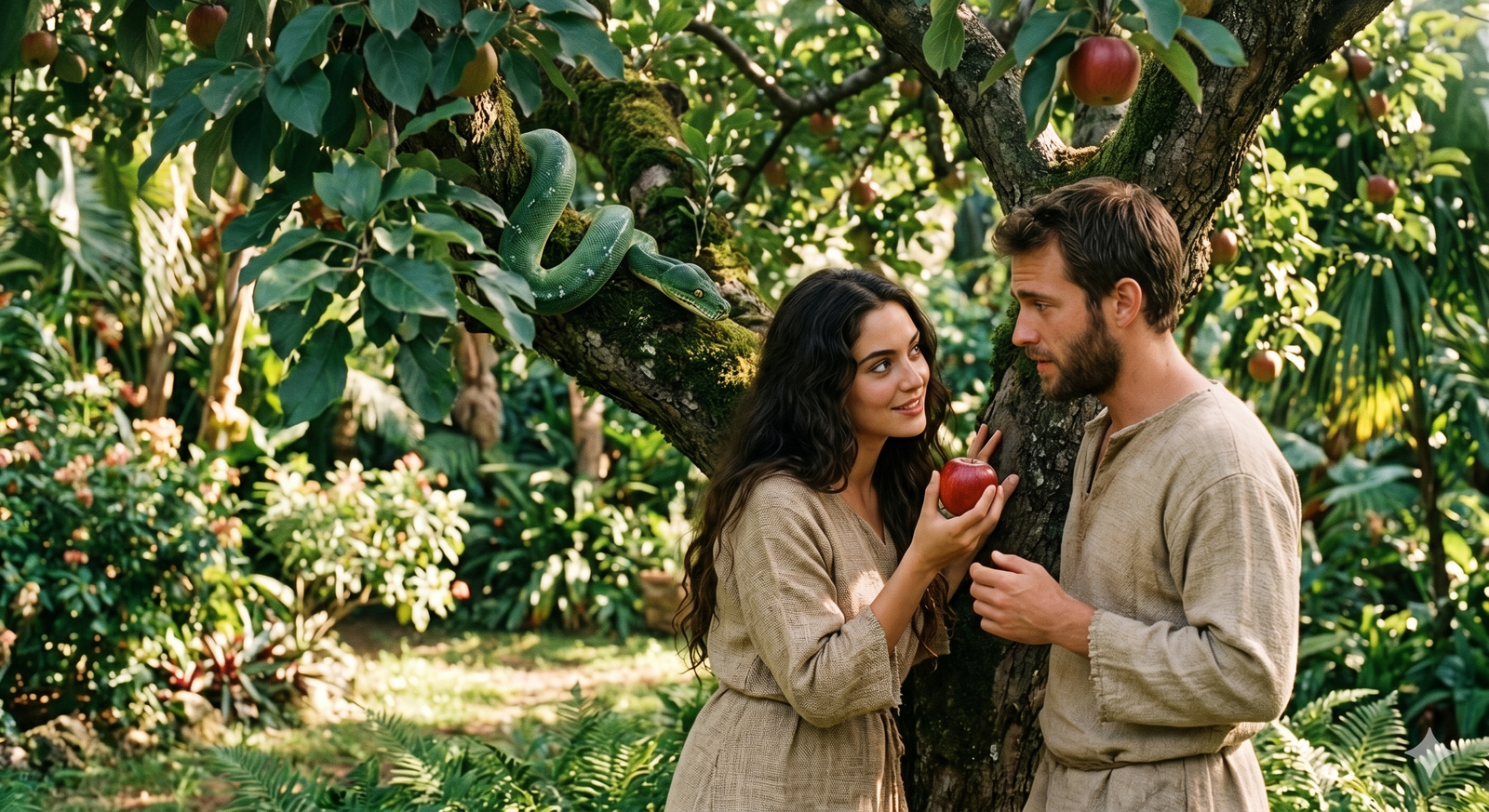
eve seduces the gullible adam to steal the forbidden apple while the talking snake is lurking
Score 0💬 0
03.05.2026
Cartoon & Humor
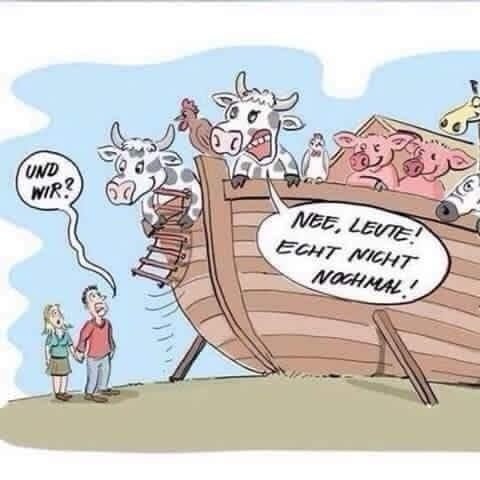
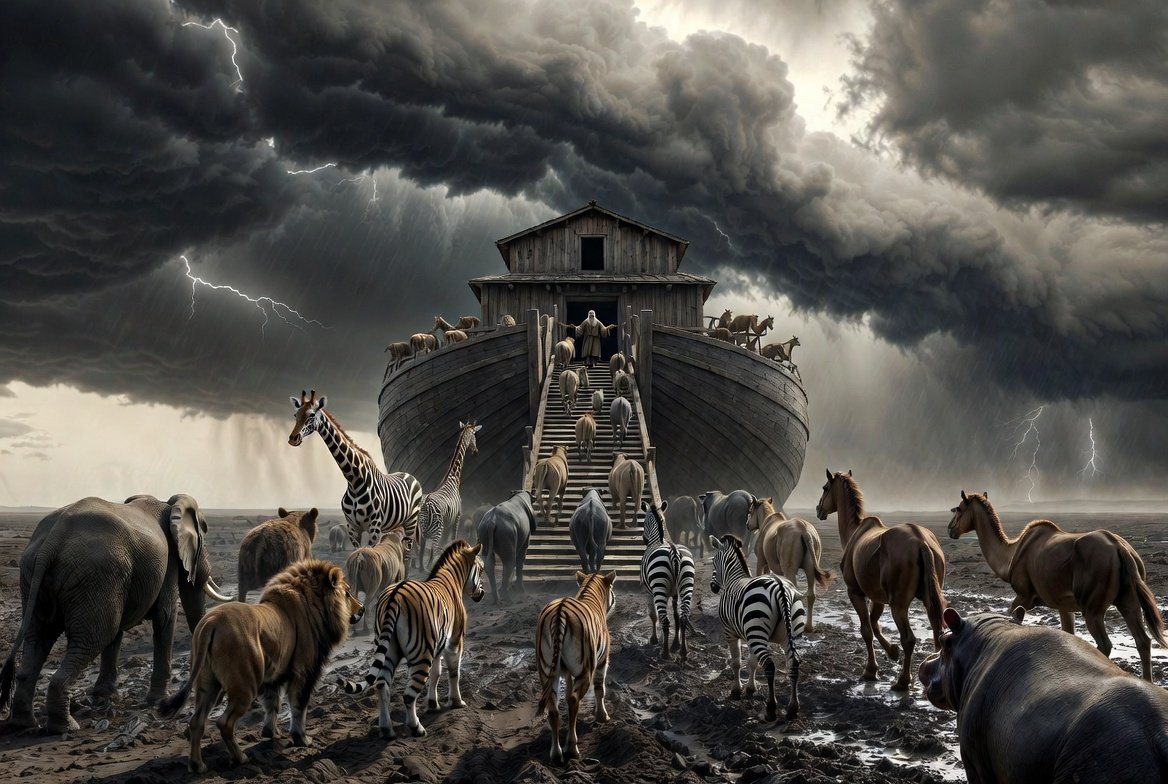
noha's arc: group of animals are entering noah's arc in groups (god considered the a pair of each sexes are enough to later reproduce millions of each kind - he obviously was not aware of modern genetics)
Score 0💬 0
02.05.2026
Cartoon & Humor
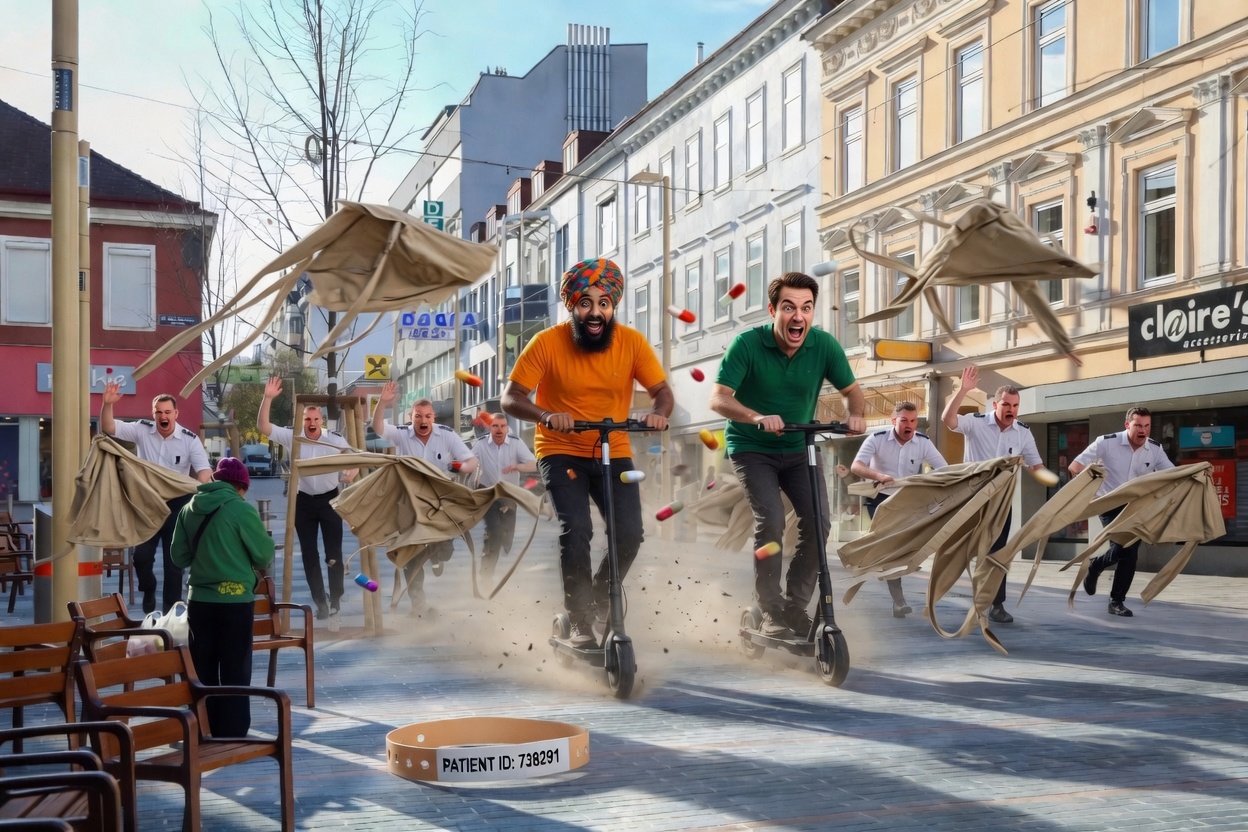
Two scooter drivers racing violently across Meidlinger Hauptstrasse janitors or prison guards with straight jackets in close pursuit.
Score 0💬 0
02.05.2026
Science
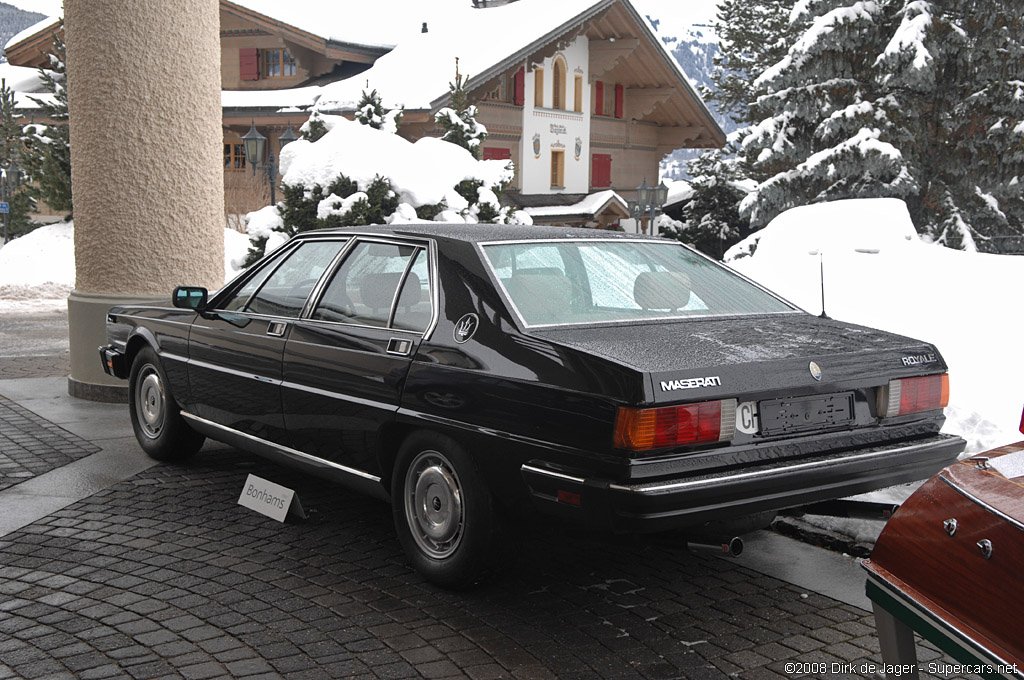
Interior of the Maserati Royale
Score 0💬 0
01.05.2026
Science
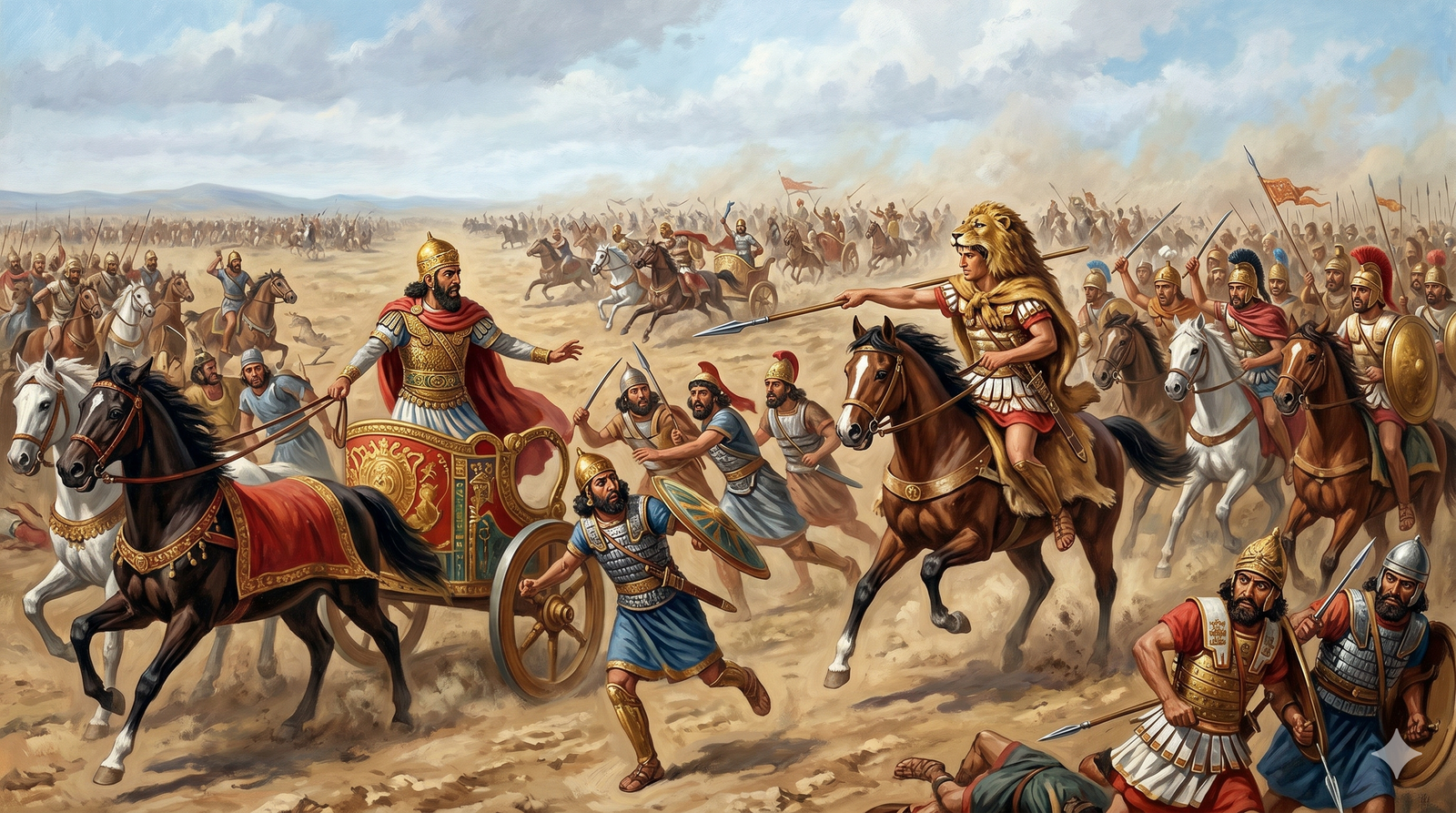
Alexander the Great vs King Darius of Persia - Battle of Gaugamela
The Battle of Gaugamela (October 1, 331 BCE) was the definitive "endgame" match between Alexander the Great and King Darius III of Persia. Gaugamela was the moment the Achaemenid Empire effectively ceased to exist.weapon"UnitsPhalanx, Companion CavalryScythed Chariots, War Elephants, ImmortalsStrategyH🧠 Alexander’s Masterstroke: To counter this, he used a brilliant piece of "battlefield baiting":The Oblique Advance: Alexander marched his army diagonally toward the Persian right.The Bait: Darius, fearing he was being outflanked, moved his cavalry to follow Alexander, As the Persian units shifted, a small gap opened in their center. Alexander immediately formed his Companion Cavalry into a giant wedge and dove straight into that gap, aiming directly for Darius himself.
Score 0💬 0
29.04.2026
Science
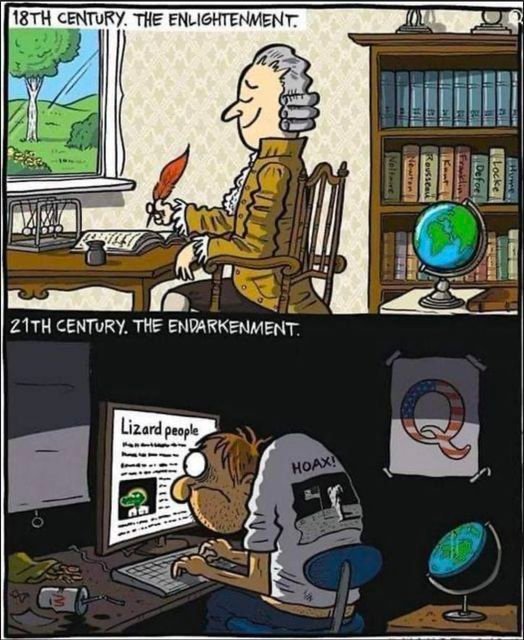
Enlightenment vs Endarkement
The Enlightenment (roughly the 17th and 18th centuries) was built on the radical idea that human beings could understand the universe through reason and empirical evidence rather than tradition or divine revelation.
Core Tenet: Sapere Aude—"Dare to know."
Key Values: * Scientific Method: If you can’t prove it, don’t preach it.
Individualism: You have rights simply because you exist.
Secularism: Keeping the church and state in separate lanes.
Progress: The belief that society can actually get better over time.
2. The Endarkenment: The Age of Unreason
The "Endarkenment" isn't a formal historical period; it’s a modern warning. It describes a cultural shift where objective facts are replaced by "alternative facts," and expertise is viewed with suspicion.
Core Tenet: "My feelings are as valid as your facts."
Key Characteristics:
Post-Truth: Where emotional appeal outweighs factual accuracy.
Echo Chambers: Surrounding oneself only with information that confirms existing biases.
Anti-Intellectualism: Dismissing scientific consensus (e.g., climate change or medicine) as elitist propaganda.
Fundamentalism: A return to rigid, dogmatic thinking that leaves no room for nuance.
Score 0💬 0
29.04.2026
Science
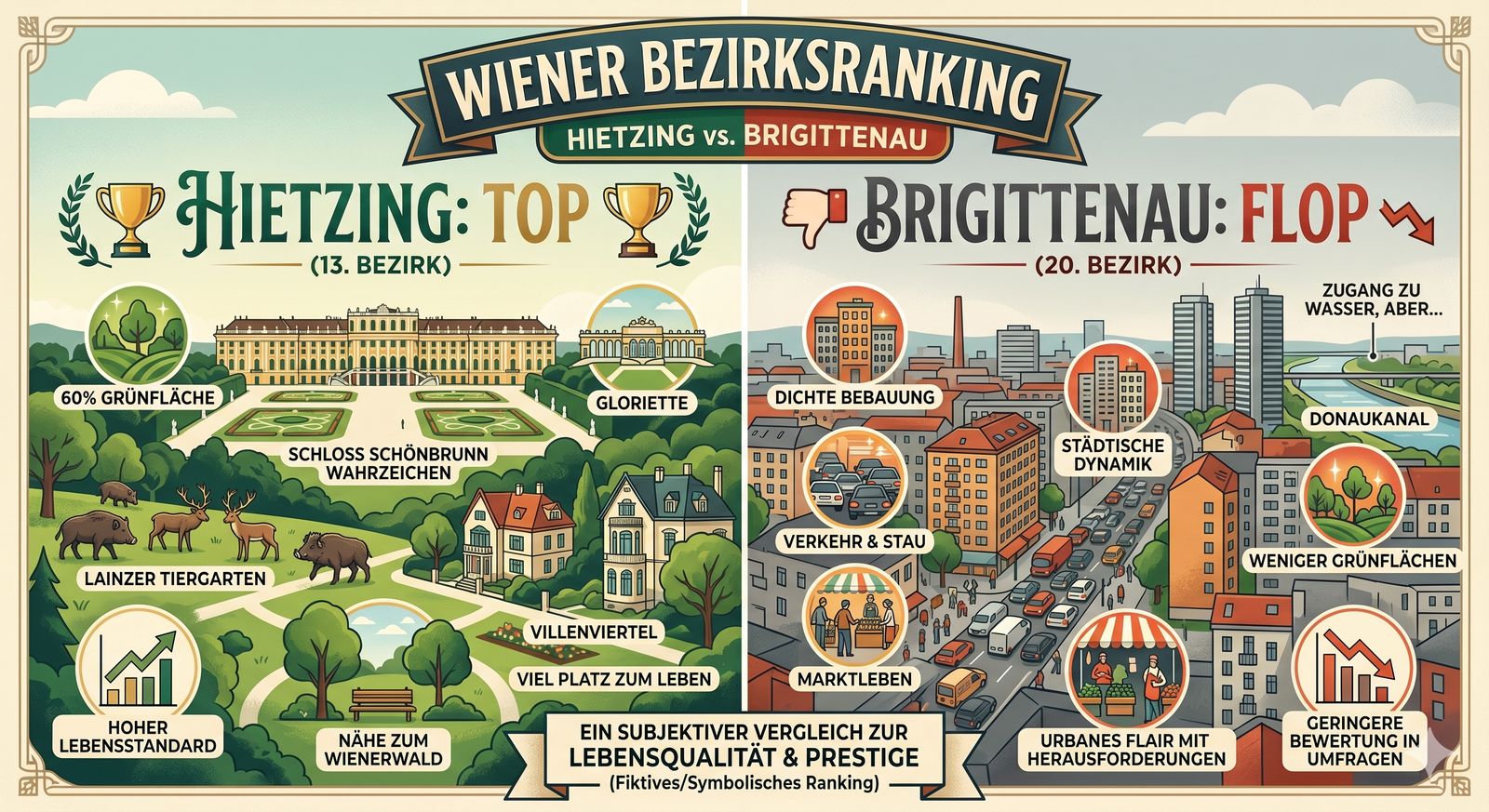
Wiener Bezirksranking: Hietzing top - Brigittenau flop
Hietzing bleibt auch 2026 der Inbegriff von Prestige. Wenn man hier wohnt, hat man es meistens „geschafft“.Warum „Top“? Es ist der grünste Bezirk Wiens. Mit dem Lainzer Tiergarten und Schönbrunn direkt vor der Haustür lebt man hier quasi im Park. Die Villenviertel in Ober St. Veit sind architektonisch ein Traum, und die Kriminalitätsrate ist so niedrig, dass man fast vergisst, in einer Millionenstadt zu sein.Der Preis: Die Exklusivität kostet. Mit Quadratmeterpreisen von durchschnittlich über 7.700 € (Stand April 2026) ist Hietzing für Normalverdiener kaum noch finanzierbar.Die Schattenseite: Manche finden es hier ein bisschen zu ruhig – fast schon verschlafen. Wer Nachtleben oder Street-Food-Märkte sucht, ist im 13. falsch. Zudem ist die Bevölkerung im Schnitt deutlich älter.🏗️ Brigittenau: Warum der „Flop“-Ruf?Die Brigittenau hat es schwer gegen die PR-Maschine von Hietzing anzukommen. Sie wird oft als grau, dicht bebaut und sozial schwierig abgestempelt.Die Kritik: Statistiken von 2025/26 zeigen oft Herausforderungen bei der sozialen Integration und im Bildungssystem (z. B. hoher Anteil an Schülern mit Förderbedarf in Deutsch). Es ist laut, es ist dicht, und Orte wie der Wallensteinplatz haben zwar Flair, kämpfen aber gegen ein „Dirty“-Image.Der „Sleeper Hit“ (Geheimtipp): Wer die Brigittenau als totalen Flop abschreibt, übersieht die Zukunft. Das Projekt Nordwestbahnhof ist 2026 voll angelaufen. Hier entsteht ein komplett neues, klimaneutrales Stadtviertel für 16.000 Menschen.Die Vorteile: Du bist in Minuten am Donaukanal oder auf der Donauinsel. Die Anbindung (U6/S-Bahn) ist top, und die Mieten sind – obwohl steigend – noch deutlich menschlicher als im Westen Wiens.Der direkte Vergleich (2026)FaktorHietzing (13.)Brigittenau (20.)VibeGediegen, konservativ, ruhigUrban, rau, im WandelNaturWeltklasse (Wälder, Parks)Wasser (Donau/Insel)PreiseLuxussegmentMittelklasse (Gentrifizierung läuft)DemografieEher alt & wohlhabendJung, multikulturell, dynamisch
Score 0💬 0
29.04.2026
Science
Bienvenue à Bora Bora, la "Perle du Pacifique". Située en Polynésie française, à environ 50 minutes de vol de Tahiti, cette île est mondialement connue pour ses lagons turquoise cristallins et ses complexes hôteliers de luxe.Voici l'essentiel à savoir sur cette destination de rêve :🏝️ Géographie et PaysageBora Bora est formée par un volcan éteint, entouré d'un lagon spectaculaire et d'une barrière de corail.Le Mont Otemanu : Le point culminant de l'île ($727$ mètres), une silhouette iconique visible de partout.Les Motus : Ce sont de petits îlots de sable blanc qui entourent l'île principale. C'est là que se trouvent la plupart des célèbres bungalows sur pilotis.🛶 Activités IncontournablesQue vous soyez amateur de farniente ou d'aventure, l'île offre des expériences uniques :Exploration du lagon : Snorkeling ou plongée pour voir des raies manta, des requins à pointes noires (inoffensifs !) et des jardins de corail colorés.Tour de l'île en pirogue : Une manière traditionnelle et romantique de découvrir les eaux translucides.Randonnée : Pour les plus sportifs, l'ascension (partielle) des montagnes offre des panoramas à couper le souffle.Détente à Matira : La plage de Matira est l'une des rares plages publiques de sable fin de l'île principale, souvent classée parmi les plus belles du monde.
Score 0💬 0
24.04.2026
Science
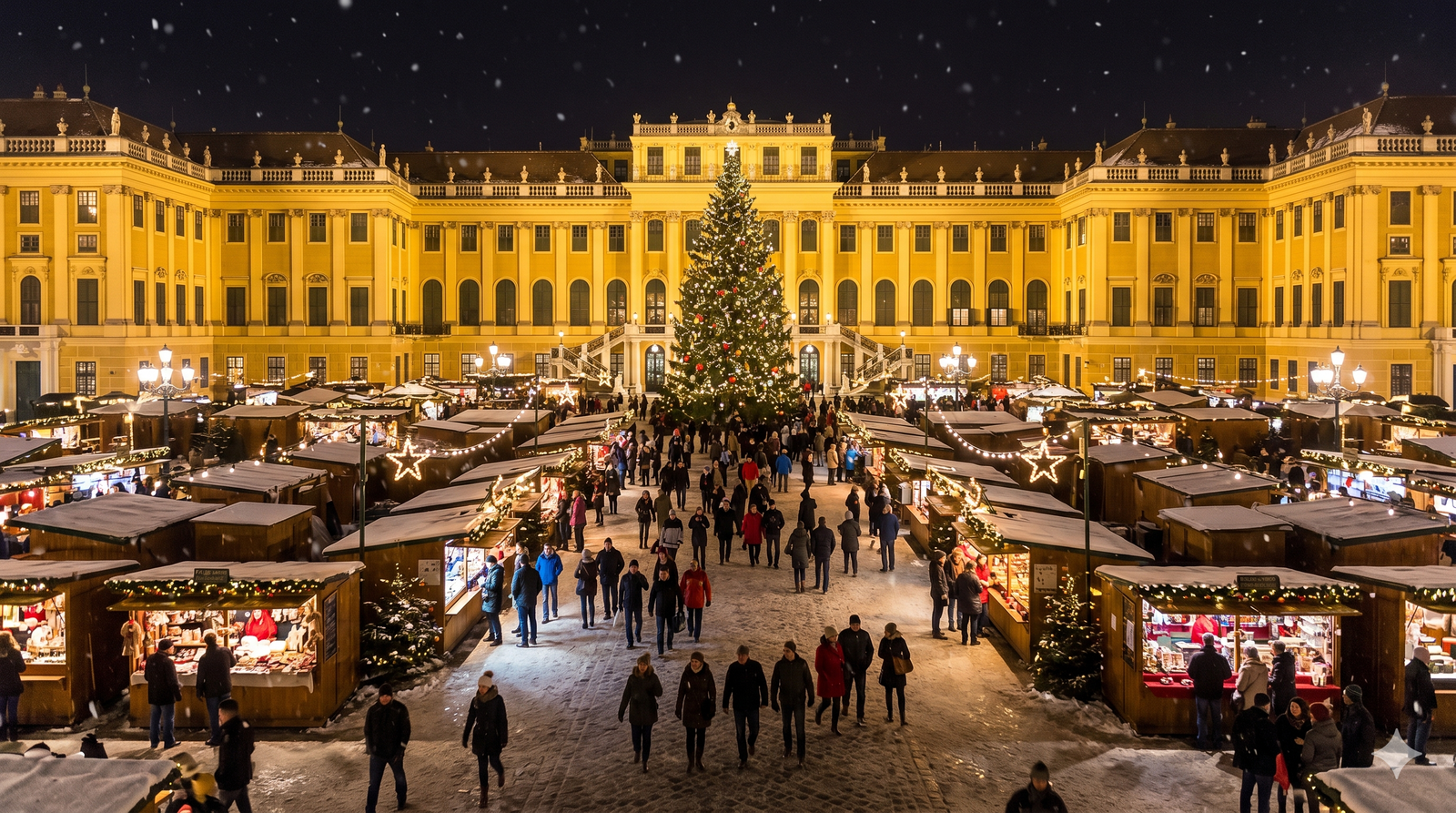
cartoon: Weihnachtsmarkt beim Schloss Schönbrunn
ist Wien tatsächlich eine der lebenswertesten Städte der Welt? Na ja- wenn man sich Bezirke wie Favoriten, Rüdolfsheim-Fünfhaus und Brigittenau ansieht, könnte man diese Aussage bezweifeln Frage: gibt es in Wien noch grindigere Bezirke als den 10., 15. und 20. ?
Score 0💬 0
22.04.2026
Science
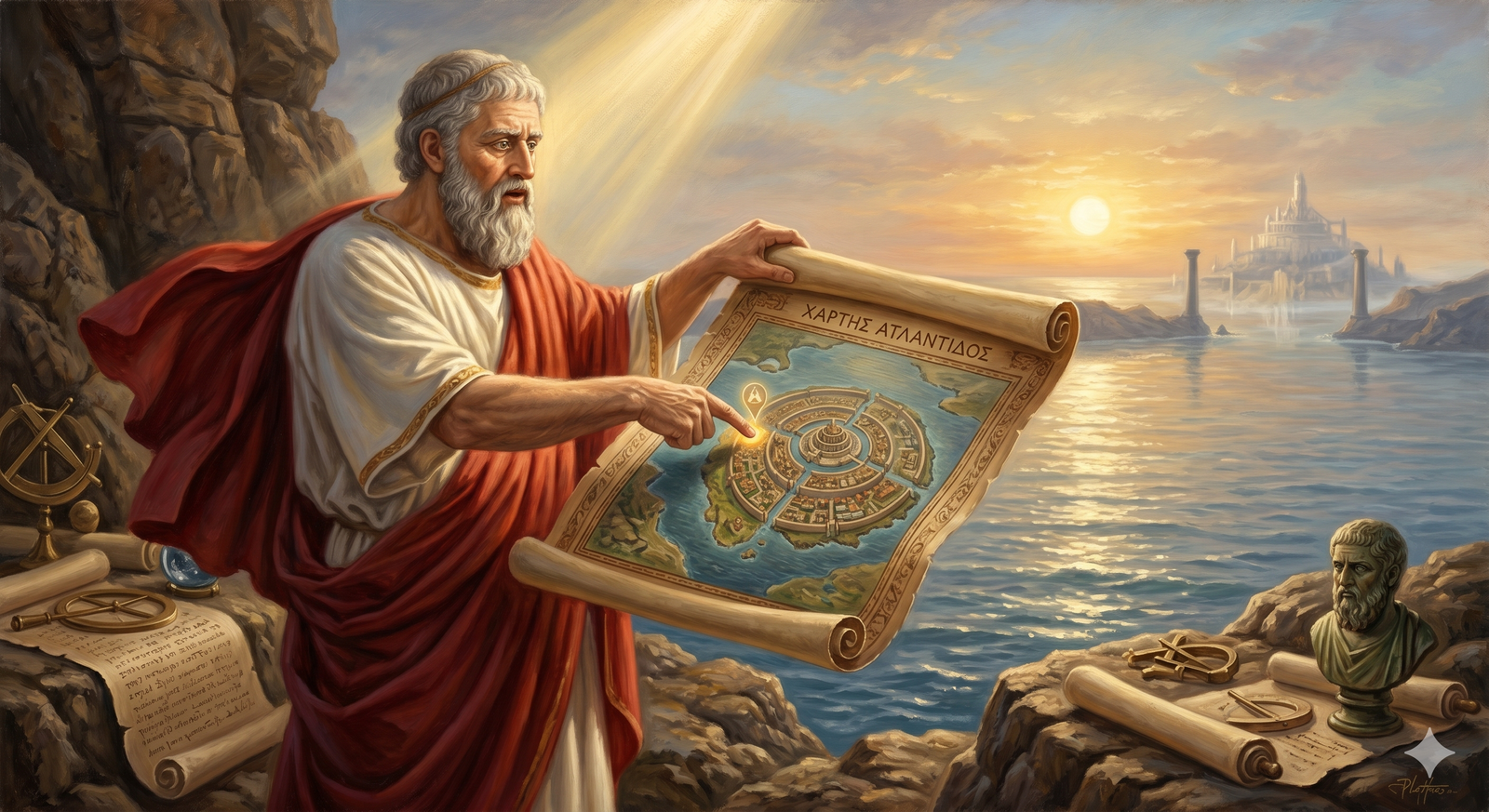
the Whereabouts of Atlantis
Plato, the ancient Greek philosopher, is the sole source of the Atlantis myth, describing it in his dialogues Timaeus and Critias as a powerful, circular empire that sank into the ocean "in a single day and night of misfortune." While he presented it as a philosophical parable, many have searched for a real-world location. Do you think that Atlantis really existed?
Score 0💬 0
22.04.2026
Science
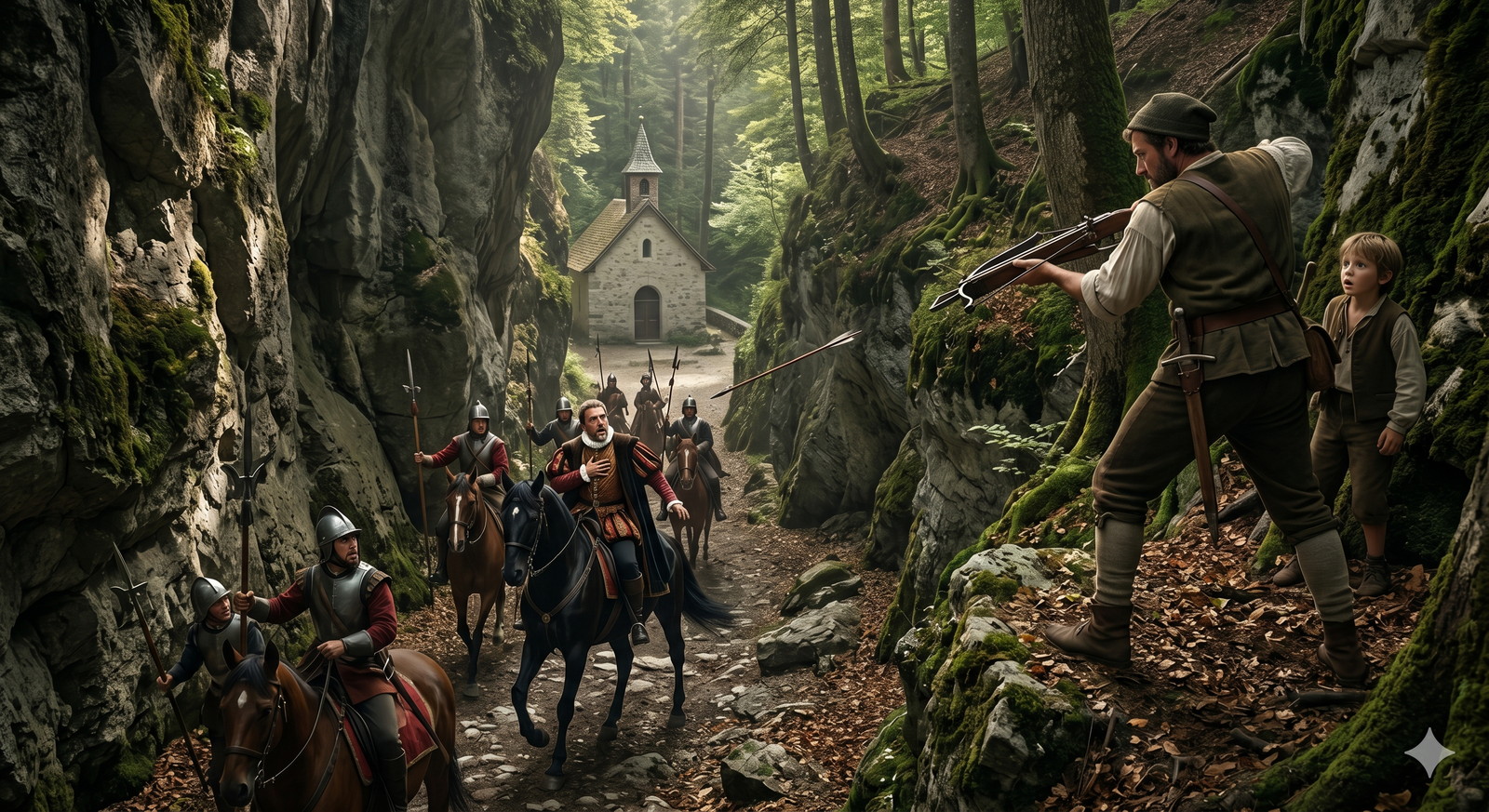
hat Wilhelm Tell tatsächlich gelebt oder it er nur die Erfindung eines schwäbischen Dichters (Schiller)?
In der modernen Geschichtswissenschaft herrscht weitgehend Einigkeit darüber, dass Wilhelm Tell eine Sagengestalt und keine historische Person ist. Es gibt keine zeitgenössischen Dokumente aus dem frühen 14. Jahrhundert (der Zeit der angeblichen Befreiungskämpfe), die seine Existenz oder die Taten, die ihm zugeschrieben werden, belegen.
Auch wenn Tell nicht existiert hat, ist seine Figur für die Schweiz von enormer Bedeutung. Er verkörpert:
Freiheitsdrang: Den Widerstand gegen fremde Vögte und Tyrannei.
Einheit: Die Entstehung der Eidgenossenschaft.
Identität: Friedrich Schiller machte die Geschichte 1804 mit seinem Drama „Wilhelm Tell“ weltweit berühmt und festigte das Bild des Schweizer Nationalhelden.
Wilhelm Tell ist eine personifizierte Idee. Während die politischen Spannungen zwischen den Waldstätten (Uri, Schwyz, Unterwalden) und den Habsburgern im 13. und 14. Jahrhundert real waren, ist der Armbrustschütze Tell eine literarische Erfindung, um diesen Freiheitskampf greifbar und heroisch zu machen.
Glaubst du, dass ein Mythos wie Tell für die Identität eines Landes wichtiger sein kann als die nackte historische Wahrheit?
Score 0💬 0
22.04.2026
Science
the gilded lobster (der vergoldete hummer)
Score 0💬 0
21.04.2026
Science
beautiful girls hiking in Hietzing during summertime
Score 0💬 0
21.04.2026
Science
Ali aus 1001 Nacht hilft einem wohlgenährten Jungen beim Einsteigen in einen Fesselballon
Score 0💬 0
18.04.2026
Science
It’s a massive turning point for Hungary. After 16 years of Viktor Orbán’s leadership, the 2026 parliamentary election held on April 12 has resulted in a historic victory for Péter Magyar and his TISZA Party (Respect and Freedom Party).This isn't just a win; it’s a landslide that has effectively shifted the country's political landscape overnight. Here are the key details of the results:The Results at a GlancePartyLeaderVote Share (Approx.)Seats WonTISZA PartyPéter Magyar~54%137Fidesz–KDNPViktor Orbán~38%56Mi HazánkLászló Toroczkai~6%6Key Highlights of the VictorySupermajority: Magyar secured a two-thirds supermajority (137 out of 199 seats), giving him the power to potentially reverse constitutional changes made during the Orbán era.Historic Turnout: Voter turnout reached an all-time high of nearly 80%, signaling a massive public mobilization.End of an Era: This ends the longest-running government in modern Hungarian history. Viktor Orbán conceded defeat on election night, and President Tamás Sulyok has already formally proposed Péter Magyar as the next Prime Minister.Geopolitical Shift: The victory is being viewed as a major pivot toward a pro-European, anti-corruption stance. Markets and EU officials in Brussels have reacted positively, expecting a restoration of the rule of law and better relations with NATO.Magyar’s campaign focused heavily on "ending the system of national cooperation," tackling corruption, and repairing the economy, which seems to have resonated with a broad spectrum of voters—from former Fidesz supporters to the youth.It's a "new dawn" for Budapest, but now the real work begins as Magyar prepares to dismantle a very entrenched political system. What do you think will be his biggest challenge in the first 100 days?
Score 0💬 0
16.04.2026
Science
Cambrium : Amphibians were the first animals to enter/conquer land. Even the President thinks that we should finally build a wall!
Score 0💬 0
16.04.2026
Science
zeitabhängige beschleunigung differentialgleichung
In der Physik ist die Beschleunigung a definiert als die zeitliche Änderung der Geschwindigkeit v, welche wiederum die zeitliche Änderung des Ortes s (oder x) ist. Wenn die Beschleunigung zeitabhängig ist, also als eine Funktion der Zeit a(t) gegeben ist, führt dies auf Differentialgleichungen:
Beschleunigung als erste Ableitung der Geschwindigkeit:
a(t)= dt dv(t) = v(t)
Dies ist eine gewöhnliche Differentialgleichung 1. Ordnung für die Geschwindigkeit v(t). Wenn a(t) bekannt ist, kann man v(t) durch Integration finden.
Beschleunigung als zweite Ableitung des Ortes:
Da v(t)= dt ds(t)
Dies ist eine gewöhnliche Differentialgleichung 2. Ordnung für die Ortsfunktion s(t).
Lösen der Differentialgleichung durch Integration
Wenn die Beschleunigungsfunktion a(t) explizit gegeben ist, kann man die Geschwindigkeit und den Ort durch sukzessive Integration bestimmen. Dabei treten Integrationskonstanten auf, die durch Anfangsbedingungen (z.B. Ort und Geschwindigkeit zum Zeitpunkt t=0) festgelegt werden.
Bestimmung der Geschwindigkeit v(t):
Man integriert die erste Differentialgleichung:
v(t)=∫a(t)dt+v
hierbei ist=v(0) die Anfangsgeschwindigkeit zum Zeitpunkt t=0.
Bestimmung des Ortes s(t):
Man integriert die Funktion für v(t) ein weiteres Mal:
s(t)=∫v(t)dt+s
Hierbei ist s = s(0) der Anfangsort zum Zeitpunkt t=0
Zusammenhang mit der Newtonschen Bewegungsgleichung
In vielen physikalischen Problemen ist die Beschleunigung nicht direkt als Funktion der Zeit gegeben, sondern resultiert aus den wirkenden Kräften gemäß dem zweiten Newtonschen Axiom:
F=m⋅a
Wenn die resultierende Kraft F zeitabhängig ist, F(t), dann ist auch die Beschleunigung zeitabhängig:
a(t)= m
Die resultierende Differentialgleichung für den Ort lautet dann:
s(t)=F(t)
Dies ist die klassische Form einer Bewegungsgleichung, wenn die Kraft explizit von der Zeit abhängt. Hängt die Kraft vom Ort oder der Geschwindigkeit ab (z.B. bei einer Federkraft F(s)=−k⋅s oder Luftwiderstand F(v)), werden die Differentialgleichungen komplexer.
Zusammenfassend: Eine zeitabhängige Beschleunigung führt direkt auf die Differentialgleichung s(t)=a(t)
Um den Bewegungsablauf s(t) zu finden, muss diese Gleichung unter Berücksichtigung der Anfangsbedingungen zweimal integriert werden.
Score 0💬 0
15.04.2026
Cartoon & Humor
a luxury countryside estate in the caribean
Score 0💬 0
14.04.2026
Science
The inquisition of Galileo Galilei remains one of the most famous intersections of science, religion, and politics in history. It wasn't just a simple "science vs. religion" debate; it was a complex power struggle involving scriptural interpretation, the fallout of the Protestant Reformation, and Galileo’s own prickly personality.
1. The Core Conflict: Geocentrism vs. Heliocentrism
At the time, the Catholic Church adhered to the Geocentric model (Aristotelian-Ptolemaic), which posited that the Earth was the stationary center of the universe.
Galileo’s observations with his improved telescope provided evidence for the Heliocentric model, championed by Nicolaus Copernicus.
The Moons of Jupiter: He discovered four moons orbiting Jupiter, proving that not everything in the heavens revolved around the Earth.
Galileo was summoned to Rome and warned by Cardinal Robert Bellarmine:
He was told he could no longer hold or defend the Copernican view as a physical fact.
He was, however, permitted to discuss it as a mathematical hypothesis.
In 1632, Galileo published Dialogue Concerning the Two Chief World Systems. He believed he had the "okay" from his friend, the newly elected Pope Urban VIII, provided the book remained balanced.
Instead, the book was a clear defense of heliocentrism. Crucially:
He put the Pope’s favorite arguments into the mouth of a character named Simplicio ("Simpleton"), which the Pope took as a personal insult.
Galileo was brought before the Inquisition in 1633 on charges of "vehement suspicion of heresy."
Under threat of torture and facing a potential death sentence, the 69-year-old Galileo was forced to kneel and formally abjure (recant) his errors.
Abjuration: He had to curse and detest his previous "errors and heresies."
House Arrest: He was sentenced to life imprisonment, which was immediately commuted to permanent house arrest at his villa in Arcetri.
Ban on Works: The Dialogue was placed on the Index Librorum Prohibitorum (List of Prohibited Books).
Galileo remained under house arrest until his death in 1642. During this time, he smuggled out his most important scientific work, Two New Sciences, which laid the foundations for modern physics and kinematics.
It took centuries for the Church to fully bridge the gap:
1758: The Church dropped the general ban on books advocating heliocentrism.
1835: Galileo’s Dialogue was finally removed from the Index.
1992: Pope John Paul II officially expressed regret for how the Galileo affair was handled, acknowledging that the "theologians of the time" failed to distinguish between the literal and metaphorical interpretation of Scripture. Cartoon: Galilei being interrogated during the inquisition trial in Rome
Score 0💬 0
13.04.2026
Science
Venezia e la peste hanno una storia indissolubile, fatta di tragedie immense ma anche di innovazioni che hanno cambiato il mondo. Essendo un emporio commerciale aperto all'Oriente, la città era la "porta d'ingresso" ideale per il morbo, ma proprio per questo divenne il laboratorio della moderna sanità pubblica.
1. 1348: La Morte Nera e l'invenzione della "Quarantena"
Questa fu l'epidemia più devastante: uccise circa 40.000 persone (un terzo della popolazione).
L'innovazione: Venezia fu la prima città al mondo a istituire un sistema di isolamento sistematico. Nel 1423 nacque il Lazzaretto Vecchio (su un'isola della laguna), il primo ospedale per appestati della storia.
La parola: Il termine "quarantena" deriva proprio dai 40 giorni di isolamento imposti alle navi sospette prima di poter attraccare a Venezia.
L'immagine iconica del medico con la maschera dal lungo becco è strettamente legata a Venezia. Quel becco non era un vezzo estetico, ma veniva riempito di erbe aromatiche, spezie e paglia per "filtrare" i miasmi dell'aria, che all'epoca si credeva fossero la causa del contagio. Cartoon: "La Serenissima" ordina i marinari di andare in Lazaretto per quaranta giorni
Score 0💬 0
12.04.2026
Cartoon & Humor
Returning from the Third Crusade in 1192, Richard found the sea routes blocked and was forced to travel overland through Europe in disguise. Despite dressing as a humble pilgrim or merchant, he was recognized near Vienna—allegedly because he was still wearing a costly ring or because his servants were using rare Byzantine coinage.
He was seized by Duke Leopold V, whom Richard had deeply offended during the Siege of Acre by tearing down the Duke's banner and refusing to share the spoils of war.
Imprisonment at Dürnstein
Richard was held in the Kuenringerburg (the castle ruins you see today) from December 1192 to March 1193.
The Setting: The castle sits on a rocky ridge roughly 150 meters above the Danube. In the 12th century, it was a formidable, isolated fortress.
The Conditions: While a prisoner, Richard wasn't kept in a dungeon cell; as a King, he was treated with "honorable" captivity, though he was constantly guarded.
The Price Tag: Leopold eventually handed Richard over to the Holy Roman Emperor, Henry VI. The ransom for his release was set at 150,000 marks—roughly 65,000 pounds of silver. This was an astronomical sum, totaling about two to three times the annual income of the English Crown at the time.
Score 0💬 0
12.04.2026
Science
the End: Japan surrenders!
Score 0💬 0
12.04.2026
Cartoon & Humor
Battle of Borodino 1812
The clash between Napoleon Bonaparte and Mikhail Kutuzov during the 1812 French invasion of Russia is one of history’s greatest psychological and strategic duels. It wasn't just a fight between two armies, but a collision of two completely different philosophies of war.Pr⚔️ The PersonalitiesFeatureNapoleon BonaparteMikhail KutuzovPhilosophyDecisive Battle: Seek one massive "knockout blow" to force a treaty.Attrition: "Patience and Time." Let the land and climate do the work.StyleAggressive, fast-moving, and centralized.Cautious, defensive, and deeply attuned to soldier morale.GoalCapture Moscow to humiliate the Tsar.🏟️ The Main Event: The Battle of BorodinoOn September 7, 1812, the two finally met head-on about 70 miles west of Moscow. It remains the bloodiest single day of the Napoleonic Wars.The Setup: Kutuzov dug into heavy earthworks (the Raevksy Sredoubt and the Bagration Fleches). Napoleon launched massive frontal assaults instead of his usual flanking maneuvers.The Carnage: By sunset, combined casualties exceeded 70,000 men.The Result: A technical French victory because the Russians retreated, but a strategic failure for Napoleon. He failed to destroy Kutuzov's army, which lived to fight another day.
Score 0💬 0
12.04.2026
Cartoon & Humor
1356: Kaiser Karl IV unterzeichnet die "Goldene Bulle", die die Wahl des deutschen Königs regelt. Die Wahlmänner sind die Erzbischöfe von Köln, Mainz und Trier, der Pfalzgraf am Rhein, der Herzog von Sachsen, der König von Böhmen, der Markgraf von Brandenburg. Die Goldene Bulle war das deutsche "Grundgesetz" bis 1806 (Reichsdeputationsschluss)
Score 0💬 0
10.04.2026
Cartoon & Humor
the blind King John of Bohemia is led by a squire with a horse in reins to the battle of Creci
Score 0💬 0
10.04.2026
Cartoon & Humor
a cyborg attacking downtown Munich
Score 0💬 0
10.04.2026
Cartoon & Humor
L'omicidio di Meredith Kercher a Perugia
Meredith Kercher, una studentessa inglese di 21 anni in Erasmus a Perugia, viene ritrovata priva di vita nella sua camera da letto nell'appartamento di via della Pergola 7. La causa della morte è un'emorragia dovuta a una profonda ferita al collo causata da un coltello.2. I protagonisti e le accuseLe indagini si concentrarono inizialmente su tre figure:Amanda Knox: Coinquilina americana di Meredith.Raffaele Sollecito: Studente pugliese e fidanzato di Amanda all'epoca dei fatti.Rudy Guede: Un giovane originario della Costa d'Avorio, le cui tracce (DNA e impronte) furono rinvenute sulla scena del crimine.Inizialmente venne coinvolto anche Patrick Lumumba, titolare di un bar dove Amanda lavorava, in seguito alle dichiarazioni della stessa Knox. Lumumba risultò però totalmente estraneo ai fatti e Amanda fu condannata per calunnia.3. L'iter giudiziarioIl processo è stato un vero e proprio "ping-pong" giudiziario durato otto anni:Primo Grado (2009): Knox e Sollecito vengono condannati rispettivamente a 26 e 25 anni di carcere. Rudy Guede, che sceglie il rito abbreviato, viene condannato a 30 anni (poi ridotti a 16 in appello).Appello (2011): La condanna di Knox e Sollecito viene ribaltata. I due vengono assolti per non aver commesso il fatto e scarcerati immediatamente.Cassazione (2013): La Suprema Corte annulla l'assoluzione, ritenendo che vi fossero troppe contraddizioni, e ordina un nuovo processo d'appello.Appello Bis (2014): I due vengono nuovamente condannati (28 anni e 6 mesi per Knox, 25 per Sollecito).Cassazione Finale (2015): La Corte di Cassazione annulla definitivamente le condanne senza rinvio, assolvendo Knox e Sollecito per "insufficienza di prove" e per l'assenza di tracce biologiche a loro riconducibili nella stanza del delitto.4. Le conclusioni definitiveAd oggi, l'unica verità processuale stabilita è la seguente:PersonaEsito GiudiziarioStato AttualeRudy GuedeCondannato in via definitiva per concorso in omicidio e violenza sessuale.Libero (ha finito di scontare la pena nel 2021).Amanda KnoxAssolta dall'omicidio; condannata solo per calunnia contro Lumumba.Vive negli USA, è un'attivista e scrittrice.Raffaele SollecitoAssolto in via definitiva.Ingegnere informatico in Italia.
Score 0💬 0
10.04.2026
Cartoon & Humor
EU vs CH - du entscheidest! Frage: warum sind gerade Norwegen und Die Schweiz, die nachweislich erfolgreichsten europäischen Länder, nicht Mitglieder der EU?
Score 0💬 0
10.04.2026
Cartoon & Humor
den habe ich gleich bei mir um die Ecke gesehen. Die Shelby Cobra hat damals die besten Beschleunigungswerte überhaupt gehabt und der Rennmotor hatte mehr als genug Power. Beeindruckend war der Start des Motors - ein ohrenbetäubender Krach.
Score 0💬 0
10.04.2026
Cartoon & Humor
der Maserati Royale ist eine fuoriserie (Sonderanfertigung) des Maserati Quattroporte - den gab es nur in dieser schönen grau-metallicgrünen Lackierung und mit dem grossen 4,9liter V8 Motor. Das Auto war zwar innen wunderschön und superbequem sowie extrem geräumig wie ein Schlachtschiff. Allerdings war er technisch nicht auf dem neuesten Stand und sein Benzinverbrauch war auch grenzwertig- die mechanische Verbrauchsanzeige war immer im roten Bereich!
Score 0💬 0
10.04.2026
Cartoon & Humor
der Werwolf-Terminator kriecht gen Mitternacht aus seiner Brigittenauer Gruft empor
Score 0💬 0
10.04.2026
Cartoon & Humor
female power! Praying mantis vs man (weibliche Gottesanbeterin und ein Männchen)
Score 0💬 0
10.04.2026
Cartoon & Humor
der R225 "Direct-Orient" fuhr bis 1977 auf der Strecke London - (Fähre) - Paris - Lausanne - Simplon- Milano-Venezia- Trieste - Zagreb - Beograd- Athenes/ -Sofia- Istanbul Dieser Zug war übrigens der einzige Zug der gleich 2 Pariser Kopfbahnhöfe anfuhr (Paris Lyon und Paris Nord) warum wohl? Fragt nach bei Agatha Christie
Score 0💬 0
10.04.2026
Cartoon & Humor
La parola "quarantena" è uno dei lasciti più significativi della storia di Venezia al mondo moderno. Il termine deriva proprio dalla pratica veneziana di isolare le navi e le persone per quaranta giorni durante le epidemie di peste.
Questa ricchezza aveva però un prezzo: le navi portavano con sé non solo spezie e seta, ma anche i ratti neri che trasmettevano la peste bubbonica.
1348: La "Morte Nera" decima la popolazione veneziana.
Il concetto: Poiché non si conoscevano i microbi, i medici dell'epoca credevano che la malattia fosse causata da "miasmi" (aria corrotta). Capirono però che l'isolamento era l'unica difesa efficace.
Perché proprio 40 giorni?
Non c’era una base scientifica medica (anche se oggi sappiamo che il periodo di incubazione della peste è molto più breve), ma piuttosto un mix di ragioni:
Pratiche: Era un tempo sufficientemente lungo per permettere ai sintomi di manifestarsi e per far morire eventuali pulci o ratti infetti a bordo delle navi.
i Lazzaretti: La prima linea di difesa
Venezia fu la prima città al mondo a istituire luoghi fisici permanenti per l'isolamento, situati su isole della laguna per sfruttare l'acqua come barriera naturale.
cartoon: si vede come dolci e carini sono i gatti
Score 0💬 0
10.04.2026
Cartoon & Humor
der legendäre D262 "Orient-Express" Bucuresti Nord-Brasov-Budapest-Hegeyshalom-Wien West-Salzburg-München-Stuttgart-Karlsruhe-Strasbourg-Paris Est.Dies war der berühmteste Zug der Welt und war auch ein einzigartiger Luxuszug. Aufgrund zahlreicher Kriege in Europa hat er auch mehrmals seine Strecke geändert, aber Wien und Paris blieben immer seine Bezugspunkte. Ursprünglich befuhr er noch in Monarchiezeiten die Strecke (London)-Paris-Wien- Budapest-Varna-(Fähre) - Konstantinopel. Der letzte Luxuszug war noch der Venice-Simplon - Orient-Express, der aber 1977 eingestellt wurde. Ebenso wie der "Orient-Express" war auch dieser Zug kein Luxuszug mehr, vor allem auf dem Streckenabschnitt Paris-Lausanne war er wie ein Bummelzug, der praktisch überall hielt. Im cartoon sehen wir den Streckenteil Wien - Paris aus den 70er Jahren.
Score 0💬 0
10.04.2026
Cartoon & Humor
eine neue Idee haben - unkonventionelle Lösungen ausdenken - teilweise mit AI unterstützt
Score 0💬 0
10.04.2026
Cartoon & Humor
yeah! "Cogito ergo sum" ou dans sa langue maternelle: "Je pense, donc je suis" (Ich denke, also bin ich) aber seine wichtigste Arbeit war die analytische Geometrie (kartesianisches Koordinatensystem)
Score 0💬 0
10.04.2026
Cartoon & Humor
Primera parte (1605): El ingenioso hidalgo Don Quijote de la Mancha. Se centra en las dos primeras salidas de Quijote y tiene un tono más burlesco y episódico.
Segunda parte (1615): El ingenioso caballero Don Quijote de la Mancha. Es más profunda y filosófica. Aquí, los personajes que Quijote encuentra ya han leído la primera parte del libro, lo que crea un juego de "metaliteratura" fascinante.
La magia de la novela reside en la relación entre sus dos protagonistas:
Don Quijote (Alonso Quijano): Representa el idealismo. Es un hidalgo que, de tanto leer libros de caballería, se le "seca el cerebro" y decide hacerse caballero andante para defender la justicia y el honor.
Sancho Panza: Representa el realismo (y el sentido común). Es un campesino que acompaña a Quijote como su escudero, atraído por la promesa de gobernar una "ínsula".
Dulcinea del Toboso: La mujer idealizada por Quijote. En la realidad es Aldonza Lorenzo, una campesina que "tenía la mejor mano para salar puercos de toda la Mancha".
A lo largo de la novela, los personajes se transforman:
Sancho empieza a adoptar el lenguaje elevado y los ideales de su amo.
Don Quijote empieza a ver la realidad de forma más terrenal, influenciado por Sancho.
El conflicto eterno del libro. Donde Quijote ve gigantes, Sancho ve molinos. Donde Quijote ve un ejército, Sancho ve un rebaño de ovejas. Cervantes nos pregunta: ¿Quién está más loco? ¿El que ve el mundo como es, o el que lucha por hacerlo mejor? Cartoon: Don quijote attaque con Sancho los molinos de viento
Score 0💬 0
10.04.2026
Cartoon & Humor
L'histoire de Jeanne d'Arc à Orléans est l'un des tournants les plus célèbres de l'histoire de France. .
Voici les points clés de cet épisode héroïque de la guerre de Cent Ans :
En 1428, les Anglais assiègent Orléans. La ville est stratégique : si elle tombe, le sud de la France est ouvert aux troupes anglaises, et la cause du futur roi Charles VII est perdue.
Jeanne arrive à Orléans le 29 avril 1429. Elle n'a que 17 ans. Bien que les chefs militaires soient sceptiques, elle parvient à galvaniser les troupes et la population civile grâce à sa foi et sa détermination inébranlable.
Blessée par une flèche à l'épaule, Jeanne retourne pourtant au combat, ce qui provoque la panique chez les Anglais qui la croient dotée de pouvoirs surnaturels.
Les Anglais lèvent le siège et se retirent. Orléans est libre. cartoon: domremi la pucelle - maison de naissance de Jeanne d'Arc
Score 0💬 0
10.04.2026
Cartoon & Humor
the cunning Pirate Carpe transfers his raids of spanish merchant ships to the close and calm Danube Channel to avoid spanish warships
Score 0💬 0
10.04.2026
Cartoon & Humor
"Honi soit qui mal y pense" this is the motive of the order of the garter, one of the most celebrated sayings in history - it means (verflucht sei, wer Böses dabei denkt) - the order was found by the English king Edward III - at this time, nobility, knights and the ruling upper classes spoke French while the old English (Georry Chaucer, canterbury tales) was spoken by the serfs, pagans and the rest of the underlings. the phrase "Honi soit.." is still in the coat of arms of the English flag. History: the British queen once lost her garter - to avoid a scandal, Edward shouted this phrase. The order of the garter (Hosenbandorden) is the most important of all English orders and well-known all over the world. cartoon: Edward with his fantastic coat of arms riding into the city of Bruge
Score 0💬 0
10.04.2026
Cartoon & Humor
ha ha! - Sir Isaac is absolutely right! (even if "social media" didn't exist in his time)
Score 0💬 0
10.04.2026
Cartoon & Humor
poor Dinos: they roamed the Earth in the wrong time but at the right place. Imagine if the comet had struck only seconds later - the Old Lobster and most of our modern mammals most likely won't be here today!
Score 0💬 0
10.04.2026
Cartoon & Humor
an Astronaut risks the dangerous trip outside his spacecraft
Score 0💬 0
10.04.2026
Cartoon & Humor
a chess tournament in the holy hindu city of Varanasi with enthusiastic fans, holy cows and rats
Score 0💬 0
10.04.2026
Cartoon & Humor
an Indian Dalit discovers the Indian Peninsula on a medieval globe
Score 0💬 0
10.04.2026
Cartoon & Humor
the T-Rex is hungry and he loves "horizontally challenged" meat
Score 0💬 0
10.04.2026
Cartoon & Humor
an Australian crocodile hunter in a lethal struggle with a huge reptile
Score 0💬 0
10.04.2026
Cartoon & Humor
an Indian performing an illegal streetrace with a cheetah and his scooter in downtown Vienna
Score 0💬 0
10.04.2026
Cartoon & Humor
"Noli disturbare circulos meos" (don't destroy my circles) Archimedes cursing Roman Soldiers who are besieging Siracuse.
Score 0💬 0
10.04.2026
Cartoon & Humor
Dante Aligheri visita l'ingresso al inferno ed urla in orrore ai dannati: "lasciate ogni speranza, voi che entrate!" (schreit schockiert zu den Verdammten: (ihr, die ihr eintretet - vergesst alle eure Hoffnungen)
Score 0💬 0
10.04.2026
Cartoon & Humor
Les Misérables, publié en 1862, est l'un des sommets de la littérature mondiale. Victor Hugo y dresse une fresque sociale, politique et philosophique de la France du début du XIXe siècle, tout en explorant la nature de la rédemption.
L'histoire suit le destin de Jean Valjean, un ancien forçat condamné pour avoir volé un pain, qui cherche à se racheter malgré la poursuite implacable de l'inspecteur Javert. À travers son parcours, .
Jean Valjean : Le symbole de la rédemption. Sous l'influence de l'évêque Myriel, il passe de l'ombre à la lumière.
Javert : L'incarnation de la loi rigide et aveugle. Pour lui, un criminel ne peut jamais changer. Cartoon: Victor Hugo est trist et "miserable" dans son atelier
Score 0💬 0
10.04.2026
Cartoon & Humor
the Polish King Jan III Sobieski saves the City of Vienna by attacking the Osman Army from the Hills of Kahlenberg
Score 0💬 0
10.04.2026
Cartoon & Humor
a medieval Alchimist discovers the secret of how to produce the "Magical stone of wisdom" to create huge amounts of Gold. cartoon: The Alchimist and his animal sidekicks are extremly pleased.
Score 0💬 0
10.04.2026
Cartoon & Humor
the Polish novelist Henrik Schinkiewicz asks himself ("quo vadis?" - "where are you Heading?"). Later, he remembered that "all the ways lead to Rome" cartoon: Henrik finally arriving at Rome.
Score 1💬 1
10.04.2026
Cartoon & Humor
the Greek hero Archilles kills the Trojan Prince Hektor outside the Gates of Troj. Later, a guided arrow from the God Apollon (the first guided missile in History?) killed Archilles.
Score 0💬 0
10.04.2026
Science
the most famous apple in History: during a lockdown of the Plague, Isaac Newton fled to his countryside estate and relaxed under an apple tree. While an apple fell down on his head, he discovered the law of Gravity
Score 0💬 0
10.04.2026
Cartoon & Humor
Globe Theatre, London: William Shakespeare performs his stunning play of "Romeo and Juliet"
Score 0💬 0
10.04.2026
Cartoon & Humor
battle of Alesia 52 BC Gaius Iulius Ceasar defeats the Celtic ("Gaul") leader Vercingetorix, what if Asterix and Obelix had come in time to support the Celtic Warriors?
Score 0💬 0
10.04.2026
Cartoon & Humor
der 0-meridian von Greenwich - London is the Center of the Universe - rule Britannia!
cartoon: the white line divides The East from the West
Score 1💬 1
10.04.2026
Cartoon & Humor
Battle of Jena and Auerstädt 1806: Napoleon defeats the Prussian Army and is riding triumphantly through the Brandenburg Gate in Berlin
Score 0💬 0
10.04.2026
Cartoon & Humor
The Battle of the Teutoburg Forest (9 AD) is often cited as Rome’s greatest defeat that permanently halted the expansion of the Roman Empire into Germania (modern-day Germany)four-day ambush. the impact of this battle was so profound that Emperor Augustus was said to have spent months wandering his palace, hitting his head against walls and screaming "Varus, give me back my legions!"The "Limes" (Borders): - a chain of stongholds and barracks across the the Rhine and the Danube to prevent a "Germanic" invasion of the Roman settlements.Many of these settlemts like Mainz, Cologne and Vienna later became prosperous cities. Rome abandoned its goal of conquering territory up to the Elbe River and retreated to the Rhine, which became the permanent border between the Roman and Germanic worlds. This battle created a linguistic and cultural boundary in Europe that roughly persists today—separating the Latin-influenced (Romance) west from the Germanic east. cartoon: Arminius ambushes roman legions in the dense and rainy forests
Score 0💬 0
10.04.2026
Cartoon & Humor
Das Nibelungenlied ist die bedeutendste Deutsche Heldensaga - der finstere Hagen von Tronje tötet den Helden Siegfried mit seinem Speer, während seine Jagdgesellschaft sich in einem Wald ausruht. Es ist auf Althochdeutsch geschrieben, der (anonyme) Author kommt aus dem Raum von Passau oder Oberösterreich. Jedenfalls wurden in der Saga mehrere Ereignisse miteinander verknüpft, die teilweise Jahrhunderte voneinander getrennt waren So versenkte beispielsweise Hagen das "Rheingold" im Rhein, den sagenumwobenen Schatz der Nibelungen, um diesen vor Kriemhild, Siegfried's Erbin, zu verstecken, der Drache war eine erbeutete Standarte der römischen Legion, die in der Schlacht am Teutoburger Wald den Germanen in die Hände fiel und die Burgunder as kurzfristige Verbündete Roms gegen Attila existierten tatsächlich
Score 0💬 0
09.04.2026
Cartoon & Humor
Christofer Columbus claims having discovered India but he stranded at the coast of the Bahamas Islands. Imagine if he had sailed "only" 100km further westwards - History would have changed dramatically indeed
Score 0💬 0
09.04.2026
Cartoon & Humor
Prince Enrique el Navegador orders his Seamen to discover and conquer new territories for the Portugese realm
Score 0💬 0
09.04.2026
Cartoon & Humor
le Monument le plus viel de Paris: l'Obelisc de Luxor á la Place de la Concord
Score 0💬 0
09.04.2026
Cartoon & Humor
Akkretionsscheibe und schwarzes Loch
In einem solchen System umkreisen sich ein „normaler“ Stern und ein Schwarzes Loch. Wenn diese eng genug beieinander liegen, zieht das Schwarze Loch Materie (meist Gas) von seinem Begleiter ab.
Das Gas des Begleitsterns stürzt nicht einfach direkt in das Schwarze Loch. Da sich beide Objekte umeinander bewegen, hat das Gas einen hohen Drehimpuls. Anstatt also geradeaus zu fallen, spiralt es wie Wasser in einem Abfluss nach innen. Durch diese Spiralbewegung bildet sich eine flache, rotierende Scheibe aus Plasma – die Akkretionsscheibe. Hier passieren spektakuläre Dinge:
Die inneren Schichten der Scheibe rotieren viel schneller als die äußeren. Die dadurch entstehende Reibung heizt das Gas auf Millionen Grad Celsius auf. Wegen der enormen Hitze leuchtet die Scheibe hell im Röntgenbereich. Tatsächlich sind solche Systeme oft die hellsten Röntgenquellen am Himmel (daher der Name Röntgendoppelstern).
Score 0💬 0
09.04.2026
Cartoon & Humor
workers (not slaves!) built the Great Pyramid of Pharaoh Cheops so he can rest there in his afterlife for eternity
Score 0💬 0
09.04.2026
Cartoon & Humor
ein Walpugisnachttreffen auf dem Brocken. in der Mitte steht Mephisto, um ihn herum tanzen Hexen mit Besenstiel
Score 0💬 0
09.04.2026
Cartoon & Humor
der Mathematiker C.F.Gauss vermass geodätische Dreiecke von genau 100km Kantenlänge, deren einer Bezugspunkt der Brocken war. Die von ihm errechnete Winkelsumme betrug genau 360^: somit hatte er bewiesen, dass der uns umgebende Raum zumindest im Längenbereich von 100km nicht-relativistisch - euklidisch ist.
Score 0💬 0
09.04.2026
Cartoon & Humor
la tombe de Napoleon Bonaparte á l' hotel des Invalides, Paris
Score 0💬 0
09.04.2026
Cartoon & Humor
W.A.Mozart conducting his opera "Don Giovanni" at the classical music festival in the city of Salzburg
Score 0💬 0
09.04.2026
Cartoon & Humor
hostile Aliens with sophisticated weapons attack human settlers
Score 0💬 0
09.04.2026
Cartoon & Humor
Alien ambassadors meet human diplomats, asking the Aliens for further information about the WarpDrive technology
Score 0💬 0
09.04.2026
Cartoon & Humor
a shootout in Wyoming in the time of the "Wild West"
Score 0💬 0
09.04.2026
Cartoon & Humor
Michael Faraday discovers the "Electromagnetic Induction" and with this discovery he creates a new line of industry
Score 0💬 0
09.04.2026
Cartoon & Humor
Berlin, 1938: the chemist Otto Hahn stumbled over the fission of an Uranium core and the phycisit Liese Meitner explains him what he has discovered. Since Rutherford's "raisin-cake" model we know what incredible force is hidden in a nuclear core, but we had no clue of how to "unleash" this energy. This discovery made the Americans hurry up to be the first nation with a nuclear bomb and not the Nazis, not only Einstein's famous letter to FDR played a crucial part in that event.
Score 0💬 0
09.04.2026
Cartoon & Humor
curious scientists abduct a working time machine and travel back in the cretacious period only to be confronted with dangerous predators
Score 0💬 0
09.04.2026
Cartoon & Humor
Neandertals fighting with recently migrated homo sapiens for warm shelter, supplies and food
Score 0💬 0
09.04.2026
Cartoon & Humor
the Old Lobster driving a state of the art supercar and being impressed by its acceleration and performance
Score 0💬 0
09.04.2026
Cartoon & Humor
people fleeing from the "Furzteufel's" terrific farts
Score 0💬 0
09.04.2026
Cartoon & Humor
Immanuel Kants "Kritik der reinen Vernunft" (1781/1787) ist eines der einflussreichsten Werke der Philosophiegeschichte. Mit diesem Buch leitete Kant die sogenannte „Kopernikanische Wende“ des Denkens ein: Er untersuchte nicht mehr primär, was wir wissen, sondern wie Erkenntnis überhaupt erst möglich wird.
Rationalisten: Glaubten, wir könnten allein durch reines Nachdenken die Welt verstehen.
Empiristen: Glaubten, alles Wissen stamme ausschließlich aus der Sinneserfahrung.
Kant versöhnt beide: „Gedanken ohne Inhalt sind leer, Anschauungen ohne Begriffe sind blind.“ Er stellt die Frage: Wie sind synthetische Urteile a priori möglich? Also: Wie können wir etwas Neues über die Welt lernen (synthetisch), ohne dass wir es erst mühsam ausprobieren müssen (a priori)?
2. Die Kopernikanische Wende
Früher dachte man, unsere Erkenntnis müsse sich nach den Gegenständen richten. Kant dreht den Spieß um: Die Gegenstände müssen sich nach unserer Erkenntnis richten. Wir sehen die Welt nicht „so wie sie ist“ (das Ding an sich), sondern so, wie unser Verstand sie filtert und strukturiert (Erscheinung).
3. Die Filter unserer Wahrnehmung
Kant unterteilt den Erkenntnisprozess in zwei Hauptbereiche:
Die Transzendentale Ästhetik (Sinnlichkeit)
Damit wir überhaupt etwas wahrnehmen können, brauchen wir zwei „Anschauungsformen“. Diese bringen wir bereits mit, sie liegen nicht in den Dingen selbst:
Raum: Wir können uns nichts vorstellen, was nicht räumlich ist.
Zeit: Alles Erlebte geschieht in einer zeitlichen Abfolge.
Die Transzendentale Logik (Verstand)
Nachdem wir Daten über Raum und Zeit empfangen haben, ordnet unser Verstand diese in 12 Kategorien. Die wichtigsten sind:
Kausalität: Wir sehen eine Ursache und eine Wirkung.
Substanz: Wir nehmen an, dass ein Gegenstand derselbe bleibt, auch wenn er sich verändert.
4. Die Grenzen der Vernunft
Kant warnt davor, dass die Vernunft dazu neigt, über ihre Grenzen hinauszufliegen. Sie will Fragen beantworten, auf die es keine empirische Antwort gibt:
Hat die Welt einen Anfang?
Gibt es eine unsterbliche Seele?
Gibt es Gott?
Diese Ideen nennt Kant „transzendentale Schein“. Wir können diese Dinge weder beweisen noch widerlegen, da sie jenseits unserer sinnlichen Erfahrung liegen. Dennoch sind sie als „regulative Ideen“ wichtig, um unserem Wissen eine Richtung zu geben. Cartoon: Kant mit seinem Diener Lampe bei seinem täglichen Spaziergang in Königsberg
Score 0💬 0
09.04.2026
Cartoon & Humor
Allgemeine Relativität: während Newton die Gravitation als eine wechselseitig anziehende Kraft zweier Massen definierte, postulierte Einstein diese als die Krümmung der vierdimensionalen Raumzeit. Cartoon: anschaulich kann man diese Krümmung grafisch darstellen: je mehr Masse, desto stärker ist diese gekrümmt. Im Extremfall eines schwarzen Lochs ist diese Krümmung so stark, dass die Objekte in den "Gravitationstrichter" hineinfallen und dadurch praktisch die Zeit stillsteht.
Score 0💬 0
09.04.2026
Cartoon & Humor
Adam Smith’s 1776 masterpiece is essentially the "Birth Certificate of Capitalism." Writing at the dawn of the Industrial Revolution, Smith sought to understand why some countries flourished while others stagnated, moving the economic conversation away from hoarding gold and toward the power of productivity.
1. The Division of Labor
Smith opens the book with a famous study of a pin factory. He argues that wealth isn't created by intense labor alone, but by specialization.
The Concept: By breaking a complex task into small, repetitive steps, workers become more efficient, save time, and innovate within their specific niche.
The Result: A massive increase in the "universal opulence" that extends even to the lowest ranks of society.
2. The "Invisible Hand"
Perhaps the most famous metaphor in economics, the "Invisible Hand" describes how individual self-interest can unintentionally lead to collective social benefits.
"It is not from the benevolence of the butcher, the brewer, or the baker that we expect our dinner, but from their regard to their own interest."
The Logic: In a free market, to get what you want (money), you must provide what others want (quality goods). Thus, the market self-regulates without the need for central planning.
At the time, the prevailing theory was Mercantilism, which held that a nation’s wealth was measured by its gold reserves and that trade was a "zero-sum game" (if you win, I lose).
Free Trade: Smith championed the idea that trade should be a "win-win." If Scotland can make wool cheaply and France can make wine cheaply, both nations benefit by trading rather than trying to produce everything themselves behind high tariffs. Cartoon: Smith debating with the Frenchman Colbert, the godfather of Mercantilism, about the right approach to economic policy
Score 0💬 0
09.04.2026
Cartoon & Humor
the Crimean war 1853-1856: Britain and France declared war on Russia who wanted to occupy the Bosporus and parts of the Black Sea from Turkey. The combined forces of Britain and France won and Florence Nightingale nursed the wounded and hurt soldiers. Cartoon: Britain and France shelled the Russian fortress of Sevastobol
Score 0💬 0
09.04.2026
Cartoon & Humor
Publié en 1762, "Du contrat social ou Principes du droit politique" est l'œuvre majeure de Jean-Jacques Rousseau. Ce traité de philosophie politique explore une question fondamentale : comment concilier la liberté individuelle avec la vie en société ?
« L’homme est né libre, et partout il est dans les fers. »
Rousseau constate que l'ordre social n'est pas naturel, mais fondé sur des conventions. Puisque l'état de nature (où l'homme était libre et sauvage) est perdu à jamais, il faut trouver une forme d'association qui protège les personnes et les biens, tout en permettant à chacun de n'obéir qu'à lui-même.
La Volonté Générale
C’est le concept le plus célèbre de Rousseau. Le "contrat social" consiste en l'aliénation totale de chaque associé avec tous ses droits à toute la communauté.
Ce n'est pas la volonté de la majorité : La "volonté de tous" est une somme d'intérêts privés. La Volonté Générale, elle, ne regarde que l'intérêt commun.
La Souveraineté : Elle appartient au peuple. Elle est inaliénable (on ne peut pas la déléguer à des représentants) et indivisible.
Obéir, c'est être libre : En obéissant à la loi que l'on s'est prescrite en tant que membre du souverain, on gagne la "liberté civile". Cartoon: un manifestation a Paris: La Bourgeosie supporte ses idees libertaires
Score 0💬 0
09.04.2026
Cartoon & Humor
king Leonidas from Sparta sacrificed 300 of his elite Warriors to buy his Greek allies sufficent time to draft reinforcements against the Persian threat. the battle took place at the hot springs of thermophylae
Score 0💬 0
09.04.2026
Cartoon & Humor
the Andromeda galaxy is, accept for the two smaller Magellan clouds, the Galaxy closest to our milky way. Like the milky way, it's a spiral-shaped galaxy, it's distance is about 2.5 billion lightyears. Cartoon: the Adromeda Galaxy, shot taken from a terrestrial observatory.
Score 0💬 0
09.04.2026
Cartoon & Humor
the star sign of Orion: on the upper left, you can spot the Red Giant Beteigeuze, on the lower right, you see the Blue SuperGiant Rigel, the three stars in the center row are called orion's belt. Since Orion is not circumpolar, you can't spot him during summertime.
Score 0💬 0
09.04.2026
Cartoon & Humor
the 5 apocalyptic horsemen causing mayham and destruction
Score 0💬 0
09.04.2026
Cartoon & Humor
terminators vs mythological gods - final battle for supremacy
Score 0💬 0
09.04.2026
Cartoon & Humor
Zeus and Apollon meet at the "Pillars of Herakles" (straits of Gibraltar)
Score 0💬 0
08.04.2026
Cartoon & Humor
greek mythological gods saving mankind from destruction
Score 0💬 0
08.04.2026
Cartoon & Humor
creatures from hell conspiring against the "evildoers"
Score 0💬 0
08.04.2026
Cartoon & Humor
Vasco da Gama sucht im Auftrag Spaniens die sagenumwobenen Gewürzinseln. Zwar wusste man, dass sich diese im Pacifik befinden mussten, wegen der enormen Audehnung dieses Ozeans war aber ihre geografische Breite unbekannt. Als Vasco die Inseln endlich fand, musste er feststellen, dass diese nach dem Vertrag von Tordesillas bereits zu Spanien gehörten. Dennoch kam Vasco nicht mehr lebend nach Europa zurück, da er im Streit von Indigenen (Molukkern?) ermordet wurde.
Score 0💬 0
08.04.2026
Cartoon & Humor
the Roman senator Cato with his usual daily rants "Cetero censo carthaginem esse delendam" (im Übrigen bin ich der Meinung, dass Carthago zerstört werden muss) about Carthago's destruction in the Roman Senate.
Score 0💬 0
08.04.2026
Cartoon & Humor
Goethe is writing on his masterpiece "Faust" while being observed by Mephisto
Score 0💬 0
08.04.2026
Cartoon & Humor
an Idiot is driving a luxury sportscar
Score 0💬 0
08.04.2026
Cartoon & Humor
Alexandre Dumas "les trois musquetaires" Cartoon: les musquetaires attaquent la garde de Cardinal Richelieu
Score 0💬 0
08.04.2026
Cartoon & Humor
Charles Darwin sailed with the ship HMS Beagle to the Galapagos Islands. there, he studied different breeds of finches. He came to the conclusion that their different outcome is not some kind of God's new masterplan but a new theory that suited best their different abilities. He called this theory Evolution. Cartoon: religious fanatics mock his theory of natural selection and evolution.
Score 0💬 0
08.04.2026
Cartoon & Humor
the Carthagan General Hannibal contemplates over a historic script in his hometown Carthage
Score 0💬 0
08.04.2026
Cartoon & Humor
Kleopatra verführt Mark Antonius
Score 0💬 0
08.04.2026
Cartoon & Humor
"Alea iacta est" (der Würfel ist gefallen) Cartoon: Gaius Iulius Ceasar crosses the River Rubicon with his loyal legions
Score 0💬 0
08.04.2026
Cartoon & Humor
20000 leagues under the seas, Jules Verne cartoon: Captain Nemo attacks with his submarine "Nautilus" a hostile warship
Score 0💬 0
08.04.2026
Cartoon & Humor
Waterloo, 1815 the combined armies of England (Wellington) and Prussia (Blücher) defeat Napoleon Bonaparte "I wish it were night or Blücher will finally arrive" - Wellington is supposed to have shouted in despair after the English army almost collapsed.
Score 0💬 0
08.04.2026
Cartoon & Humor
la Gioconda (Monna Lisa) - die Heitere, Leonardo da Vinci, 1503-1506, museo del Louvre, Parigi - sicuramente il dipinto píu famoso del mondo. cartoon: Leonardo sta sviluppando il disseno della Gioconda.
Score 0💬 0
08.04.2026
Cartoon & Humor
the 7 wonders of the ancient world:
Great Pyramid of Giza Egypt 2560 BCE
Hanging Gardens of Babylon Iraq 600 BCE Destroyed (Location/existence debated)
Statue of Zeus at Olympia Greece 435 BCE Destroyed by fire (5th century CE)
Temple of Artemis at Ephesus Turkey 550 BCE Destroyed by arson/raids (401 CE)
Mausoleum at Halicarnassus Turkey 351 BCE Destroyed by earthquakes (12th–15th
Colossus of Rhodes Greece 282 BCE Destroyed by earthquake (226 BCE)
Lighthouse of Alexandria 280 BCE
cartoon: which of these wonders is still standing?
Score 0💬 0
08.04.2026
Cartoon & Humor
the skilful Spacelobster fixes a broken valve with a screwdriver on a moonrocket
Score 0💬 0
08.04.2026
Cartoon & Humor
Queen Kleopatra with her entourage visits the Great Lighthouse "Pharos" in Alexandria. "pharos" has been the word's sencond tallest building after the Pyramides of Giza. Kleopatra was not Egyptian, she had hellenic-ptolemaic origin.
Score 0💬 0
08.04.2026
Cartoon & Humor
der Kampfhummer "Africanus" greift eine römische Legion in der Nähe von Carthago an
Score 0💬 0
08.04.2026
Cartoon & Humor
C'est l'un des plus grands chefs-d'œuvre de la littérature mondiale. Publié en 1862, Les Misérables n'est pas seulement un roman, c'est une fresque historique, sociale et philosophique de la France du XIXe siècle.
Le roman suit le destin de Jean Valjean, un ancien forçat condamné au bagne pour avoir volé un morceau de pain. Après sa rencontre avec l'évêque Myriel, il décide de changer de vie, mais il est poursuivi sans relâche par l'inspecteur Javert, incarnation de la justice rigide
Score 0💬 0
08.04.2026
Cartoon & Humor
La caída de Tenochtitlan en 1521 es uno de los eventos más dramáticos y transformadores de la historia universal. No fue solo una batalla, sino el colapso de un imperio y el nacimiento de una nueva realidad cultural.
Aquí te presento los puntos clave para entender este proceso: cartoon: los espanoles ruban oro de los aztecos
Score 0💬 0
08.04.2026
Cartoon & Humor
The Dimetrodon is one of the most famous "prehistoric monsters," it wasn't a dinosaur. In fact, it lived and went extinct roughly 40 million years before the first dinosaur even appeared. It is actually a synapsid, a group of animals more closely related to mammals than to reptiles like today The Apex Predator of the Permian(~295–272 million years ago) DietCarnivorous The massive neural spine sail The "Two Measures of Teeth" Dimetrodon means "two measures of teeth." Unlike most reptiles of its time, which had rows of identical teeth, Dimetrodon had two distinct types:Large Canines: For piercing and gripping prey.Smaller Shearing Teeth: For tearing flesh.This dental differentiation is a hallmark trait that eventually led to the complex teeth we mammals have today. The Mystery of the SailThe most striking feature of the Dimetrodon is the giant sail on its back, formed by elongated spines growing from the vertebrae. While paleontologists are still debating its exact purpose, the leading theories include:Thermoregulation: The sail acted like a biological radiator. By facing the sun, it could quickly warm its blood to start hunting; by facing the wind, it could cool down.Sexual Selection: Much like a peacock's tail, a larger or more vibrant sail might have helped attract mates or intimidate rivals.Camouflage or Confusion: Some suggest it could have broken up the animal's silhouette among tall reeds or served to make it look much larger to other predators. Where Did They Live?Most Dimetrodon fossils have been found in the "Red Beds" of Texas and Oklahoma, as well as parts of Europe. Back then, these areas were swampy, lush environments—vastly different from the dry plains they are today.
Score 0💬 0
08.04.2026
Cartoon & Humor
The Permian-Triassic (P-Tr) Extinction, colloquially known as "The Great Dying," was the most severe extinction event in Earth's history. Occurring approximately 252 million years ago, it wiped out roughly 96% of marine species and 70% of terrestrial vertebrate species. It is the only known mass extinction of insects.The Primary Cause: The Siberian TrapsMost scientists agree that the catastrophe was triggered by massive, prolonged volcanic activity in a region known as the Siberian Traps. This wasn't just a few volcanoes; it was a volcanic event that lasted for hundreds of thousands of years, covering millions of square kilometers in lava.The Deadly Chain ReactionThe eruptions didn't just kill through heat and lava; they released colossal amounts of carbon dioxide and methane , leading to: Extreme Global Warming: Global temperatures rose by as much as 10°C Ocean Acidification: As the oceans absorbed excess the pH levels dropped, making it impossible for shell-building organisms to survive.Ocean Anoxia: Warmer water holds less oxygen. The oceans became "dead zones," suffocating marine life.Ozone Depletion: Volcanic gases weakened the ozone layer, exposing surviving land life to lethal levels of UV radiation.
Score 0💬 0
08.04.2026
Cartoon & Humor
Test1
Score 0💬 0
05.04.2026