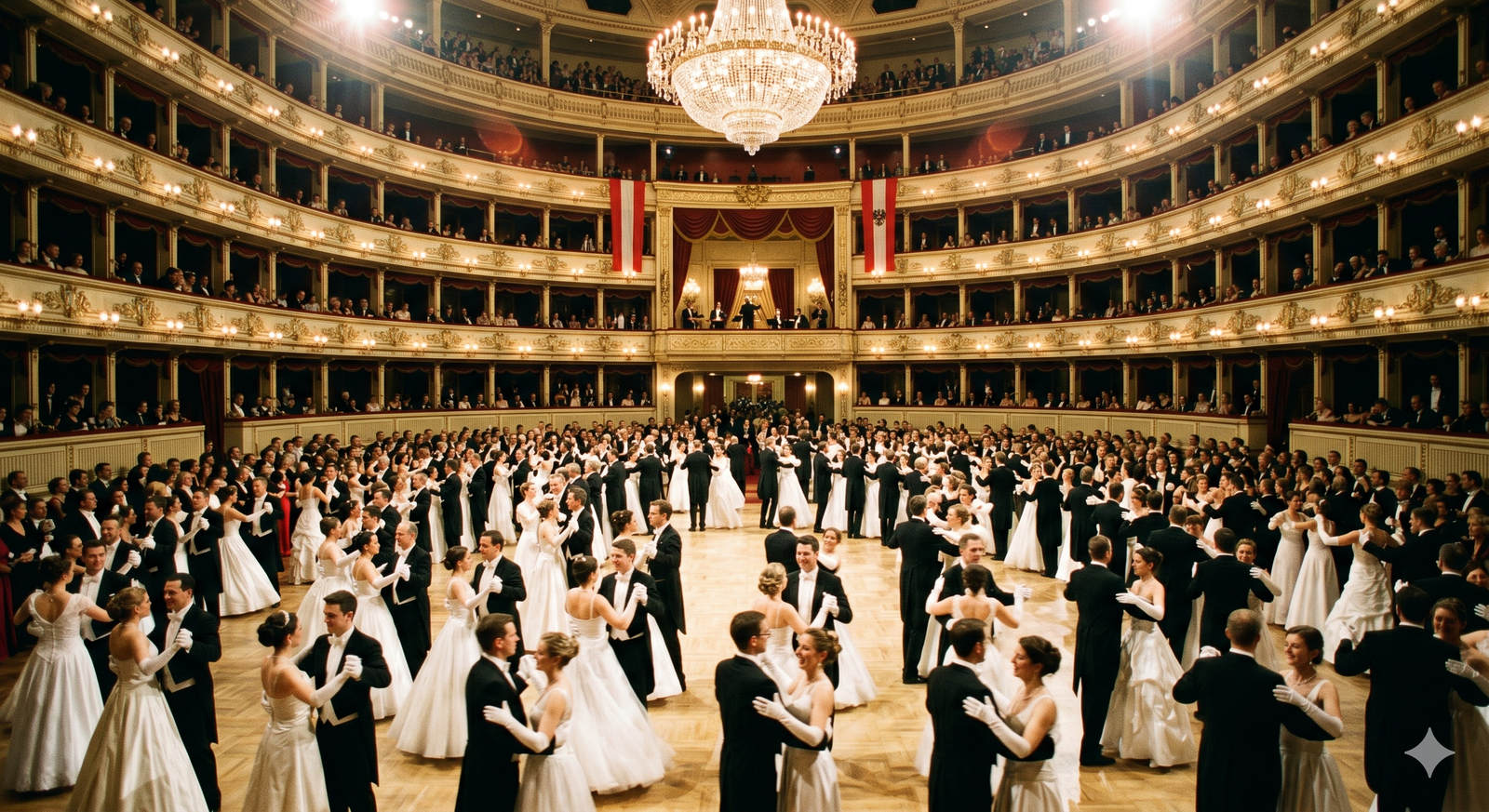
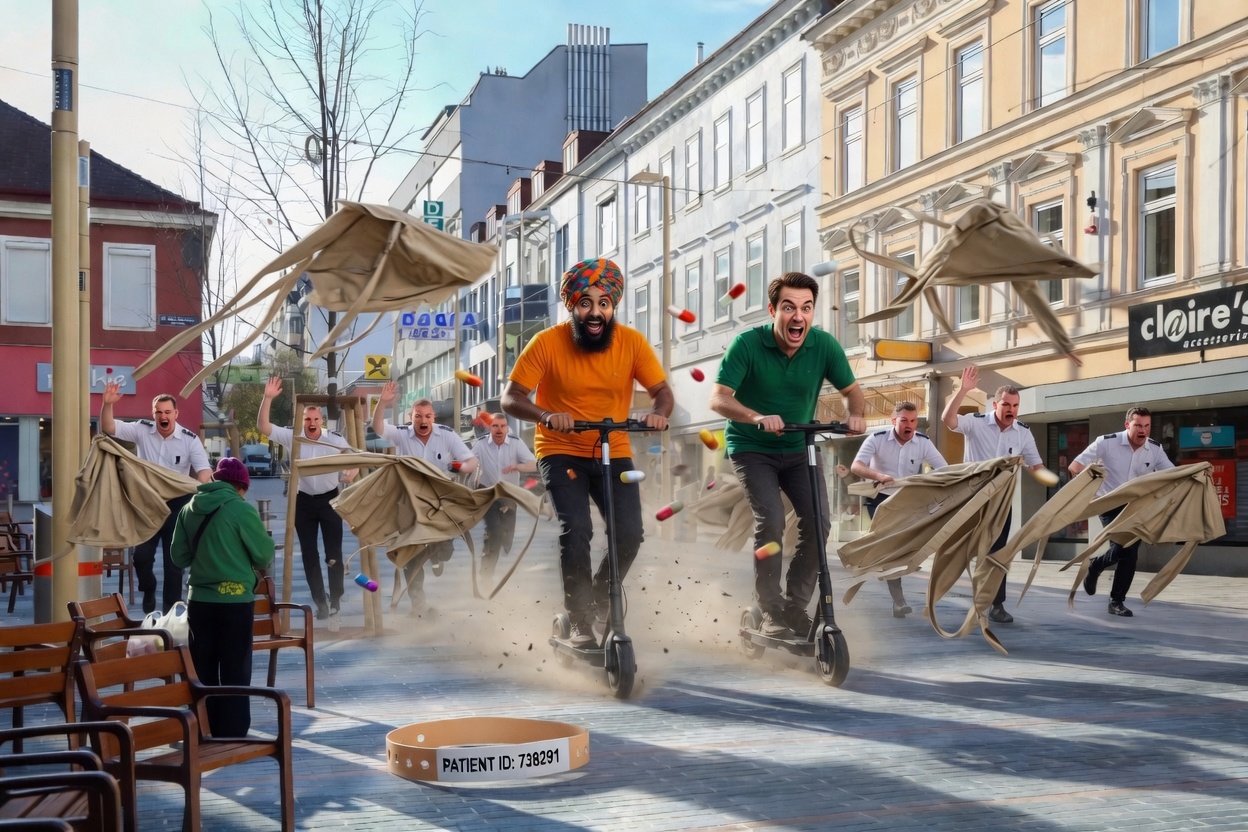
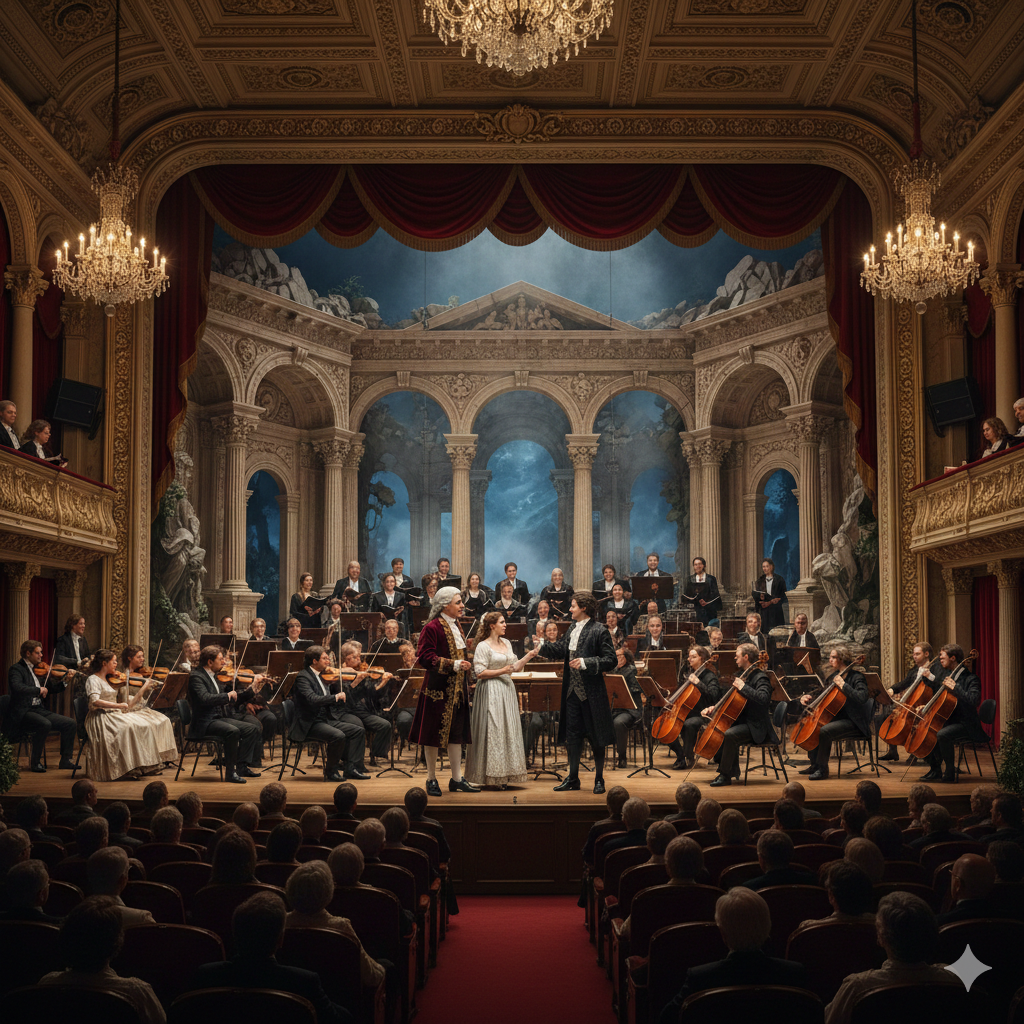
Opernball Vienna one of the leading society events in Vienna. Question: is it just an event or the upper classes? or does it contribute with other fringe benefits to the population?
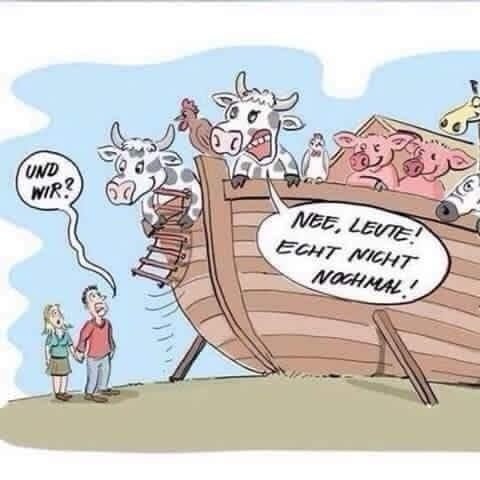
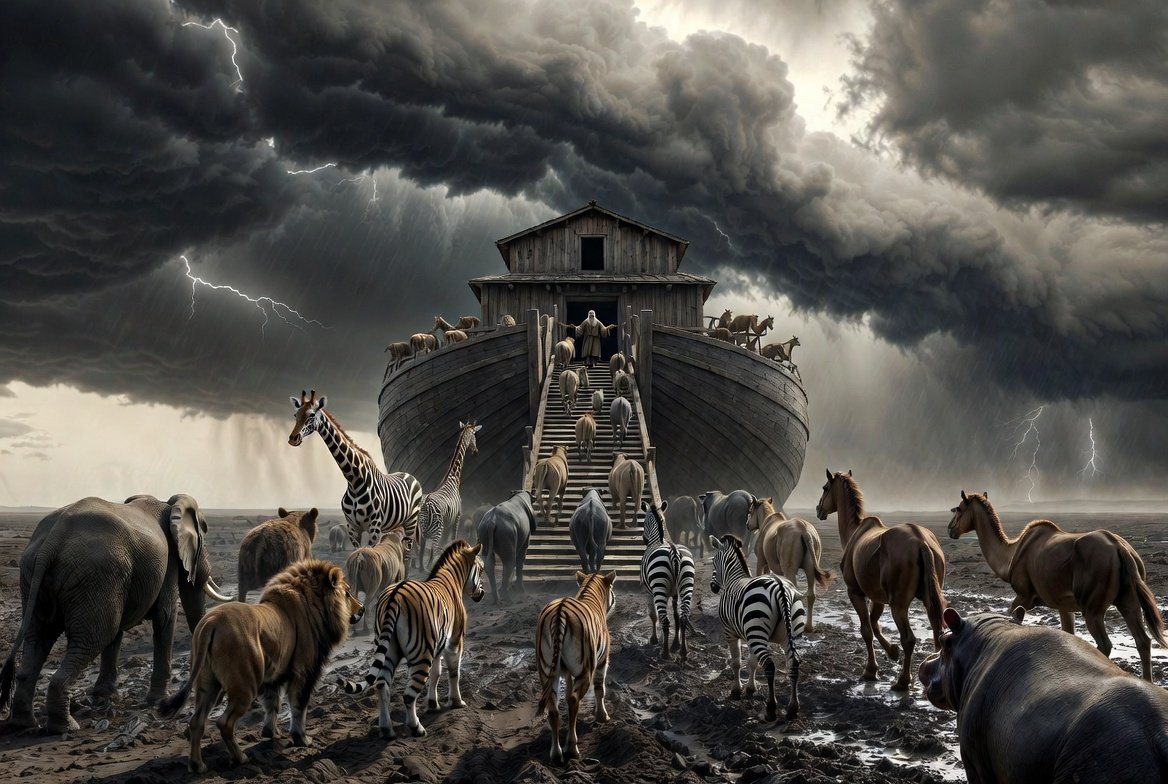
noha's arc: group of animals are entering noah's arc in groups (god considered the a pair of each sexes are enough to later reproduce millions of each kind - he obviously was not aware of modern genetics)
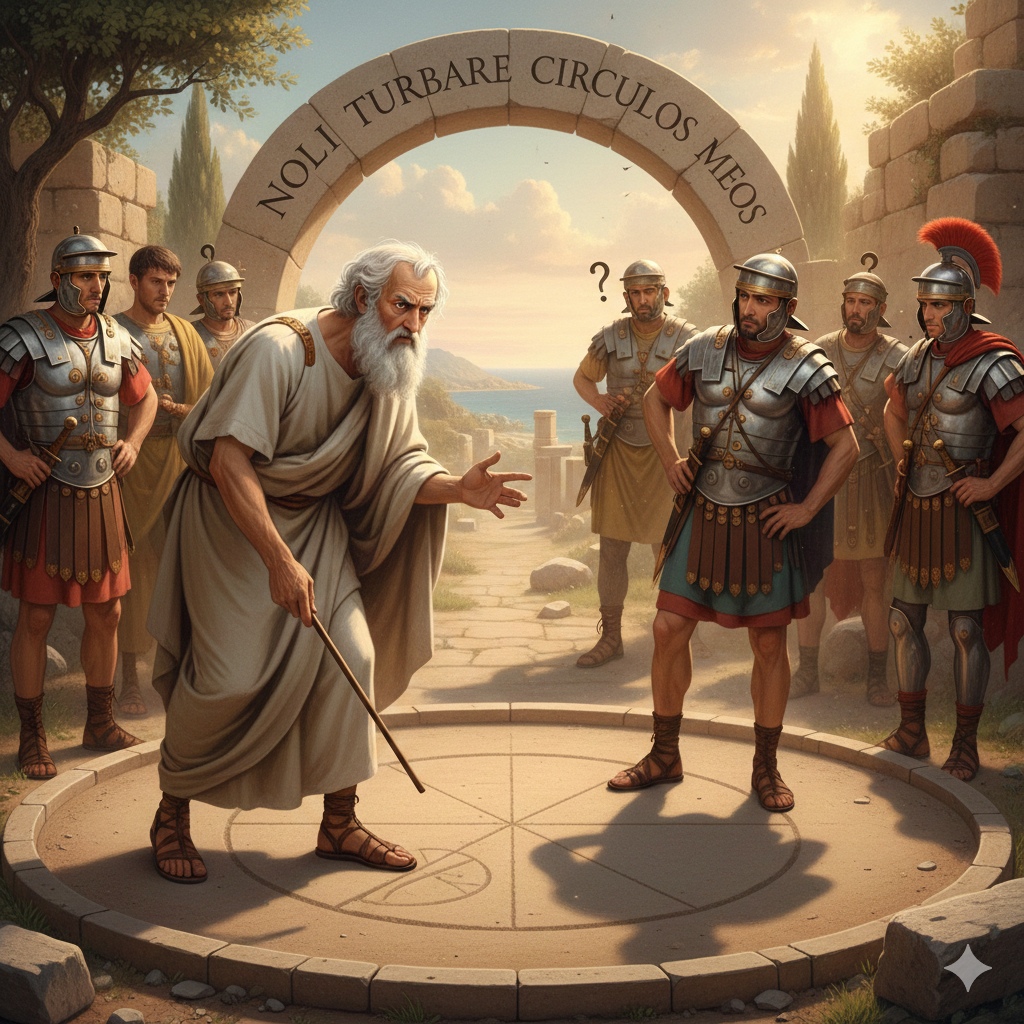
the Whereabouts of Atlantis
Plato, the ancient Greek philosopher, is the sole source of the Atlantis myth, describing it in his dialogues Timaeus and Critias as a powerful, circular empire that sank into the ocean "in a single day and night of misfortune." While he presented it as a philosophical parable, many have searched for a real-world location. Do you think that Atlantis really existed?
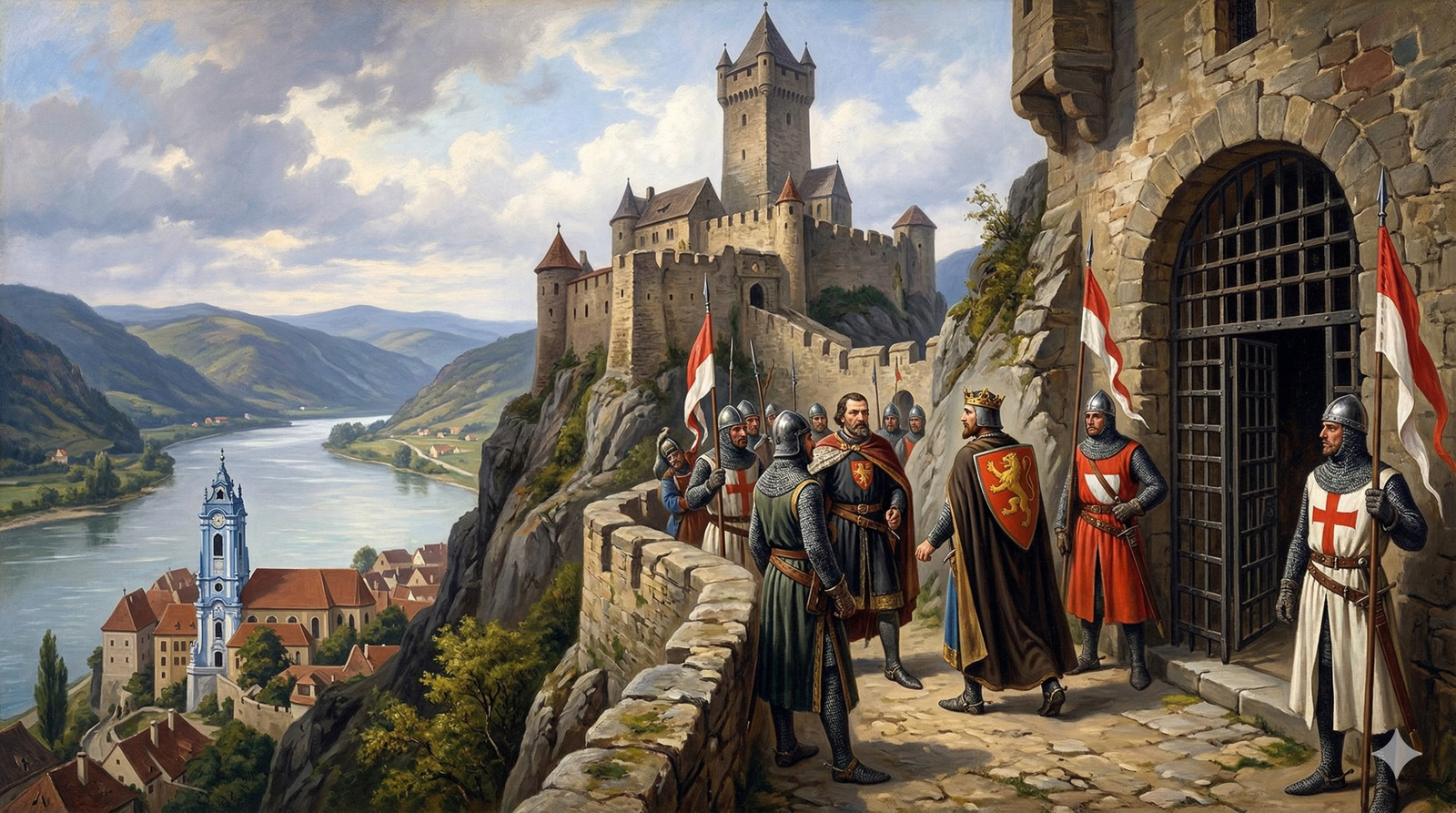
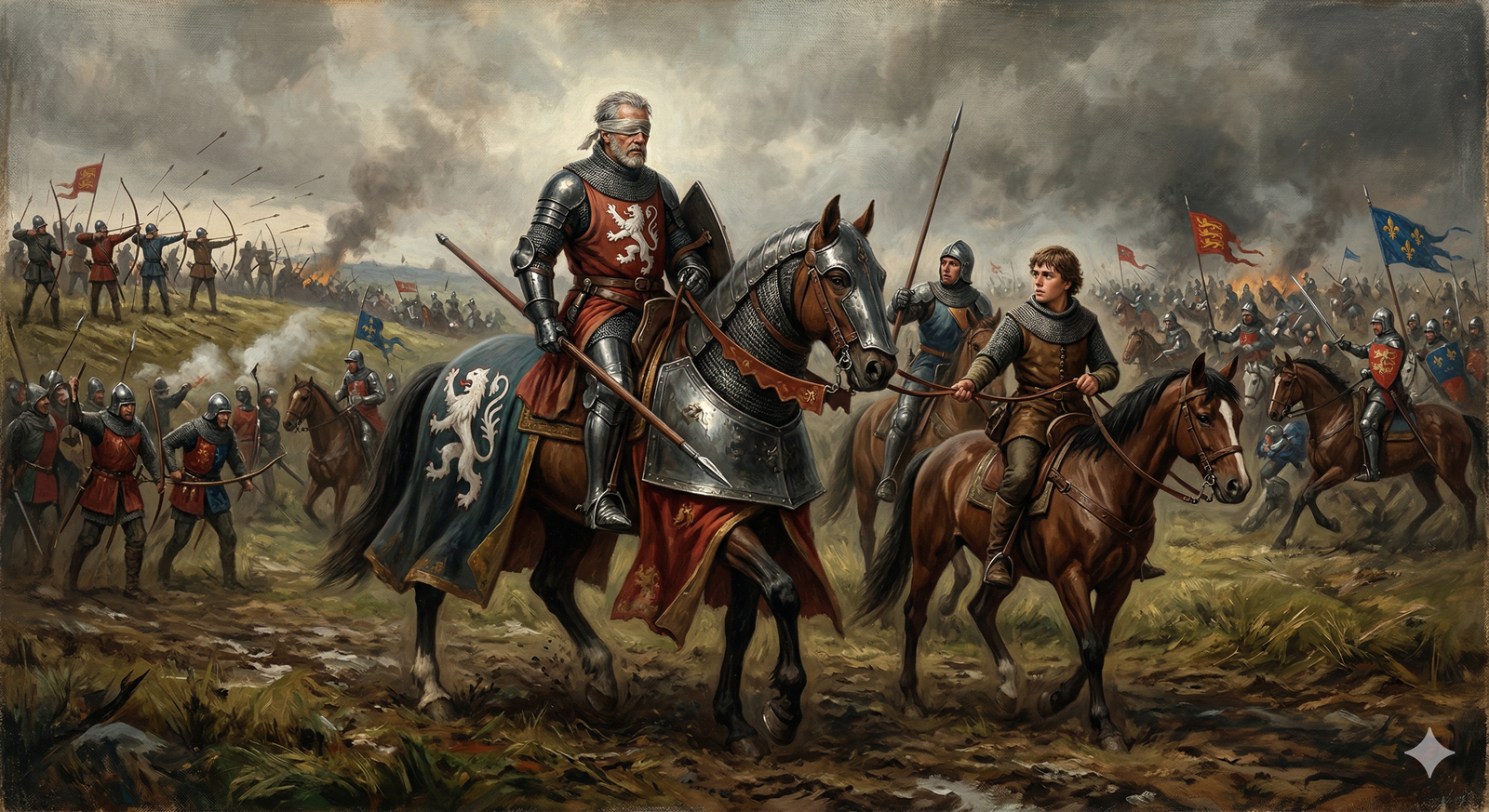
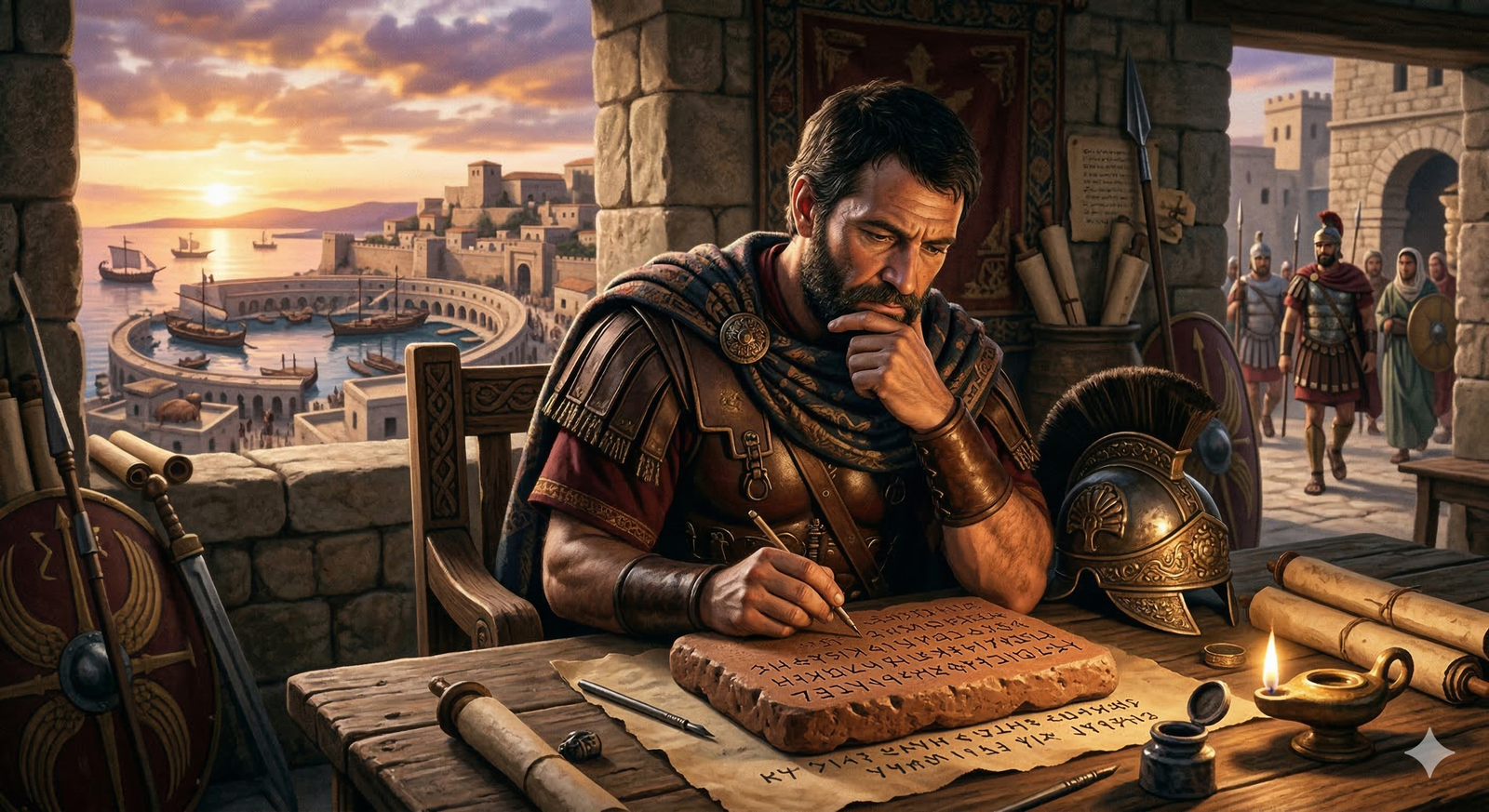
Returning from the Third Crusade in 1192, Richard found the sea routes blocked and was forced to travel overland through Europe in disguise. Despite dressing as a humble pilgrim or merchant, he was recognized near Vienna—allegedly because he was still wearing a costly ring or because his servants were using rare Byzantine coinage.
He was seized by Duke Leopold V, whom Richard had deeply offended during the Siege of Acre by tearing down the Duke's banner and refusing to share the spoils of war.
Imprisonment at Dürnstein
Richard was held in the Kuenringerburg (the castle ruins you see today) from December 1192 to March 1193.
The Setting: The castle sits on a rocky ridge roughly 150 meters above the Danube. In the 12th century, it was a formidable, isolated fortress.
The Conditions: While a prisoner, Richard wasn't kept in a dungeon cell; as a King, he was treated with "honorable" captivity, though he was constantly guarded.
The Price Tag: Leopold eventually handed Richard over to the Holy Roman Emperor, Henry VI. The ransom for his release was set at 150,000 marks—roughly 65,000 pounds of silver. This was an astronomical sum, totaling about two to three times the annual income of the English Crown at the time.
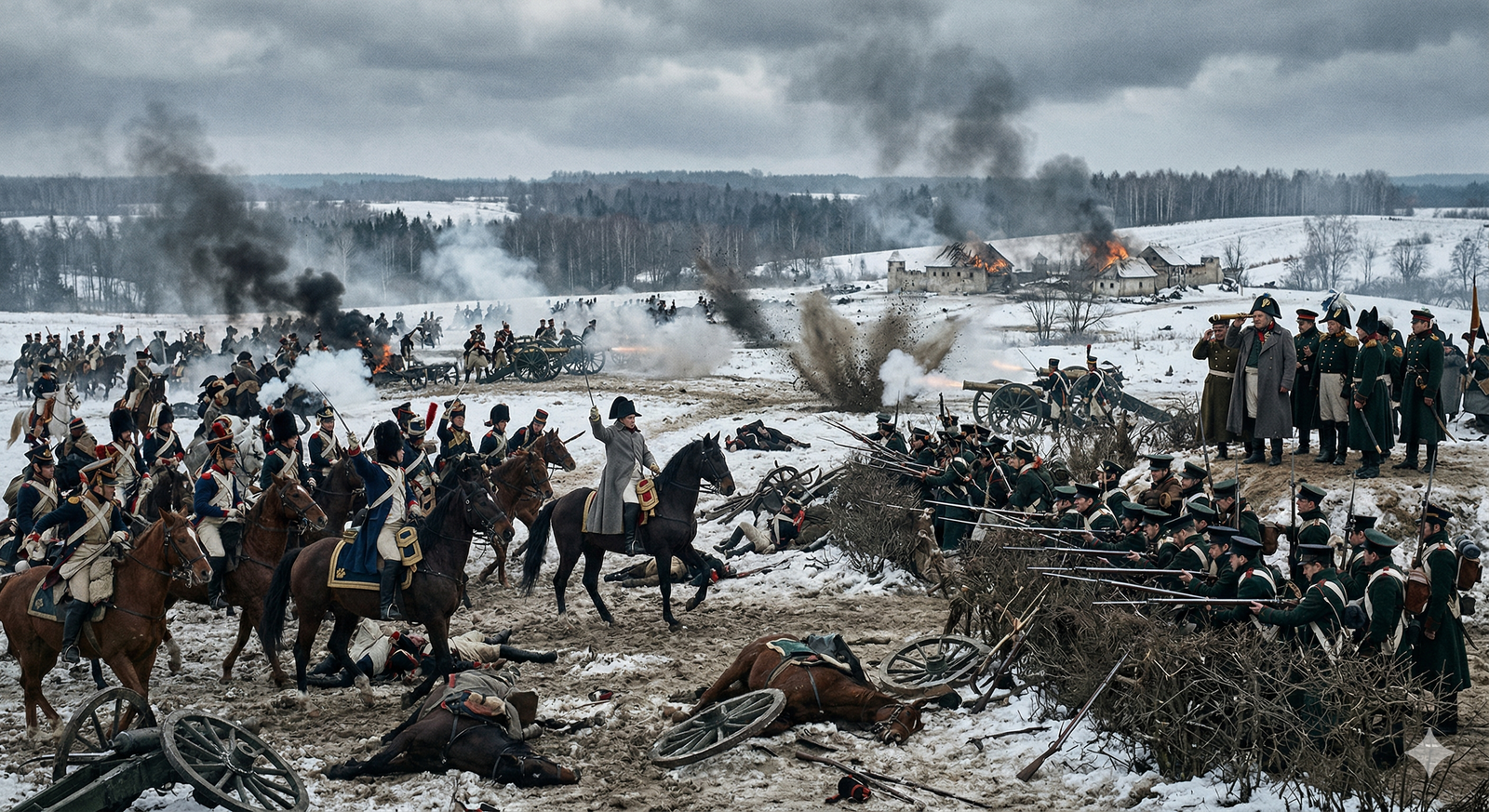
Battle of Borodino 1812
The clash between Napoleon Bonaparte and Mikhail Kutuzov during the 1812 French invasion of Russia is one of history’s greatest psychological and strategic duels. It wasn't just a fight between two armies, but a collision of two completely different philosophies of war.Pr⚔️ The PersonalitiesFeatureNapoleon BonaparteMikhail KutuzovPhilosophyDecisive Battle: Seek one massive "knockout blow" to force a treaty.Attrition: "Patience and Time." Let the land and climate do the work.StyleAggressive, fast-moving, and centralized.Cautious, defensive, and deeply attuned to soldier morale.GoalCapture Moscow to humiliate the Tsar.🏟️ The Main Event: The Battle of BorodinoOn September 7, 1812, the two finally met head-on about 70 miles west of Moscow. It remains the bloodiest single day of the Napoleonic Wars.The Setup: Kutuzov dug into heavy earthworks (the Raevksy Sredoubt and the Bagration Fleches). Napoleon launched massive frontal assaults instead of his usual flanking maneuvers.The Carnage: By sunset, combined casualties exceeded 70,000 men.The Result: A technical French victory because the Russians retreated, but a strategic failure for Napoleon. He failed to destroy Kutuzov's army, which lived to fight another day.
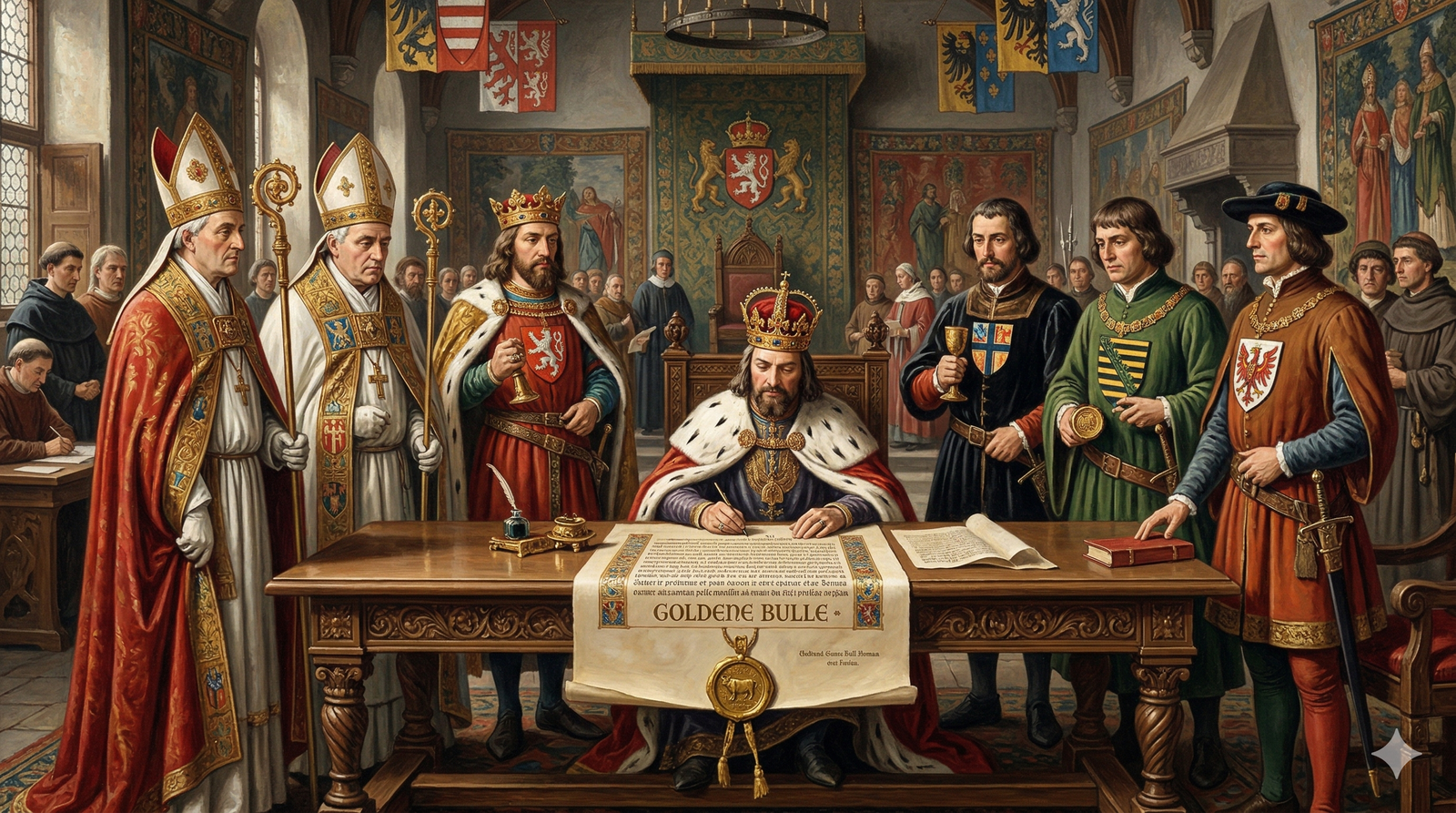
1356: Kaiser Karl IV unterzeichnet die "Goldene Bulle", die die Wahl des deutschen Königs regelt. Die Wahlmänner sind die Erzbischöfe von Köln, Mainz und Trier, der Pfalzgraf am Rhein, der Herzog von Sachsen, der König von Böhmen, der Markgraf von Brandenburg. Die Goldene Bulle war das deutsche "Grundgesetz" bis 1806 (Reichsdeputationsschluss)
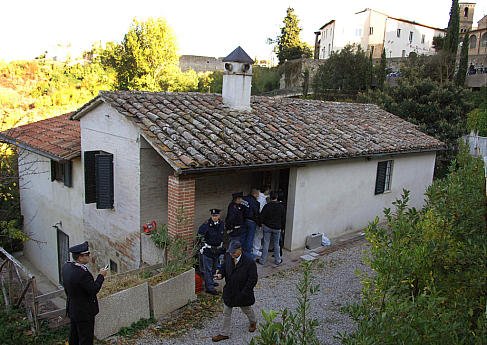
L'omicidio di Meredith Kercher a Perugia
Meredith Kercher, una studentessa inglese di 21 anni in Erasmus a Perugia, viene ritrovata priva di vita nella sua camera da letto nell'appartamento di via della Pergola 7. La causa della morte è un'emorragia dovuta a una profonda ferita al collo causata da un coltello.2. I protagonisti e le accuseLe indagini si concentrarono inizialmente su tre figure:Amanda Knox: Coinquilina americana di Meredith.Raffaele Sollecito: Studente pugliese e fidanzato di Amanda all'epoca dei fatti.Rudy Guede: Un giovane originario della Costa d'Avorio, le cui tracce (DNA e impronte) furono rinvenute sulla scena del crimine.Inizialmente venne coinvolto anche Patrick Lumumba, titolare di un bar dove Amanda lavorava, in seguito alle dichiarazioni della stessa Knox. Lumumba risultò però totalmente estraneo ai fatti e Amanda fu condannata per calunnia.3. L'iter giudiziarioIl processo è stato un vero e proprio "ping-pong" giudiziario durato otto anni:Primo Grado (2009): Knox e Sollecito vengono condannati rispettivamente a 26 e 25 anni di carcere. Rudy Guede, che sceglie il rito abbreviato, viene condannato a 30 anni (poi ridotti a 16 in appello).Appello (2011): La condanna di Knox e Sollecito viene ribaltata. I due vengono assolti per non aver commesso il fatto e scarcerati immediatamente.Cassazione (2013): La Suprema Corte annulla l'assoluzione, ritenendo che vi fossero troppe contraddizioni, e ordina un nuovo processo d'appello.Appello Bis (2014): I due vengono nuovamente condannati (28 anni e 6 mesi per Knox, 25 per Sollecito).Cassazione Finale (2015): La Corte di Cassazione annulla definitivamente le condanne senza rinvio, assolvendo Knox e Sollecito per "insufficienza di prove" e per l'assenza di tracce biologiche a loro riconducibili nella stanza del delitto.4. Le conclusioni definitiveAd oggi, l'unica verità processuale stabilita è la seguente:PersonaEsito GiudiziarioStato AttualeRudy GuedeCondannato in via definitiva per concorso in omicidio e violenza sessuale.Libero (ha finito di scontare la pena nel 2021).Amanda KnoxAssolta dall'omicidio; condannata solo per calunnia contro Lumumba.Vive negli USA, è un'attivista e scrittrice.Raffaele SollecitoAssolto in via definitiva.Ingegnere informatico in Italia.
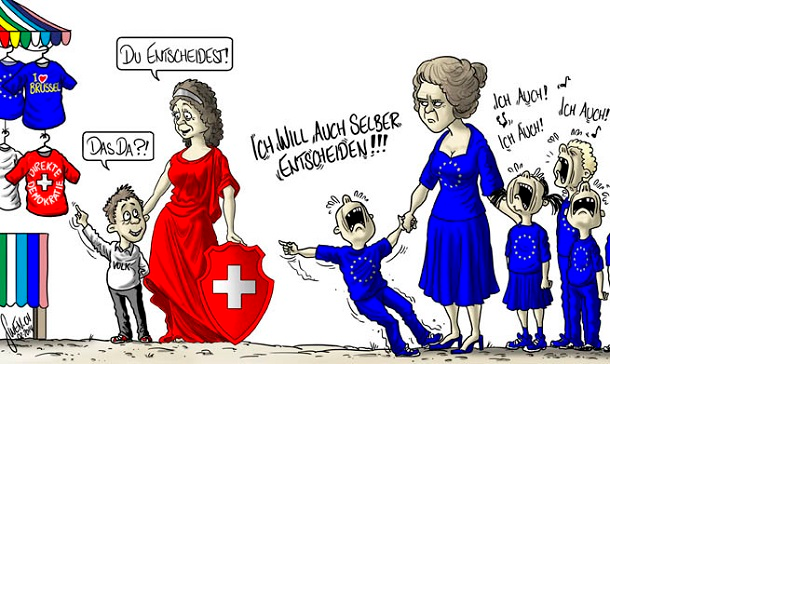
EU vs CH - du entscheidest! Frage: warum sind gerade Norwegen und Die Schweiz, die nachweislich erfolgreichsten europäischen Länder, nicht Mitglieder der EU?
den habe ich gleich bei mir um die Ecke gesehen. Die Shelby Cobra hat damals die besten Beschleunigungswerte überhaupt gehabt und der Rennmotor hatte mehr als genug Power. Beeindruckend war der Start des Motors - ein ohrenbetäubender Krach.
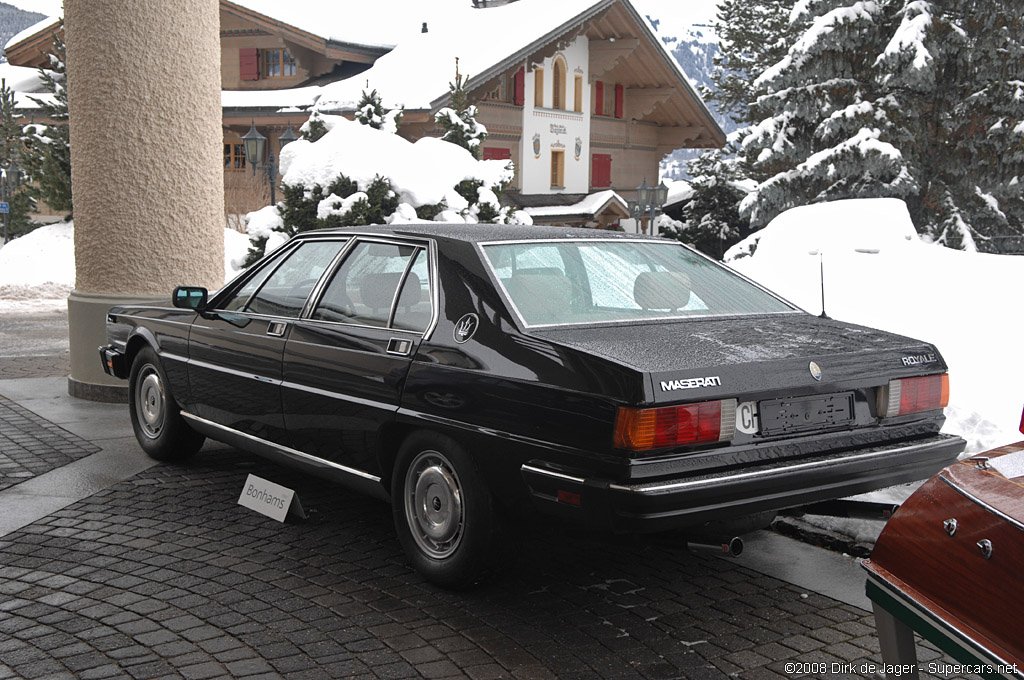
der Maserati Royale ist eine fuoriserie (Sonderanfertigung) des Maserati Quattroporte - den gab es nur in dieser schönen grau-metallicgrünen Lackierung und mit dem grossen 4,9liter V8 Motor. Das Auto war zwar innen wunderschön und superbequem sowie extrem geräumig wie ein Schlachtschiff. Allerdings war er technisch nicht auf dem neuesten Stand und sein Benzinverbrauch war auch grenzwertig- die mechanische Verbrauchsanzeige war immer im roten Bereich!
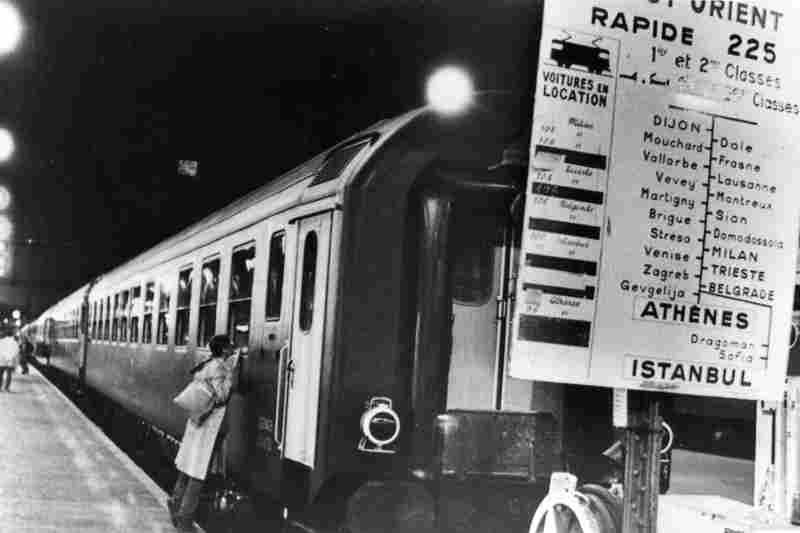
der R225 "Direct-Orient" fuhr bis 1977 auf der Strecke London - (Fähre) - Paris - Lausanne - Simplon- Milano-Venezia- Trieste - Zagreb - Beograd- Athenes/ -Sofia- Istanbul Dieser Zug war übrigens der einzige Zug der gleich 2 Pariser Kopfbahnhöfe anfuhr (Paris Lyon und Paris Nord) warum wohl? Fragt nach bei Agatha Christie
La parola "quarantena" è uno dei lasciti più significativi della storia di Venezia al mondo moderno. Il termine deriva proprio dalla pratica veneziana di isolare le navi e le persone per quaranta giorni durante le epidemie di peste.
Questa ricchezza aveva però un prezzo: le navi portavano con sé non solo spezie e seta, ma anche i ratti neri che trasmettevano la peste bubbonica.
1348: La "Morte Nera" decima la popolazione veneziana.
Il concetto: Poiché non si conoscevano i microbi, i medici dell'epoca credevano che la malattia fosse causata da "miasmi" (aria corrotta). Capirono però che l'isolamento era l'unica difesa efficace.
Perché proprio 40 giorni?
Non c’era una base scientifica medica (anche se oggi sappiamo che il periodo di incubazione della peste è molto più breve), ma piuttosto un mix di ragioni:
Pratiche: Era un tempo sufficientemente lungo per permettere ai sintomi di manifestarsi e per far morire eventuali pulci o ratti infetti a bordo delle navi.
i Lazzaretti: La prima linea di difesa
Venezia fu la prima città al mondo a istituire luoghi fisici permanenti per l'isolamento, situati su isole della laguna per sfruttare l'acqua come barriera naturale.
cartoon: si vede come dolci e carini sono i gatti
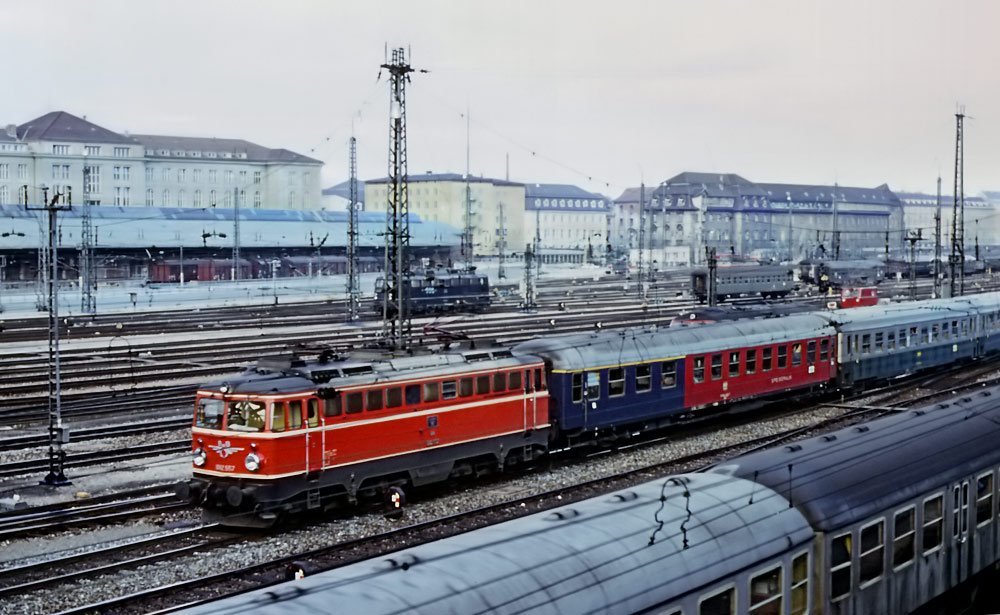
der legendäre D262 "Orient-Express" Bucuresti Nord-Brasov-Budapest-Hegeyshalom-Wien West-Salzburg-München-Stuttgart-Karlsruhe-Strasbourg-Paris Est.Dies war der berühmteste Zug der Welt und war auch ein einzigartiger Luxuszug. Aufgrund zahlreicher Kriege in Europa hat er auch mehrmals seine Strecke geändert, aber Wien und Paris blieben immer seine Bezugspunkte. Ursprünglich befuhr er noch in Monarchiezeiten die Strecke (London)-Paris-Wien- Budapest-Varna-(Fähre) - Konstantinopel. Der letzte Luxuszug war noch der Venice-Simplon - Orient-Express, der aber 1977 eingestellt wurde. Ebenso wie der "Orient-Express" war auch dieser Zug kein Luxuszug mehr, vor allem auf dem Streckenabschnitt Paris-Lausanne war er wie ein Bummelzug, der praktisch überall hielt. Im cartoon sehen wir den Streckenteil Wien - Paris aus den 70er Jahren.
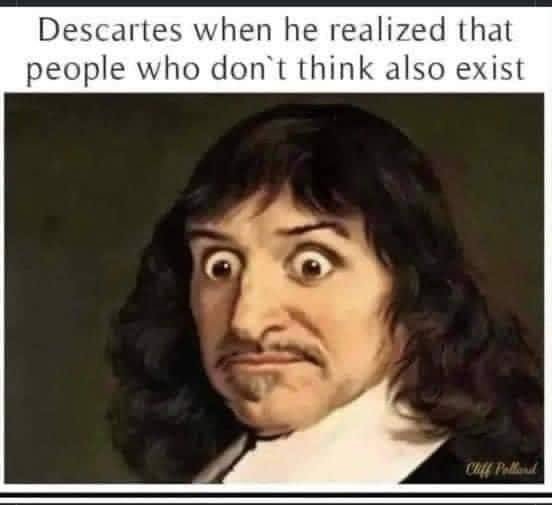
yeah! "Cogito ergo sum" ou dans sa langue maternelle: "Je pense, donc je suis" (Ich denke, also bin ich) aber seine wichtigste Arbeit war die analytische Geometrie (kartesianisches Koordinatensystem)
Primera parte (1605): El ingenioso hidalgo Don Quijote de la Mancha. Se centra en las dos primeras salidas de Quijote y tiene un tono más burlesco y episódico.
Segunda parte (1615): El ingenioso caballero Don Quijote de la Mancha. Es más profunda y filosófica. Aquí, los personajes que Quijote encuentra ya han leído la primera parte del libro, lo que crea un juego de "metaliteratura" fascinante.
La magia de la novela reside en la relación entre sus dos protagonistas:
Don Quijote (Alonso Quijano): Representa el idealismo. Es un hidalgo que, de tanto leer libros de caballería, se le "seca el cerebro" y decide hacerse caballero andante para defender la justicia y el honor.
Sancho Panza: Representa el realismo (y el sentido común). Es un campesino que acompaña a Quijote como su escudero, atraído por la promesa de gobernar una "ínsula".
Dulcinea del Toboso: La mujer idealizada por Quijote. En la realidad es Aldonza Lorenzo, una campesina que "tenía la mejor mano para salar puercos de toda la Mancha".
A lo largo de la novela, los personajes se transforman:
Sancho empieza a adoptar el lenguaje elevado y los ideales de su amo.
Don Quijote empieza a ver la realidad de forma más terrenal, influenciado por Sancho.
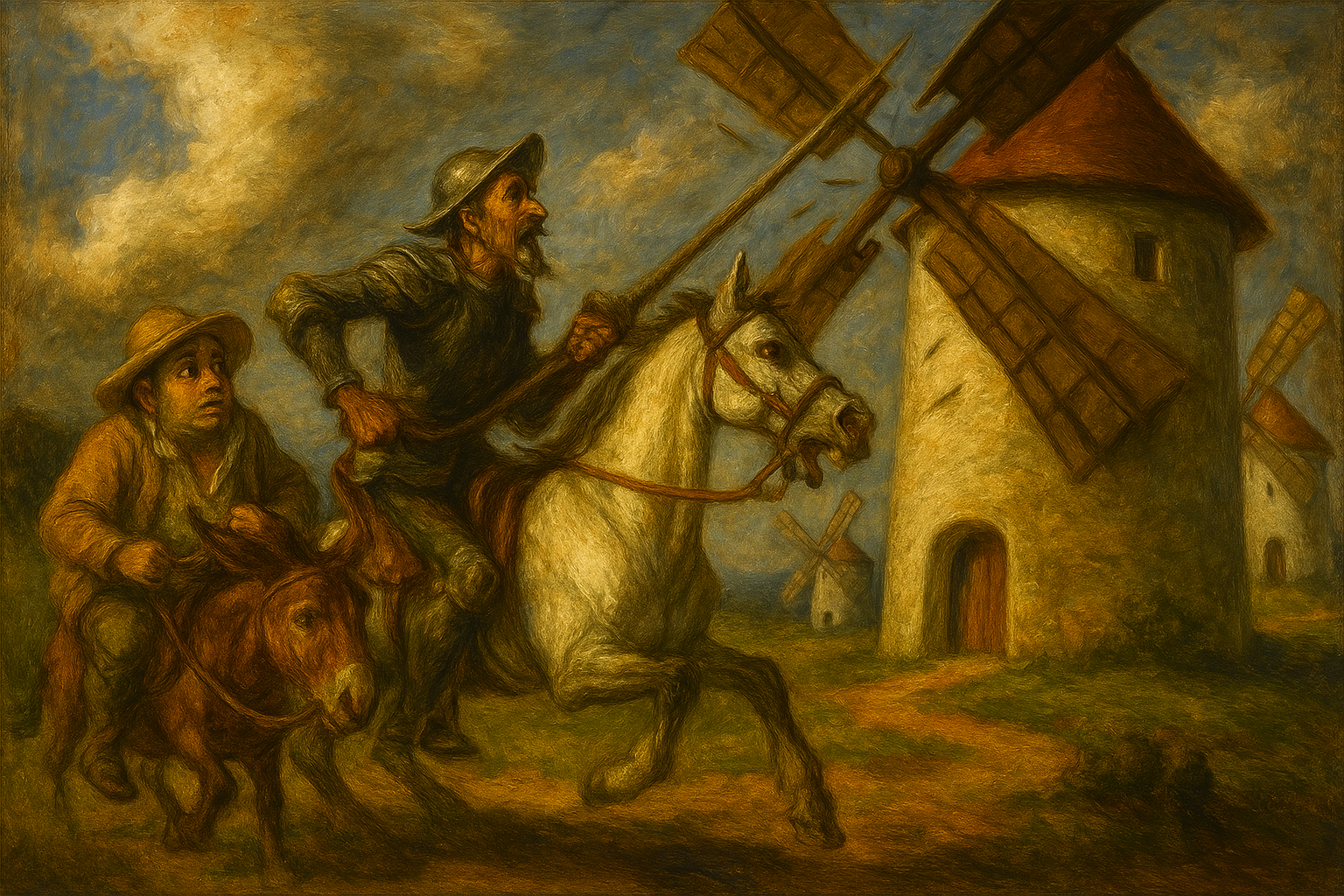
El conflicto eterno del libro. Donde Quijote ve gigantes, Sancho ve molinos. Donde Quijote ve un ejército, Sancho ve un rebaño de ovejas. Cervantes nos pregunta: ¿Quién está más loco? ¿El que ve el mundo como es, o el que lucha por hacerlo mejor? Cartoon: Don quijote attaque con Sancho los molinos de viento
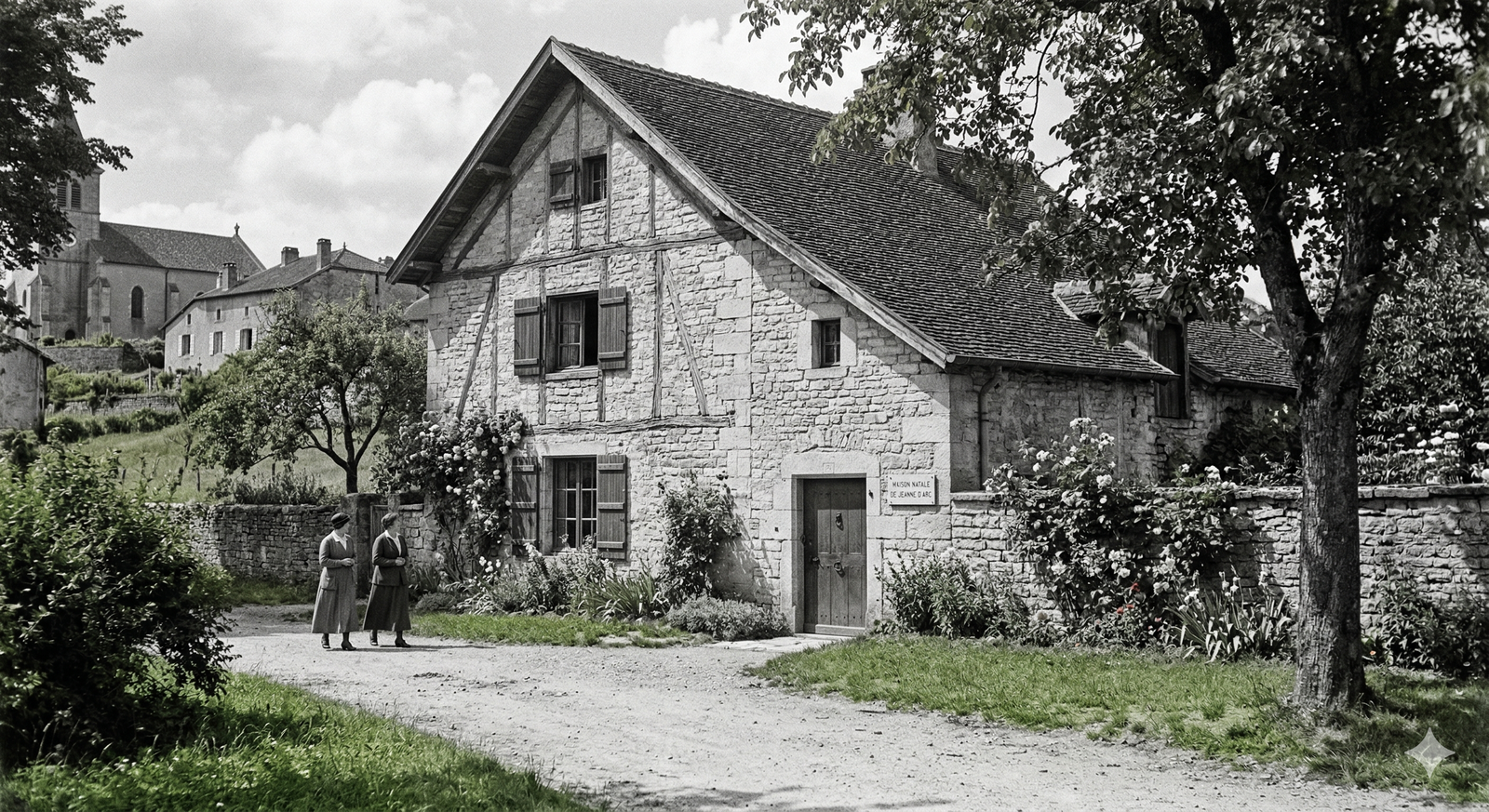
L'histoire de Jeanne d'Arc à Orléans est l'un des tournants les plus célèbres de l'histoire de France. .
Voici les points clés de cet épisode héroïque de la guerre de Cent Ans :
En 1428, les Anglais assiègent Orléans. La ville est stratégique : si elle tombe, le sud de la France est ouvert aux troupes anglaises, et la cause du futur roi Charles VII est perdue.
Jeanne arrive à Orléans le 29 avril 1429. Elle n'a que 17 ans. Bien que les chefs militaires soient sceptiques, elle parvient à galvaniser les troupes et la population civile grâce à sa foi et sa détermination inébranlable.
Blessée par une flèche à l'épaule, Jeanne retourne pourtant au combat, ce qui provoque la panique chez les Anglais qui la croient dotée de pouvoirs surnaturels.
Les Anglais lèvent le siège et se retirent. Orléans est libre. cartoon: domremi la pucelle - maison de naissance de Jeanne d'Arc
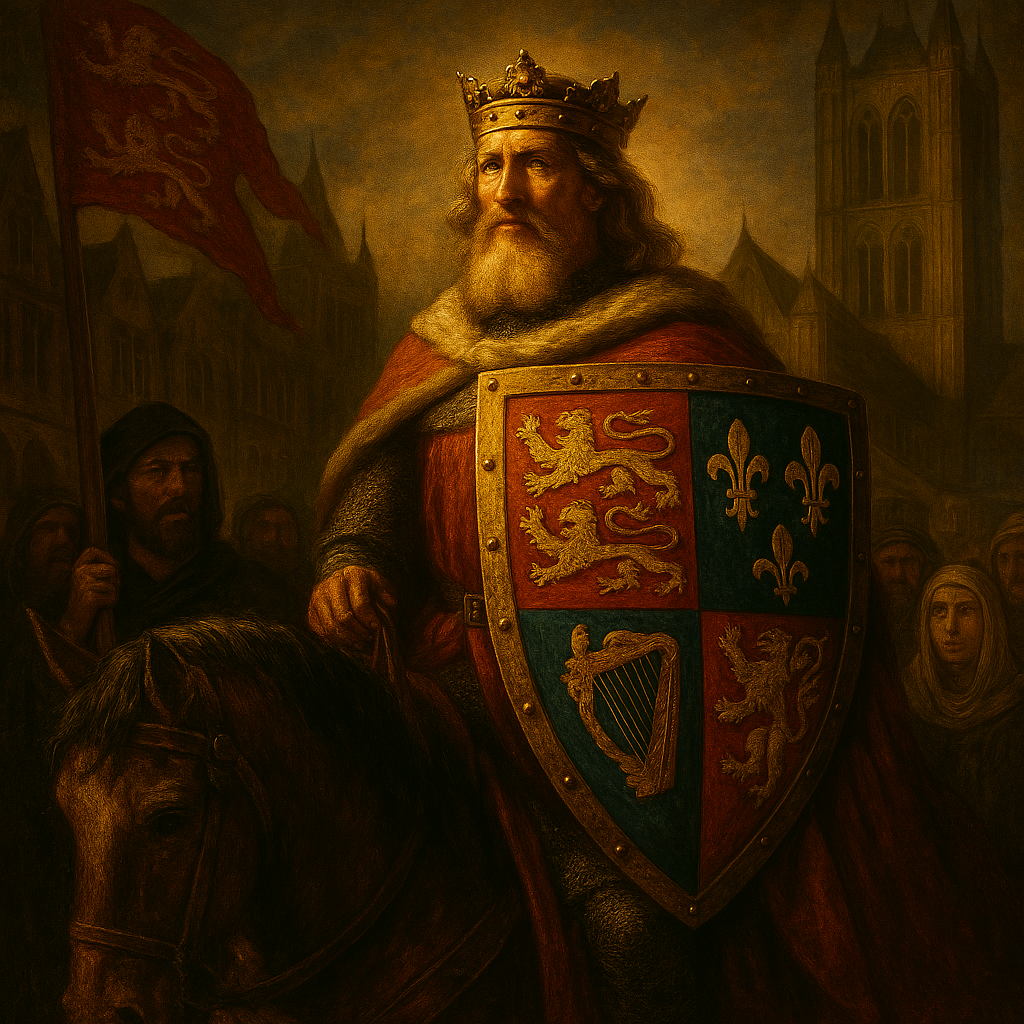
"Honi soit qui mal y pense" this is the motive of the order of the garter, one of the most celebrated sayings in history - it means (verflucht sei, wer Böses dabei denkt) - the order was found by the English king Edward III - at this time, nobility, knights and the ruling upper classes spoke French while the old English (Georry Chaucer, canterbury tales) was spoken by the serfs, pagans and the rest of the underlings. the phrase "Honi soit.." is still in the coat of arms of the English flag. History: the British queen once lost her garter - to avoid a scandal, Edward shouted this phrase. The order of the garter (Hosenbandorden) is the most important of all English orders and well-known all over the world. cartoon: Edward with his fantastic coat of arms riding into the city of Bruge
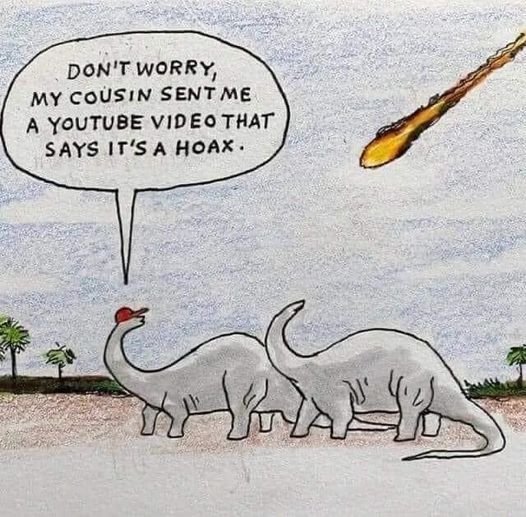
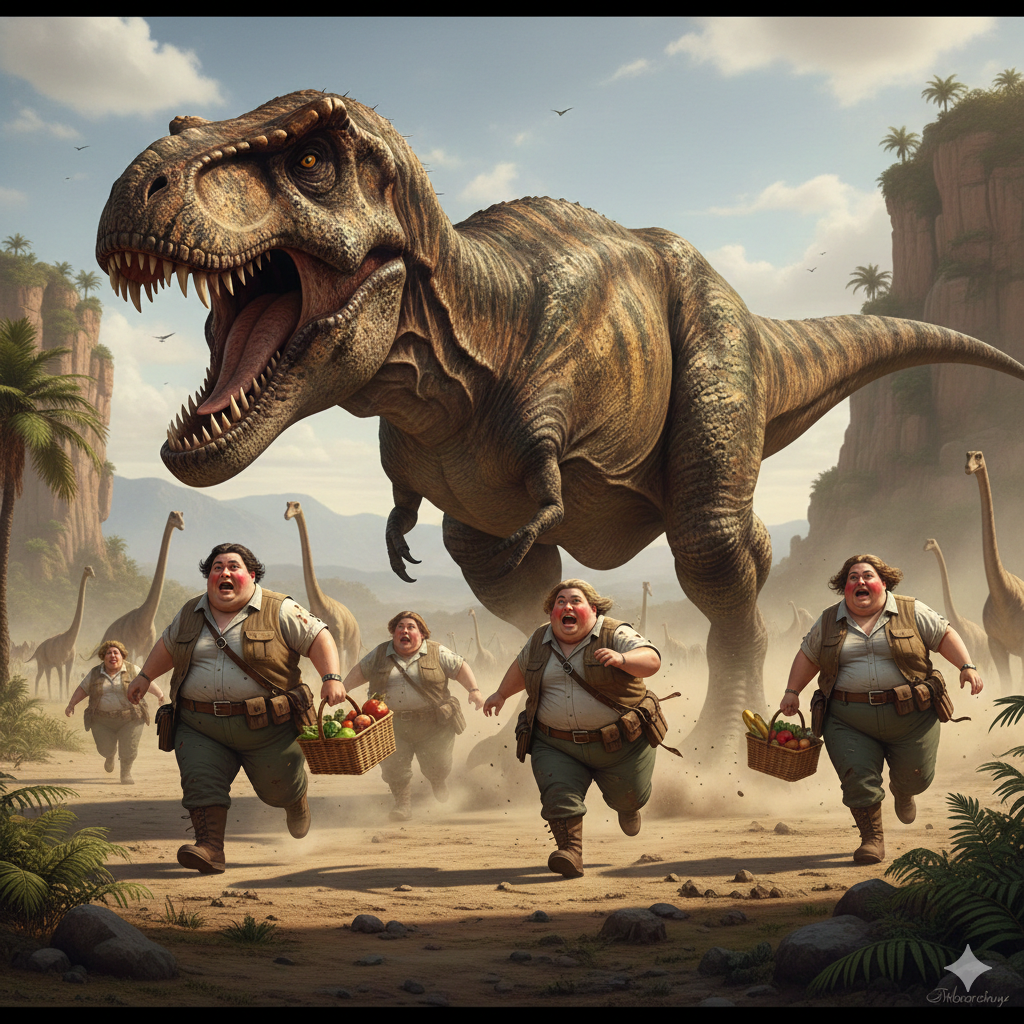
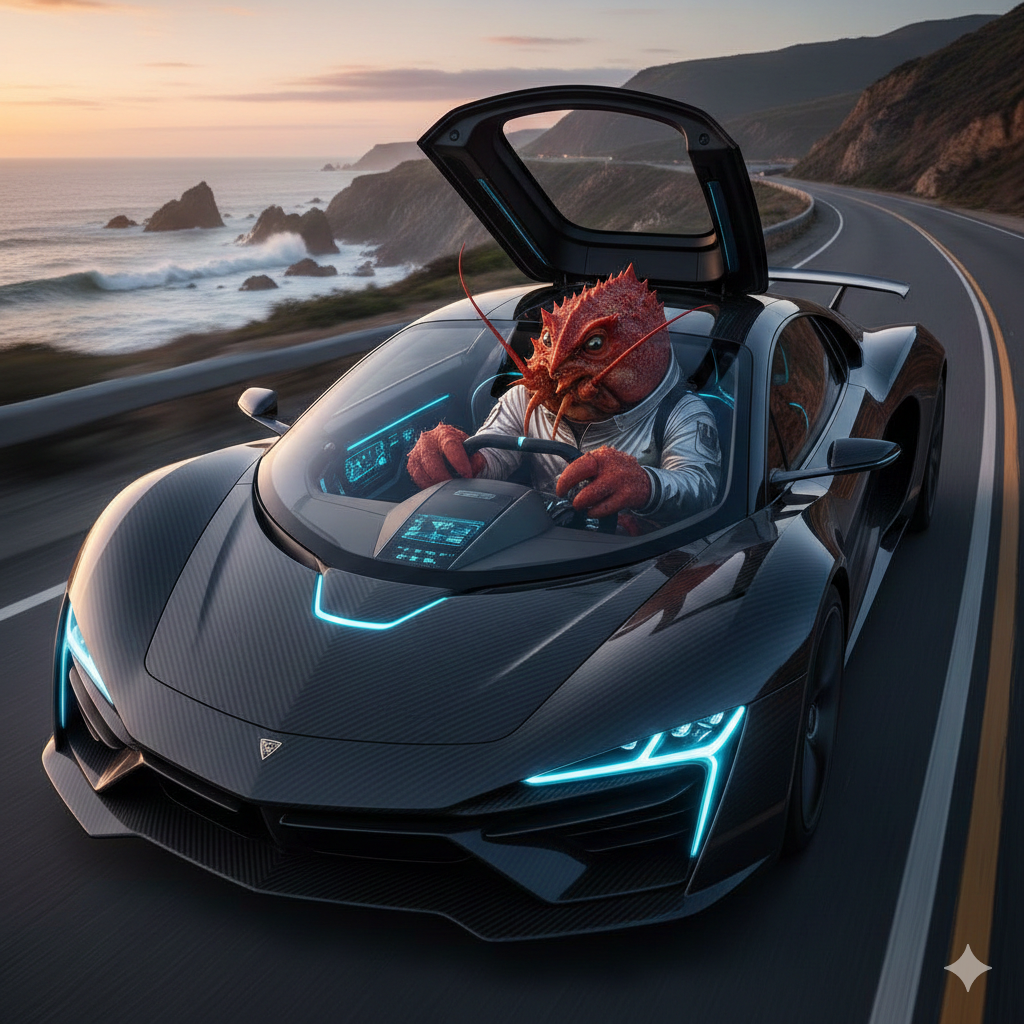
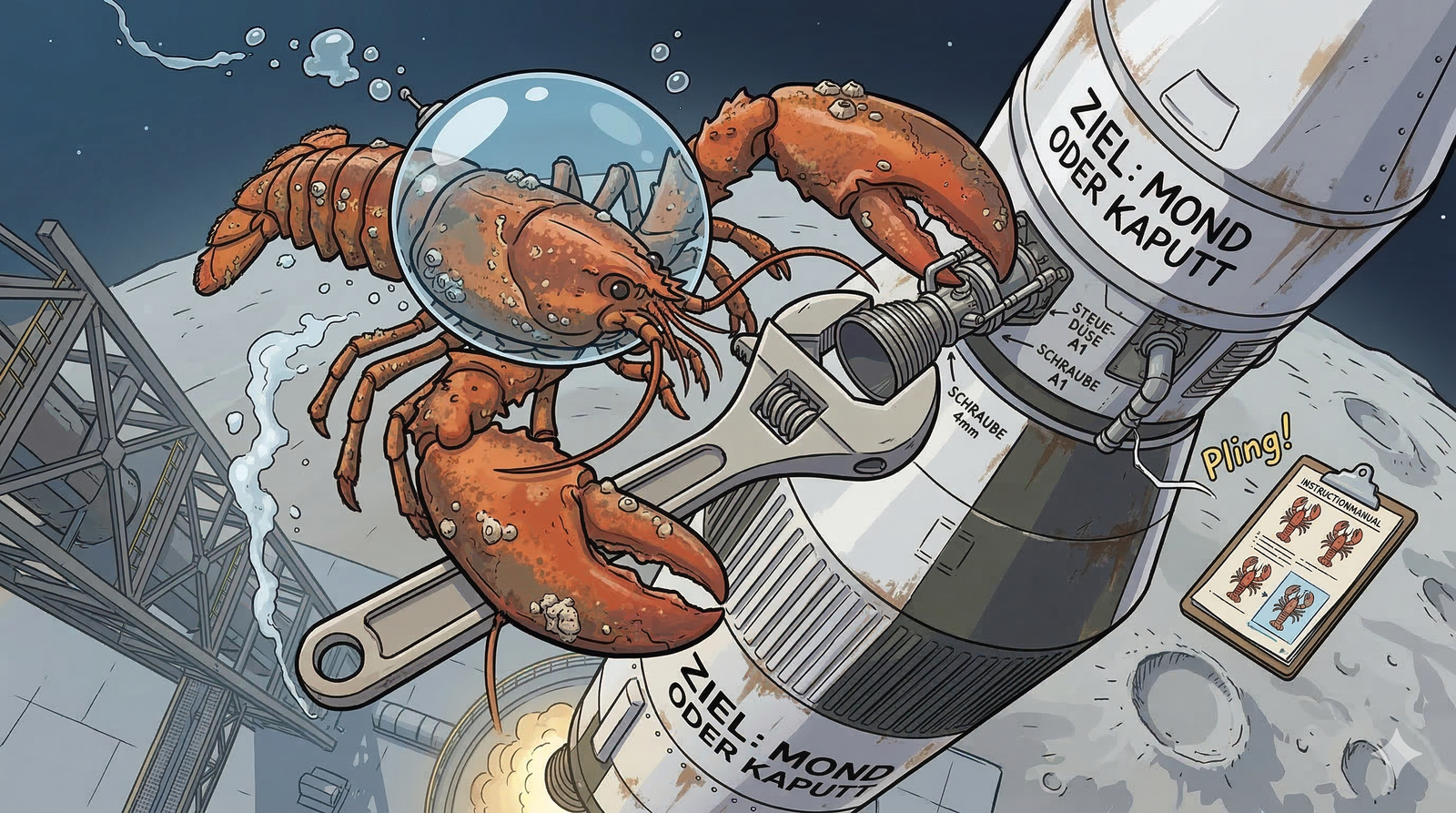
poor Dinos: they roamed the Earth in the wrong time but at the right place. Imagine if the comet had struck only seconds later - the Old Lobster and most of our modern mammals most likely won't be here today!
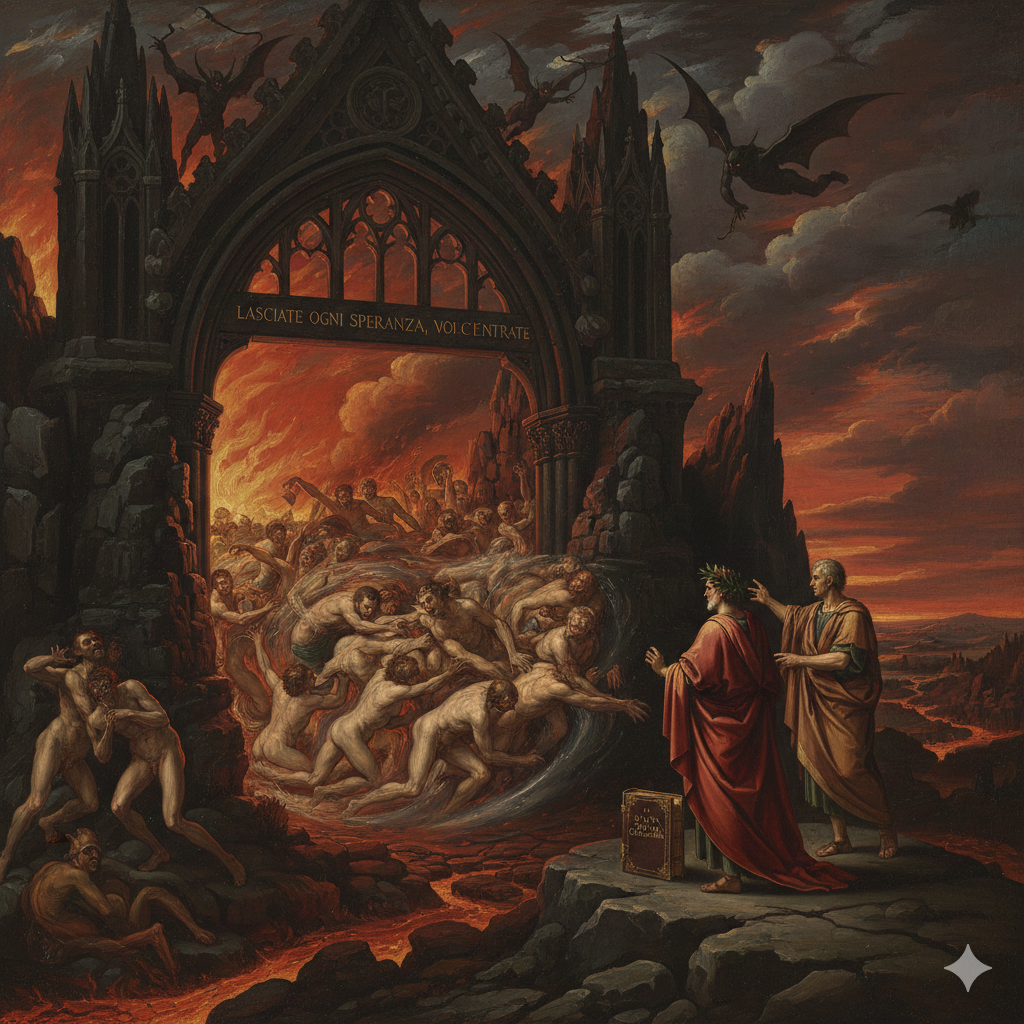
Dante Aligheri visita l'ingresso al inferno ed urla in orrore ai dannati: "lasciate ogni speranza, voi che entrate!" (schreit schockiert zu den Verdammten: (ihr, die ihr eintretet - vergesst alle eure Hoffnungen)
Les Misérables, publié en 1862, est l'un des sommets de la littérature mondiale. Victor Hugo y dresse une fresque sociale, politique et philosophique de la France du début du XIXe siècle, tout en explorant la nature de la rédemption.
L'histoire suit le destin de Jean Valjean, un ancien forçat condamné pour avoir volé un pain, qui cherche à se racheter malgré la poursuite implacable de l'inspecteur Javert. À travers son parcours, .
Jean Valjean : Le symbole de la rédemption. Sous l'influence de l'évêque Myriel, il passe de l'ombre à la lumière.
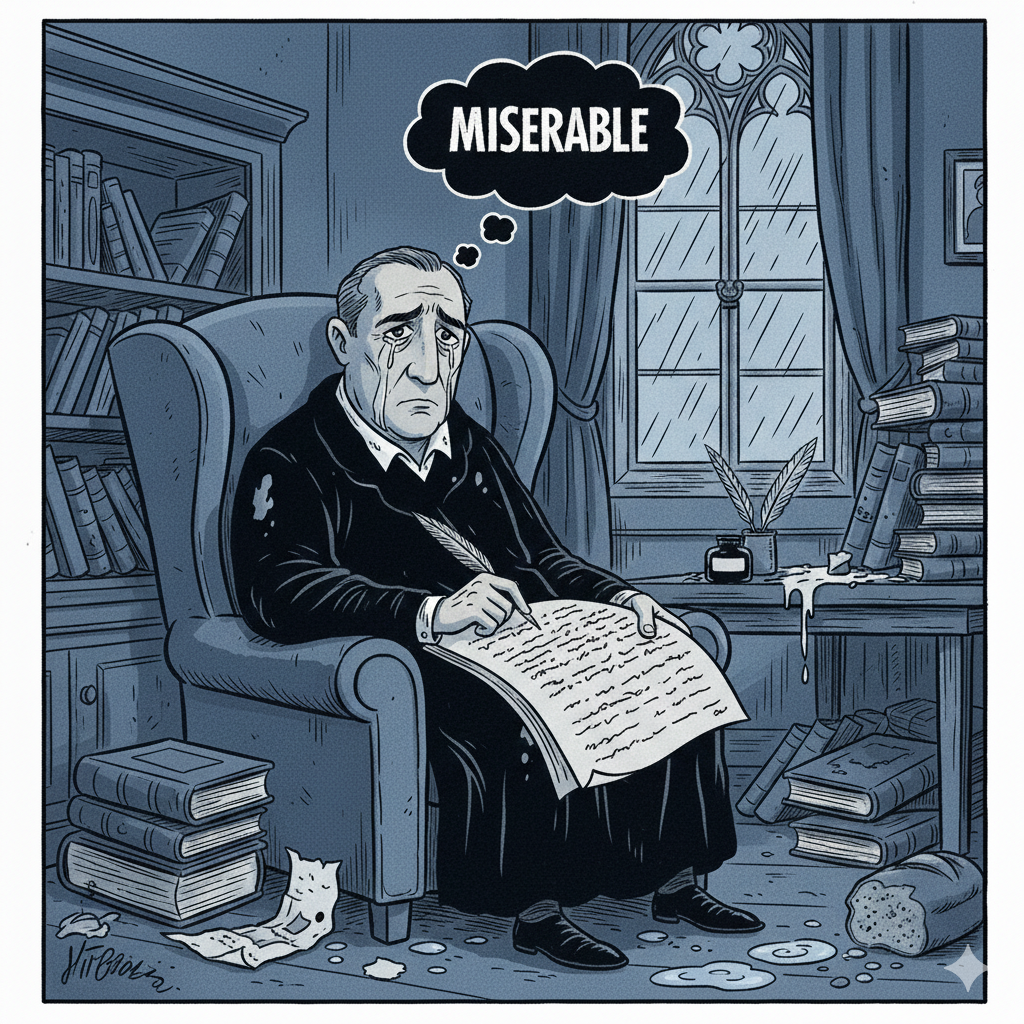
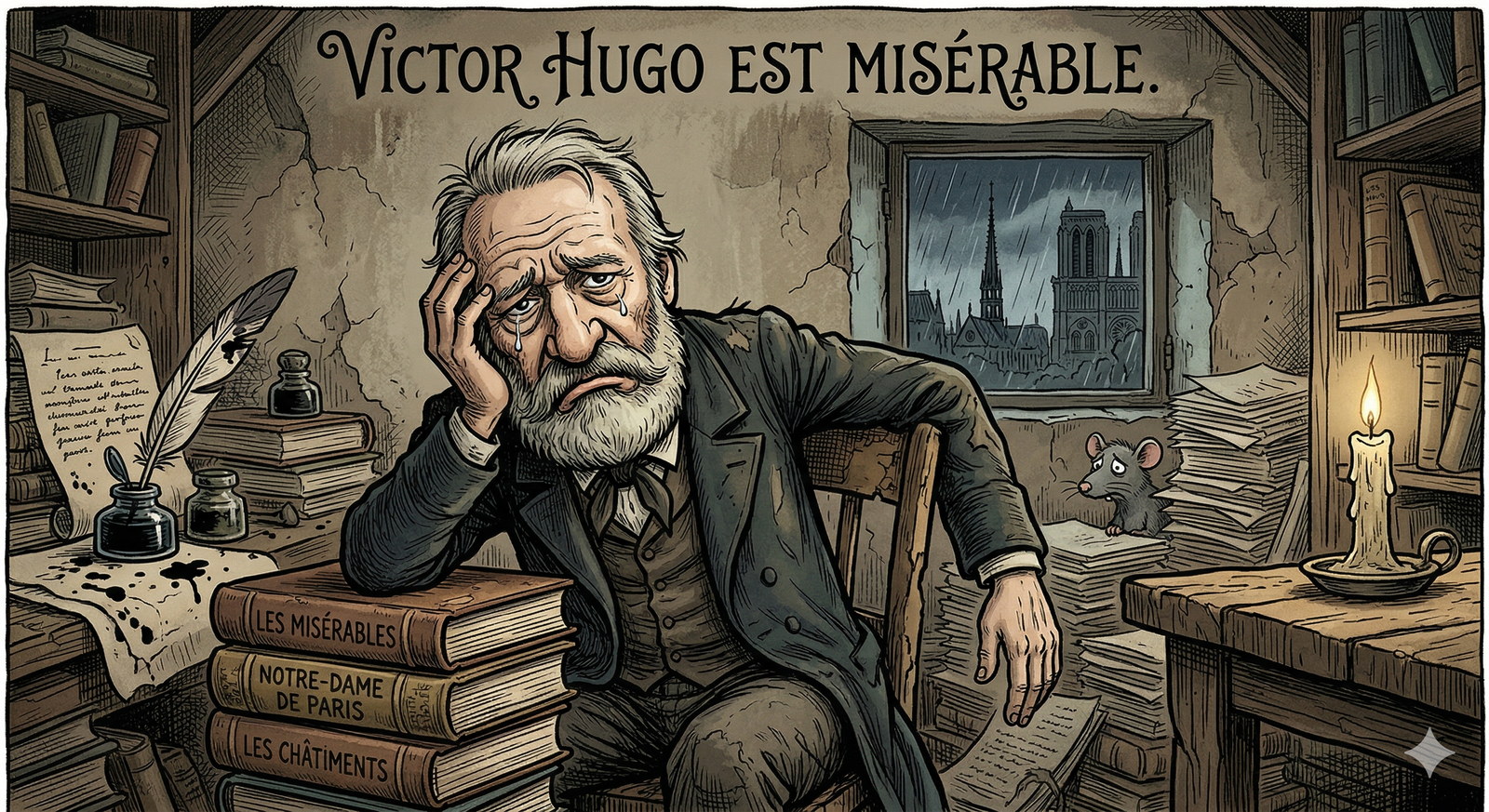
Javert : L'incarnation de la loi rigide et aveugle. Pour lui, un criminel ne peut jamais changer. Cartoon: Victor Hugo est trist et "miserable" dans son atelier
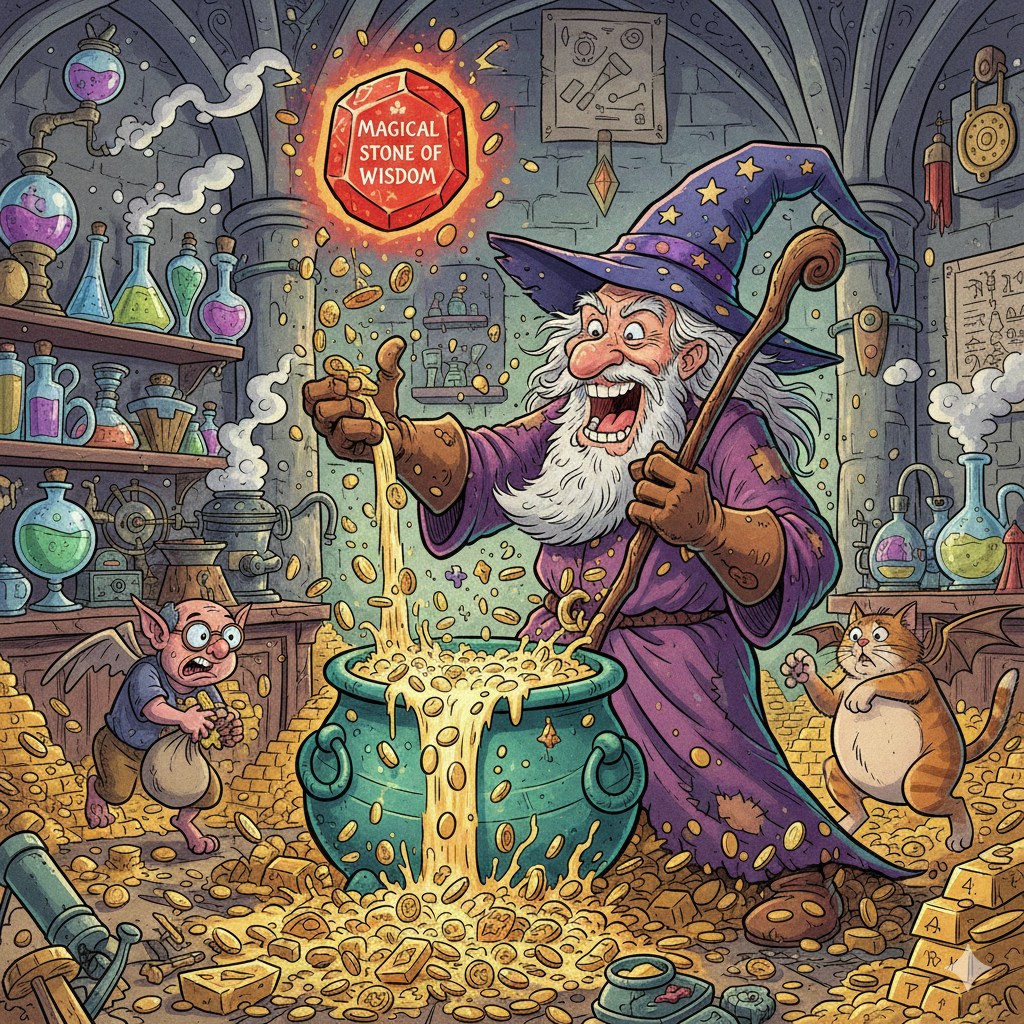
a medieval Alchimist discovers the secret of how to produce the "Magical stone of wisdom" to create huge amounts of Gold. cartoon: The Alchimist and his animal sidekicks are extremly pleased.
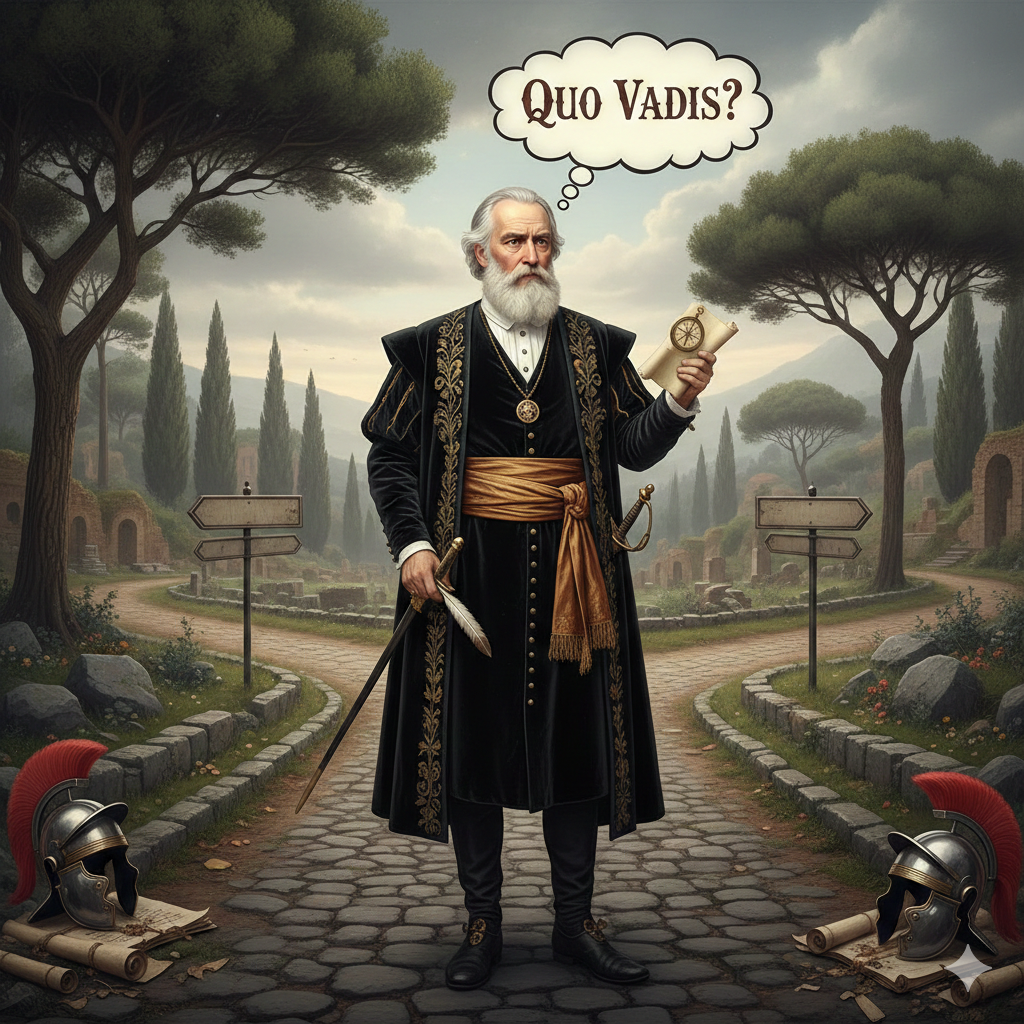
the Polish novelist Henrik Schinkiewicz asks himself ("quo vadis?" - "where are you Heading?"). Later, he remembered that "all the ways lead to Rome" cartoon: Henrik finally arriving at Rome.
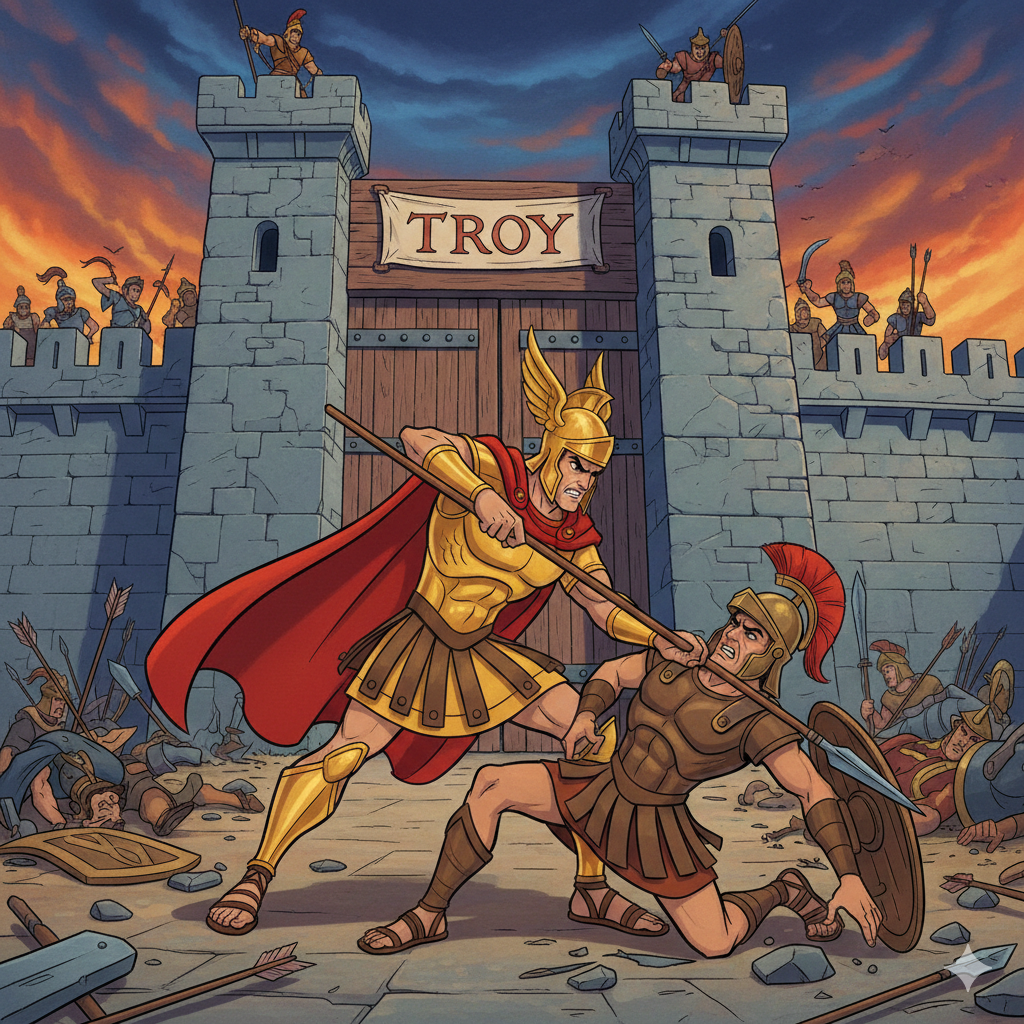
the Greek hero Archilles kills the Trojan Prince Hektor outside the Gates of Troj. Later, a guided arrow from the God Apollon (the first guided missile in History?) killed Archilles.
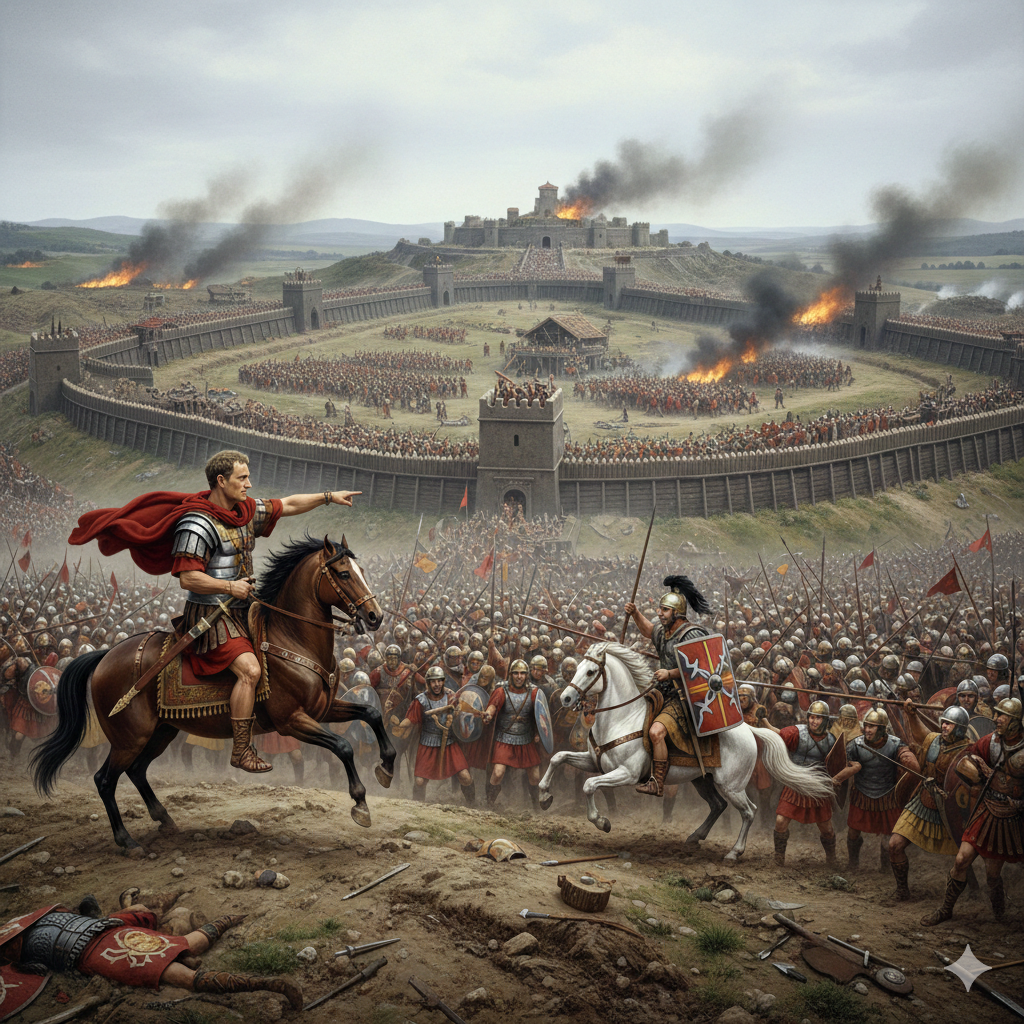
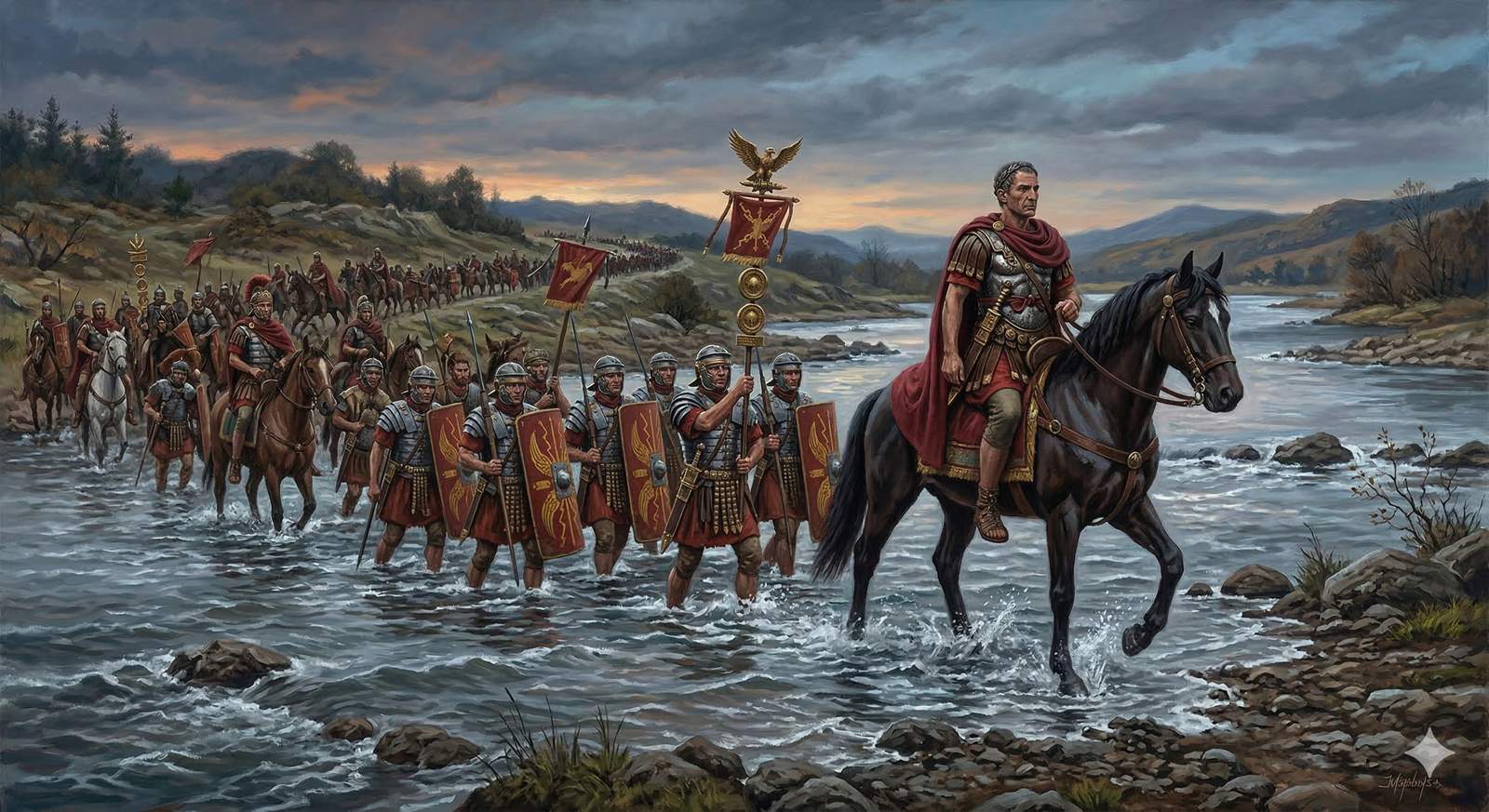
battle of Alesia 52 BC Gaius Iulius Ceasar defeats the Celtic ("Gaul") leader Vercingetorix, what if Asterix and Obelix had come in time to support the Celtic Warriors?
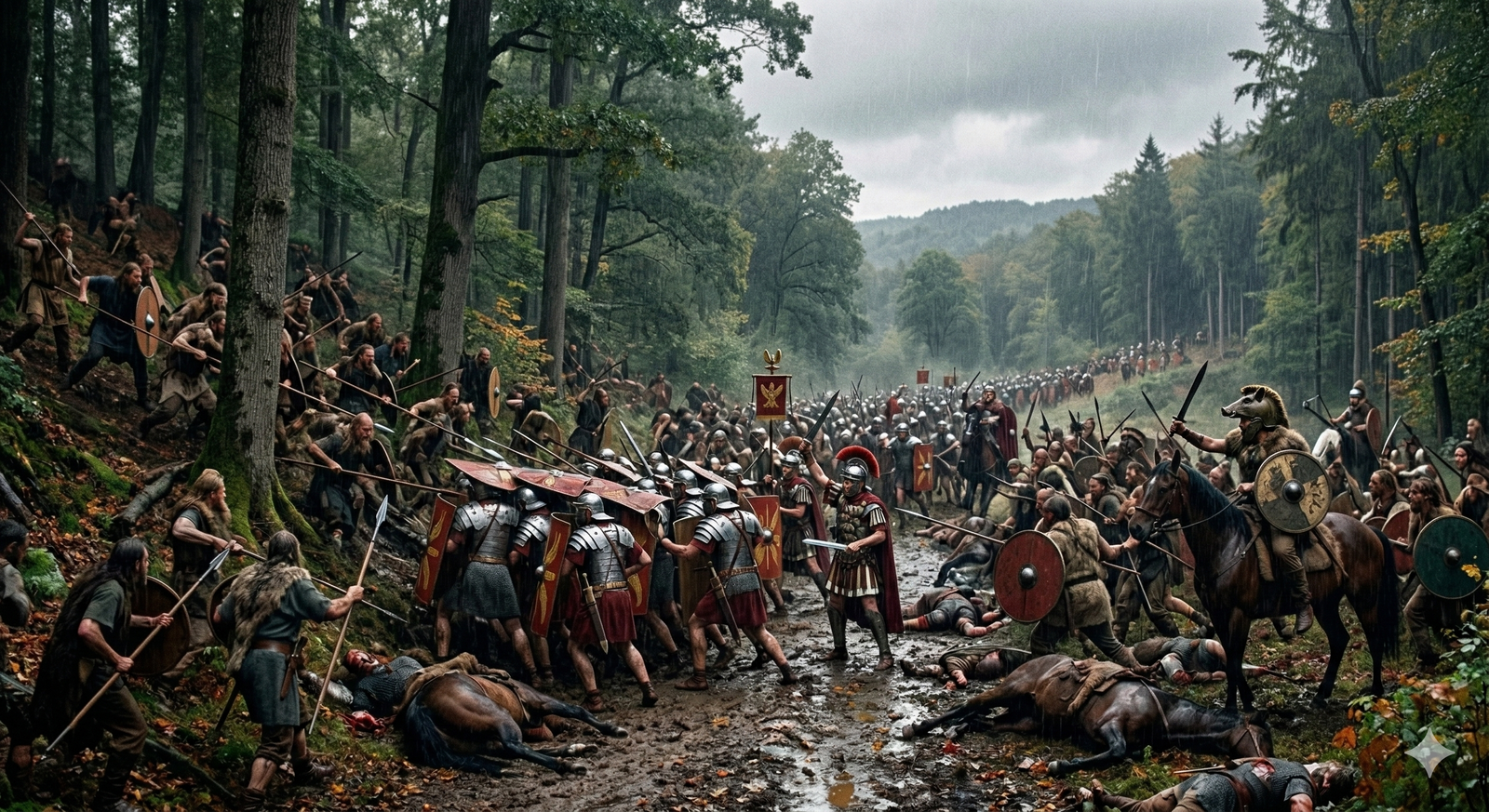
The Battle of the Teutoburg Forest (9 AD) is often cited as Rome’s greatest defeat that permanently halted the expansion of the Roman Empire into Germania (modern-day Germany)four-day ambush. the impact of this battle was so profound that Emperor Augustus was said to have spent months wandering his palace, hitting his head against walls and screaming "Varus, give me back my legions!"The "Limes" (Borders): - a chain of stongholds and barracks across the the Rhine and the Danube to prevent a "Germanic" invasion of the Roman settlements.Many of these settlemts like Mainz, Cologne and Vienna later became prosperous cities. Rome abandoned its goal of conquering territory up to the Elbe River and retreated to the Rhine, which became the permanent border between the Roman and Germanic worlds. This battle created a linguistic and cultural boundary in Europe that roughly persists today—separating the Latin-influenced (Romance) west from the Germanic east. cartoon: Arminius ambushes roman legions in the dense and rainy forests
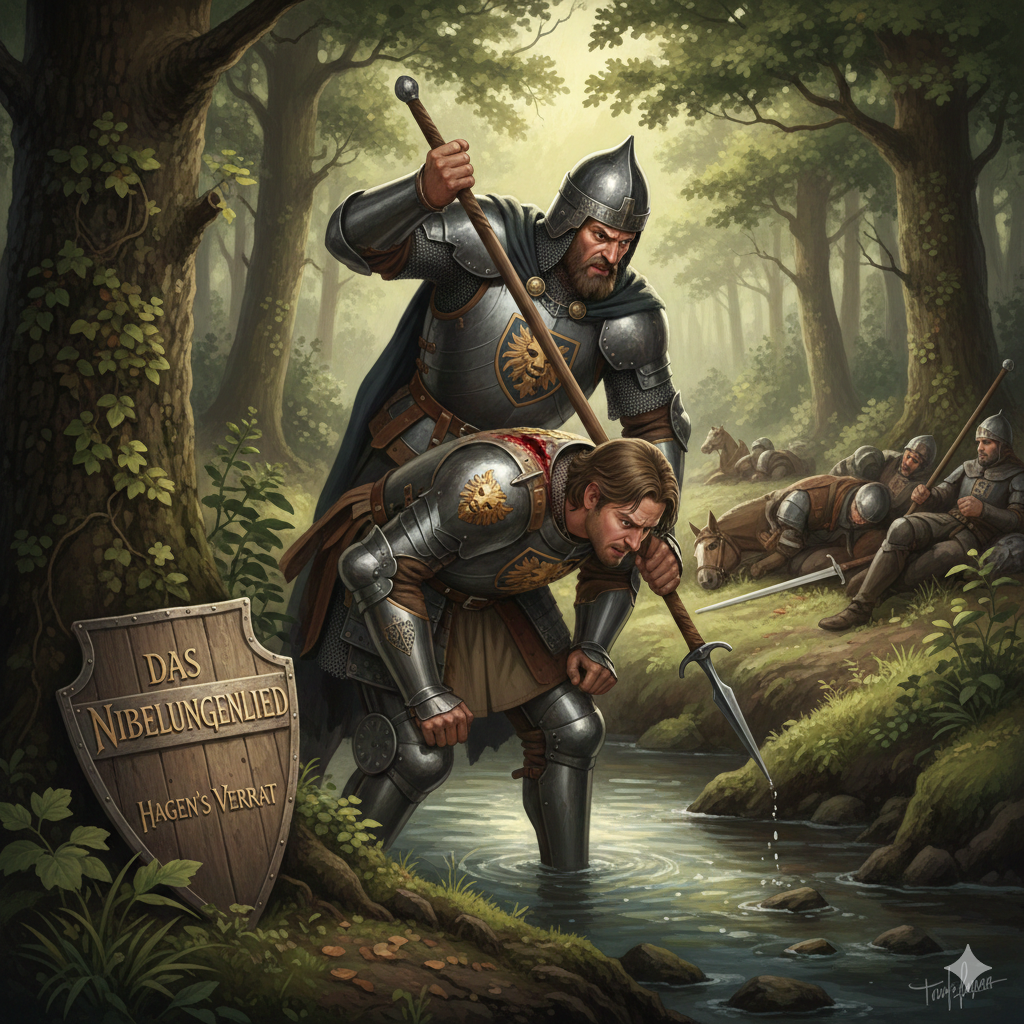
Das Nibelungenlied ist die bedeutendste Deutsche Heldensaga - der finstere Hagen von Tronje tötet den Helden Siegfried mit seinem Speer, während seine Jagdgesellschaft sich in einem Wald ausruht. Es ist auf Althochdeutsch geschrieben, der (anonyme) Author kommt aus dem Raum von Passau oder Oberösterreich. Jedenfalls wurden in der Saga mehrere Ereignisse miteinander verknüpft, die teilweise Jahrhunderte voneinander getrennt waren So versenkte beispielsweise Hagen das "Rheingold" im Rhein, den sagenumwobenen Schatz der Nibelungen, um diesen vor Kriemhild, Siegfried's Erbin, zu verstecken, der Drache war eine erbeutete Standarte der römischen Legion, die in der Schlacht am Teutoburger Wald den Germanen in die Hände fiel und die Burgunder as kurzfristige Verbündete Roms gegen Attila existierten tatsächlich
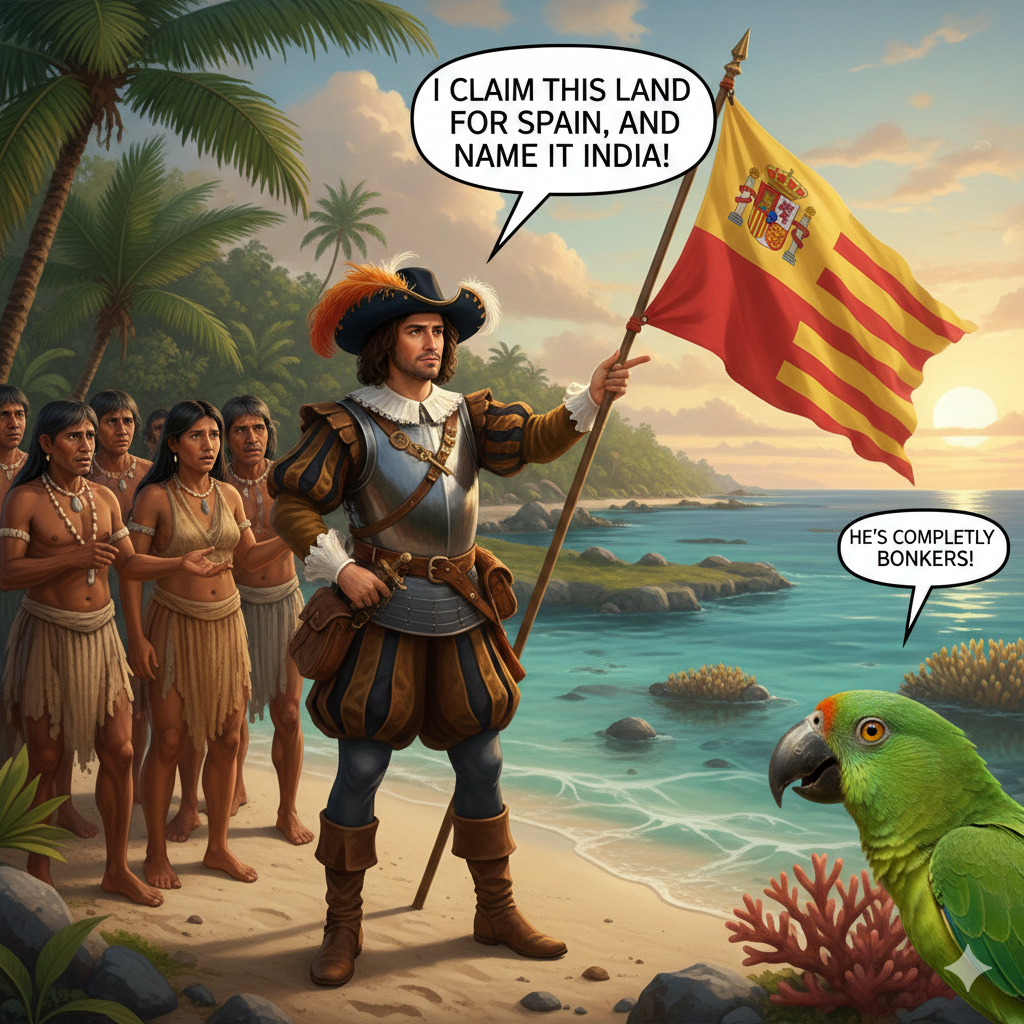
Christofer Columbus claims having discovered India but he stranded at the coast of the Bahamas Islands. Imagine if he had sailed "only" 100km further westwards - History would have changed dramatically indeed
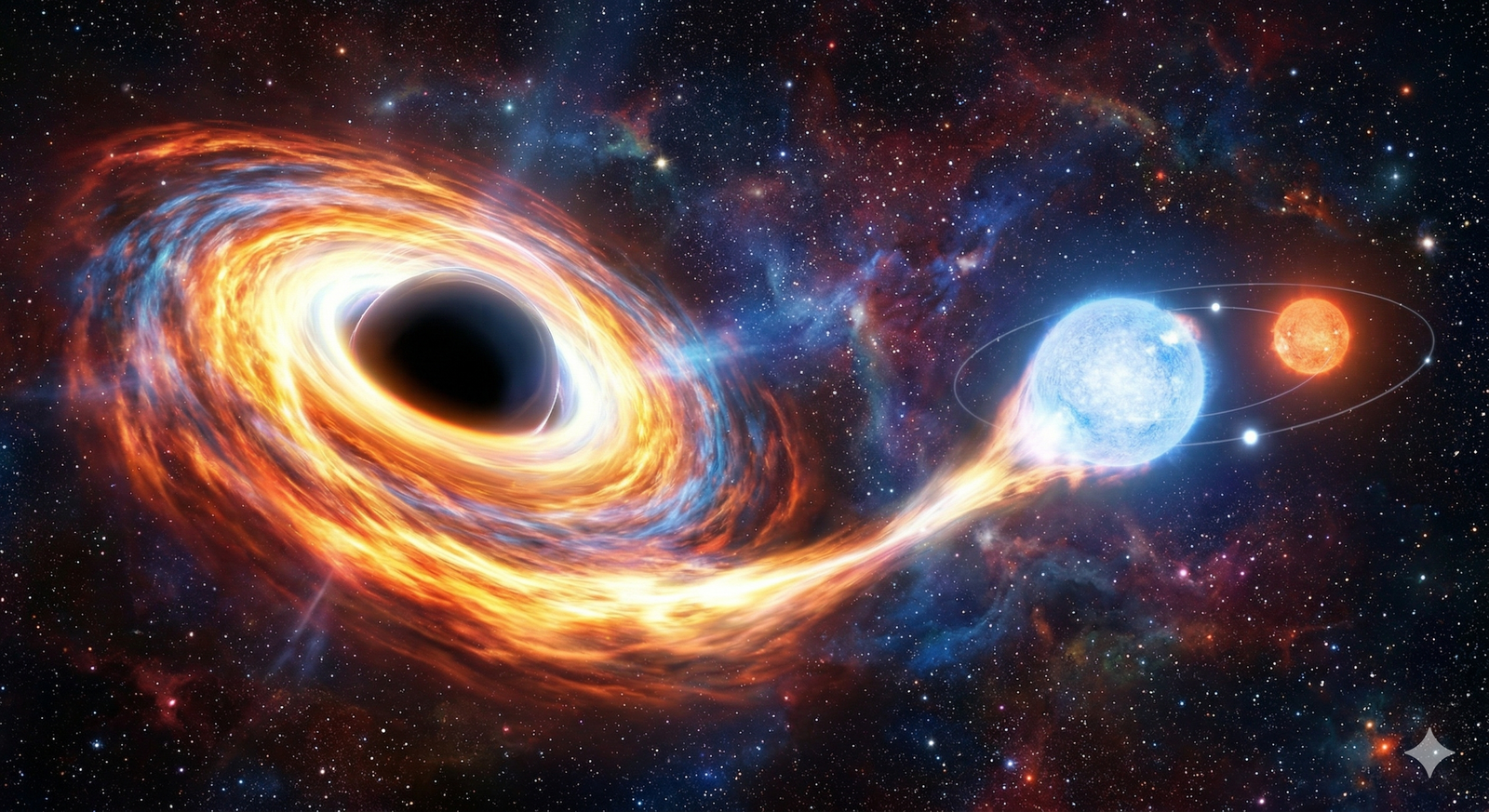
Akkretionsscheibe und schwarzes Loch
In einem solchen System umkreisen sich ein „normaler“ Stern und ein Schwarzes Loch. Wenn diese eng genug beieinander liegen, zieht das Schwarze Loch Materie (meist Gas) von seinem Begleiter ab.
Das Gas des Begleitsterns stürzt nicht einfach direkt in das Schwarze Loch. Da sich beide Objekte umeinander bewegen, hat das Gas einen hohen Drehimpuls. Anstatt also geradeaus zu fallen, spiralt es wie Wasser in einem Abfluss nach innen. Durch diese Spiralbewegung bildet sich eine flache, rotierende Scheibe aus Plasma – die Akkretionsscheibe. Hier passieren spektakuläre Dinge:
Die inneren Schichten der Scheibe rotieren viel schneller als die äußeren. Die dadurch entstehende Reibung heizt das Gas auf Millionen Grad Celsius auf. Wegen der enormen Hitze leuchtet die Scheibe hell im Röntgenbereich. Tatsächlich sind solche Systeme oft die hellsten Röntgenquellen am Himmel (daher der Name Röntgendoppelstern).
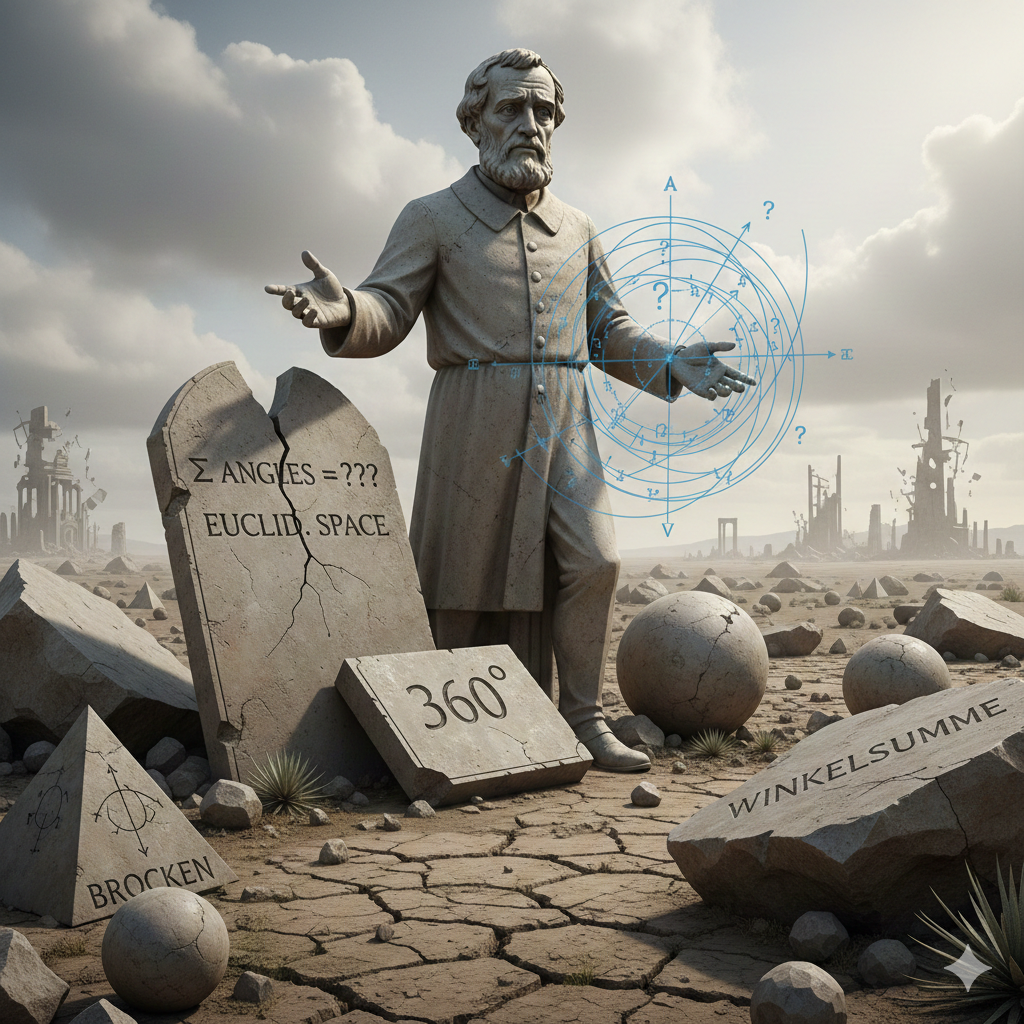
der Mathematiker C.F.Gauss vermass geodätische Dreiecke von genau 100km Kantenlänge, deren einer Bezugspunkt der Brocken war. Die von ihm errechnete Winkelsumme betrug genau 360^: somit hatte er bewiesen, dass der uns umgebende Raum zumindest im Längenbereich von 100km nicht-relativistisch - euklidisch ist.
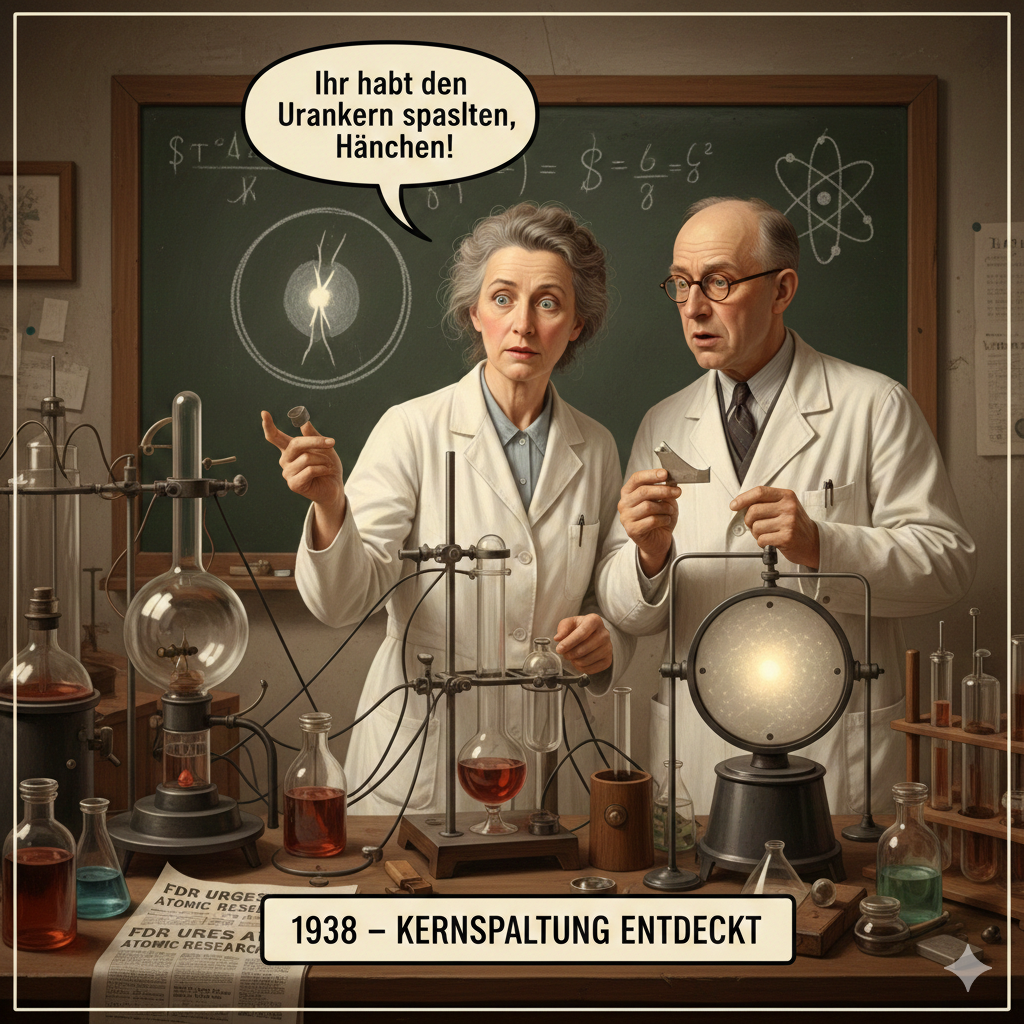
Berlin, 1938: the chemist Otto Hahn stumbled over the fission of an Uranium core and the phycisit Liese Meitner explains him what he has discovered. Since Rutherford's "raisin-cake" model we know what incredible force is hidden in a nuclear core, but we had no clue of how to "unleash" this energy. This discovery made the Americans hurry up to be the first nation with a nuclear bomb and not the Nazis, not only Einstein's famous letter to FDR played a crucial part in that event.
Immanuel Kants "Kritik der reinen Vernunft" (1781/1787) ist eines der einflussreichsten Werke der Philosophiegeschichte. Mit diesem Buch leitete Kant die sogenannte „Kopernikanische Wende“ des Denkens ein: Er untersuchte nicht mehr primär, was wir wissen, sondern wie Erkenntnis überhaupt erst möglich wird.
Rationalisten: Glaubten, wir könnten allein durch reines Nachdenken die Welt verstehen.
Empiristen: Glaubten, alles Wissen stamme ausschließlich aus der Sinneserfahrung.
Kant versöhnt beide: „Gedanken ohne Inhalt sind leer, Anschauungen ohne Begriffe sind blind.“ Er stellt die Frage: Wie sind synthetische Urteile a priori möglich? Also: Wie können wir etwas Neues über die Welt lernen (synthetisch), ohne dass wir es erst mühsam ausprobieren müssen (a priori)?
2. Die Kopernikanische Wende
Früher dachte man, unsere Erkenntnis müsse sich nach den Gegenständen richten. Kant dreht den Spieß um: Die Gegenstände müssen sich nach unserer Erkenntnis richten. Wir sehen die Welt nicht „so wie sie ist“ (das Ding an sich), sondern so, wie unser Verstand sie filtert und strukturiert (Erscheinung).
3. Die Filter unserer Wahrnehmung
Kant unterteilt den Erkenntnisprozess in zwei Hauptbereiche:
Die Transzendentale Ästhetik (Sinnlichkeit)
Damit wir überhaupt etwas wahrnehmen können, brauchen wir zwei „Anschauungsformen“. Diese bringen wir bereits mit, sie liegen nicht in den Dingen selbst:
Raum: Wir können uns nichts vorstellen, was nicht räumlich ist.
Zeit: Alles Erlebte geschieht in einer zeitlichen Abfolge.
Die Transzendentale Logik (Verstand)
Nachdem wir Daten über Raum und Zeit empfangen haben, ordnet unser Verstand diese in 12 Kategorien. Die wichtigsten sind:
Kausalität: Wir sehen eine Ursache und eine Wirkung.
Substanz: Wir nehmen an, dass ein Gegenstand derselbe bleibt, auch wenn er sich verändert.
4. Die Grenzen der Vernunft
Kant warnt davor, dass die Vernunft dazu neigt, über ihre Grenzen hinauszufliegen. Sie will Fragen beantworten, auf die es keine empirische Antwort gibt:
Hat die Welt einen Anfang?
Gibt es eine unsterbliche Seele?
Gibt es Gott?
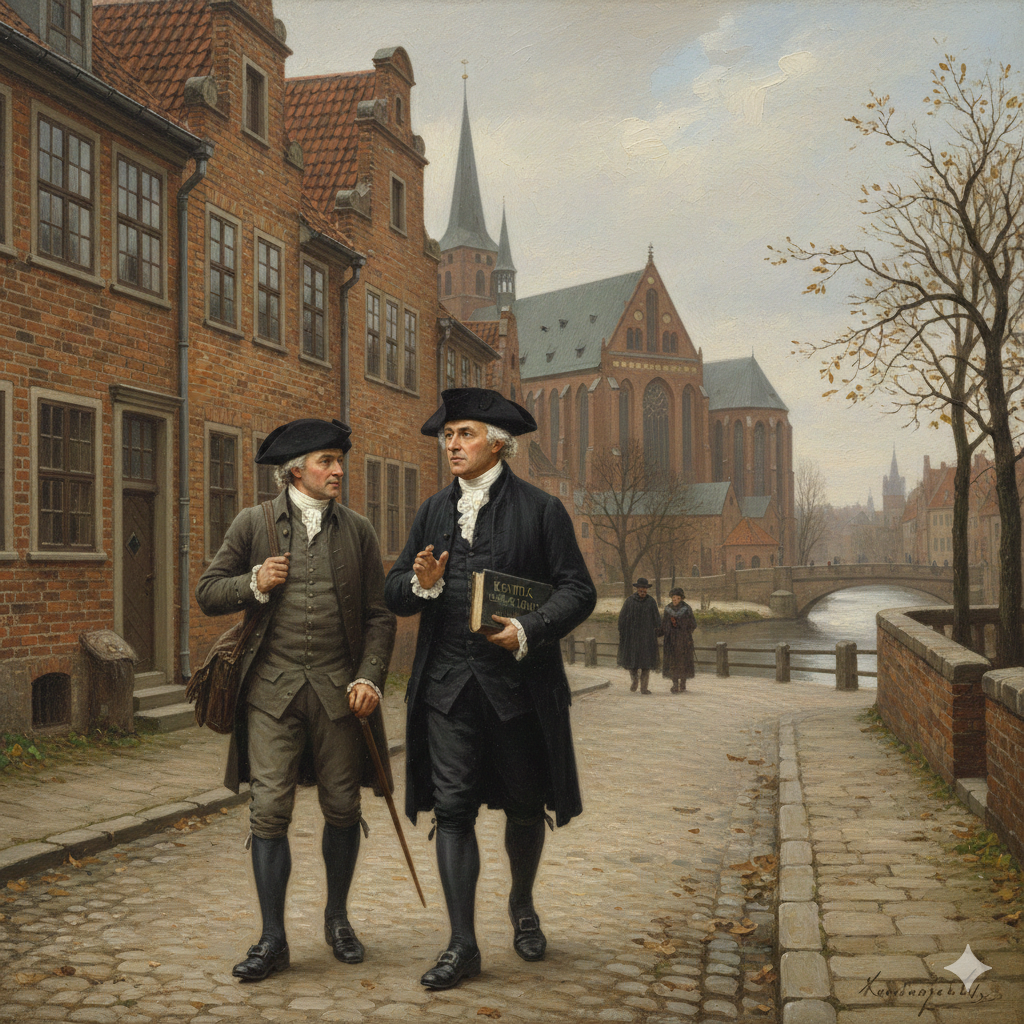
Diese Ideen nennt Kant „transzendentale Schein“. Wir können diese Dinge weder beweisen noch widerlegen, da sie jenseits unserer sinnlichen Erfahrung liegen. Dennoch sind sie als „regulative Ideen“ wichtig, um unserem Wissen eine Richtung zu geben. Cartoon: Kant mit seinem Diener Lampe bei seinem täglichen Spaziergang in Königsberg
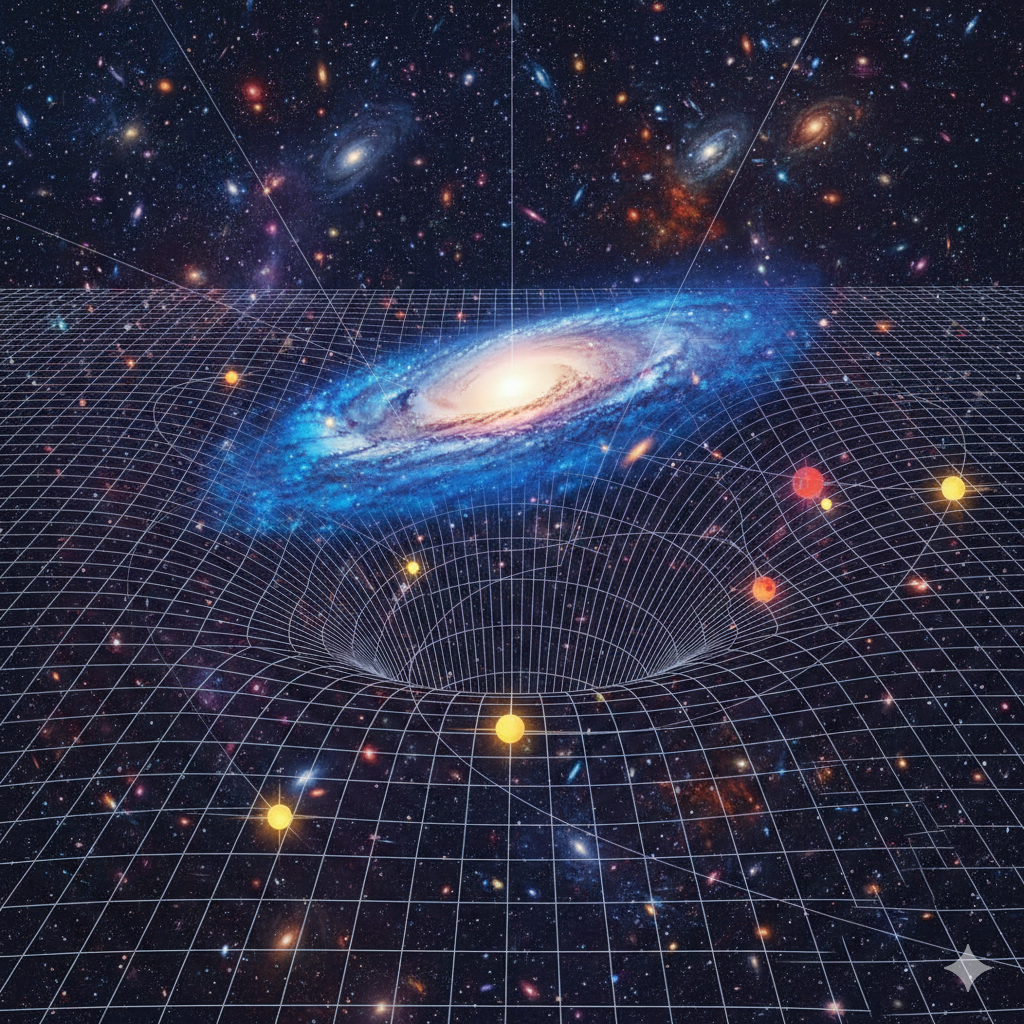
Allgemeine Relativität: während Newton die Gravitation als eine wechselseitig anziehende Kraft zweier Massen definierte, postulierte Einstein diese als die Krümmung der vierdimensionalen Raumzeit. Cartoon: anschaulich kann man diese Krümmung grafisch darstellen: je mehr Masse, desto stärker ist diese gekrümmt. Im Extremfall eines schwarzen Lochs ist diese Krümmung so stark, dass die Objekte in den "Gravitationstrichter" hineinfallen und dadurch praktisch die Zeit stillsteht.
Adam Smith’s 1776 masterpiece is essentially the "Birth Certificate of Capitalism." Writing at the dawn of the Industrial Revolution, Smith sought to understand why some countries flourished while others stagnated, moving the economic conversation away from hoarding gold and toward the power of productivity.
1. The Division of Labor
Smith opens the book with a famous study of a pin factory. He argues that wealth isn't created by intense labor alone, but by specialization.
The Concept: By breaking a complex task into small, repetitive steps, workers become more efficient, save time, and innovate within their specific niche.
The Result: A massive increase in the "universal opulence" that extends even to the lowest ranks of society.
2. The "Invisible Hand"
Perhaps the most famous metaphor in economics, the "Invisible Hand" describes how individual self-interest can unintentionally lead to collective social benefits.
"It is not from the benevolence of the butcher, the brewer, or the baker that we expect our dinner, but from their regard to their own interest."
The Logic: In a free market, to get what you want (money), you must provide what others want (quality goods). Thus, the market self-regulates without the need for central planning.
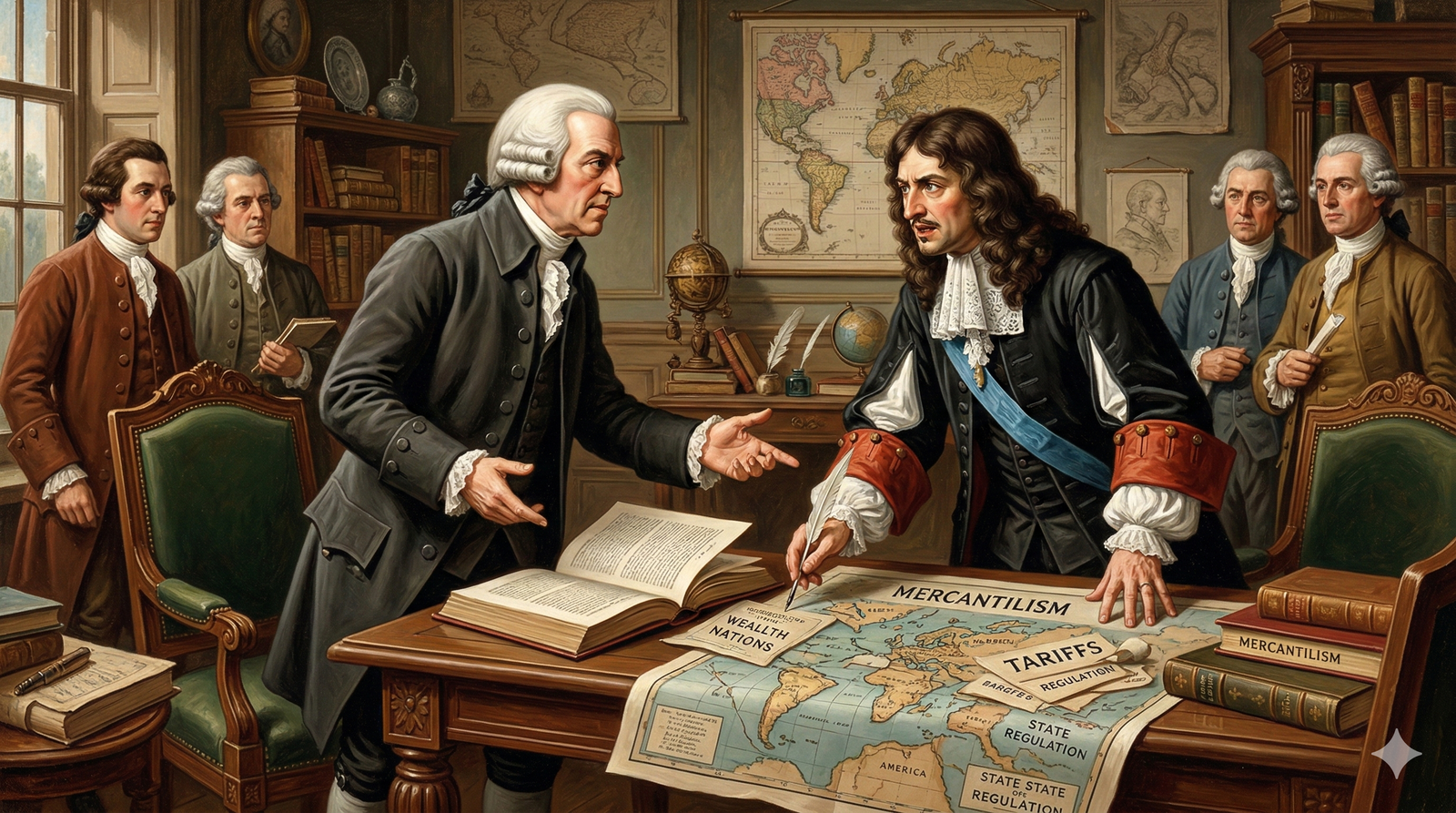
At the time, the prevailing theory was Mercantilism, which held that a nation’s wealth was measured by its gold reserves and that trade was a "zero-sum game" (if you win, I lose).
Free Trade: Smith championed the idea that trade should be a "win-win." If Scotland can make wool cheaply and France can make wine cheaply, both nations benefit by trading rather than trying to produce everything themselves behind high tariffs. Cartoon: Smith debating with the Frenchman Colbert, the godfather of Mercantilism, about the right approach to economic policy
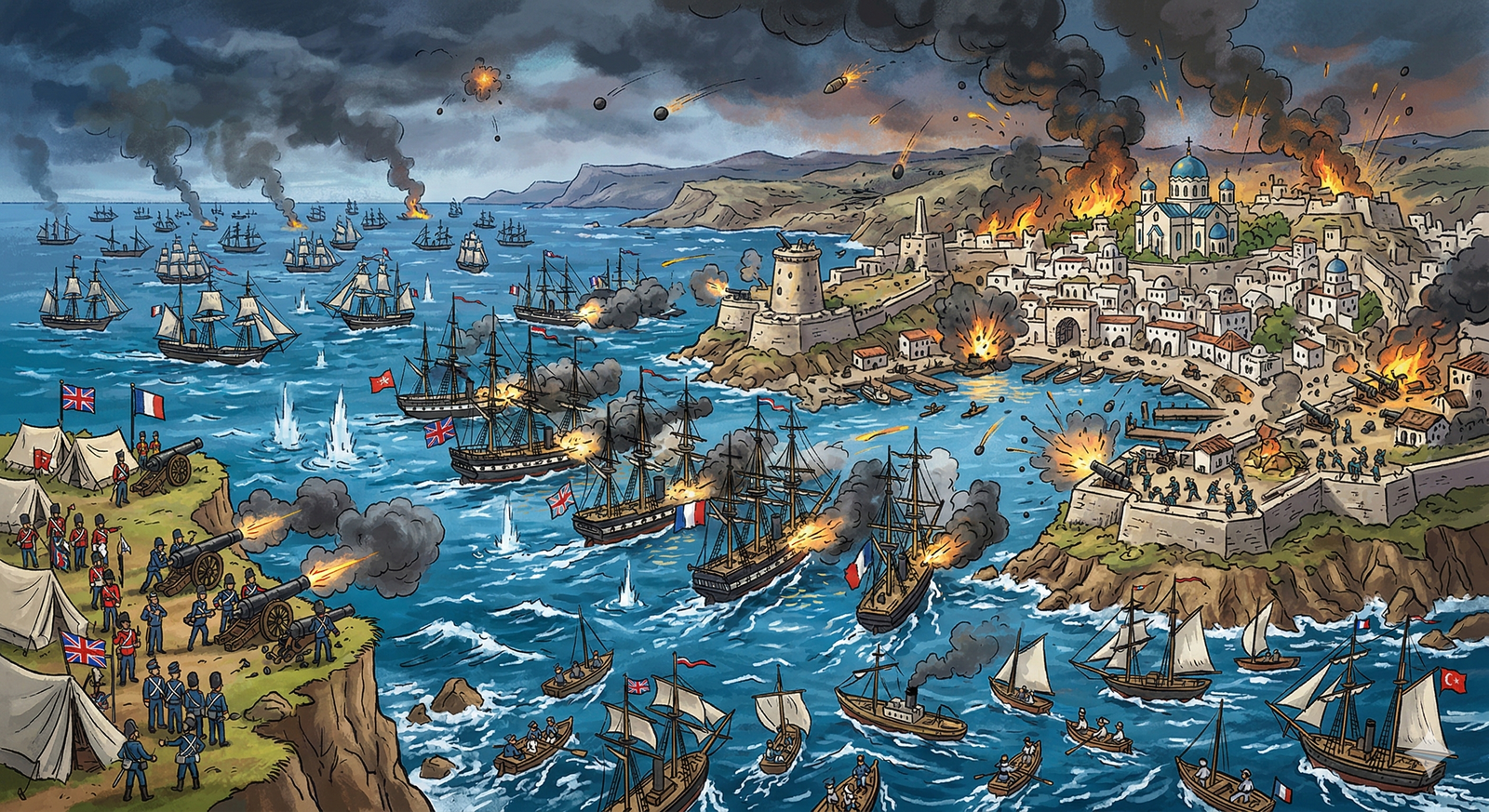
the Crimean war 1853-1856: Britain and France declared war on Russia who wanted to occupy the Bosporus and parts of the Black Sea from Turkey. The combined forces of Britain and France won and Florence Nightingale nursed the wounded and hurt soldiers. Cartoon: Britain and France shelled the Russian fortress of Sevastobol
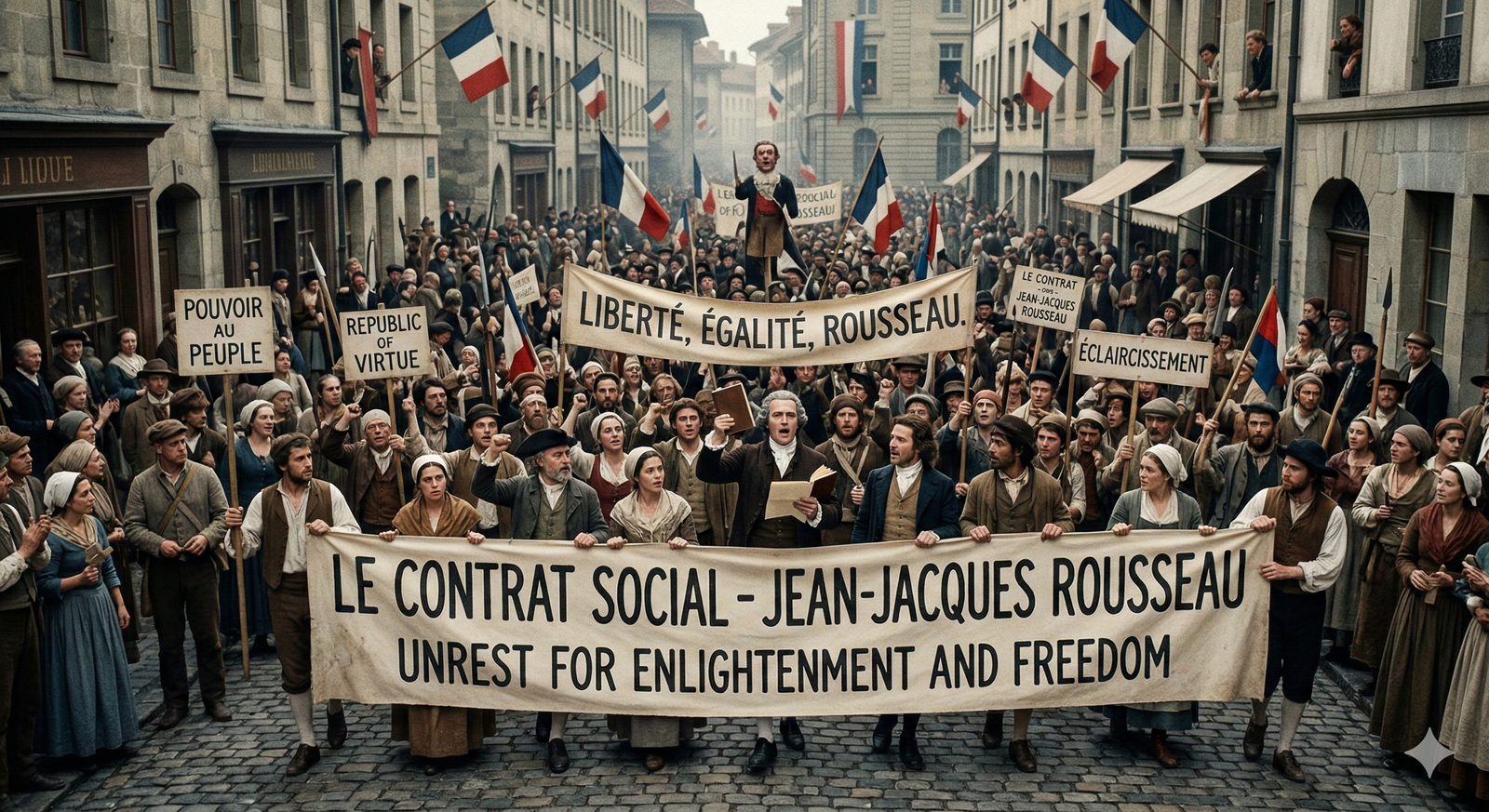
Publié en 1762, "Du contrat social ou Principes du droit politique" est l'œuvre majeure de Jean-Jacques Rousseau. Ce traité de philosophie politique explore une question fondamentale : comment concilier la liberté individuelle avec la vie en société ?
« L’homme est né libre, et partout il est dans les fers. »
Rousseau constate que l'ordre social n'est pas naturel, mais fondé sur des conventions. Puisque l'état de nature (où l'homme était libre et sauvage) est perdu à jamais, il faut trouver une forme d'association qui protège les personnes et les biens, tout en permettant à chacun de n'obéir qu'à lui-même.
La Volonté Générale
C’est le concept le plus célèbre de Rousseau. Le "contrat social" consiste en l'aliénation totale de chaque associé avec tous ses droits à toute la communauté.
Ce n'est pas la volonté de la majorité : La "volonté de tous" est une somme d'intérêts privés. La Volonté Générale, elle, ne regarde que l'intérêt commun.
La Souveraineté : Elle appartient au peuple. Elle est inaliénable (on ne peut pas la déléguer à des représentants) et indivisible.
Obéir, c'est être libre : En obéissant à la loi que l'on s'est prescrite en tant que membre du souverain, on gagne la "liberté civile". Cartoon: un manifestation a Paris: La Bourgeosie supporte ses idees libertaires
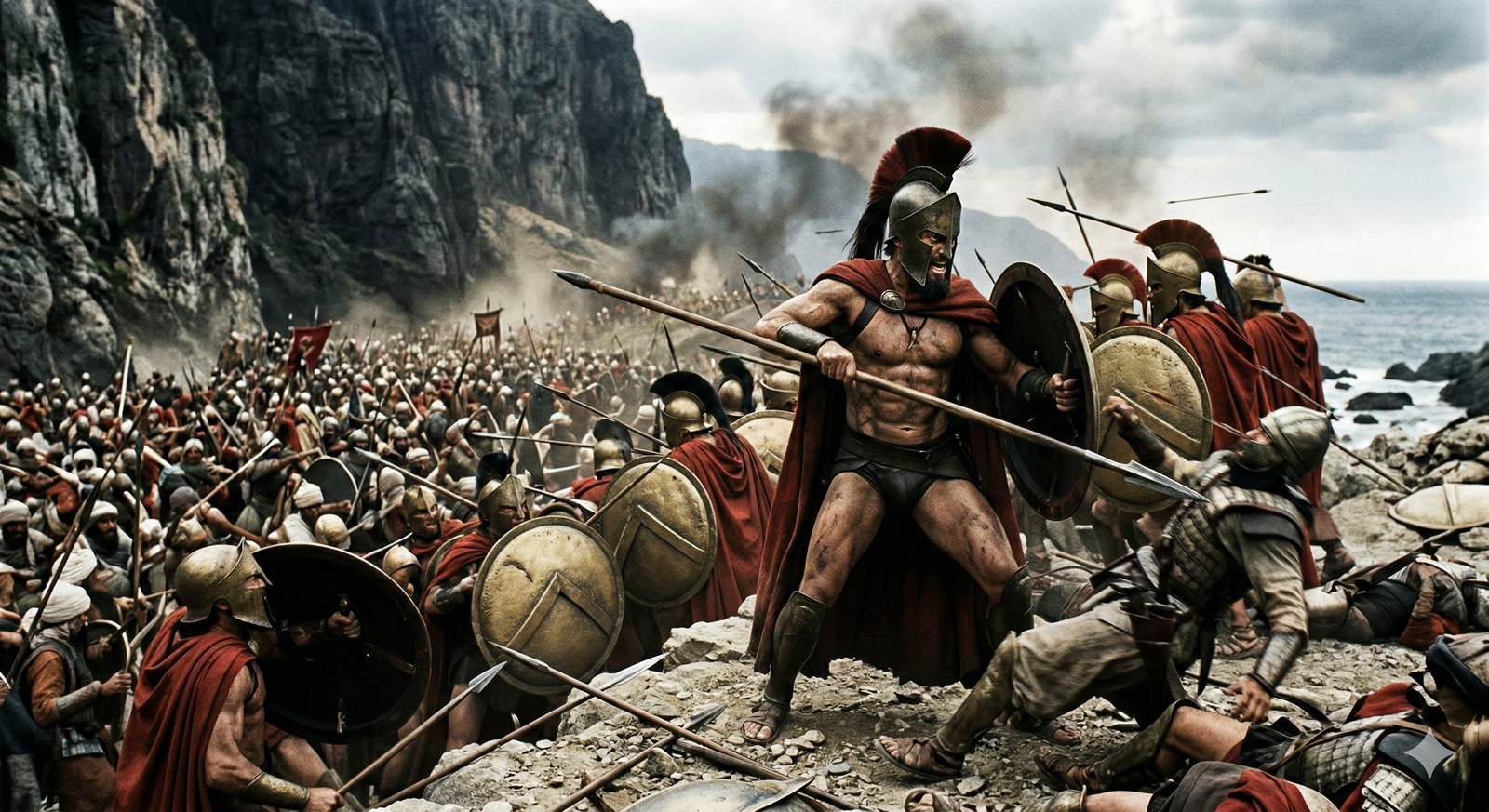
king Leonidas from Sparta sacrificed 300 of his elite Warriors to buy his Greek allies sufficent time to draft reinforcements against the Persian threat. the battle took place at the hot springs of thermophylae
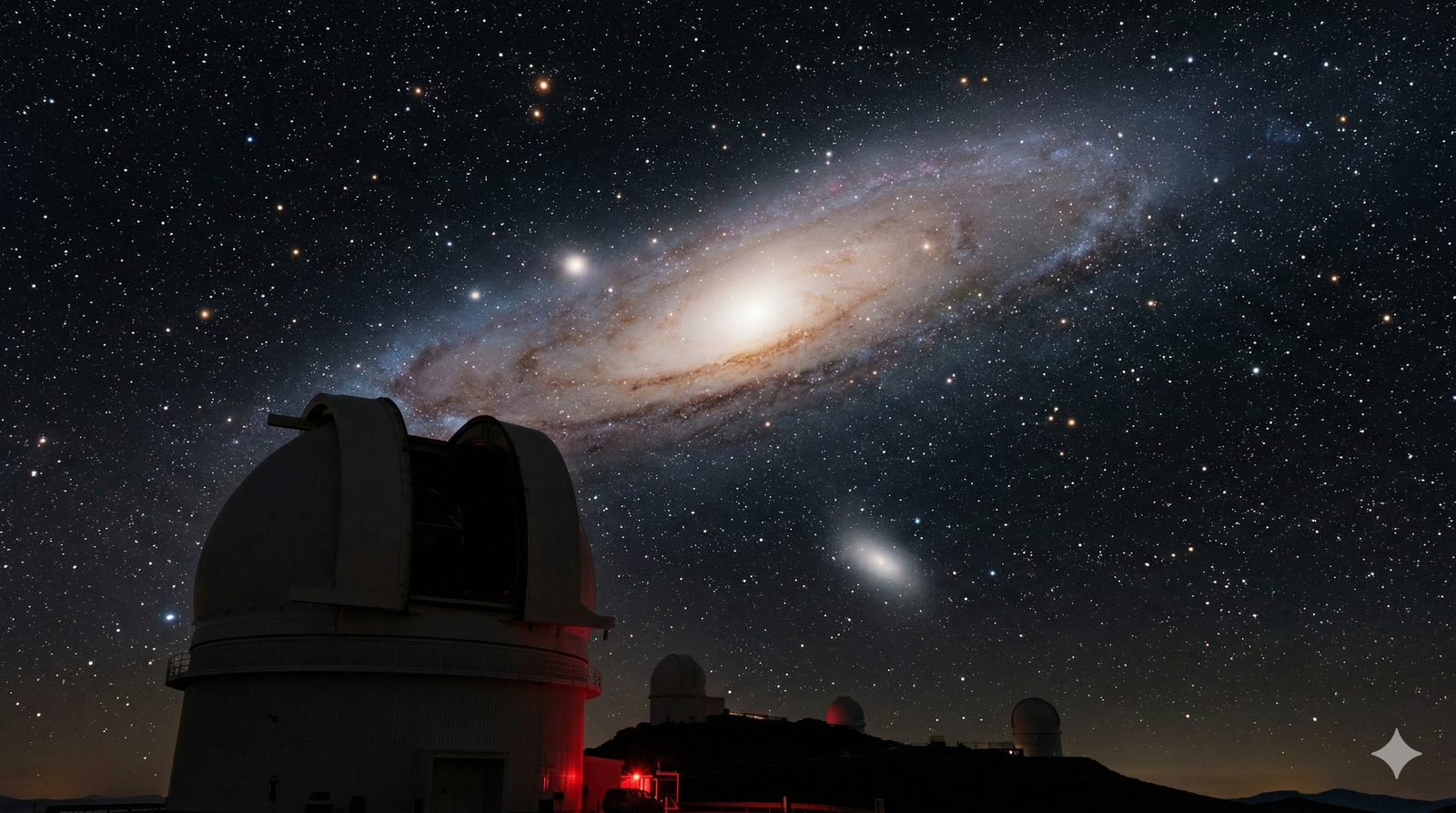
the Andromeda galaxy is, accept for the two smaller Magellan clouds, the Galaxy closest to our milky way. Like the milky way, it's a spiral-shaped galaxy, it's distance is about 2.5 billion lightyears. Cartoon: the Adromeda Galaxy, shot taken from a terrestrial observatory.
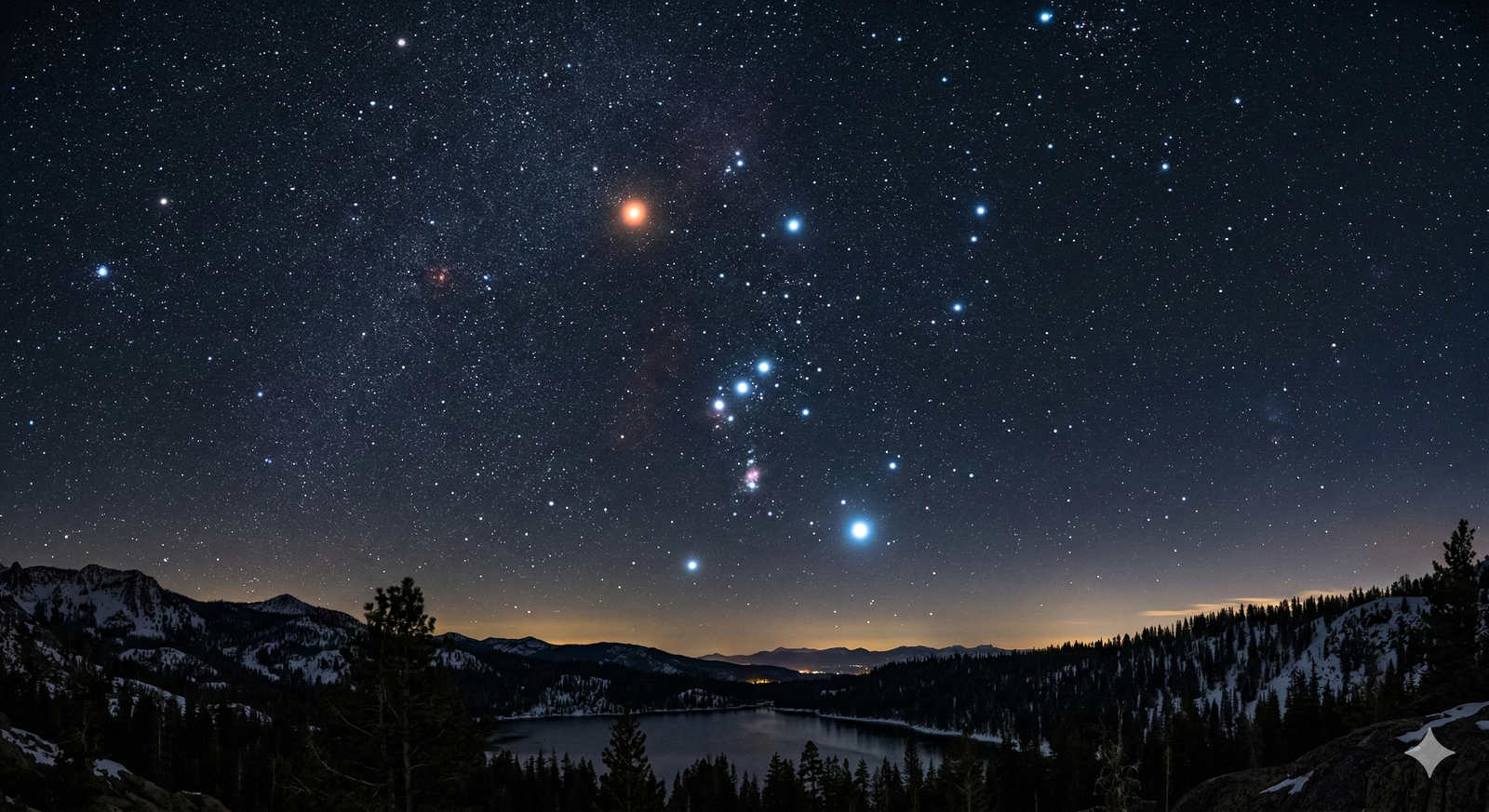
the star sign of Orion: on the upper left, you can spot the Red Giant Beteigeuze, on the lower right, you see the Blue SuperGiant Rigel, the three stars in the center row are called orion's belt. Since Orion is not circumpolar, you can't spot him during summertime.
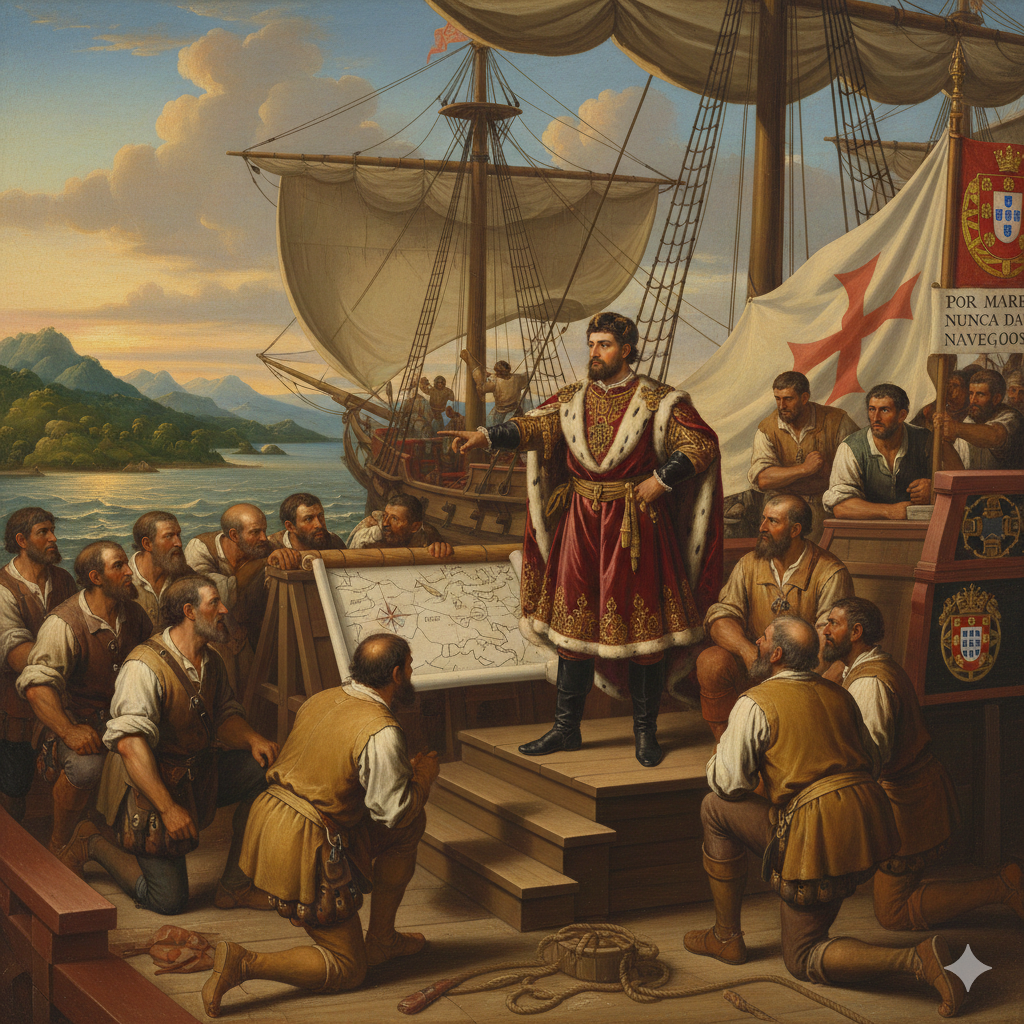
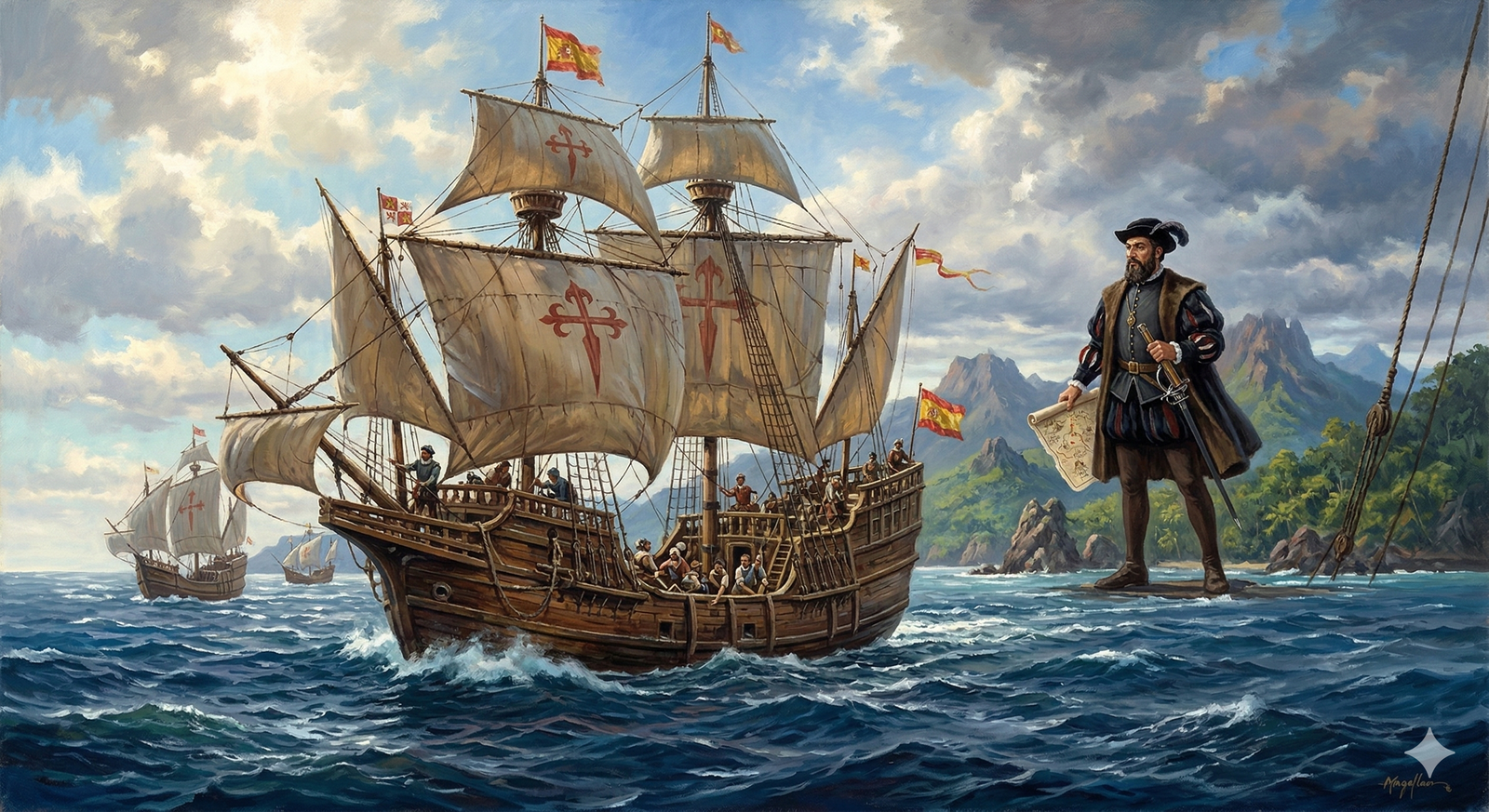
Vasco da Gama sucht im Auftrag Spaniens die sagenumwobenen Gewürzinseln. Zwar wusste man, dass sich diese im Pacifik befinden mussten, wegen der enormen Audehnung dieses Ozeans war aber ihre geografische Breite unbekannt. Als Vasco die Inseln endlich fand, musste er feststellen, dass diese nach dem Vertrag von Tordesillas bereits zu Spanien gehörten. Dennoch kam Vasco nicht mehr lebend nach Europa zurück, da er im Streit von Indigenen (Molukkern?) ermordet wurde.
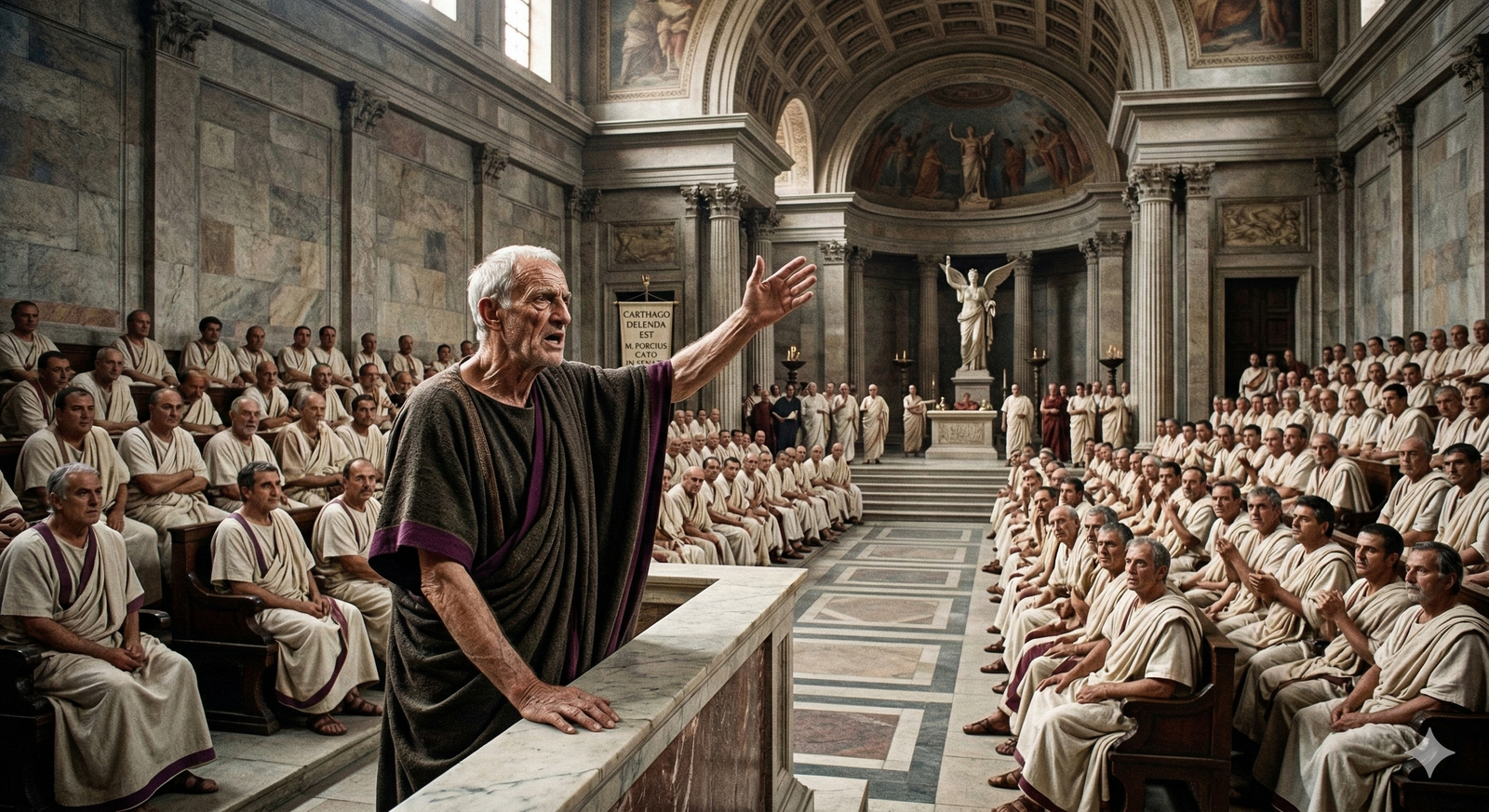
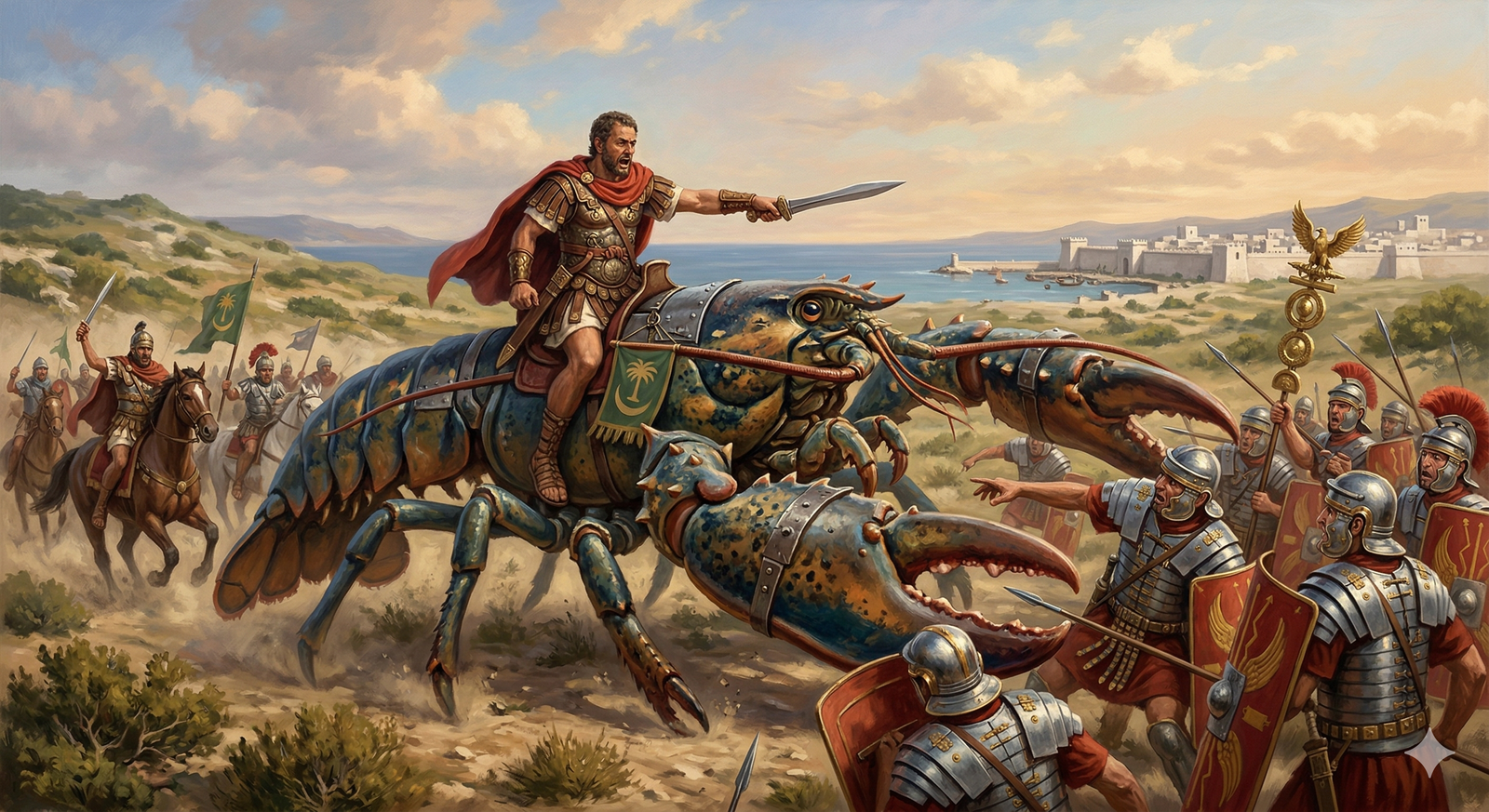
the Roman senator Cato with his usual daily rants "Cetero censo carthaginem esse delendam" (im Übrigen bin ich der Meinung, dass Carthago zerstört werden muss) about Carthago's destruction in the Roman Senate.
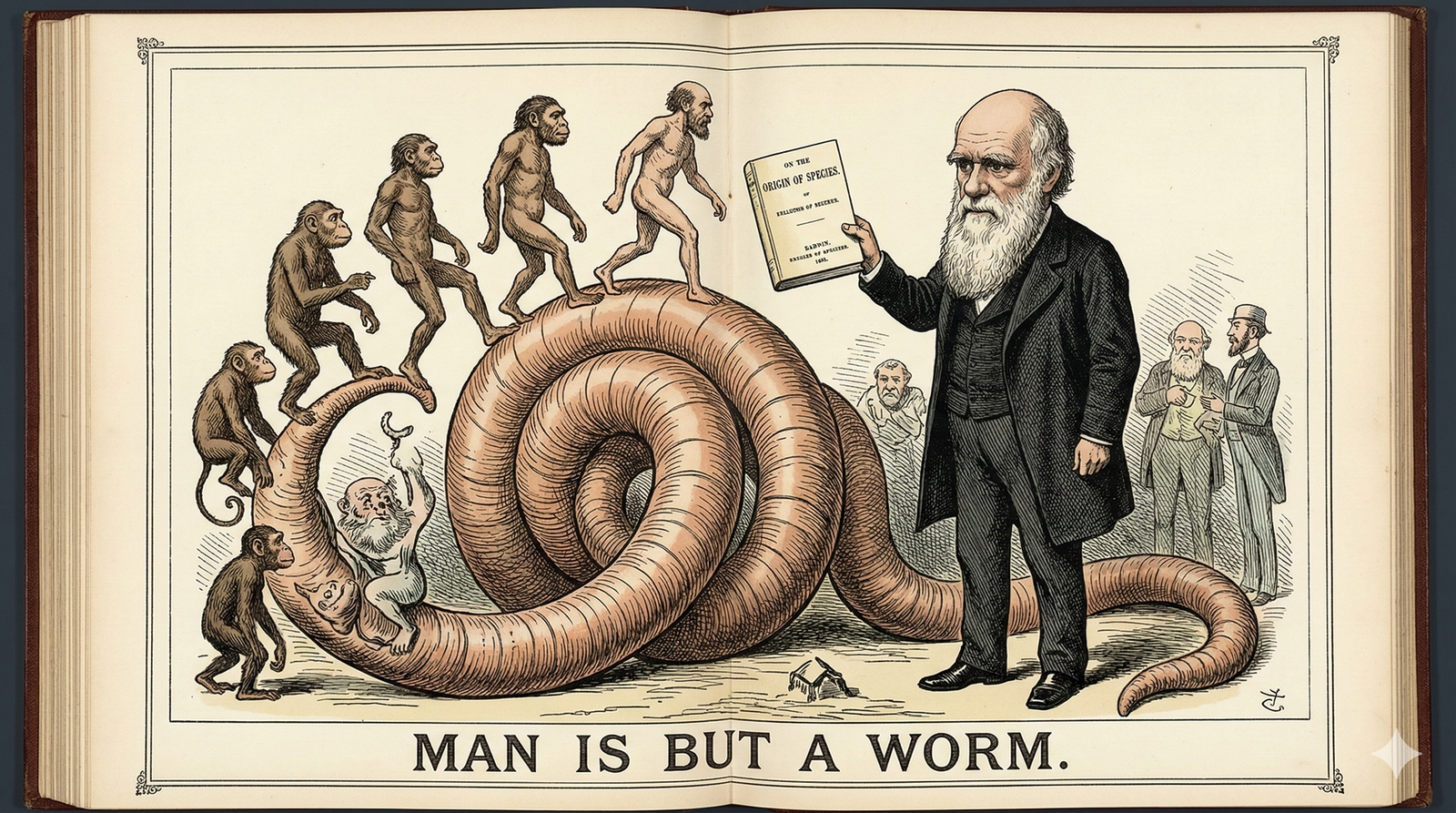
Charles Darwin sailed with the ship HMS Beagle to the Galapagos Islands. there, he studied different breeds of finches. He came to the conclusion that their different outcome is not some kind of God's new masterplan but a new theory that suited best their different abilities. He called this theory Evolution. Cartoon: religious fanatics mock his theory of natural selection and evolution.
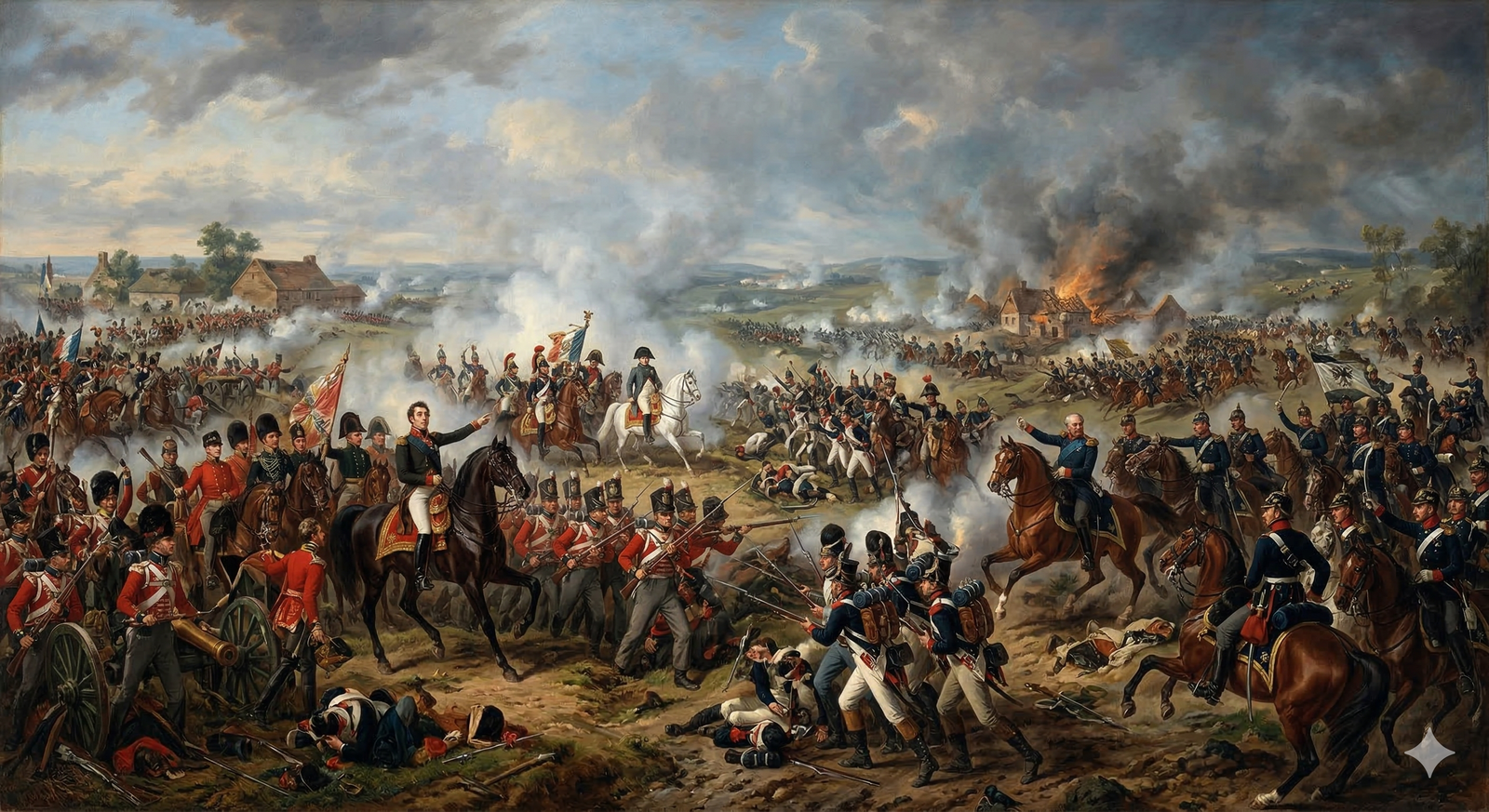
Waterloo, 1815 the combined armies of England (Wellington) and Prussia (Blücher) defeat Napoleon Bonaparte "I wish it were night or Blücher will finally arrive" - Wellington is supposed to have shouted in despair after the English army almost collapsed.
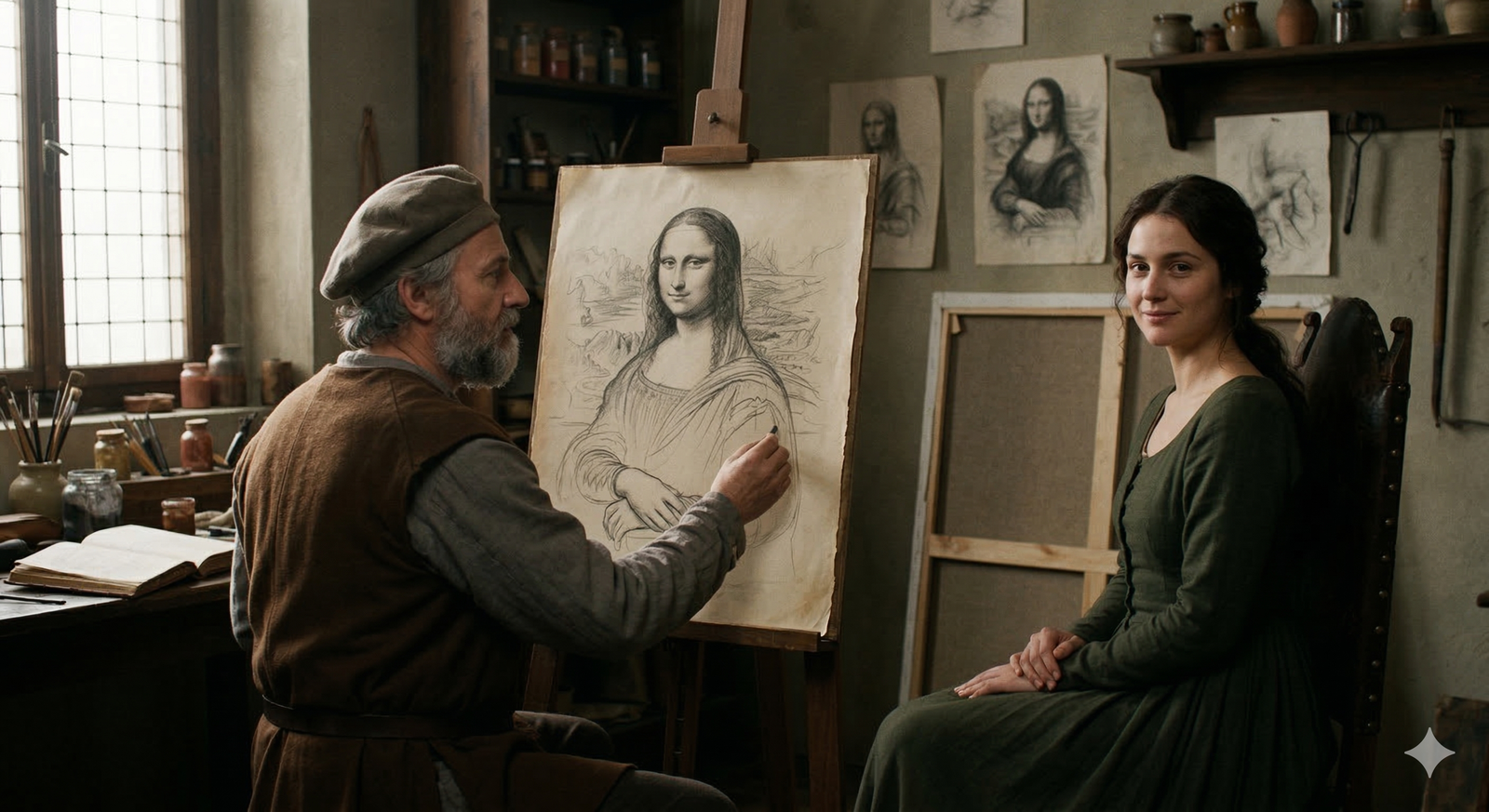
la Gioconda (Monna Lisa) - die Heitere, Leonardo da Vinci, 1503-1506, museo del Louvre, Parigi - sicuramente il dipinto píu famoso del mondo. cartoon: Leonardo sta sviluppando il disseno della Gioconda.
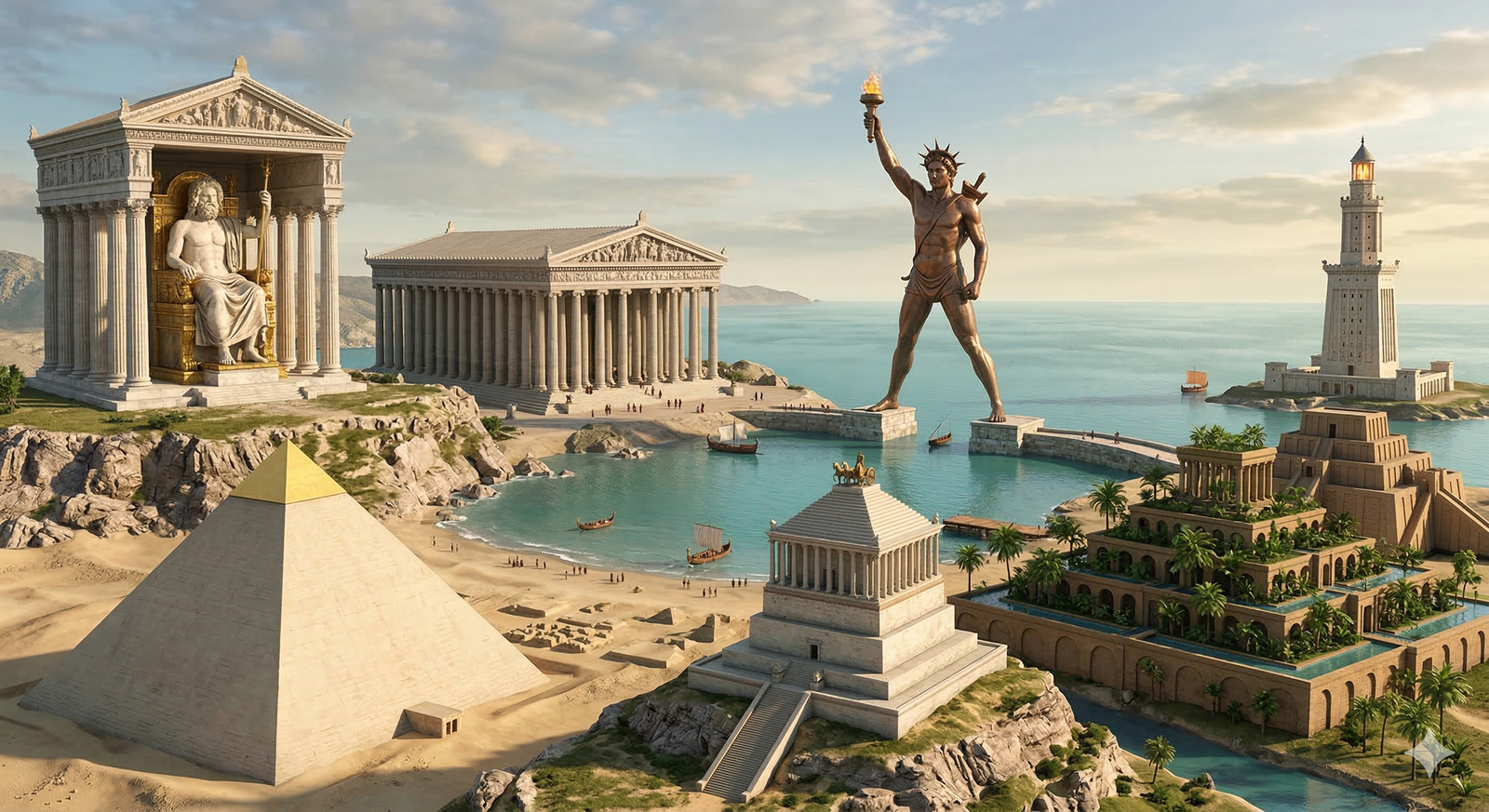
the 7 wonders of the ancient world:
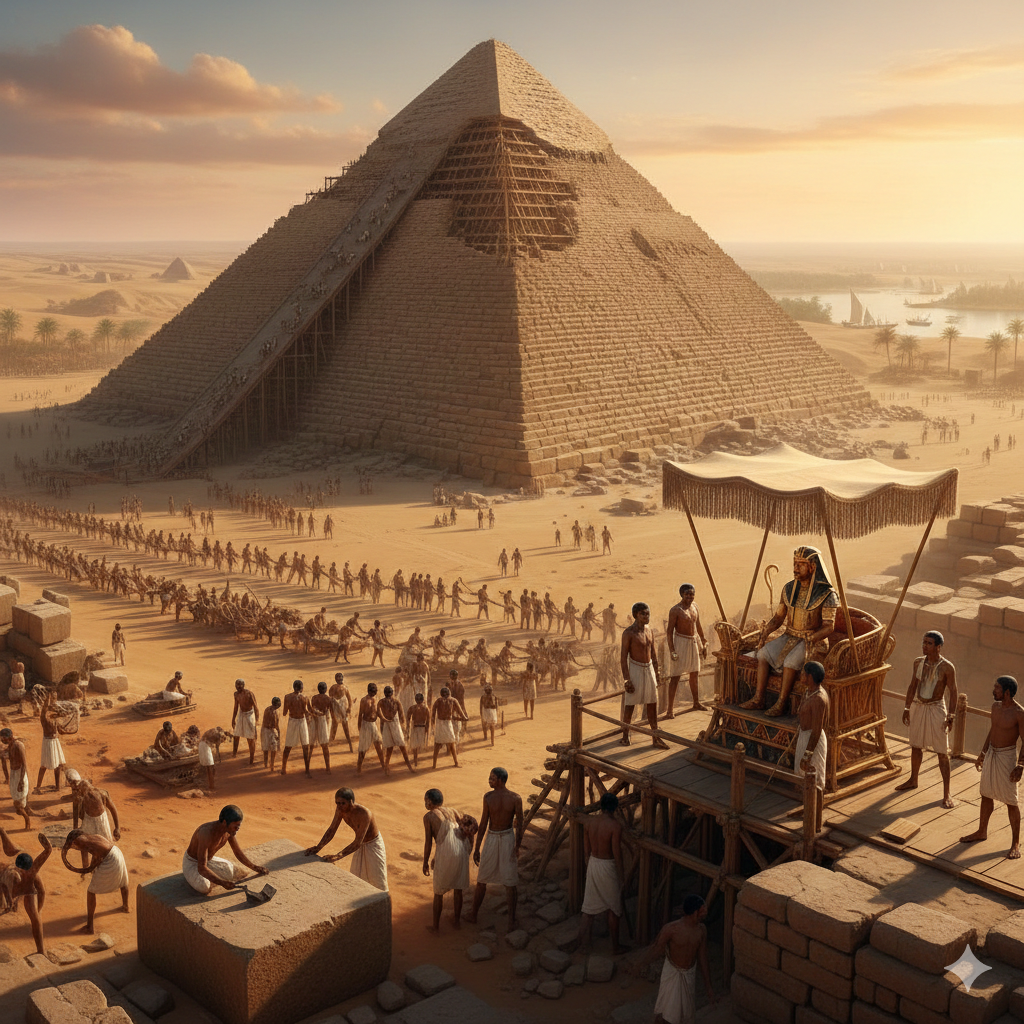
Great Pyramid of Giza Egypt 2560 BCE
Hanging Gardens of Babylon Iraq 600 BCE Destroyed (Location/existence debated)
Statue of Zeus at Olympia Greece 435 BCE Destroyed by fire (5th century CE)
Temple of Artemis at Ephesus Turkey 550 BCE Destroyed by arson/raids (401 CE)
Mausoleum at Halicarnassus Turkey 351 BCE Destroyed by earthquakes (12th–15th
Colossus of Rhodes Greece 282 BCE Destroyed by earthquake (226 BCE)
Lighthouse of Alexandria 280 BCE
cartoon: which of these wonders is still standing?
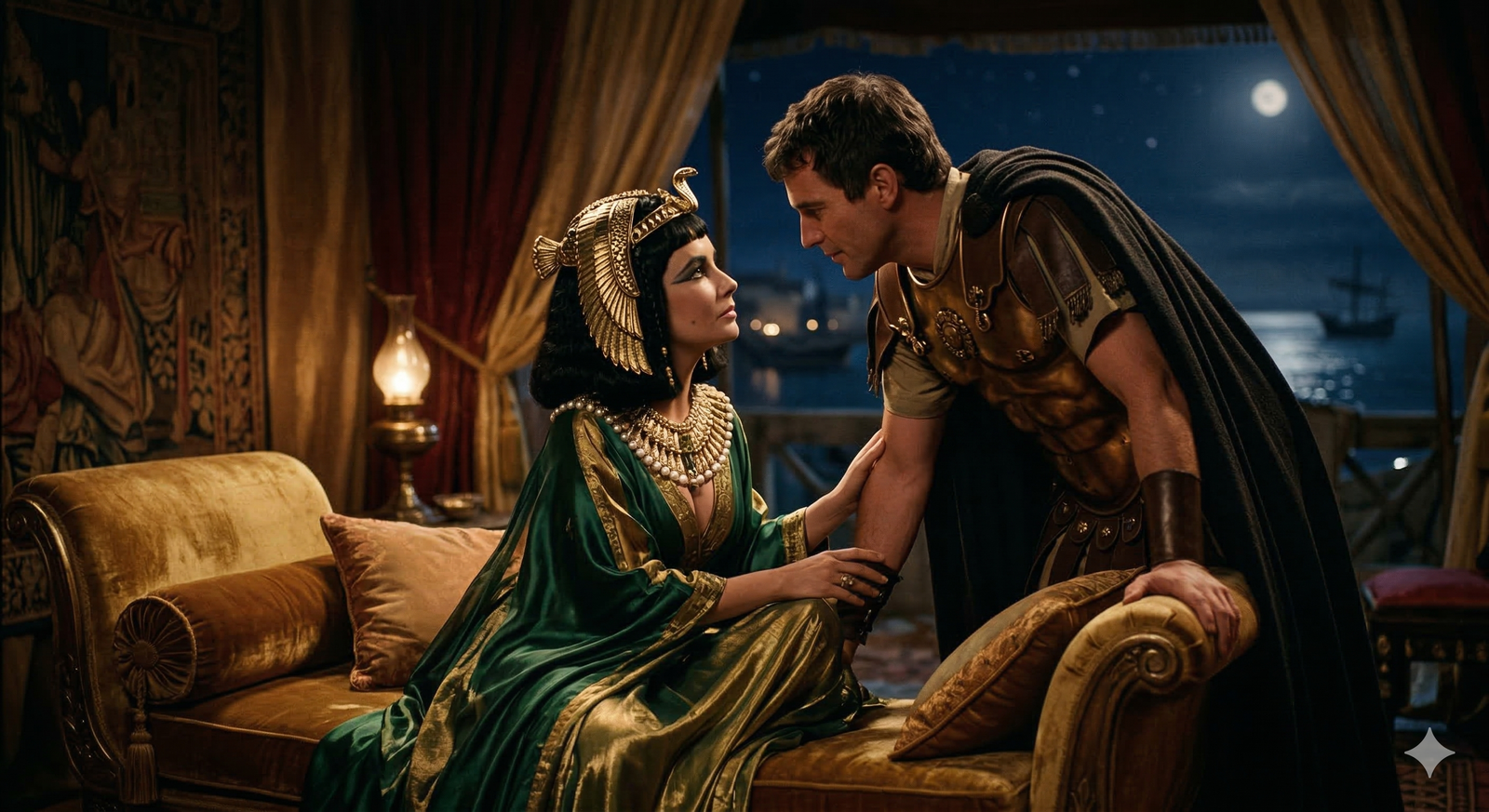
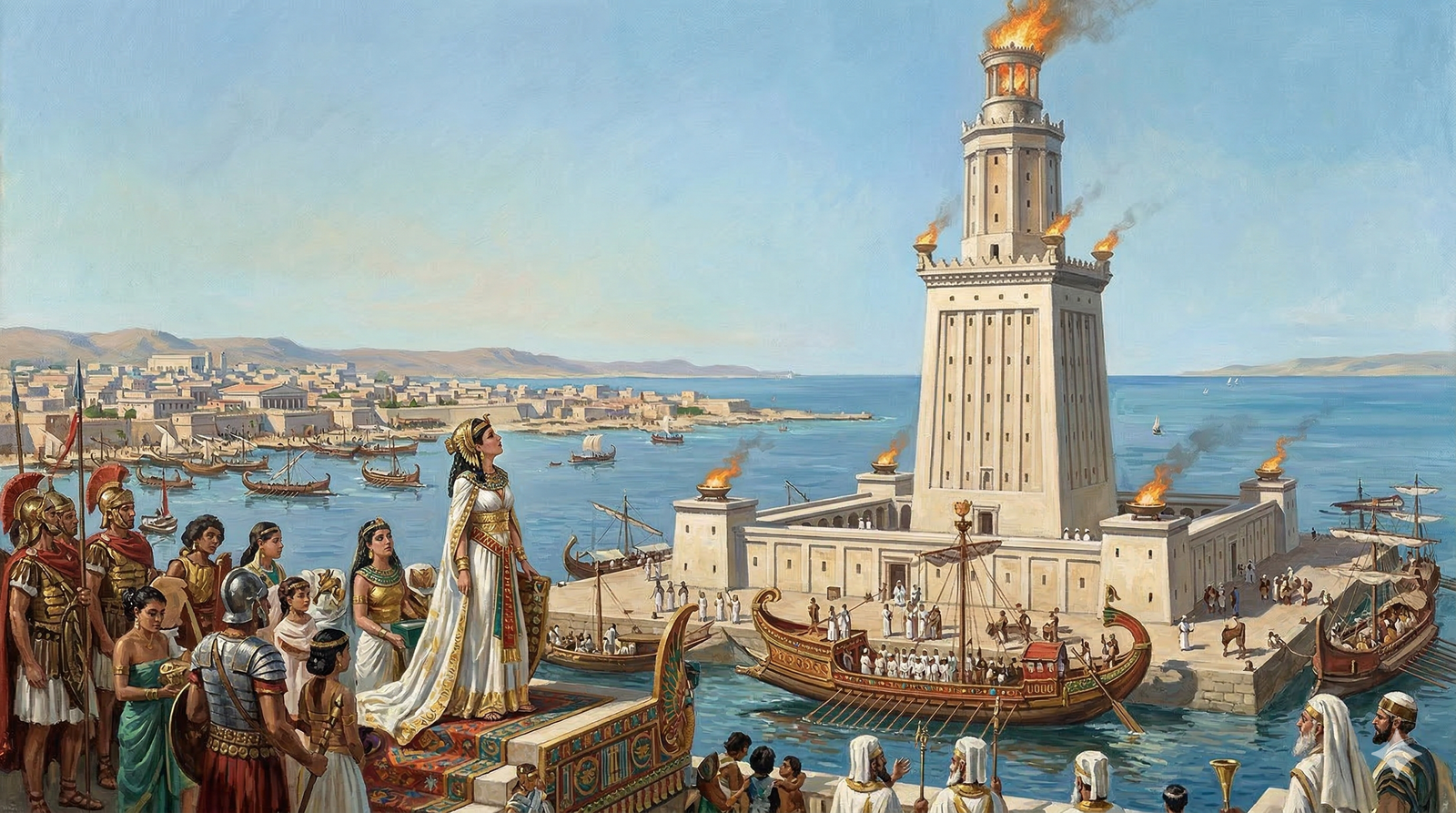
Queen Kleopatra with her entourage visits the Great Lighthouse "Pharos" in Alexandria. "pharos" has been the word's sencond tallest building after the Pyramides of Giza. Kleopatra was not Egyptian, she had hellenic-ptolemaic origin.
C'est l'un des plus grands chefs-d'œuvre de la littérature mondiale. Publié en 1862, Les Misérables n'est pas seulement un roman, c'est une fresque historique, sociale et philosophique de la France du XIXe siècle.
Le roman suit le destin de Jean Valjean, un ancien forçat condamné au bagne pour avoir volé un morceau de pain. Après sa rencontre avec l'évêque Myriel, il décide de changer de vie, mais il est poursuivi sans relâche par l'inspecteur Javert, incarnation de la justice rigide
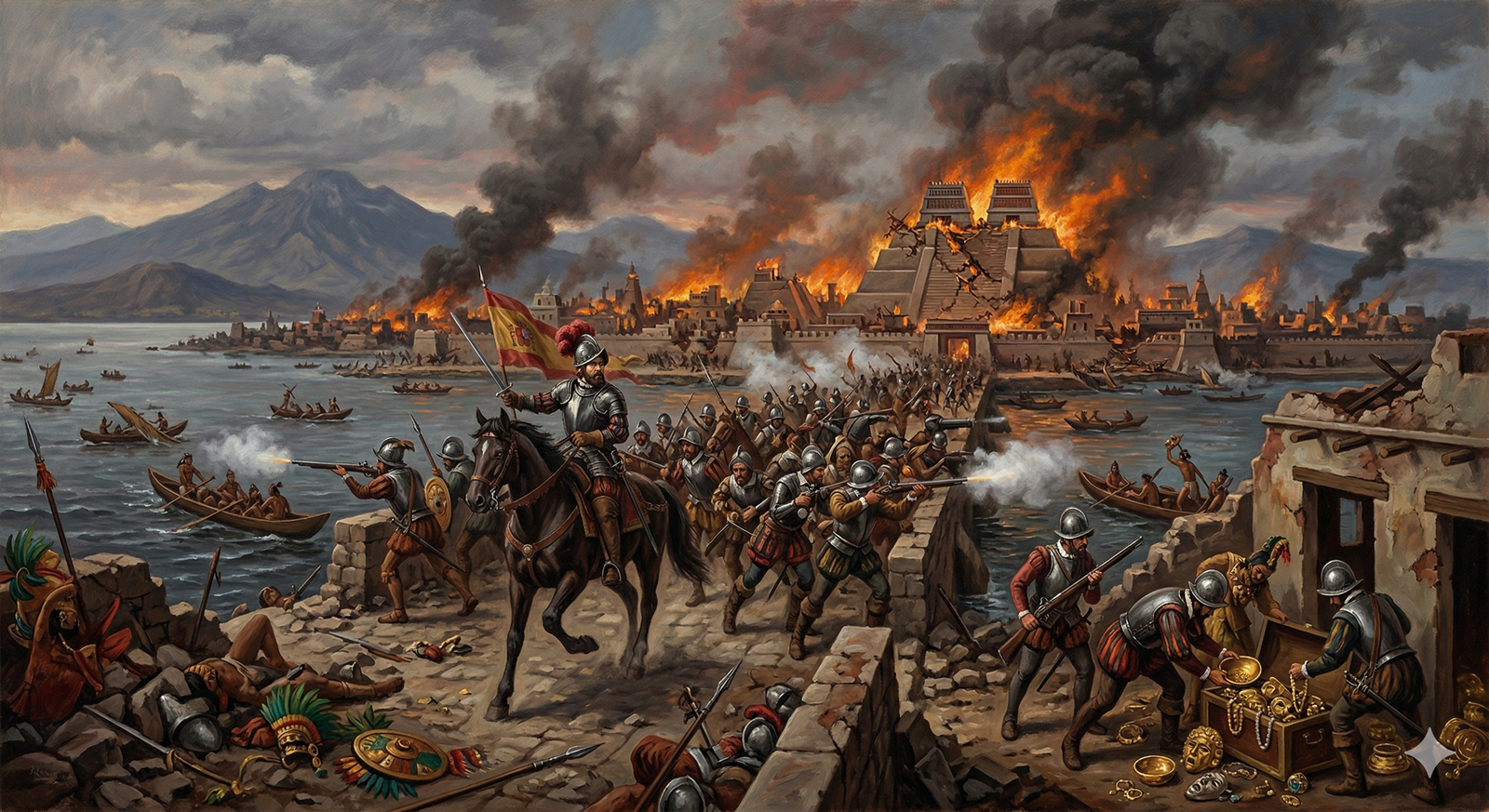
La caída de Tenochtitlan en 1521 es uno de los eventos más dramáticos y transformadores de la historia universal. No fue solo una batalla, sino el colapso de un imperio y el nacimiento de una nueva realidad cultural.
Aquí te presento los puntos clave para entender este proceso: cartoon: los espanoles ruban oro de los aztecos
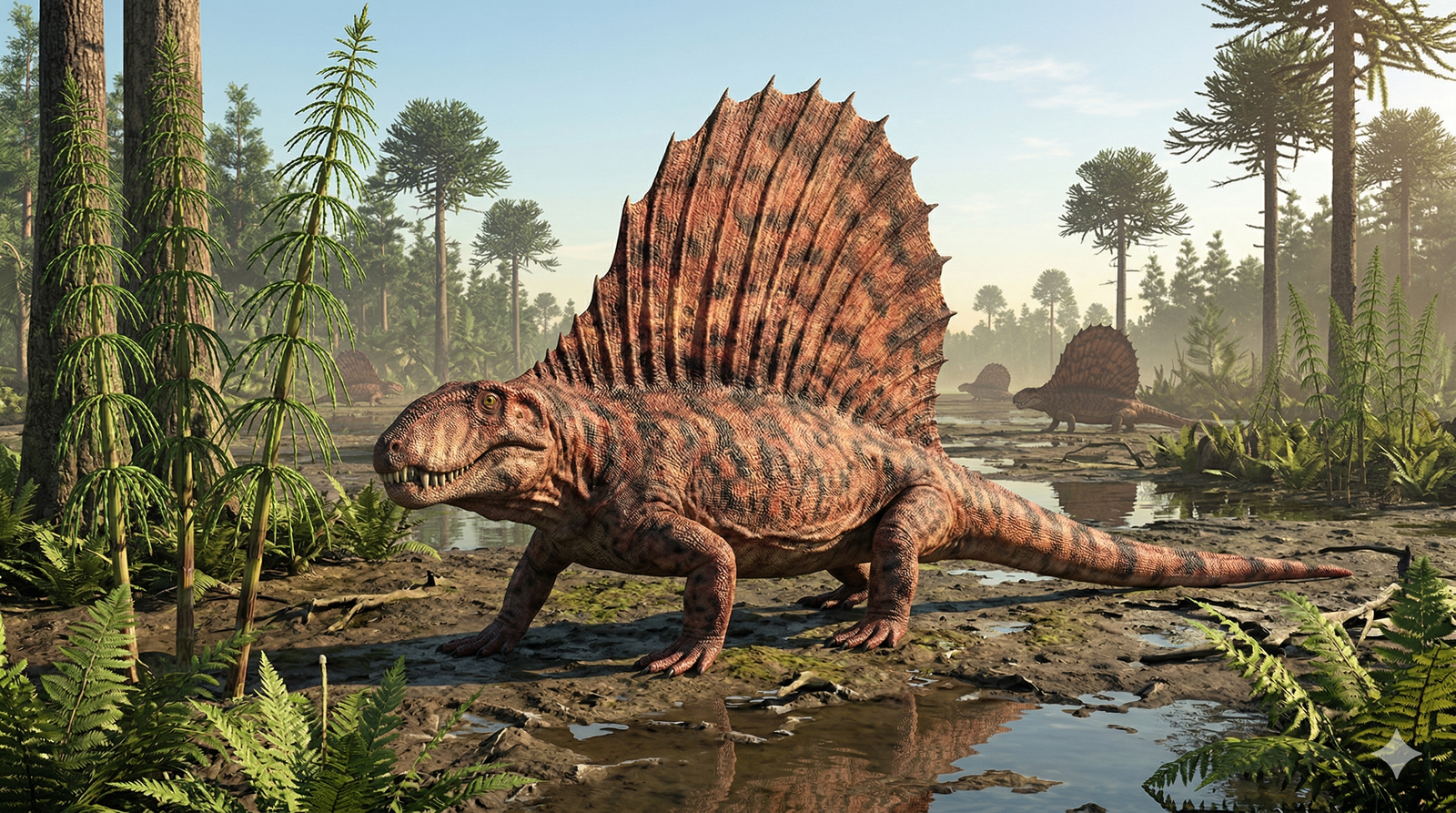
The Dimetrodon is one of the most famous "prehistoric monsters," it wasn't a dinosaur. In fact, it lived and went extinct roughly 40 million years before the first dinosaur even appeared. It is actually a synapsid, a group of animals more closely related to mammals than to reptiles like today The Apex Predator of the Permian(~295–272 million years ago) DietCarnivorous The massive neural spine sail The "Two Measures of Teeth" Dimetrodon means "two measures of teeth." Unlike most reptiles of its time, which had rows of identical teeth, Dimetrodon had two distinct types:Large Canines: For piercing and gripping prey.Smaller Shearing Teeth: For tearing flesh.This dental differentiation is a hallmark trait that eventually led to the complex teeth we mammals have today. The Mystery of the SailThe most striking feature of the Dimetrodon is the giant sail on its back, formed by elongated spines growing from the vertebrae. While paleontologists are still debating its exact purpose, the leading theories include:Thermoregulation: The sail acted like a biological radiator. By facing the sun, it could quickly warm its blood to start hunting; by facing the wind, it could cool down.Sexual Selection: Much like a peacock's tail, a larger or more vibrant sail might have helped attract mates or intimidate rivals.Camouflage or Confusion: Some suggest it could have broken up the animal's silhouette among tall reeds or served to make it look much larger to other predators. Where Did They Live?Most Dimetrodon fossils have been found in the "Red Beds" of Texas and Oklahoma, as well as parts of Europe. Back then, these areas were swampy, lush environments—vastly different from the dry plains they are today.
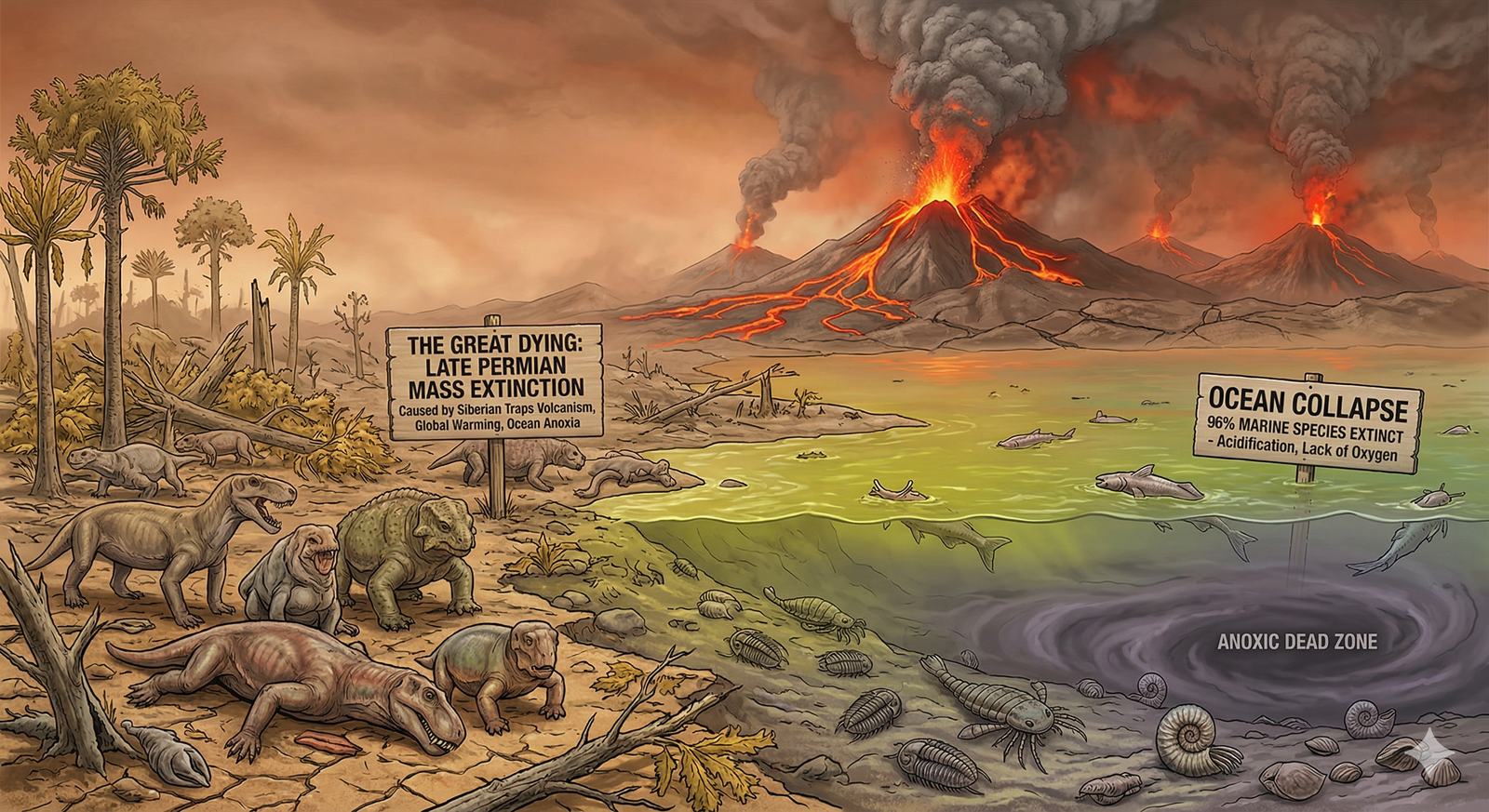
The Permian-Triassic (P-Tr) Extinction, colloquially known as "The Great Dying," was the most severe extinction event in Earth's history. Occurring approximately 252 million years ago, it wiped out roughly 96% of marine species and 70% of terrestrial vertebrate species. It is the only known mass extinction of insects.The Primary Cause: The Siberian TrapsMost scientists agree that the catastrophe was triggered by massive, prolonged volcanic activity in a region known as the Siberian Traps. This wasn't just a few volcanoes; it was a volcanic event that lasted for hundreds of thousands of years, covering millions of square kilometers in lava.The Deadly Chain ReactionThe eruptions didn't just kill through heat and lava; they released colossal amounts of carbon dioxide and methane , leading to: Extreme Global Warming: Global temperatures rose by as much as 10°C Ocean Acidification: As the oceans absorbed excess the pH levels dropped, making it impossible for shell-building organisms to survive.Ocean Anoxia: Warmer water holds less oxygen. The oceans became "dead zones," suffocating marine life.Ozone Depletion: Volcanic gases weakened the ozone layer, exposing surviving land life to lethal levels of UV radiation.





Kommentare